Bingo for Family Game Night: Free Printable Cards
Bingo for family game night is a grid of fun, household-friendly squares instead of numbers, like "tell a joke," "high-five everyone," and "name a favorite snack." Someone calls items, players mark their squares, and the first to a full line shouts "Bingo!" The easiest way to set it up is a free bingo card generator that shuffles your word list into unique cards everyone in the house can print.
Want to play tonight? Open the free generator, paste in a word list (there's a ready-made one below), and print a unique card for every family member. No sign-up, no fee, nothing to install.
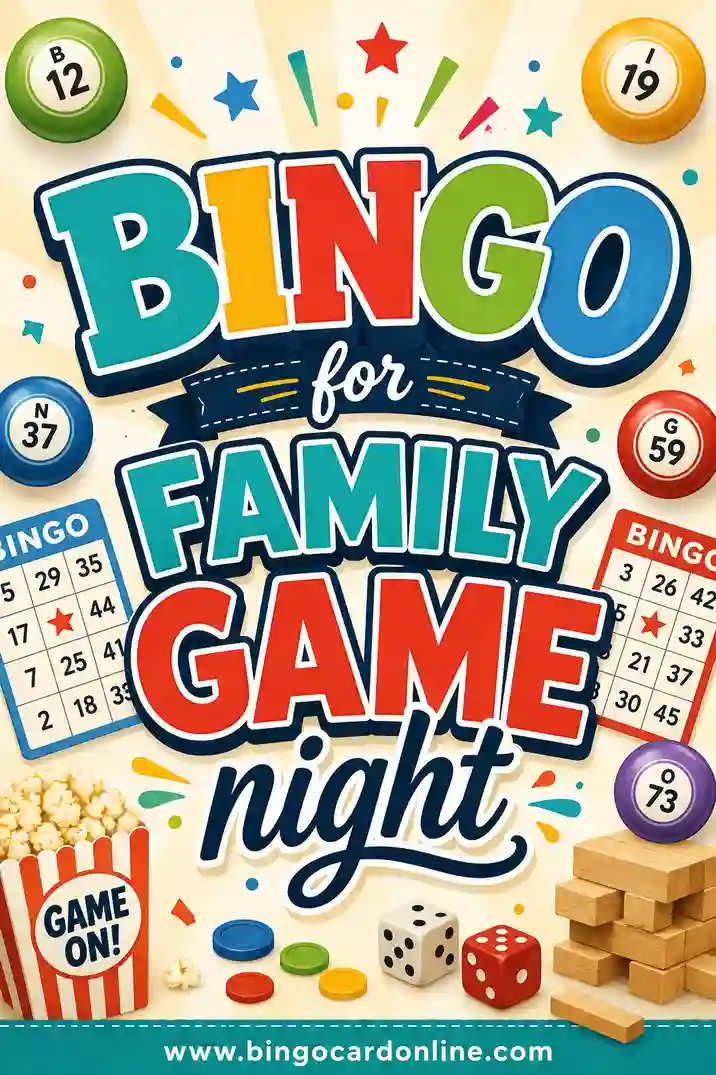
It's regular bingo with the numbers swapped for fun, doable squares the whole family can hit. Each card is a grid filled with little actions, prompts, and favorites, things kids and grown-ups can all play. It works as a calling game with a parent at the helm, or as an activity game where you mark squares as you do each thing together.
That's why it's a game-night staple. It bridges the age gap. A four-year-old and a grandparent can sit at the same table and both have a real shot at winning. No reading-heavy rules, no strategy that leaves the little ones behind.
There are two easy ways to play:
- Caller bingo. A parent draws words and reads them aloud. Everyone marks matches. Classic, simple, and great for younger kids.
- Activity bingo. No caller. Players mark a square each time they do the action, "tell a joke," "do a silly dance." Turns the night into a string of small, giggly challenges.
Both are easy. Activity bingo gets everyone up and moving; caller bingo is calmer and good for winding down.
Why Bingo Is Perfect for Family Night
Game night can be tricky when ages range from toddler to teen to grandparent. Bingo solves that better than almost anything.
- Everyone can play. No game is more age-flexible. Swap words for pictures and even non-readers join in fully.
- It's quick to set up. Print a stack, grab some markers, and you're playing in five minutes. No 20-minute rules explanation.
- It's free and endlessly fresh. New word list, new game. You'll never run out of versions, and it never costs a thing.
It also takes the pressure off. There's no losing streak to sulk about, no complicated turns, just a little luck and a lot of laughing.
Free Family Game Night Bingo Word List (Copy & Paste)
Here's a ready-to-use list of 30 family-friendly squares. Pick any 24 for a 5x5 card (the 25th is your free space), or grab 9 for a toddler-friendly 3x3. Copy a column straight into the generator.
| Silly Actions | Family Favorites | Quick Challenges |
|---|---|---|
| Tell a joke | Name a favorite snack | High-five everyone |
| Do a silly dance | Pick a movie | Hop on one foot |
| Make a funny face | Favorite ice cream | Spell your name |
| Animal sound | A song you love | Count to ten |
| Wiggle like jelly | Best vacation memory | Touch your toes |
| Strike a pose | Favorite color | Give a compliment |
| Big belly laugh | A pet you'd want | Clap five times |
| Whisper a secret | Favorite holiday | Balance a book |
| Robot walk | A game you love | Name three fruits |
| Funny accent | Dream superpower | Do a thumbs up |
Mix and match across columns so every card feels different. For little kids, lean on silly actions and pictures. For a mixed-age table, blend all three so everyone has squares they can nail.
Theme variations to try
- Movie night bingo. Squares are things that happen in the film you're watching: "a car chase," "someone cries," "a happy ending." Mark them as you watch.
- Dinner table bingo. Squares are conversation prompts: "share a high from today," "name something you're thankful for," "tell a story about you as a baby."
- Chore bingo. Turn tidy-up into a game: "made your bed," "fed the pet," "put away toys." First to a line picks the next family activity.
How to Make Family Bingo Cards in 4 Steps
No design skills needed. Here's the whole process.
- Pick your grid size. 5x5 for older kids and adults, 4x4 for a faster round, 3x3 for the littlest players.
- Add your words. Paste at least 24 squares for a 5x5. More words means more variety between cards, so aim for 30.
- Choose how many cards. One per person, plus a spare for a guest. The generator makes each one unique automatically.
- Print. Hit print, grab your stack, and gather everyone at the table.
If game night is a weekly thing, print on cardstock and slip cards into clear sleeves. Players mark with dry-erase markers, and you wipe them clean for next week.
Making It Work for Every Age at the Table
The best family games meet everyone where they are. A few easy tweaks keep the whole table happy.
For toddlers and preschoolers
Use a 3x3 grid and pictures instead of words, a dog, a star, an apple. Keep rounds short and cheer loudly. At this age, the joy is in marking squares and yelling "Bingo," not in winning.
For school-age kids
A 4x4 grid with a mix of simple words and pictures hits the sweet spot. Add silly action squares so the game gets them giggling and moving. Small prizes, like picking the bedtime story, keep them invested.
For tweens and teens
Go full 5x5 and lean on pop-culture or "favorites" squares to keep older kids interested. Activity bingo with funny challenges works well, since teens love a game that gives everyone a moment to be ridiculous together.
For grandparents and adults
Classic caller bingo with larger print is comfortable and familiar. Mix in nostalgic or memory-prompt squares ("a song from your school days") so the grown-ups get pulled in too.
Tips for a Smooth Game Night
A few small choices make the evening land.
- Set the win condition first. A single line is quick and fair for little kids. Save full blackout for when you've got time.
- Let a kid be the caller. Older children love running the game. It keeps them engaged and gives the parents a breather.
- Keep prizes tiny or silly. Picking the next snack, choosing the movie, or skipping a chore. The fun is in the playing.
- Run two grid sizes at once. A 3x3 for the toddler and a 5x5 for everyone else keeps the youngest from falling behind.
- Make markers part of the fun. Cereal pieces or mini marshmallows double as a treat, which little kids adore.
What to use as markers
Whatever's around the house works:
- Cereal pieces, raisins, or mini marshmallows (edible markers are a hit)
- Buttons, coins, or dried beans
- A crayon or pencil to cross squares off
- Dry-erase markers if you've laminated the cards
Fun Ways to Change Up the Game
Once the basic version gets familiar, try these twists.
- Blackout round. Fill the whole card to win. A longer game that's great for a rainy afternoon.
- Four corners. First to mark all four corners wins. Quick and perfect for short attention spans.
- Team bingo. Pair a little kid with a grown-up to share a card. Levels the field and builds teamwork.
- Roving prize. The winner of each round picks a small reward, then it resets. Keeps everyone playing for "just one more."
You can tie prizes to family life too: choosing the weekend outing, a later bedtime, or first pick of dessert.
Family Bingo for Different Ages
The same game stretches from toddlers to grandparents with a few tweaks.
| Age group | Grid size | Tips |
|---|---|---|
| Toddlers (2–4) | 3x3 | Use pictures, not words. Keep it short and silly. |
| Kids (5–9) | 4x4 | Mix simple words and pictures. Add action squares. |
| Tweens & teens | 5x5 | Pop-culture and "favorites" squares keep interest. |
| Adults | 5x5 | Caller bingo or funny challenge rounds. |
| Grandparents | 4x4 | Larger print, classic format, memory prompts. |
Love a good group game? You can build the same kind of bingo for your book club, a summer camp, or an office holiday party.
Frequently Asked Questions
How many family bingo cards do I need?
One card per person, plus a spare for a friend who joins. For a family of five, print seven or eight. The generator makes as many unique cards as you want in one go, so extras cost only paper.
What words should go on a family bingo card?
Use fun, doable squares everyone can hit: tell a joke, name a favorite snack, high-five everyone, do a silly dance. The list above gives you 30 to copy. Aim for at least 24 different squares so a 5x5 card fills completely.
Is family game night bingo free to print?
Yes. You make and print the cards yourself at no cost. There's no sign-up and no watermark, so you can run game night every week on a single free word list.
Can toddlers play family bingo?
Absolutely. Use a smaller 3x3 grid and picture-based squares instead of words, like a star, a dog, or an apple. Bigger squares and simple images let non-readers play right alongside everyone else.
How do I keep the game fair across different ages?
Run two grid sizes at once, a 3x3 for the youngest and a 5x5 for older kids and adults, or pair a little one with a grown-up to share a card. That way nobody falls behind and everyone has a real chance to win.
How do I make every bingo card different?
Use a generator that shuffles your word list. It rearranges the same squares into a new layout for each card, so no two players have identical grids and the game stays fair. Doing it by hand is slow, which is why the tool exists.
Ready to Print Your Family Bingo Cards?
Grab the word list above, open the free bingo card generator, and you'll have a stack of unique, printable cards ready for tonight in minutes. It's free, there's no sign-up, and every card comes out different, so the whole family gets a fair shot at the win. Have a great game night, and may the youngest player be the first to shout "Bingo!"