Bingo for Teachers: Classroom Ideas That Actually Work
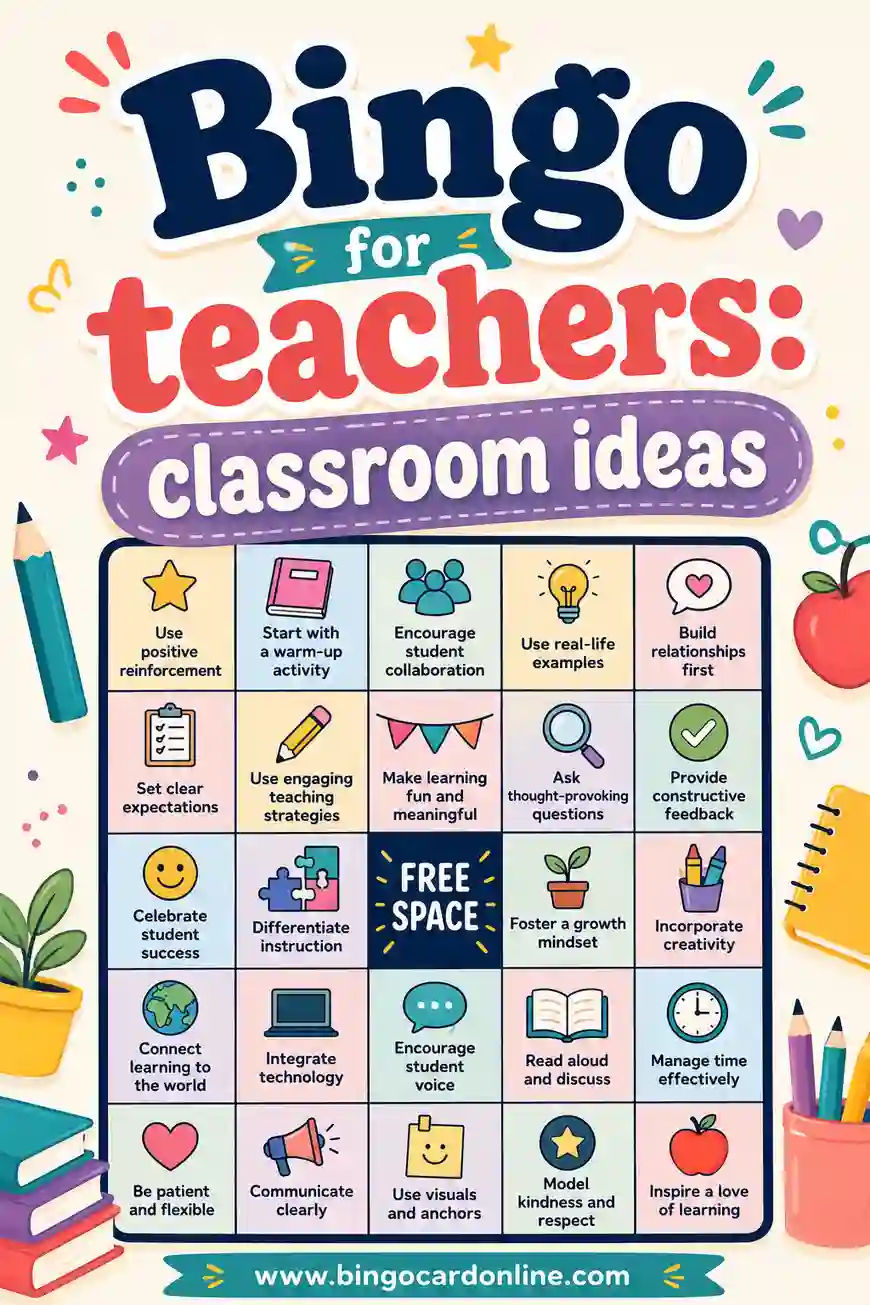
Bingo for teachers is a flexible classroom tool: you swap the numbers for vocabulary words, math facts, sight words, or review questions, then call them out while students mark their cards. It works for almost any subject and any grade, and it turns drilling into a game kids actually want to play. The fastest way to set one up is a free bingo card generator that takes your word list and prints a different card for every student.
Short on time before your next lesson? Open the free generator, paste in the words below, and print a full class set of unique cards in a couple of minutes. No login, no cost, no software to install.
Bingo sneaks learning into a format kids already love. They think they're playing a game. You know they're reviewing spelling words for the third time without a single groan.
It also hits a few things teachers care about at once. It's low-prep once you have a generator. It works for the whole class at the same time. And it gives you a built-in way to check who's keeping up, since you can see whose cards are filling in and whose aren't.
Best of all, it scales. The same template works for a kindergarten letter hunt and a high school chemistry review. You just change the words on the squares.
Classroom Bingo Ideas by Subject
You're not stuck with one version. Here are ways to use bingo across the subjects you teach.
Reading and language arts
- Sight word bingo. Fill squares with high-frequency words. Call them out for early readers to find.
- Vocabulary bingo. Put the words on the cards and call out the definitions, so students match meaning to term.
- Rhyme bingo. Call a word and students mark a square that rhymes with it.
- Parts of speech bingo. Squares are example words; you call "noun" or "verb" and they mark a match.
Math
- Math fact bingo. Squares hold answers. You call "7 times 8" and students mark 56.
- Shape bingo. Great for younger grades. Squares show shapes; you name them aloud.
- Fraction bingo. Match visual fractions to their written form.
Science and social studies
- Vocabulary review. Photosynthesis, erosion, ecosystem. Call definitions, mark terms.
- State or country bingo. Match capitals, flags, or landmarks.
- Lab safety bingo. A fun way to drill the rules before a unit.
Anytime fillers
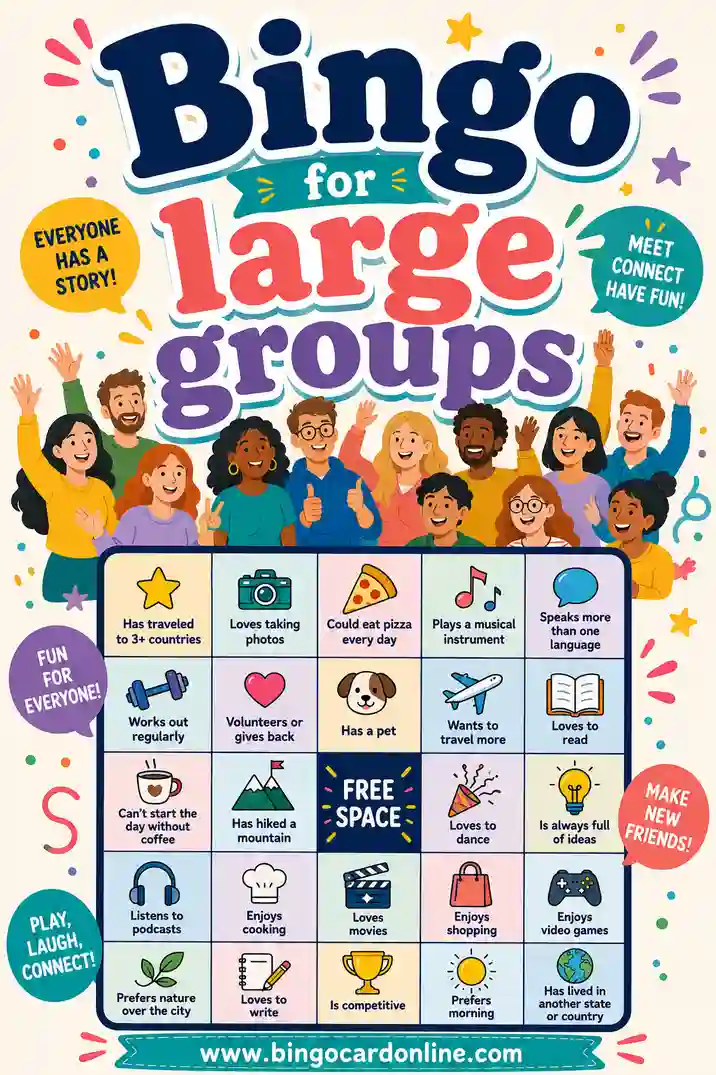
- Getting-to-know-you bingo. Squares say things like "has a pet" or "loves pizza." Students mingle and sign each other's squares. Perfect for the first week.
- Brain break bingo. A quick round between heavy lessons to reset the room.
Free Classroom Bingo Word List (Copy & Paste)
Here's a ready-to-use list of 30 general classroom squares you can drop straight into the generator. It's built for a getting-to-know-you or back-to-school round, but you can mix and match. Pick any 24 for a 5x5 card or 9 for a 3x3.
| About Me | Likes & Hobbies | Fun Facts |
|---|---|---|
| Has a pet | Loves pizza | Has a birthday this month |
| Wears glasses | Plays a sport | Has been on a plane |
| Has a sibling | Likes to draw | Can whistle |
| Walks to school | Plays an instrument | Has a garden |
| Has a nickname | Loves reading | Speaks two languages |
| Is the oldest kid | Likes video games | Has met a famous person |
| Has curly hair | Loves animals | Can do a cartwheel |
| Likes summer best | Plays board games | Has a collection |
| Wears sneakers today | Likes science | Has a funny middle name |
| Has a library card | Loves music | Has visited the beach |
Swap these for subject words whenever you want a review round instead. The structure stays the same.
Quick theme swaps
- Spelling list bingo. Use this week's spelling words as the squares.
- Holiday review. Mix in seasonal words to keep things fresh.
- Behavior bingo. Squares are positive actions; mark them as you spot them during the day.
How to Make Classroom Bingo Cards in 4 Steps
You don't need to be tech-savvy. Here's the whole process.
- Pick your grid size. 3x3 for the youngest, 4x4 for a quick round, 5x5 for older students.
- Add your words. Paste at least 24 items for a 5x5. More words means more variety between cards.
- Set the number of cards. One per student, plus a few spares for absences and latecomers.
- Print. The generator makes each card unique, so no two students share a layout.
If you teach the same lesson to multiple classes, save your word list somewhere handy. You can reprint a fresh, scrambled set in seconds next period.
Grid Sizes and Tips by Grade
The same game stretches across grade levels if you adjust the grid and the words.
| Grade level | Grid size | Tips |
|---|---|---|
| Pre-K & K | 3x3 | Use pictures or letters. Keep rounds short. |
| Grades 1–2 | 4x4 | Sight words and simple math facts. Mark with counters. |
| Grades 3–5 | 5x5 | Vocabulary and multiplication facts. Add small prizes. |
| Middle school | 5x5 | Subject review before tests. Use a blackout round. |
| High school | 5x5 | Dense vocabulary, formulas, or terms. Time the rounds. |
For early grades, lean on pictures and big squares so non-readers and little hands can keep up. For older students, pack the cards with content so a full game doubles as a real review session.
Running a Smooth Bingo Game in Class
If you've never been the caller, relax, it's simple. Here's a clean game from start to finish.
- Hand out cards and markers. One card each, plus a small pile of counters within reach.
- State the win condition. A line, four corners, or a full blackout. Say it before you start so nobody argues later.
- Call items clearly. Pull a word or question, read it, and pause so students can scan.
- Track your calls. Cross each one off a master list. You'll need it to check the winner.
- Verify the winning card. When someone calls "Bingo!", read their squares against your list. If it checks out, they win.
A good pace is one call every 10 to 15 seconds, slower for younger kids. Keep prizes tiny, a sticker or first pick at the reading corner, and you can fit several rounds into one period.
Markers that work in a classroom
- Dried beans, buttons, or plastic counters
- Mini erasers or pom-poms
- A crayon or dry-erase marker if cards are laminated
- Torn paper squares if you're out of everything else
Make Cards Last All Year
A few small choices save you reprinting every week.
- Laminate a class set. Students mark with dry-erase markers and you wipe them clean.
- Print on cardstock. It survives backpacks and recess hands better than copy paper.
- Use sleeves. Slip paper cards into clear sleeves for a cheaper reusable option.
- Print one test card first. Check the margins so you're not stuck with cut-off squares on a full stack.
- Keep blank counters in a bag. Then bingo is a five-minute decision, not a scavenger hunt.
If you teach little ones, go for a 3x3 or 4x4. Bigger squares help small hands and keep the round short enough to hold their attention.
Bingo as a Sneaky Assessment Tool
Here's a trick experienced teachers use. Bingo isn't just a game, it's a quick read on the room.
As you call items, watch which students hesitate and which mark instantly. If half the class can't find "denominator," you've just learned what to reteach tomorrow. It's a low-pressure check that doesn't feel like a quiz, so kids stay relaxed and you still get the signal.
You can also ask the winner to explain one square before awarding the prize. "Tell me what photosynthesis means." Now the whole class hears the answer one more time, and you've confirmed they actually know it.
Keeping the Whole Class Engaged
A bingo round only works if every student stays in it, not just the quick finishers. A few small habits keep the energy up and stop the game from fizzling halfway through.
The biggest fix is to keep rounds short. A single-line win that takes three or four minutes holds attention far better than a blackout that drags on for fifteen. Run several quick rounds instead of one long one, and reshuffle a fresh card between them so early winners start over on equal footing with everyone else.
Give the students who already won a job, too. The first winner becomes your assistant caller for the next round, or checks the next winner's card against the master list. It keeps them invested instead of zoning out, and it frees you up to keep the pace moving.
Watch for the kids who finish slowly and quietly fall behind. Calling at a steady, unhurried pace, and repeating each item once, lets the slower readers stay in the game. If you notice a few students consistently struggling to find squares, that's your signal to slow down or reteach, not to speed up for the kids who are flying.
Handling ties and false alarms
Ties happen, especially with a fresh class. Keep it simple: if two students call "Bingo!" on the same item, they both win, and you hand out two small prizes. Stickers and pencils are cheap, and a fair tie beats an awkward tiebreaker that sours the mood.
False alarms happen too, usually from an excited younger student who miscounted a row. Treat them gently. Read the card back against your called list, and if it doesn't check out, just say "almost, keep going!" and continue. No penalty, no embarrassment. The quick verification step protects the game without making anyone feel singled out.
Low-Prep Ways to Reuse One Word List
Teachers are short on time, so the real win is getting many lessons out of a single setup. One good word list can stretch much further than a single round.
Save every list you build somewhere easy to reach, a pinned note or a folder of text files. The next time you teach that unit, you paste it back into the generator and print a freshly scrambled set in under a minute. No two classes get the same layout, and you did zero new prep.
You can also reuse one content set across several game modes. The same list of vocabulary words works as call-the-definition bingo on Monday, a fill-in-the-blank review on Wednesday, and a partner quiz on Friday. The students see the words enough times to actually remember them, and you only made the list once.
For a multi-week unit, keep a running master list and add the new terms each week. By the review session before the test, you've got a deep, well-mixed list that covers everything, ready to print as a final blackout round that doubles as a study guide.
Frequently Asked Questions
How many bingo cards do I need for my class?
One card per student, plus three or four spares for absences and latecomers. For a class of 28, print around 32. The generator makes as many unique cards as you want in one batch.
What subjects can I use classroom bingo for?
Almost any. Vocabulary, sight words, math facts, science terms, states and capitals, parts of speech, and review for tests all work. You just put the content on the squares and call the matching clue.
How do I make sure every student's card is different?
Use a generator that shuffles your word list into a fresh layout for each card. Doing it by hand is slow and error-prone, which is exactly why the tool exists. Every student gets a one-of-a-kind grid.
Is this bingo generator really free for teachers?
Yes. You make and print the cards yourself at no cost. There's no sign-up and no watermark, so you can run a whole class, or several, on one free word list.
What grade levels does classroom bingo work for?
All of them. Use a 3x3 with pictures for pre-K, scale up to a content-packed 5x5 for high school. The grid-size table above gives you a starting point for each grade.
Can I reuse the cards next year?
Yes. Laminate a class set or use clear sleeves, then have students mark with dry-erase markers. Wipe them down and they're ready for next year's group.
What do I do with students who finish early?
Give them a role in the next round. The first winner can be your assistant caller, or check the next winner's card against the master list. It keeps quick finishers engaged instead of restless, and it takes a small job off your plate.
Ready to Print Your Classroom Bingo Cards?
Grab the word list above, open the free bingo card generator, and you'll have a full class set of unique, printable cards in minutes. It's free, there's no sign-up, and every card comes out different. Want more ideas? Try our guides to bingo for ESL learners, bingo for toddlers and preschoolers, and bingo for large groups. Now go turn your next review into a game your students will ask to play again.