Bingo for Toddlers & Preschoolers: Simple, Fun & Free
Bingo for toddlers and preschoolers is a stripped-down version of the classic game: small 3x3 grids, big squares, and pictures instead of words so kids who can't read yet can still play. You call out a picture, they find it and cover it, and the first to fill a line (or the whole card) wins. The easiest way to make a set is a free bingo card generator that turns a simple picture list into a different card for every child.
Want to play with your little ones today? Open the free generator, use the picture words below, and print a unique 3x3 card for each child in minutes. No sign-up, no cost, nothing to install.
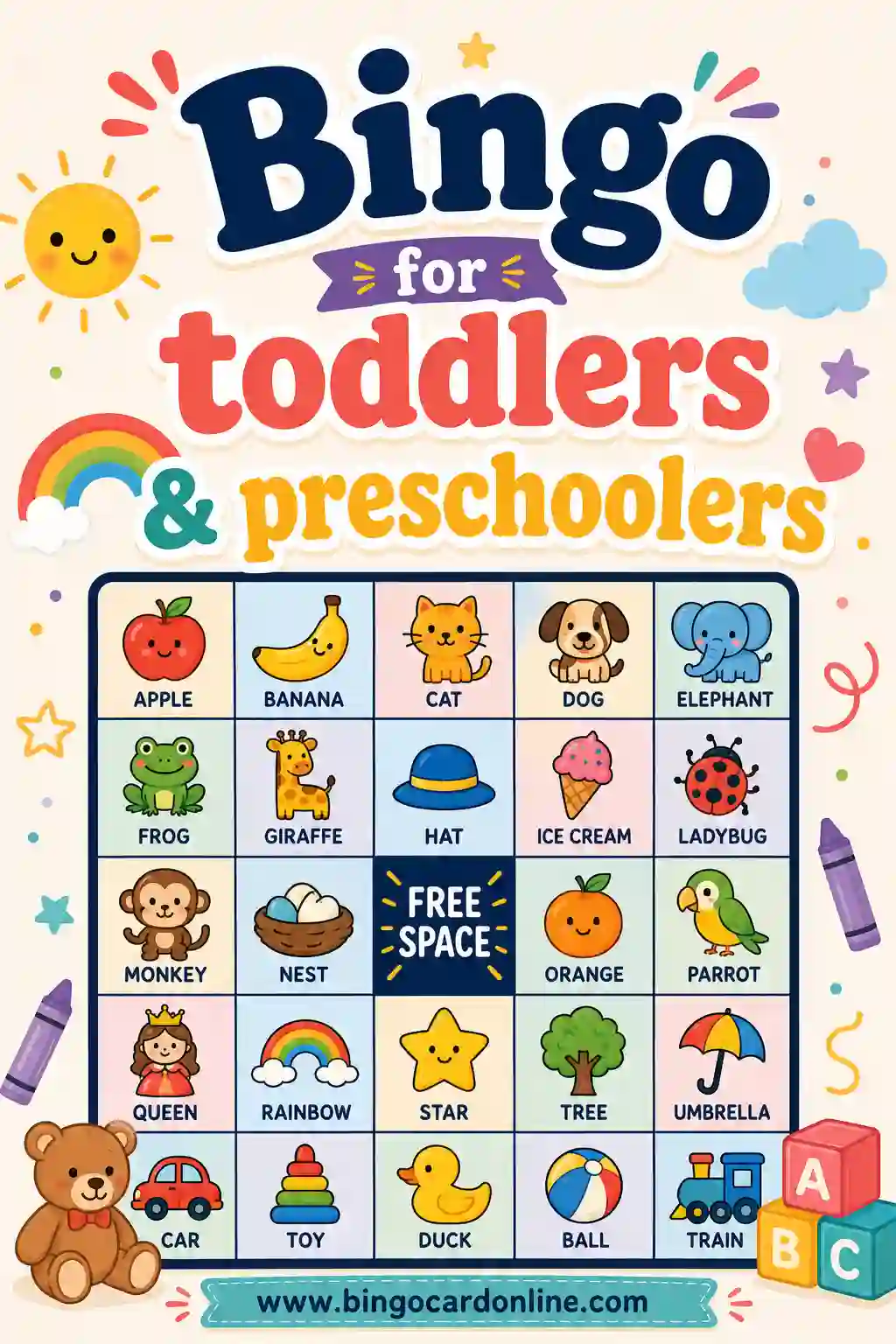
You might think bingo is too grown-up for a two-year-old. It isn't, as long as you shrink it down. Toddlers and preschoolers love the simple thrill of finding a picture and covering it. That little "I found it!" moment is the whole game to them.
It also quietly builds real skills. Matching a called picture to one on the card sharpens visual recognition. Taking turns and waiting builds patience. And covering squares one at a time helps with focus and fine motor control. They're learning, but to them it's just play.
The key is keeping it tiny. Short rounds, big squares, simple pictures, and lots of cheering. Get those right and even a busy toddler will sit and play.
Picture Bingo Ideas Toddlers Love
Pictures beat words every time at this age. Here are themes that work well with little ones.
Everyday objects
Things kids see all day are the easiest to recognize: a ball, a cup, a shoe, a spoon. Start here for your very youngest players.
Animals
Animals are a toddler favorite. Use a dog, cat, cow, duck, and fish. Bonus: make the animal sound when you call it, and they'll squeal with delight.
Colors and shapes
Squares are solid colors or simple shapes. You call "red!" or "circle!" and they find it. Great for kids just learning these.
Around the house
A toy version where pictures are household things: chair, bed, door, lamp. You can even play a "find it in the room" version where they spot the real object.
Free Toddler Bingo Picture List (Copy & Paste)
Here's a ready-to-use list of 30 simple, easy-to-picture words perfect for toddlers and preschoolers. Add a clip-art picture next to each one, or use a picture-only set. Pick any 9 for a 3x3 card.
| Animals | Toys & Things | Everyday |
|---|---|---|
| Dog | Ball | Cup |
| Cat | Teddy bear | Spoon |
| Duck | Blocks | Shoe |
| Cow | Car | Hat |
| Fish | Book | Sock |
| Bird | Balloon | Apple |
| Bunny | Doll | Banana |
| Bee | Drum | Sun |
| Frog | Kite | Star |
| Pig | Bubbles | Flower |
Every word here is something a toddler can recognize at a glance. That's the rule: if a two-year-old can't instantly point to it, leave it off the card.
Easy theme swaps
- Farm bingo. All animals, with the sounds. A guaranteed hit.
- Color bingo. Solid color squares only. Perfect for the youngest players.
- Snack bingo. Pictures of foods, then play "find it on your plate."
How to Make Toddler Bingo Cards in 4 Steps
It takes just a few minutes. Here's the whole process.
- Pick the 3x3 grid. It's the right size for little hands and short attention spans.
- Choose 9 simple pictures. Use the list above, or your own clip art.
- Make a card per child. Plus a spare or two. The generator keeps each one unique.
- Print big. Bigger squares are easier for tiny fingers to cover.
Print on cardstock if you can, since toddlers are rough on paper. And keep a few backup cards ready, because at least one will end up bent, drawn on, or briefly chewed.
The Right Grid Size for Each Age
Match the grid to the age and the game stays fun instead of frustrating.
| Age | Grid size | Tips |
|---|---|---|
| 18 months–2 years | 2x2 or 3x3 | Just 4–9 big pictures. Help them cover squares. |
| 2–3 years | 3x3 | Simple objects and animals. Cheer every find. |
| 3–4 years | 3x3 | Add colors and shapes. Try a "first to one line" win. |
| 4–5 years | 3x3 or 4x4 | Mix pictures with a few first words. Take turns calling. |
| Pre-K (5) | 4x4 | Early letters or sight words alongside pictures. |
Stick with 3x3 for most toddlers. A 5x5 has too many squares and the round drags on far past their attention span. Smaller is better here.
How to Play with Wiggly Little Ones
Toddlers don't follow rules like big kids do, so keep it loose. Here's a version that actually works.
- Give each child a card and big markers. Pom-poms, plastic chips, or even cereal pieces.
- Skip complicated win conditions. For the youngest, "cover the whole card" is plenty. No lines or corners needed.
- Call slowly and clearly. Hold up the matching picture as you call it so they can compare.
- Help them find it. Point, hint, and celebrate. The goal is fun, not competition.
- Cheer for everyone. Make every child a winner. At this age, finishing the card is the prize.
Keep rounds to a few minutes. The moment they lose interest, the game is over, and that's fine. Short and happy beats long and cranky.
Safe, fun markers for toddlers
Watch for choking hazards. Stick to markers too big to swallow:
- Big pom-poms or fuzzy balls
- Large plastic bingo chips or milk caps
- Stickers (let them stick one on each found square)
- A bingo dauber, if you have one (they love the stamping)
Avoid small beans, buttons, or coins with toddlers who still put things in their mouths.
Make It a Learning Game (Without Them Noticing)
The beauty of toddler bingo is how much sneaks in. Lean into it.
Call the animal sound instead of the name and they're learning sounds. Name the color of each square and they're learning colors. Count the covered squares together at the end and they're practicing numbers. None of it feels like a lesson, because it isn't, it's just the game.
You can also stretch their vocabulary by describing each picture. "It's a duck! Ducks say quack and they swim in the water." Now they've heard the word, the sound, and a fact, all while playing. That's the kind of easy, repeated exposure little brains soak up best.
What Skills Toddler Bingo Builds
It's easy to see bingo as just play, but a lot is happening under the surface when a toddler covers a square. Knowing what's being built helps you lean into it.
- Visual matching. Finding the called picture on a busy card is exactly the skill that later helps with reading and sorting.
- Listening and following directions. They hear a word, then act on it. That's a building block for every classroom year ahead.
- Turn-taking and patience. Waiting for their picture to be called is hard at this age, and a few rounds of practice goes a long way.
- Fine motor control. Pinching a chip and placing it on a small square strengthens the same little muscles they'll use to hold a crayon and, later, a pencil.
- Early vocabulary. Every call is a word they hear, see, and connect to a picture, which is how new words stick.
None of this needs to be pointed out to the child. They just think they're playing a game, and that's the magic of it. The learning rides along for free.
Common Mistakes to Avoid With Little Kids
A few small missteps can turn a happy game cranky fast. Sidestep these and you'll keep the giggles going.
- Too many squares. A 5x5 is overwhelming for a toddler. Stick to 3x3 (or even 2x2 for the youngest) so the round ends before they wander off.
- Words instead of pictures. They can't read yet. If a square is just text, they can't play it. Always use clear images.
- Hard-to-picture items. "Weather" or "happy" don't show up well as a picture. Choose concrete things a child can point to, like a dog or a ball.
- A long, slow game. Toddler attention is measured in minutes. Keep rounds short and stop while they're still having fun.
- Making it competitive. A toddler in tears because someone "won" first defeats the whole purpose. Let everyone finish and cheer for all of them.
Get those right and the game almost runs itself. The biggest secret is simply to keep it small, fast, and full of praise.
Frequently Asked Questions
What age can a toddler start playing bingo?
Around 18 months to 2 years, with a tiny 2x2 or 3x3 picture card and plenty of help. Keep it to a few big, familiar pictures and cheer every find. By 3, most kids can play a simple 3x3 round with light guidance.
Should I use pictures or words for toddler bingo?
Pictures, always. Toddlers and preschoolers can't read yet, so picture squares let them actually play. Use simple, instantly recognizable images, a dog, a ball, a cup, the kind they can point to without thinking.
How do I make each child's card different?
Use a generator that shuffles your picture list into a fresh layout for every card. Doing it by hand is slow and fiddly, which is why the tool exists. Each child gets a unique grid, so they all win at different times.
Is this bingo generator free for parents and teachers?
Yes. You make and print the cards yourself at no cost. There's no sign-up and no watermark, so you can print a whole preschool class set on one free picture list.
What's the best grid size for preschoolers?
A 3x3 grid. It has just nine squares, perfect for little hands and short attention spans. Save the bigger 4x4 and 5x5 grids for older kids who can handle more squares and a longer game.
What should toddlers use to cover the squares?
Big, safe markers that aren't a choking risk: large pom-poms, big plastic chips, stickers, or a bingo dauber. Skip small beans, buttons, and coins with kids who still mouth objects.
How long should a toddler bingo game last?
A few minutes, tops. Toddlers have short attention spans, so aim to finish a round before they lose interest. One quick "cover the whole card" round often lands around three to five minutes, which is just right. End on a high note rather than pushing for one more.
Can I play bingo with just one toddler?
Absolutely. You don't need a group. Take the caller role yourself and play alongside them with a card of your own, or just help them find and cover each picture. One-on-one bingo is a lovely calm-down activity and a sneaky way to practice new words together.
What if my toddler just wants to cover every square at once?
That's completely normal, and honestly fine. At the youngest ages, the joy is in the covering, not the rules. Let them go for it, name each picture as they cover it, and treat a full card as the win. The structured "wait for your picture" version comes naturally a little later, around age three or four.
How do I keep more than one toddler from fighting over markers?
Give each child their own little cup of markers before you start, so nothing has to be shared mid-game. Pom-poms or chips in a small bowl per child works well. With their own stash in reach, they stay focused on their own card instead of reaching across the table.
Ready to Print Your Toddler Bingo Cards?
Grab the picture list above, open the free bingo card generator, and you'll have a unique, printable 3x3 card for every little one in minutes. It's free, there's no sign-up, and every card is different, so they all get their own "Bingo!" moment. Want more ideas? See our guides to bingo for teachers, bingo for ESL learners, and bingo for large groups. Now go make a happy, giggly game your little ones will want to play again and again.