Easter Bingo Cards: Free Printable & Customizable
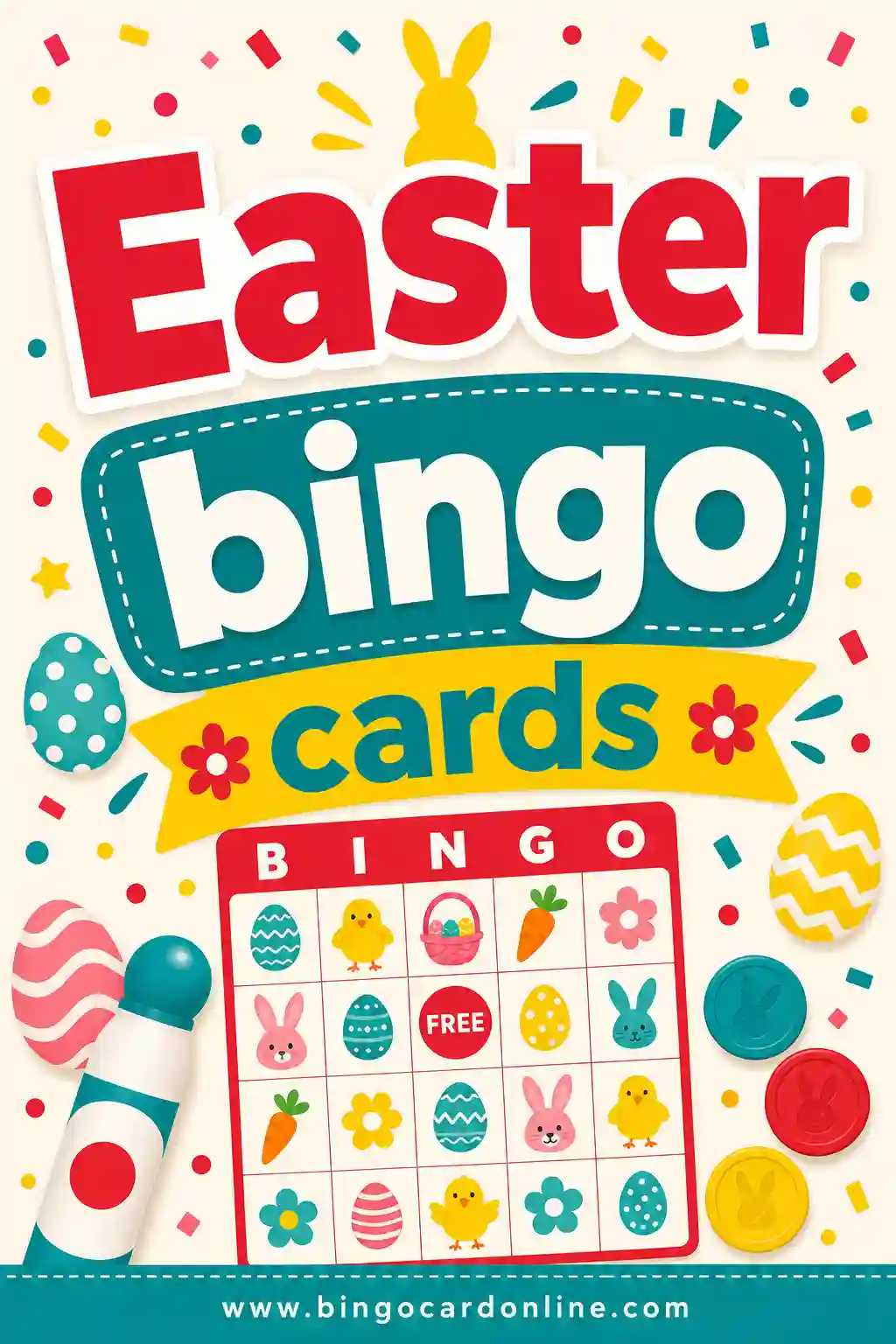
Easter bingo swaps numbers for bunnies, eggs, chicks, and spring flowers. Someone calls the items, or players hunt for them around the yard, and the first person to complete a line shouts "Bingo!" What sets this holiday apart is how many places the game fits: an egg hunt, a Sunday school room, a brunch table, or a living room on a rainy morning.
To get started, open the free generator, paste in the Easter word list further down, and print a different card for every player. No sign-up and nothing to install.
Two Ways to Play: Caller Bingo or Hunt-and-Mark
Easter is one of the few holidays where bingo can leave the table. The same card works in two very different formats, and picking the right one for your gathering matters more than any other decision you make.
Caller bingo is the familiar version. One person reads squares aloud, everyone marks what they have, and the first full line wins. It suits a classroom, a church hall, or a living room on a rainy afternoon.
Hunt-and-mark bingo has no caller at all. Each player carries a card and checks off squares as they actually find or notice things: a yellow egg, a blooming bush, a bunny-shaped wind chime. Nobody waits for a turn, and nobody gets bored. It is the better choice whenever people will be walking around anyway.
Either way, the cards need to differ from one another, or two players finish at the same moment and the game fizzles. A bingo card generator handles that by shuffling one word list into a separate layout for every player. Paste the list below into it, pick a grid size, and print.
Bingo and the Egg Hunt: Pairing the Two
An egg hunt has a built-in problem. A few quick or tall children collect most of the eggs, and the youngest ones end up holding an almost empty basket. A bingo card gives every child a second way to feel they are winning.
Before the hunt
Give each hunter a card and a crayon. Squares should describe the eggs and the yard, not just the count: a pink egg, an egg on something high, an egg in the grass, a striped egg, an egg beside a flowerpot. Because you control the squares, you can make sure every box is achievable for a three-year-old who only walks the lawn.
During the hunt
Kids mark a square each time they find a matching egg. Tell them that finding the same kind of egg twice does not mark a second square, which nudges fast hunters to look for variety and leaves the easy eggs for smaller hands.
After the hunt
Sit everyone down, compare cards, and give a small prize for each category (most squares, first full row, rarest find) so more than one child goes home pleased.
Inside the Plastic Eggs: Egg-Contents Bingo
Plastic eggs open, and that makes them useful in a way few other holiday props are. Instead of filling them only with candy, tuck in small things that match squares on a card.
Here is one setup that works well for ages four and up:
- Fill each egg with one small item, such as a sticker, a mini eraser, a pom-pom, a small plastic chick, a paper clip, or a single jelly bean.
- Make each card a grid of those items, written as words or drawn as simple pictures.
- Kids find an egg, open it on the spot, and mark the matching square.
The twist is that children cannot mark a square until they open the egg, so the surprise stays intact. If you have a mix of ages, put the picture-based cards in the hands of the youngest hunters and the word-based cards in the hands of older siblings.
A calmer variation uses the eggs as the caller. Write each word on a slip of paper, fold one into each egg, and let a child crack one open for every round. It is a small ceremony, and it gives shy children a job without asking them to speak up in front of a crowd.
A Rainy-Day Plan When the Hunt Moves Indoors
Easter weather is unreliable, and a soaked yard can cancel the hunt. Bingo is a good rescue because it needs a table and a few pieces of paper, not a field.
- Hide a short list of eggs indoors. Limit the rooms. Three or four are plenty, and a hallway or stairwell works if you want to keep little ones away from fragile things.
- Switch to hunt-and-mark cards built for the house. Squares such as an egg under something soft, an egg above eye level, an egg near a window, or an egg next to a book keep the search organized.
- Finish with a round of caller bingo. Once the eggs are found, everyone settles at the table with their candy or cereal markers for a sit-down game.
Picture Cards for Kids Who Can't Read Yet
Many children in a preschool or early kindergarten group cannot read "daffodil" or "marshmallow chick," but they can match a picture. Picture cards let them take part as equals instead of waiting for an adult to read each square.
A few things make them work:
- Keep the grid at 3x3. Nine squares is enough for a short attention span, and a round finishes quickly.
- Use pictures that are obviously different. A bunny, an egg, a chick, a carrot, a flower, a basket. Avoid pairs that look alike at a glance, such as a duckling and a chick, in the same grid.
- Add the word below each picture. Pre-readers pick up letter shapes by seeing them next to the image, so the card quietly teaches as it entertains.
- Call the item by what it looks like. Say "the yellow chick" instead of "spring poultry," and describe it once more if a child hesitates.
Matching the Card to the Age
A single card rarely suits a table that includes a toddler and a grandfather. These suggestions help you decide how to adapt.
| Age group | Grid | What works at Easter |
|---|---|---|
| Ages 2–4 | 3x3, pictures | Egg-color squares, one animal per picture, a grown-up marking alongside the child. |
| Ages 5–7 | 3x3 or 4x4 | Short words plus pictures. Pair with an egg hunt so there is something to hold and open. |
| Ages 8–12 | 5x5 | Harder spotting tasks outdoors, such as a bird's nest, a budding branch, or a specific insect. |
| Teens | 5x5 | Team play, a blackout round, or squares about family traditions that make people laugh. |
| Adults and older relatives | 4x4 or 5x5 | Large print, a clear table, and squares drawn from the meal and the day itself. |
Free Easter Bingo Word List (Copy & Paste)
Here's a ready-to-use list of 30 Easter squares. Pick any 24 for a 5x5 card (the center is your free space), or grab 9 for a 3x3 toddler version. Copy the column you like right into the generator.
| Easter Classics | Spring & Nature | Treats & Fun |
|---|---|---|
| Easter bunny | Tulip | Chocolate egg |
| Easter egg | Daffodil | Jelly beans |
| Chick | Butterfly | Easter basket |
| Lamb | Ladybug | Egg hunt |
| Bonnet | Rainbow | Marshmallow chick |
| Cottontail | Green grass | Candy |
| Carrot | Bumblebee | Egg dye |
| Spring chicken | Robin | Pastel colors |
| Bunny ears | Blooming flower | Plastic egg |
| Duckling | Raindrop | Easter card |
Mix across columns for variety. For young kids, lean on easy-to-picture words like bunny, egg, and chick.
Sunday School, Church Breakfasts, and Spring Fairs
Bingo suits a faith-community Easter because it is quiet enough for a classroom and flexible enough for a fellowship hall. If you are putting together a custom list for your group, you have a lot of room to choose.
In Sunday school
Teachers can build a card from the story being taught that week: a palm branch, a garden, a stone, a lily, a cross, an empty tomb, a sunrise. Call the items while you tell the story, and let children mark each square as it appears. This keeps wiggly kids listening for a purpose, and it works well as a review at the end of the lesson. You decide how much of the story to include and how formally to handle it; the generator simply turns your list into cards.
At a church breakfast or potluck
Mixed ages sit at one long table here, so use large print and a 4x4 grid. A volunteer can call from a microphone, and a basket of wrapped candy works well as a prize table. Bingo gives children something to do while adults finish their coffee.
At a community spring fair
Set out a stack of cards and a jar of crayons near the entrance. Visitors can pick one up, wander the fair, and mark squares as they see a face-painted bunny, a flower stall, a pastel balloon, or a bake sale table. Whoever fills a row stops by the welcome booth for a small prize.
Brunch Table Bingo
Easter brunch tends to run long. The meal arrives in stages, the kids finish eating first, and the adults are still talking. A set of table cards solves this without anyone leaving their seat.
Build the list from what is actually in the room. Squares might read: deviled eggs, a hot cross bun, a pitcher of orange juice, spring flowers on the table, someone in a pastel shirt, a ham or a lamb dish, a basket, a candle, a relative who is late. Players mark a square when they spot it, so the game runs quietly under the conversation instead of interrupting it.
Put one card at each place setting with a small pencil or a handful of jelly beans as markers. Plan a small prize for the first full line, and let the youngest child pick it out of the dessert tray.
Easter Bingo for Every Household
Not everyone at your gathering celebrates Easter as a religious day, and that is fine. A classroom, a neighborhood, and a blended family may include people from many backgrounds. Bingo adapts well because you write the list.
- Spring-only version. Draw squares entirely from the season: tulip, robin, raindrop, muddy boots, kite, green leaves, rainbow, puddle, picnic blanket. No religious reference is needed.
- Egg-and-bunny version. Limit the list to the folk traditions that many families enjoy regardless of belief, like egg dye, baskets, chocolate bunnies, and the egg hunt.
- Faith version. Add squares drawn from the Easter story for a church or a family that wants them, as described above.
- Allergy-aware markers. If candy markers are a concern because of food allergies, use buttons, stickers, or plain paper squares instead, and consider nut-free or allergen-free prizes. Ask parents ahead of time in a classroom setting.
Printing, Markers, and Packing It Away
You do not need special supplies, but a few choices make the cards last longer and the game run smoother.
- Paper weight. Cardstock holds up to sticky fingers and chocolate smudges much better than copy paper.
- Black and white is fine. Children can color the eggs and bunnies in while they wait, which also uses up spare time at a crowded table.
- Markers to try. Jelly beans, mini eggs, cotton balls for bunny tails, pastel pom-poms, buttons, or a plain crayon.
- Reuse next year. Slide cards into clear sleeves, mark them with dry-erase pens, and wipe them clean. Store them in the basket you will use next April.
Easter Bingo Questions
How many cards do I need for an egg hunt?
One per hunter, plus a few spares for guests who arrive late and for cards that get muddy or wet. If the hunt is outdoors, consider printing on cardstock or sliding the cards into clear sleeves so a damp lawn does not ruin them.
Can small children play without reading?
Yes. Use a 3x3 grid with a picture in each square and the word printed underneath. Say the name of each picture aloud as you call it, and pair younger players with an older sibling or an adult if they need help marking.
What should I do if the weather ruins the outdoor hunt?
Move the eggs inside to a few chosen rooms and swap in hunt-and-mark cards written for the house, then finish with a round of caller bingo at the table. The rainy-day plan above lays out the steps.
What can I use as markers if there are food allergies?
Buttons, stickers, coins, paper circles, or a crayon all work. If you still want a treat, hand wrapped candy out after the game, not during it, and check with parents about any allergies first.
Can I make the cards without any religious content?
Absolutely. Build the list around spring, eggs, bunnies, and food. The generator uses whatever words you give it, so you decide what appears on every card.
How many different words do I need?
At least 24 for a 5x5 card, but 30 or more is better because it gives the generator room to make each card distinct. The list above has 30. For a 3x3 grid, you can get by with about 15 words.
Ready to Print Your Easter Bingo Cards?
Choose the format that fits your day, whether that is a yard hunt, a church breakfast, a rainy living room, or a long brunch table. Then open the free bingo card generator, paste in the word list, and print a stack of unique cards. It costs nothing, needs no sign-up, and every card comes out different. Happy Easter, and may the first "Bingo!" come from the smallest hunter.