Valentine's Day Bingo Cards: Free Printable & Customizable
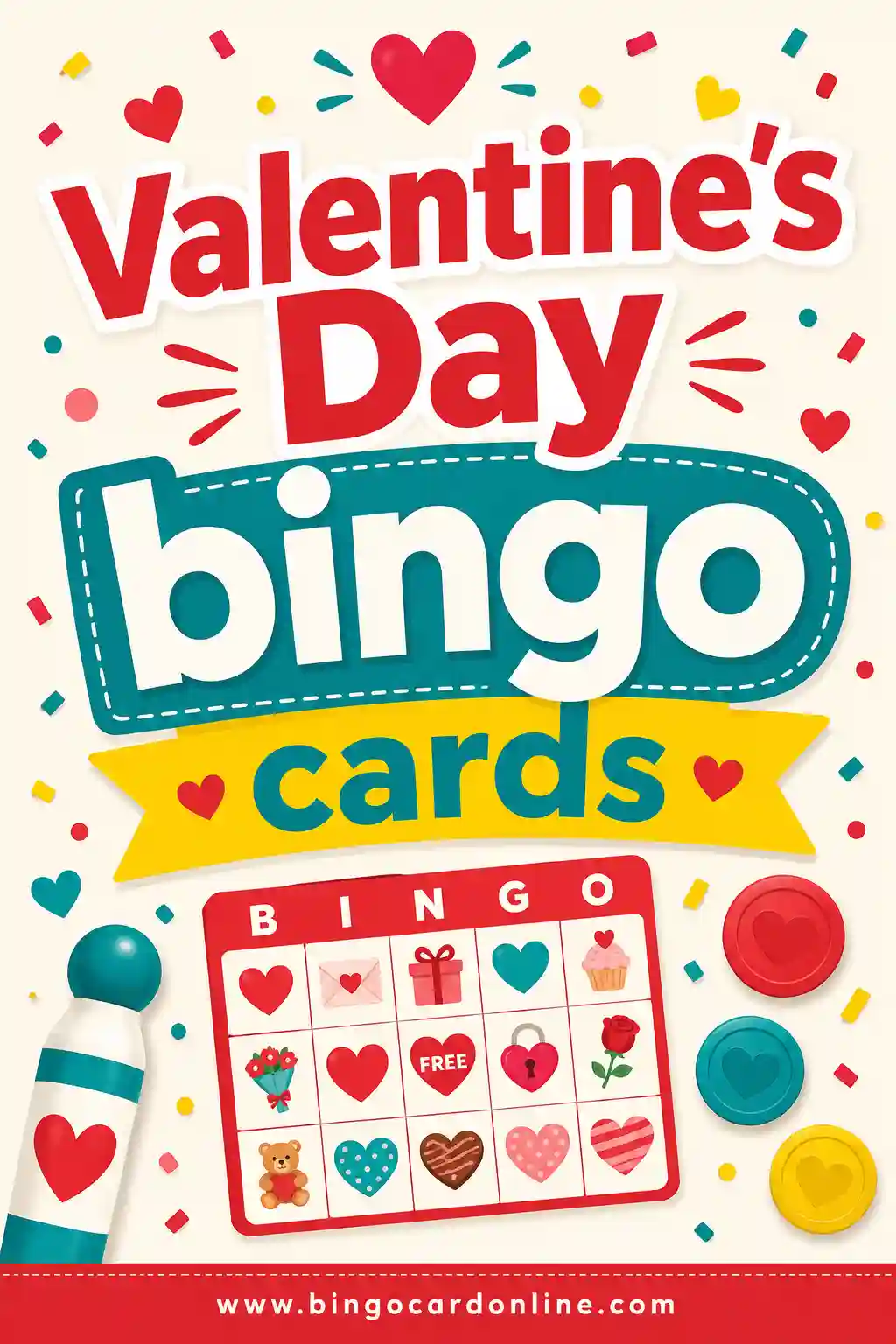
Valentine's Day bingo cards are grids filled with love-themed words and pictures, like "heart," "rose," and "chocolate," instead of numbers. Someone calls out items, players mark the squares they have, and the first to finish a line shouts "Bingo!" The fastest way to get a full set is a free bingo card generator that shuffles your word list into unique cards for the whole class or party.
Short on time? Open the free generator, paste in a Valentine's word list (there's a ready-made one below), and print as many different cards as you need. No sign-up, no cost, nothing to download.
What Are Valentine's Day Bingo Cards?
It's regular bingo with a sweet, lovey twist. Each card is a grid of squares filled with Valentine's things instead of numbers. The usual sizes are 3x3 for little kids, 4x4 for a quick round, and the classic 5x5 with a free space in the middle.
One rule matters most: every card has to be different. If two players get the same layout, they'll both win at once and the game falls flat. That's exactly what a generator fixes. It takes one word list and scrambles it into a stack of unique cards in seconds.
You can play it two ways:
- Caller bingo. One person reads love-themed words off a list, players mark what they have. The classic version.
- Spot-it bingo. No caller. Players mark squares as they actually spot the item at a class party, a candy box, a heart balloon, a card being handed out. Great for a low-key activity.
Why Make Your Own Valentine's Day Bingo
A store pack works, but homemade beats it on every count.
- It's free. A printable set costs nothing when you make it yourself.
- You pick the words. Add your classroom's traditions, your kids' favorite candies, or sweet little inside jokes.
- Every card is unique. Cheap printed packs repeat layouts. A generator gives each player their own grid.
It's quick, too. From "we need a Valentine's game" to a printed stack is usually under ten minutes.
Free Valentine's Day Bingo Word List (Copy & Paste)
Here's a ready-to-use list of 30 Valentine's squares. Pick any 24 for a 5x5 card (the center is your free space), or grab 9 for a 3x3 kids' version. Copy the column you like right into the generator.
| Hearts & Love | Treats & Gifts | Sweet Symbols |
|---|---|---|
| Heart | Chocolate | Cupid |
| Red rose | Candy hearts | Love letter |
| Love | Lollipop | Arrow |
| Hug | Cupcake | Envelope |
| Kiss | Box of chocolates | Ribbon |
| XOXO | Heart cookie | Doily |
| Sweetheart | Pink frosting | Be mine |
| Teddy bear | Strawberry | Friendship |
| Bouquet | Conversation heart | Glitter |
| Pink heart | Heart balloon | Valentine card |
Mix across columns for variety. For young kids, lean on easy-to-picture words like heart, teddy bear, and chocolate.
Theme variations to try
- Classroom party bingo. Squares are things that happen at a school party: "swap a Valentine card," "eat a candy heart," "decorate a paper bag."
- Galentine's bingo. Squares for a friends-only celebration: "a cheesy rom-com," "shared dessert," "a heartfelt toast."
- Couple's bingo. Squares for a date night in: "cook together," "old photo," "slow dance in the kitchen." A sweet, low-pressure activity.
How to Make Valentine's Day Bingo Cards in 4 Steps
No design skills required. Here's the whole thing.
- Pick your grid size. 5x5 for adults and big kids, 4x4 for a quicker round, 3x3 for the little ones.
- Add your words. Paste at least 24 items for a 5x5. More words means more variety between cards.
- Choose how many cards. One per player, plus spares. The generator makes each one unique automatically.
- Print. Hit print, grab your stack, and you're ready to play.
To reuse the cards, print on cardstock or slip them into clear sleeves so players can mark with dry-erase markers.
Who Valentine's Day Bingo Cards Are Great For
This game flexes to fit almost any group.
Classrooms
This is the big one. Teachers reach for Valentine's bingo during the February class party. It keeps a sugar-buzzed room focused while reinforcing seasonal vocabulary for early readers. Print a class set, hand out candy hearts or paper squares as markers, and you've got an activity that runs itself. Pair it with the card exchange and you've filled a whole party hour.
Kids' Valentine's parties
It's a calm, no-fuss game for a home or community party. Use simple picture-friendly words and offer a small prize like first pick from the candy bowl. Younger kids do great with a 3x3 picture grid.
Galentine's and friend gatherings
Swap kid squares for friend-group fun: "a rom-com quote," "shared chocolate," "a group selfie." It's an easy icebreaker that gets everyone laughing and chatting.
Couples and date nights
A homemade couple's bingo turns an ordinary night in into a little game. Fill squares with things you'll do together and race to a line, no prizes needed beyond bragging rights.
Printing Tips for Crisp, Reusable Cards
Small choices, real difference.
- Use cardstock when you can. Regular paper works, but cardstock holds up across multiple parties and feels nicer.
- Print in black and white to save ink. The cards read clearly without color, and kids can color the hearts in as a bonus.
- Laminate or use sleeves for reuse. Players mark with dry-erase markers, then you wipe them clean for next year.
- Print one test card first. Check the margins so you don't end up with cut-off squares.
- Bigger squares for little hands. A 3x3 or 4x4 grid leaves more room per square, which helps young kids and anyone with low vision.
What to use as markers
No special supplies needed:
- Candy hearts, M&Ms, or wrapped chocolates (edible markers are a hit)
- Dried beans, buttons, or pennies
- A crayon or marker to cross squares off
- Heart-shaped stickers or pink pom-poms for a themed touch
Fun Ways to Change Up the Game
When the basic version gets old, try these twists.
- Blackout round. Players race to fill the whole card. Longer game, bigger payoff.
- Four corners. First to mark all four corners wins. Quick and great for restless kids.
- Heart frame. Mark every square around the edge of the card. A nice step between one line and a blackout.
- Team bingo. Split into teams and share cards, handy for a big class or party.
Tie prizes to the day too: a special Valentine card, first pick of the treats, or a homemade coupon.
How to Run a Valentine's Day Bingo Game
Never been the caller? It's simple. Here's a clean game from start to finish.
- Hand out cards and markers. One card per player, with a pile of markers in reach.
- Explain the win condition. Decide before you start: a single line (across, down, or diagonal), four corners, or a full blackout. Announce it so nobody's confused later.
- Call items one at a time. Pull a word from your list (a heart-shaped box of paper slips is a sweet touch) and read it clearly. Pause so players can scan their cards.
- Track what you've called. Cross off each word on your master list, or set the slips aside. You'll need this to verify the winner.
- Check the winning card. When someone yells "Bingo!", read their marked squares against your called list. If it's good, they win. If not, play continues.
In a classroom, a steady pace of one call every 12 to 15 seconds keeps a sugar-buzzed room with you. Keep prizes small, like a candy or a sticker, and run several quick rounds rather than one long one.
Common mistakes to avoid
- Too few words. With only 24 words for a 5x5, the cards barely differ. Aim for 30 or more so the generator can make distinct cards.
- Forgetting to track calls. Without a record, you can't confirm a win. Cross off as you go.
- Hard-to-picture words. "Affection" is tough to recognize at a glance. Stick to concrete things like "heart" and "chocolate."
- One grid size for everyone. A 5x5 overwhelms toddlers. Run a separate 3x3 for the youngest so they can join in.
Valentine's Day Bingo for Different Ages
The same game stretches from toddlers to adults with a few tweaks.
| Age group | Grid size | Tips |
|---|---|---|
| Toddlers (2–4) | 3x3 | Use pictures, not words. Keep it short and sweet. |
| Kids (5–9) | 4x4 | Mix simple words and pictures. Offer candy prizes. |
| Tweens & teens | 5x5 | Add pop-culture or rom-com squares for interest. |
| Adults | 5x5 | Try blackout rounds or Galentine's-themed squares. |
| Seniors | 4x4 | Larger print, fewer squares, classic love-themed words. |
Loving the seasonal theme? Build the same kind of game for other holidays with our Christmas bingo cards, Halloween bingo cards, and Easter bingo cards.
Frequently Asked Questions
How many Valentine's Day bingo cards do I need?
One per player, plus a few spares for latecomers or damaged cards. For a class of 25, print around 30. The generator makes as many unique cards as you want in a single batch.
What words should go on a Valentine's Day bingo card?
Pick recognizable love-themed items: heart, rose, chocolate, cupid, teddy bear, and so on. The word list above gives you 30 ready to copy. Use at least 24 different words so a 5x5 card fills completely.
Are these Valentine's Day bingo cards free to print?
Yes. You make and print them yourself at no cost, with no sign-up and no watermark. One free word list can cover your whole class or party.
Can I make Valentine's bingo for young kids?
Absolutely. Use a smaller 3x3 grid and picture-based squares like a heart, a teddy bear, or a chocolate so non-readers can play. Bigger squares and simple images work best.
How do I make every bingo card different?
Use a generator that shuffles your word list. It rearranges the same words into a fresh layout for each card, so no two players match. Doing this by hand is slow and error-prone, which is what the tool is for.
Can I reuse the cards next year?
Yes. Print on cardstock and laminate them (or use clear sleeves), let players mark with dry-erase markers, then wipe them clean and store for next Valentine's Day.
Ready to Print Your Valentine's Day Bingo Cards?
Grab the word list above, open the free bingo card generator, and you'll have a stack of unique, printable Valentine's Day bingo cards in minutes. It's free, there's no sign-up, and every card comes out different, so your class or party is set to play. Happy Valentine's Day, and may the first "Bingo!" be yours.