Bingo Grid: Sizes, Layouts and How to Build One
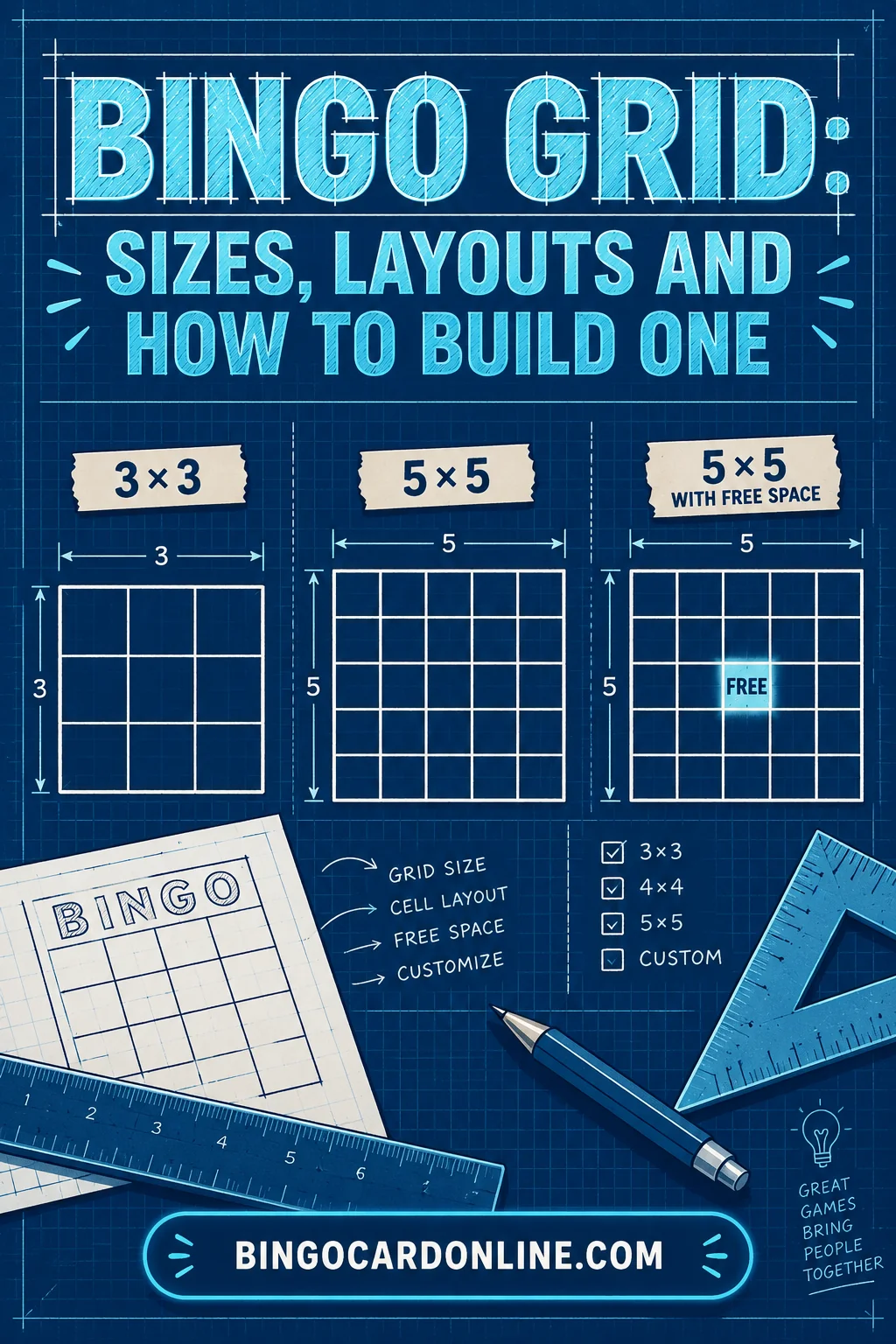
A bingo grid is the square array of cells printed on a card, and the standard one is 5x5 with a free center square, giving twenty-four marks to fill. The other grids in regular use are 3x3 with nine cells for fast rounds, 4x4 with sixteen for mid-length games, and the 9x3 ticket used in ninety-ball play, which is a rectangle rather than a square and only fills fifteen of its twenty-seven spaces.
Grid size looks like a cosmetic choice and is not. It sets how many calls a game takes, how many unique cards you can generate before duplicates appear, how big the print has to be for the back row to read it, and whether a class of twenty-two can finish before the bell. Pick the grid first, then everything downstream gets easier.
What Is Bingo, Structurally
Strip out the theme and the calling and what is bingo? It is a matching game between a random draw and a fixed grid. Each player holds a grid filled with items from a shared pool. A caller pulls items one at a time. Players mark any cell holding the called item. When a player's marked cells form the agreed pattern, that player wins.
Everything interesting about the format lives in two numbers: the size of the grid and the size of the item pool. The ratio between them controls the whole experience. A large pool against a small grid makes for a long, tense game with few near misses. A small pool against a large grid means almost everyone is close to winning at once, which is chaotic and fun for about four minutes.
The Standard Grid Sizes
| Grid | Cells | Marks needed | Item pool | Best for |
|---|---|---|---|---|
| 3x3 | 9 | 9 (or a line of 3) | 12 to 20 | Preschool, warm-ups, quick rounds |
| 4x4 | 16 | 16 (or a line of 4) | 20 to 32 | Classrooms, parties, vocabulary |
| 5x5 free center | 25 | 24 | 30 to 75 | The default for almost everything |
| 5x5 no free space | 25 | 25 | 30 to 75 | Long blackout games |
| 9x3 ticket | 27 spaces | 15 filled | 1 to 90 | Ninety-ball club play |
| 6x6 or larger | 36+ | 36+ | 45+ | Rarely worth it |
The 5x5 Grid and Its Free Space
The 5x5 bingo grid is the one people picture. In seventy-five-ball play, the five columns are lettered B, I, N, G, O and each column draws from its own fifth of the number range: B holds 1 to 15, I holds 16 to 30, N holds 31 to 45, G holds 46 to 60, and O holds 61 to 75. That column rule is what makes verification fast. A caller who hears "B-12" only has to check one column.
The center cell is free, already marked before play starts. It exists to shorten the game and to make the center-cross patterns achievable. For word and picture games you can keep it, drop it, or use it for something better: the theme title, a bonus square, or a "wild" cell the player writes themselves.
The 3x3 and 4x4 Grids
Small grids are underrated. A 3x3 grid finishes in a couple of minutes, which is exactly right for a transition between lessons, a warm-up before a meeting, or a game with young children who cannot track twenty-four cells at once. A 4x4 grid is the sweet spot for word games and vocabulary practice, because sixteen terms is about as many as a group can hold in working memory during one round.
Both sizes have a practical printing advantage. Fewer cells means larger cells, which means larger type, which means a child or an older player can actually read the card from arm's length. A 5x5 grid squeezed onto a quarter sheet is unreadable, and unreadable cards produce disputed wins.
The 9x3 Ticket
The ninety-ball ticket is not a square grid at all. It has nine columns and three rows, and only fifteen of those twenty-seven spaces carry numbers. Each row holds exactly five numbers and four blanks, and each column holds numbers from its own decade: the first column takes 1 to 9, the second 10 to 19, and so on to the last column with 80 to 90. Tickets are usually sold in strips of six so that every number from 1 to 90 appears once across the strip. Prizes go to one line, two lines, and the full house.
How Many Unique Grids Can You Make
This is the question that decides whether your event works. Two players holding identical cards means two simultaneous winners and an argument, so you need genuinely unique grids for everyone in the room.
The rough rule: the pool must be comfortably larger than the number of cells. If your pool is exactly the size of the grid, every card holds the same items and differs only in arrangement, so the number of distinct cards is limited and, worse, everyone completes a blackout on the same call.
Practical minimums that hold up:
- 3x3 grid: at least 14 items in the pool, 18 is better
- 4x4 grid: at least 24 items, 30 is better
- 5x5 grid: at least 32 items, 40 or more is better
With a pool half again as large as the grid, the arrangements available run into the millions, and a shuffle will not repeat within a few hundred cards. If you are printing for a hall rather than a classroom, use a generator rather than trusting a manual shuffle, because human shuffling of a card layout is far less random than it feels.
Building a Grid That Plays Well
Write the pool before you draw the grid. People build the empty grid first, then try to fill twenty-four cells and run dry at eighteen. Write the list, count it, then choose the grid that fits it.
Keep the items the same length. A grid with one cell reading "cat" and another reading "photosynthesis in low light conditions" prints badly, and the long cell becomes a visual anchor that changes how players scan. Trim to two or three words per cell where you can.
Distribute difficulty evenly. If you are making a review game, mix easy and hard terms across the whole pool rather than clustering. Random shuffling handles this for you as long as the pool itself is balanced.
Decide the winning pattern before printing. Line, four corners, X, blackout, or postage stamp. Print it on the card. This is the single most common source of mid-game confusion.
Leave a name line. A grid with nowhere to write a name becomes anonymous the moment it hits the floor.
Once the pool is written, a bingo card generator will shuffle it into the grid size you pick and produce a batch of different cards to print. That is the part worth automating: the layout is trivial, but producing thirty non-identical arrangements by hand is slow and error-prone.
Grid Size and Game Length
A useful planning number: in seventy-five-ball play, a single line typically arrives somewhere between the fifteenth and twenty-fifth call, and a blackout usually needs somewhere in the high fifties to low seventies. For word games with a smaller pool, divide roughly: with a pool of thirty items and a 4x4 grid, a line lands in about eight to twelve calls.
If your event has a hard time limit, work backward. Ten minutes of play at roughly four calls a minute is forty calls, which comfortably covers a line on a 5x5 grid but not a blackout. Choose the pattern to fit the clock, not the other way around.
Themed Grids Beyond Numbers
The grid does not care what is in it. Anything with a pool of items and a caller works:
- Vocabulary and sight words. The caller reads a definition and players find the word.
- Math facts. The caller reads the problem and players mark the answer. A 4x4 grid of products works well for times-table practice.
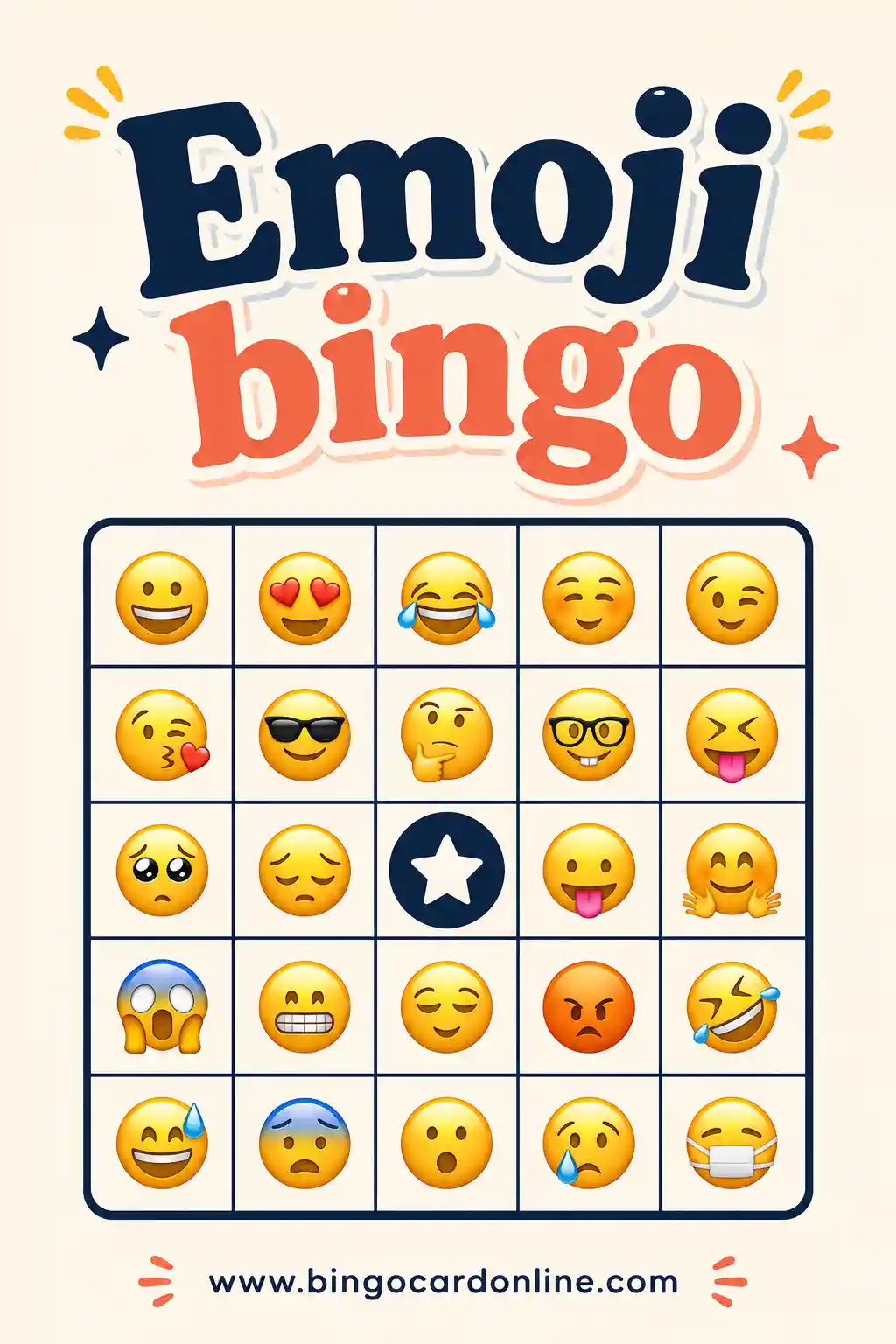
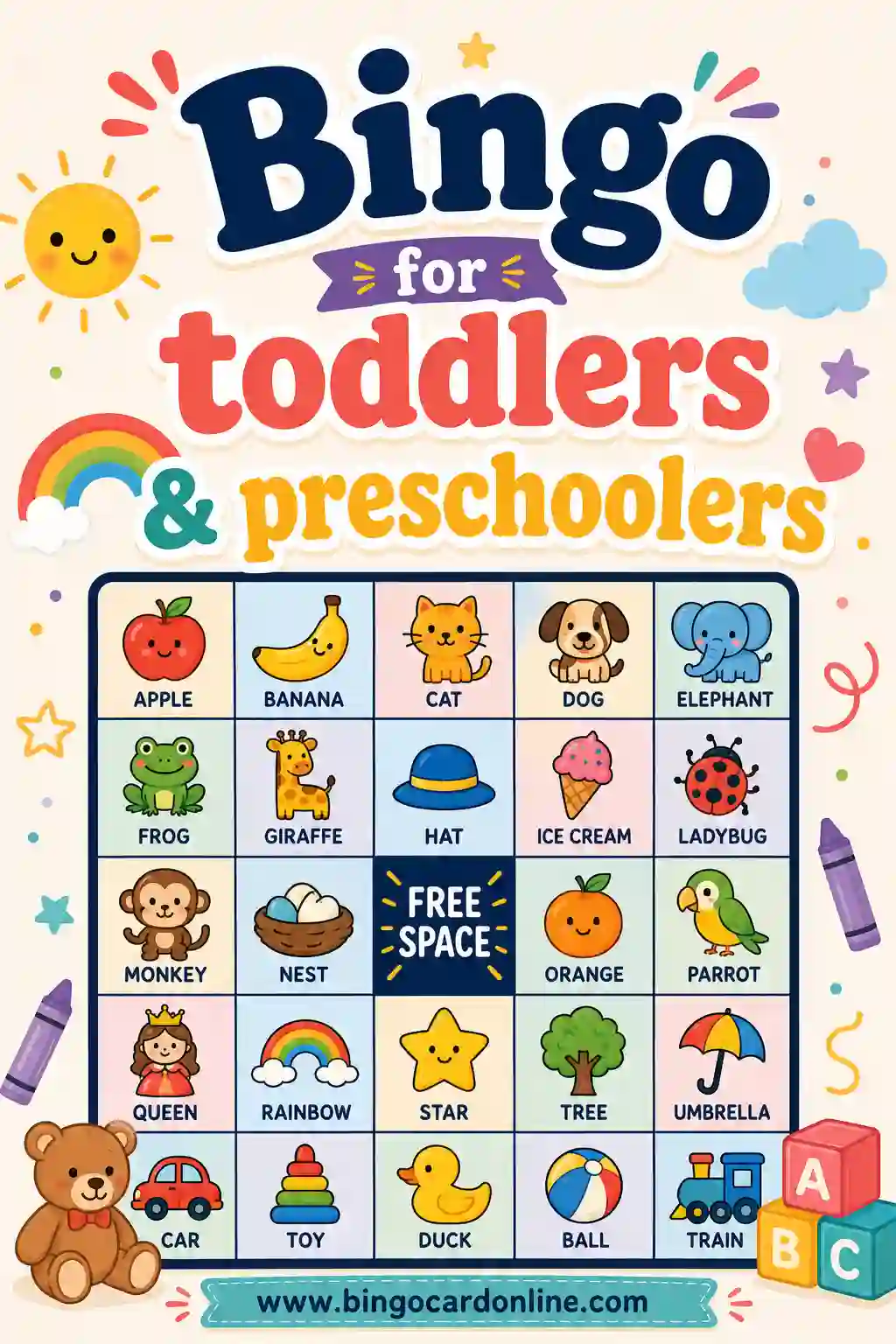
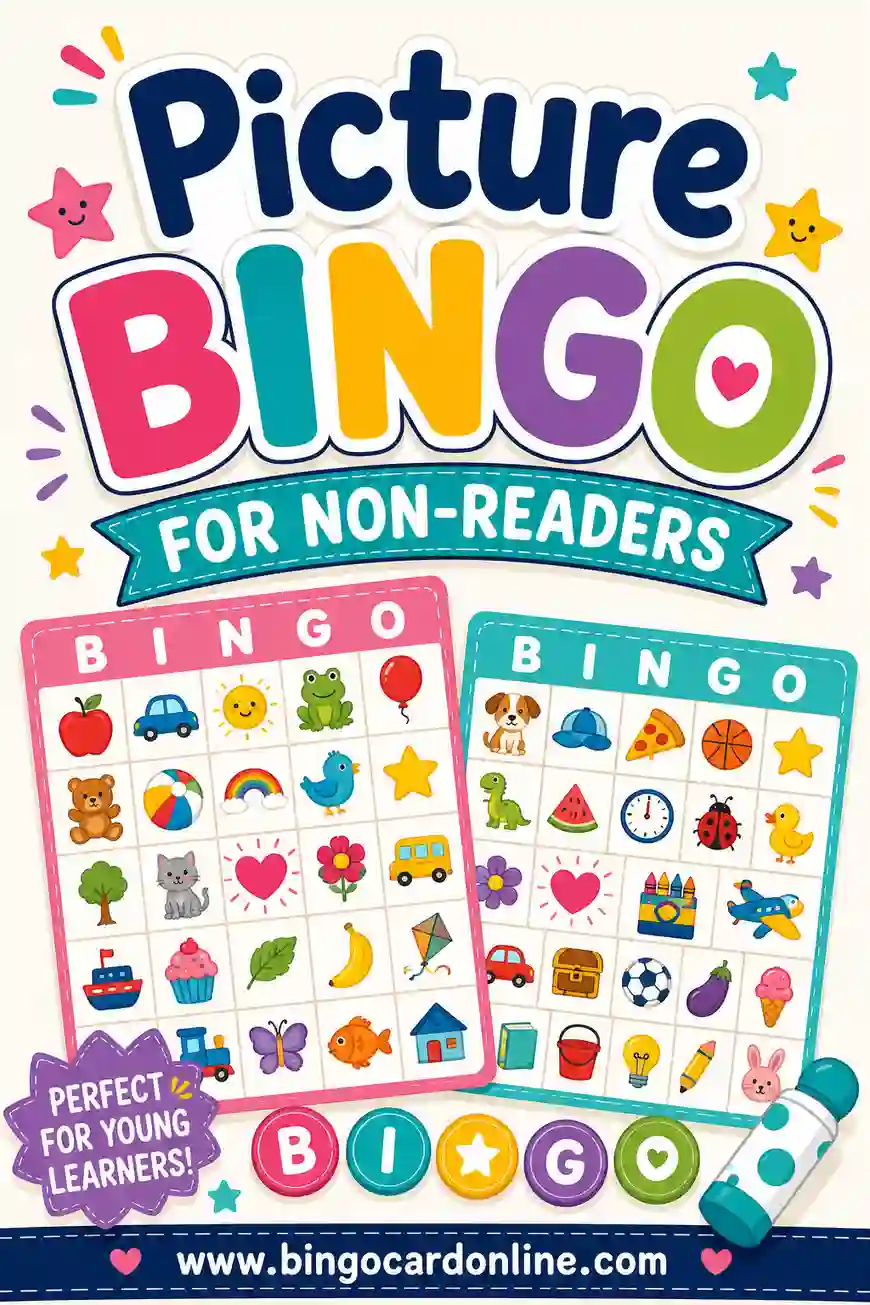
- Picture grids for pre-readers. Nine images, called aloud by name.
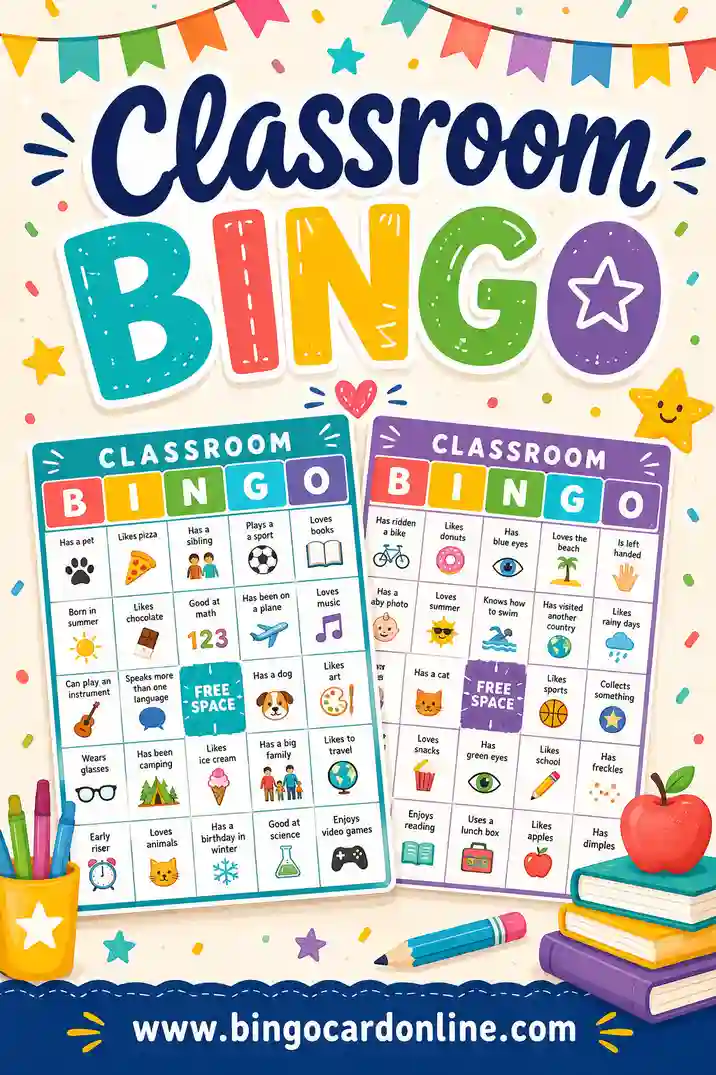
- Event bingo. Squares describing things that will happen at a wedding, a conference, a road trip, or a televised game. Players mark what they observe, and there is no caller at all.
- Music bingo. Song titles in the cells, clips played instead of calls.
- Language learning. Cells in the target language, calls in the native language, or the reverse.
Observation-style grids need a rule the number version does not: what counts as seen, and who adjudicates. Decide before you print, and put it on the card.
Printing the Grid Properly
Cell size is the whole ballgame. On letter paper, a 5x5 grid printed one card to a page gives cells of roughly an inch and a half, which is comfortable for daubers and readable across a table. Four cards to a page cuts that to well under an inch, which is fine for a quiet classroom and terrible for a crowded room.
A few settings worth checking before you send fifty pages to the printer:
- Turn off "fit to page" scaling or your grid lines shift and cards no longer line up when stacked.
- Print one test page and mark it with whatever your players will use. Thin lines vanish under a dauber.
- Use plain paper for daubers, card stock for chips. Chips slide off flimsy paper the moment a table gets bumped.
- Print in black and white if players will mark with color. A colored grid plus a colored marker is hard to read.
Free Bingo, Free Online Bingo, and What You Actually Get
Search phrasing for this is all over the place. Free bingo, free online bingo, bingo online free, bingo free online: people type all four and mean roughly the same thing. What they usually want is a grid they can fill with their own items and print without an account.
It is worth separating two meanings of bingo online. Commercial online bingo means wagering games run by licensed gambling operators, which is a regulated industry and an entirely separate thing. The other meaning, the one a teacher or a party host has in mind, is a browser-based card maker. Same words, unrelated products. If you are building a grid for a classroom or a family party, the second one is what you want.
Common Grid Mistakes
A pool the same size as the grid. Every card holds identical items and the game collapses into a tie.
Forgetting the free space in the count. A 5x5 grid with a free center needs twenty-four items marked, not twenty-five. People print twenty-five-item pools and wonder why one item never gets used.
Ignoring the column rule in number games. If you scatter 1 to 75 randomly across a 5x5 grid instead of using column ranges, verification slows to a crawl because the caller has to scan the whole card.
Grids too dense to read. More cells is not more fun. Six by six looks impressive and plays badly.
No pattern printed on the card. Half the room plays for a line, half plays for a blackout, and the first shout starts a debate.
Frequently Asked Questions
What size is a standard bingo grid? Five by five, twenty-five cells, with the center square free. That is the standard for seventy-five-ball play in the United States and the default for most word and picture games as well.
Why does the bingo grid have a free space? It shortens the game and makes center-based patterns like the X and the plus sign possible. Without it, every pattern that runs through the middle needs an extra call, and a blackout takes noticeably longer.
Can I use a 4x4 bingo grid with regular numbers? Yes. Use a pool of 1 to 80 split into four columns of twenty, or simply use 1 to 40 for a faster game. Sixteen cells with a forty-number pool gives a line in roughly eight to twelve calls.
How many different cards can I make from one grid? It depends entirely on the pool. With a pool half again the size of the grid, the number of distinct arrangements is enormous, far beyond what any single event needs. With a pool exactly the size of the grid, you get only rearrangements of the same items, which is why cards start looking alike.