Classroom Bingo: Free Printable & Customizable
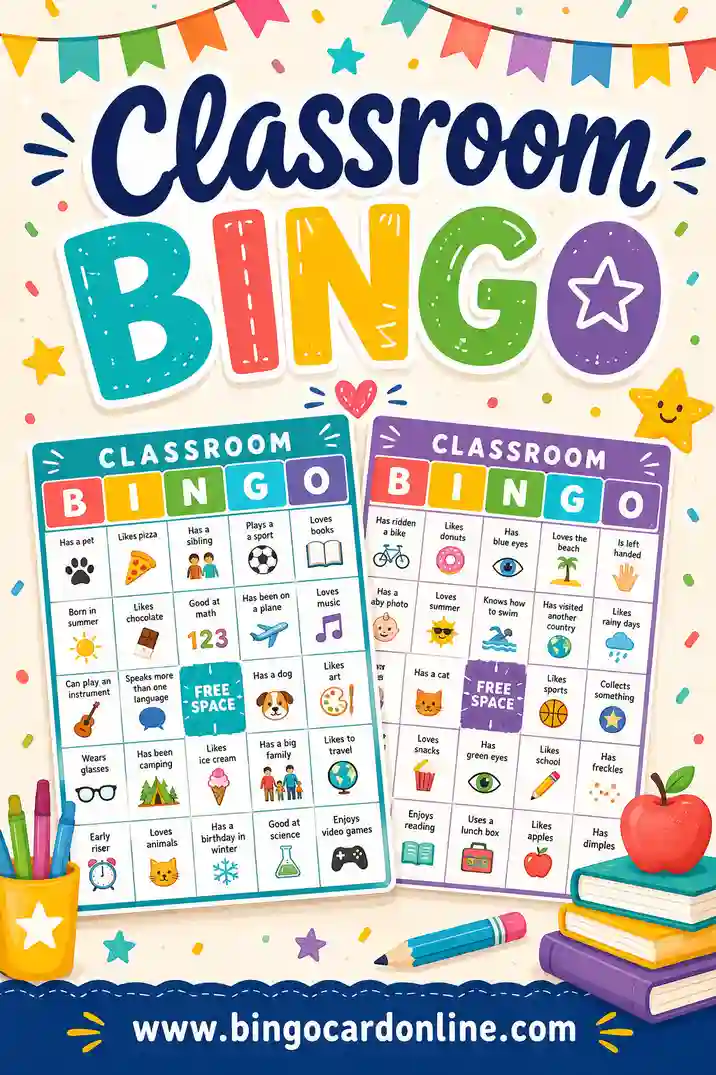
Classroom bingo is a grid filled with words, pictures, or facts instead of numbers, like vocabulary terms, math answers, or "find a classmate who..." prompts. You call out clues, students mark the matching squares, and the first to complete a line shouts "Bingo!" The fastest way to get a full class set is to use a free bingo card generator that shuffles your word list into unique cards every student can print or play from.
Want to build a set right now? Open the free generator, paste in your word list (there are ready-made ones below), and print one card per student. No sign-up, no fee, nothing to install.
What Is Classroom Bingo?
Think of regular bingo, then swap the numbers for whatever you're teaching. Each card is a grid of squares filled with vocabulary words, math facts, science terms, or get-to-know-you prompts. You read a clue, students find and mark the matching square, and learning happens without anyone realizing they're studying.
Common formats are 3x3 for the youngest learners, 4x4 for a quicker game, and the classic 5x5 with a free space in the middle for older students.
Here's the part that trips teachers up: every card in your class set needs to be different. If two students have the same layout, they'll both win at once and the lesson loses steam. That's exactly why a generator beats hand-making cards. It takes one word list and scrambles it into a whole class set of unique cards in a couple of clicks.
You can play it two ways:
- Caller bingo. You call clues (a definition, a math problem, a word) and students mark the answer. This is the classic teaching version.
- Spot-it bingo. Students mark squares as they find matches around the room, in a book, or in each other (great for icebreakers).
Why Make Your Own Instead of Buying a Pack
Store-bought classroom bingo is fine, but homemade beats it for three reasons.
- It's free. A printable class set costs nothing when you make it yourself.
- You control the content. Match the squares to this week's spelling list, your math unit, or the book you're reading.
- You get unique cards. Pre-printed packs repeat layouts. A generator gives every student a one-of-a-kind grid.
It's also a real time-saver during a busy week. Most teachers go from "I need a quick activity" to a printed class set in under ten minutes.
Free Classroom Bingo Word Lists (Copy & Paste)
Here are ready-to-use lists of 30 squares across three common subjects. Pick any 24 for a 5x5 card (the 25th is the free space), or grab 9 for a 3x3. Copy the column you need straight into the generator.
| Language Arts | Math | Science |
|---|---|---|
| Noun | Sum | Plant |
| Verb | Difference | Animal |
| Adjective | Product | Rock |
| Syllable | Fraction | Water cycle |
| Rhyme | Even number | Gravity |
| Synonym | Odd number | Energy |
| Antonym | Equals | Solid |
| Prefix | Greater than | Liquid |
| Suffix | Less than | Gas |
| Vowel | Multiply | Habitat |
Swap in your own terms to match the lesson. The best classroom bingo cards use words students are learning right now, so the game doubles as review.
Subject ideas to try
- Spelling bingo. Fill squares with this week's spelling words. Call the definition or use the word in a sentence; students mark the right spelling.
- Math fact bingo. Put answers in the squares. Call out problems like "7 × 6" and students mark "42." A painless way to drill facts.
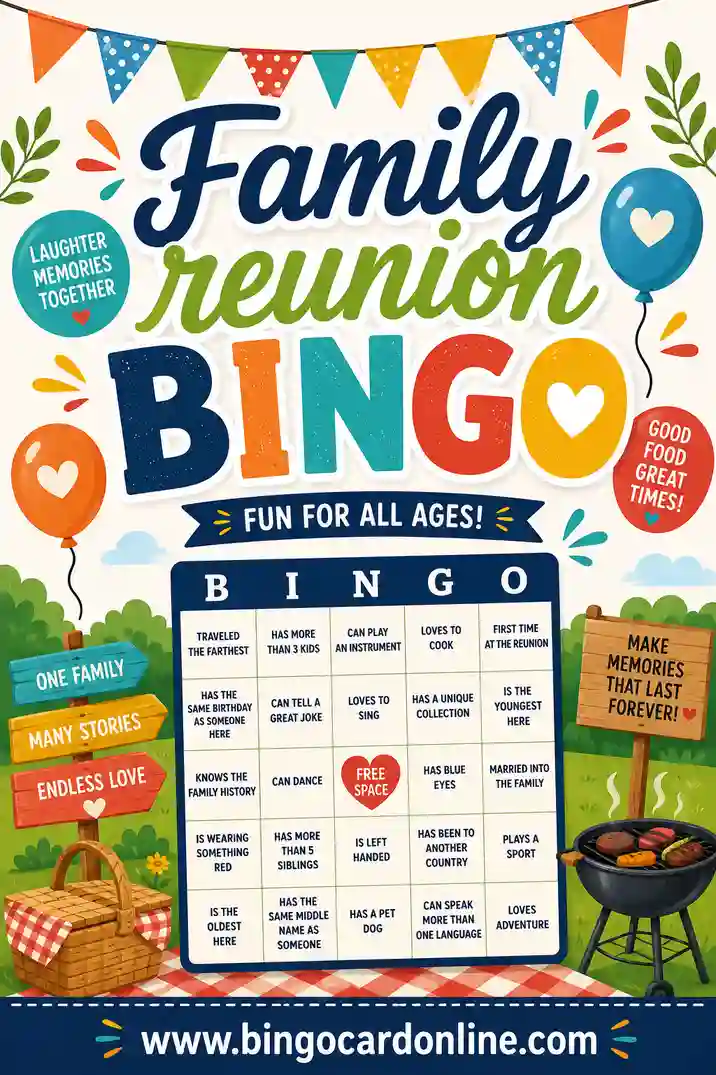
- Get-to-know-you bingo. For the first week, use "find a classmate who..." prompts, has a summer birthday, has a pet, can roll their tongue. Instant icebreaker.
How to Make Classroom Bingo Cards in 4 Steps
You don't need design skills or special software. Here's the whole process.
- Pick your grid size. 5x5 for upper grades, 4x4 for elementary, 3x3 for kindergarten and pre-K.
- Add your words. Paste at least 24 terms for a 5x5. More is better, since it boosts variety between cards.
- Choose how many cards. One per student, plus a few spares. The generator makes each one unique automatically.
- Print. Hit print, grab your class set, and you're ready before the bell.
That's it. To reuse the cards year after year, print on cardstock or slip them into clear sleeves so students mark with dry-erase markers.
Who Classroom Bingo Is Great For
This game flexes across grades and subjects. A few of the best uses:
Review days and test prep
Bingo turns a dull review session into a game. Students stay locked in because they want to win, and you get to call out every key term before a quiz.
Substitute teacher days
Leave a printed class set and a word list, and any sub can run a structured, on-topic activity. It's low-prep for them and keeps learning on track while you're out.
Early finishers and brain breaks
A quick 3x3 round is perfect for students who finish early or for a five-minute reset between tougher lessons. It re-energizes the room without going off-topic.
First-week icebreakers
Get-to-know-you bingo helps a new class learn each other's names fast. Students mingle, ask questions, and warm up to the room, all while you take attendance.
Printing Tips for Crisp, Reusable Cards
A few small choices make a big difference for a whole class set.
- Use cardstock if you can. Regular paper works for one-time games, but cardstock survives a full class period of little hands.
- Print in black and white to save ink. A class set adds up fast, and the cards read clearly without color.
- Laminate or use sleeves for reuse. Students mark with dry-erase markers and you wipe the cards clean for the next class.
- Print one test card first. Check your margins so you're not stuck with cut-off squares on thirty cards.
- Bigger squares for little hands. A 3x3 or 4x4 grid leaves more room per square, which helps young students and anyone still building fine-motor skills.
What to use as markers
No fancy supplies needed:
- Dried beans, buttons, or counting bears
- Small paper squares students cut themselves
- A pencil or crayon to cross squares off
- Bingo daubers or dot markers, if you have them
Fun Ways to Change Up the Game
Once the basic version gets routine, try these twists to keep students engaged.
- Blackout round. Students race to fill the whole card. Great for a longer review of every term in the unit.
- Four corners. First to mark all four corners wins. Quick and good for short attention spans.
- Team bingo. Split the class into teams sharing cards. Encourages students to help each other find answers.
- Student caller. Let a student be the caller. It builds confidence and gives them practice reading terms aloud.
Tie small rewards to wins: a sticker, line-leader for the day, or first pick at center time.
How to Run a Classroom Bingo Game
If you've never run bingo with a class, don't worry, it's easy. Here's how a clean game goes from start to finish.
- Hand out cards and markers. One card per student, a pile of markers within reach.
- Explain the win condition. Decide before you start: a single line, four corners, or a full blackout. Say it out loud so nobody's confused.
- Call clues one at a time. Read a definition, problem, or word clearly. Pause so students can scan their cards and think.
- Track what you've called. Keep a master list and cross off each clue. You'll need it to verify the winner.
- Check the winning card. When a student yells "Bingo!", read their marked squares back against your called list. If it checks out, they win.
A good pace is one clue every 15 to 20 seconds, slower for younger students who need think time. Keep rounds short so you can fit several into one period.
Common mistakes to avoid
- Too few words. With only 24 terms for a 5x5, every card is nearly identical. Aim for 30 or more so cards come out distinct.
- Forgetting to track calls. If you don't keep a record, you can't verify a win. Always cross off as you go.
- Clues that are too hard. Match the difficulty to the grade so students can answer at a glance.
- One grid size for everyone. A 5x5 overwhelms kindergartners. Use a 3x3 for the youngest so they can keep up.
Classroom Bingo for Different Ages
The same game stretches across grade levels with a few adjustments.
| Grade level | Grid size | Tips |
|---|---|---|
| Pre-K & K | 3x3 | Use pictures, not words. Keep rounds very short. |
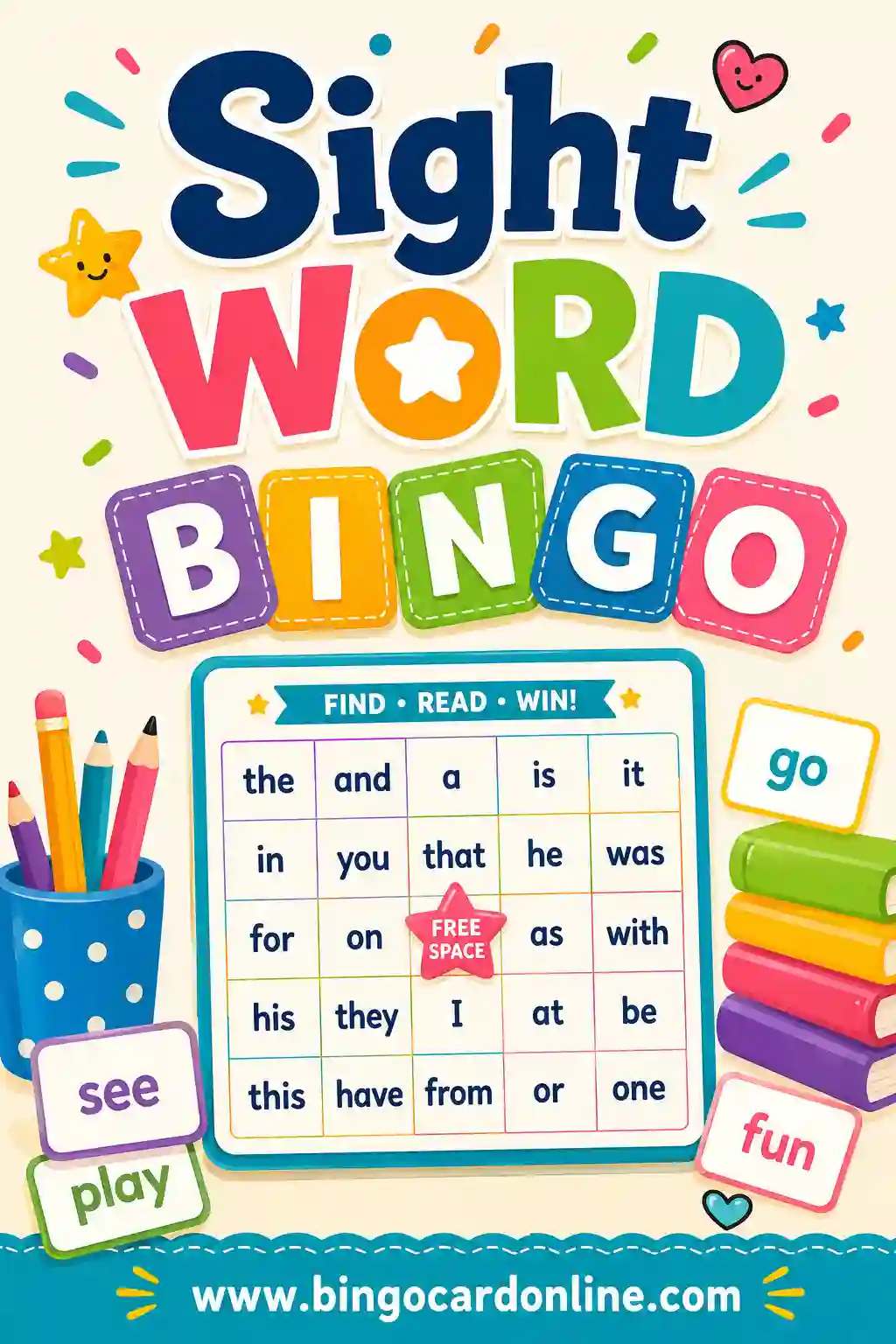
| Grades 1–2 | 4x4 | Mix simple words and pictures. Sight words work well. |
| Grades 3–5 | 4x4 or 5x5 | Vocabulary and math facts. Add small prizes. |
| Middle school | 5x5 | Subject terms, review games, student callers. |
| ESL & mixed | 4x4 | Pair words with pictures so every learner can play. |
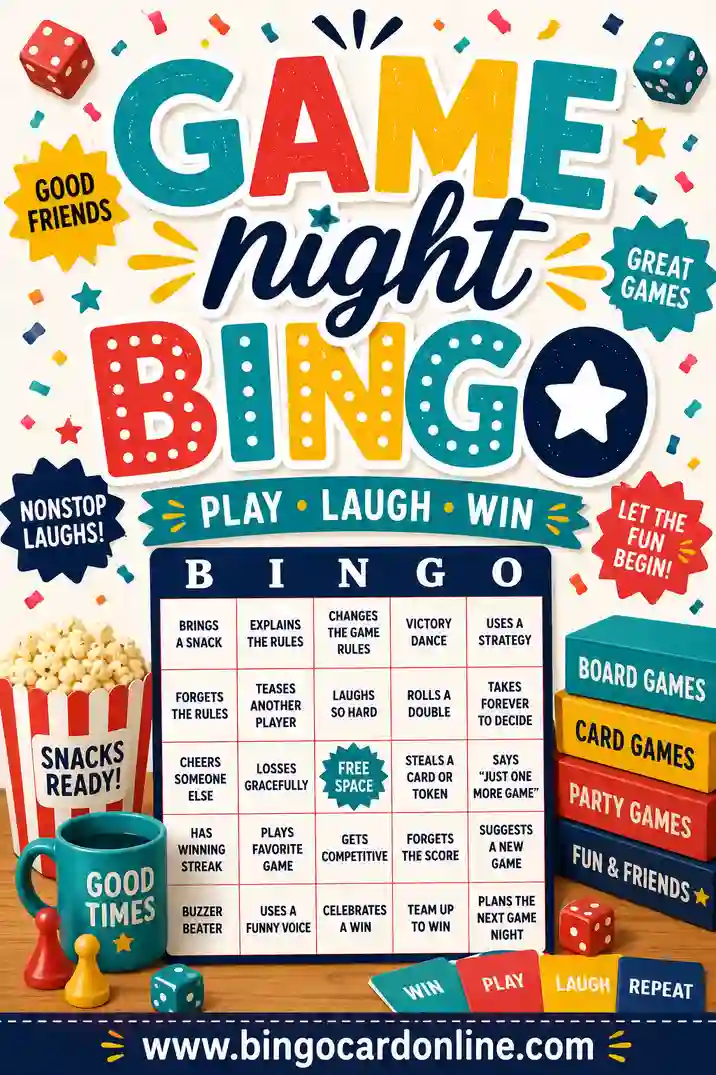
Teaching early readers? Build a focused deck with our sight word bingo. Want games for outside the classroom? Try family reunion bingo or a relaxed round of game night bingo.
Frequently Asked Questions
How many classroom bingo cards do I need?
One card per student, plus a few spares in case a card tears or a new student arrives. For a class of 25, print around 30. The generator makes as many unique cards as you want in one go.
What words should go on a classroom bingo card?
Use the terms you're teaching right now: vocabulary words, math answers, science terms, or spelling words. The lists above give you 30 each for language arts, math, and science. Aim for at least 24 so a 5x5 card fills completely.
Are these classroom bingo cards really free to print?
Yes. You make and print them yourself at no cost. There's no sign-up and no watermark, so you can run a whole class set on a single free word list.
Can I make classroom bingo for young students who can't read?
Absolutely. Use a smaller 3x3 grid with pictures instead of words, or pair each word with a simple image. Picture bingo works great for pre-K, kindergarten, and ESL learners.
How do I make every bingo card different?
Use a generator that shuffles your word list. It rearranges the same terms into a new layout for each card, so no two students have identical grids. Doing it by hand for a whole class is slow and error-prone.
Can I reuse the cards next year?
Yes. Print on cardstock and laminate them (or use clear sleeves), then students mark with dry-erase markers. Wipe them clean and they're ready for next year's class.
Ready to Print Your Classroom Bingo?
Grab a word list above, open the free bingo card generator, and you'll have a class set of unique, printable classroom bingo cards in minutes. It's free, there's no sign-up, and every card comes out different, so your whole class is set to learn and play. Have fun, and may the first "Bingo!" spark a great lesson.