Back to School Bingo: Free Printable Cards & Word List
Back to school bingo is a 5x5 grid filled with first-week things like "new backpack," "sharpened pencil," and "meet a new friend" instead of numbers. You call out items, students mark the squares they have, and the first to complete a line shouts "Bingo!" The fastest way to get a full set is a free bingo card generator that shuffles your word list into unique cards for the whole class.
Want to jump right in? Open the free generator, paste in a back-to-school word list (there's a ready-made one below), and print one card per student. No sign-up, no fee, no software to install.
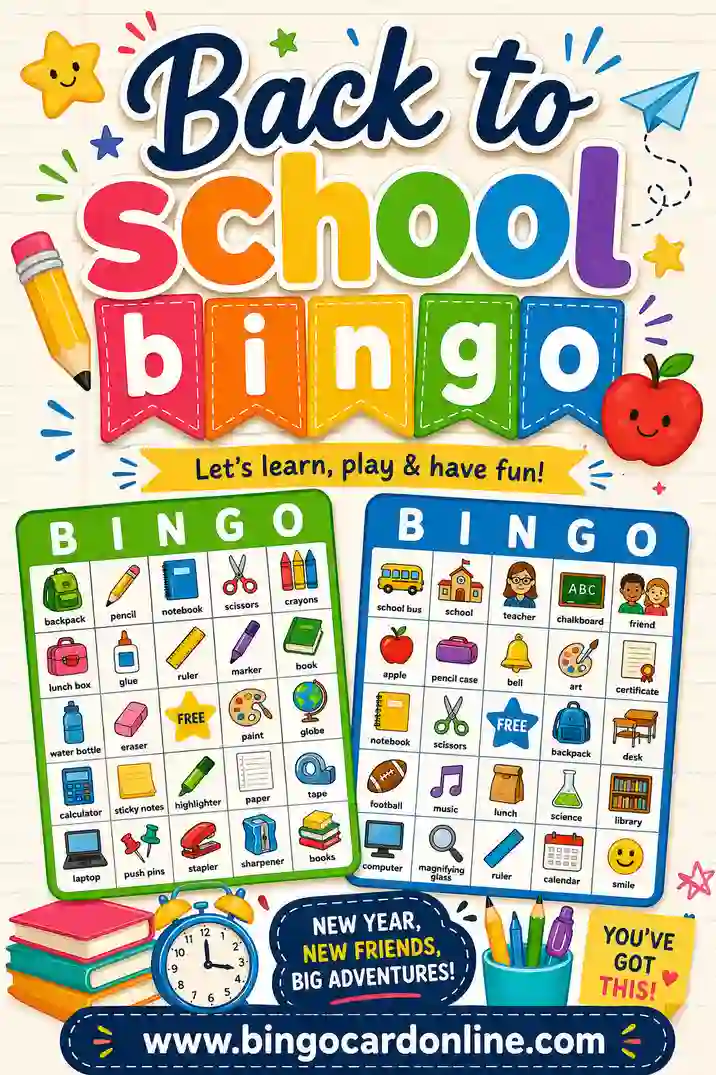
Take regular bingo and swap the numbers for everything that comes with a fresh school year. Each card is a grid of first-week words, supplies, or little goals. Some teachers play it as a classic caller game; others use it as an icebreaker where students hunt down classmates who match each square.
That second version, the "find someone who" style, is what makes back to school bingo special. Instead of marking words you hear, students walk around and find a classmate who "has a pet," "rode the bus," or "has the same favorite color." It's a game and an introduction rolled into one.
Here's the thing people miss: every card in your stack should be different. If two students share a layout, the game gets predictable fast. That's why a generator beats hand-drawing cards. It takes one word list and scrambles it into dozens of unique grids in seconds.
Two Ways to Play Back to School Bingo
You can run this game two completely different ways depending on your goal.
- Classic caller bingo. You read items from a list (supplies, school words, summer memories) and students mark matches on their card. Quiet, quick, and great for settling a room.
- Icebreaker "find someone who" bingo. Each square is a fact about a person, like "has a summer birthday." Students mingle and get a classmate who fits each square to sign it. First to fill a line wins. This one breaks the ice on day one.
Both use the same printable cards. The only difference is what you put in the squares and whether students sit or mingle.
Free Back to School Bingo Word List (Copy & Paste)
Here's a ready-to-use list of 30 back-to-school squares. Pick any 24 for a 5x5 card (the center is your free space), or grab 9 for a 3x3. Copy a column straight into the generator.
| School Supplies | First-Week Moments | Classroom Things |
|---|---|---|
| New backpack | Meet a new friend | Alphabet wall |
| Sharpened pencil | Find your desk | Class pet |
| Glue stick | Learn a name | Reading corner |
| Crayons | Ride the bus | Whiteboard |
| Lunchbox | New shoes | Bookshelf |
| Notebook | First homework | Cubbies |
| Scissors | Raise your hand | Pencil sharpener |
| Eraser | Make a craft | Calendar |
| Ruler | Recess game | Word wall |
| Markers | Pack of stickers | Class rules |
Mix and match across columns for variety. For the "find someone who" version, swap these for personal facts like "has a pet," "loves pizza," or "traveled this summer."
"Find someone who" square ideas
- Has a summer birthday
- Read a book this summer
- Has the same favorite color as you
- Plays a sport
- Has a younger sibling
- Likes the same lunch food
- Visited somewhere new this summer
- Can whistle
How to Make Back to School Bingo Cards in 4 Steps
No design skills needed. Here's the whole process.
- Pick your grid size. 5x5 for older students, 4x4 for a faster round, 3x3 for the youngest.
- Add your squares. Paste at least 24 items for a 5x5 (more is better, since it boosts variety between cards).
- Choose how many cards. One per student, plus a few spares. The generator makes each one unique automatically.
- Print. Hit print, grab your stack, and you're ready to play.
That's it. Print on cardstock so the cards survive being passed around the room on a busy first day.
When to Use Back to School Bingo
This game fits a bunch of first-week moments. A few favorites:
The first day icebreaker
Nothing breaks tension like a reason to talk. The "find someone who" version gets students out of their seats and meeting each other within minutes. By the time the cards fill up, the room feels a lot less like strangers in a row.
Open house or meet-the-teacher night
Hand families a card with squares like "find the reading corner" or "spot the class pet." It turns a walk around the room into a friendly scavenger hunt and gives nervous kids something to do.
Supply check-in
Use a supplies-themed card to make unpacking backpacks fun. Students mark each item as they pull it out, and you get a quick read on who's still missing a glue stick.
Settling-down review
A few days in, a classic caller round with school words is a calm way to practice listening and following directions while everyone's still learning the routine.
Back to School Bingo by Age Group
The same game stretches from preschool to high school if you adjust a few things.
| Age group | Grid size | Tips |
|---|---|---|
| Preschool (3–5) | 3x3 | Use pictures of supplies, not words. Keep it short. |
| Early elementary (5–8) | 4x4 | Mix simple words and pictures. Read each item aloud. |
| Upper elementary (8–11) | 5x5 | Use the "find someone who" icebreaker version. |
| Middle school | 5x5 | Add fun personal-fact squares to spark conversation. |
| High school | 5x5 | Lean into the mingle version with quirky facts. |
Matching the grid and the squares to the age keeps every student in the game.
Fun Ways to Change Up the Game
Once the basic version gets familiar, these twists keep students interested.
- Blackout round. Instead of one line, students fill the whole card. For the icebreaker version, that means meeting a lot of classmates.
- Four corners. First to mark the four corner squares wins. Quick and great for a warm-up.
- One signature rule. In the mingle version, each classmate can only sign one square on your card. This forces students to talk to everyone, not just their friends.
- Team bingo. Split into small teams sharing a card. Good for very large classes.
Tie a small reward to the win, like first pick of a classroom job or a homework pass. Keep it light and the rounds short.
Printing Tips for a Busy First Week
A few small choices save you stress on day one.
- Use cardstock if you can. It survives being passed around and feels sturdier in little hands.
- Print in black and white. The cards read clearly without color and save ink, which matters when you're printing for a whole class.
- Print a test card first. Check your margins so you're not stuck with cut-off squares on a full stack.
- Bigger squares for little hands. A 3x3 or 4x4 grid leaves more room per square for young students.
- Have spares ready. First days are chaotic. Print a few extra cards for late arrivals or torn ones.
Making the Most of the First Week
The first week sets the tone for the whole year, and a good icebreaker does a lot of quiet work. Here's how to get the most out of a back to school bingo round.
- Play it early. Don't wait until day three. Running the mingle version on day one tells students this is a room where they'll talk, move, and have fun, not just sit and listen.
- Model it first. Before you turn kids loose, walk through one square yourself. Ask the class, "Who rode the bus today?" and show how to find a match and get a signature. A quick demo prevents a lot of confusion.
- Set a gentle goal. Tell students the aim is to meet as many new people as they can, not just to win. That shifts the focus from racing to connecting.
- Debrief at the end. Spend two minutes asking what students learned about each other. "Who found someone with the same favorite food?" It cements the new connections.
Tie it to a class goal
You can also use the cards to introduce routines. Make squares like "find the turn-in tray," "spot the daily schedule," or "locate the classroom library." Students learn where everything lives while they play, which saves you a week of "where does this go?" questions.
The whole point is to lower the first-day nerves. When students spend their first hour laughing and meeting each other, the rest of the week feels a lot easier.
Frequently Asked Questions
How many back to school bingo cards do I need?
One card per student, plus a few spares for late arrivals or damaged cards. For a class of 24, print around 28. The generator lets you make as many unique cards as you want in one go.
What words should go on a back to school bingo card?
For a classic game, use supplies and school things: backpack, pencil, glue stick, lunchbox, whiteboard. For the icebreaker version, use personal facts like "has a pet" or "read a book this summer." The list above gives you 30 squares ready to copy.
How does the "find someone who" version work?
Each square is a fact about a person. Students walk around and find a classmate who matches each square, then have that person sign it. The first to fill a line (or the whole card) wins. It's a built-in icebreaker for the first day.
Are these back to school bingo cards really free to print?
Yes. You make and print them yourself at no cost. There's no sign-up and no watermark, so you can run a whole class on a single free word list.
How do I make every bingo card different?
Use a generator that shuffles your word list into a new layout for each card. No two students get matching grids, which keeps the game fresh. Doing this by hand is slow and error-prone, which is why the tool exists.
Can I use this for back to school night with parents?
Definitely. Make a card with squares like "find the class library" or "meet the class pet" and turn your room into a friendly scavenger hunt. It gives families a reason to explore and gives shy kids something to do.
Ready to Print Your Back to School Bingo Cards?
Grab the word list above, open the free bingo card generator, and you'll have a stack of unique, printable back to school bingo cards in minutes. It's free, there's no sign-up, and every card comes out different, so your first day is set to start with smiles instead of nerves.
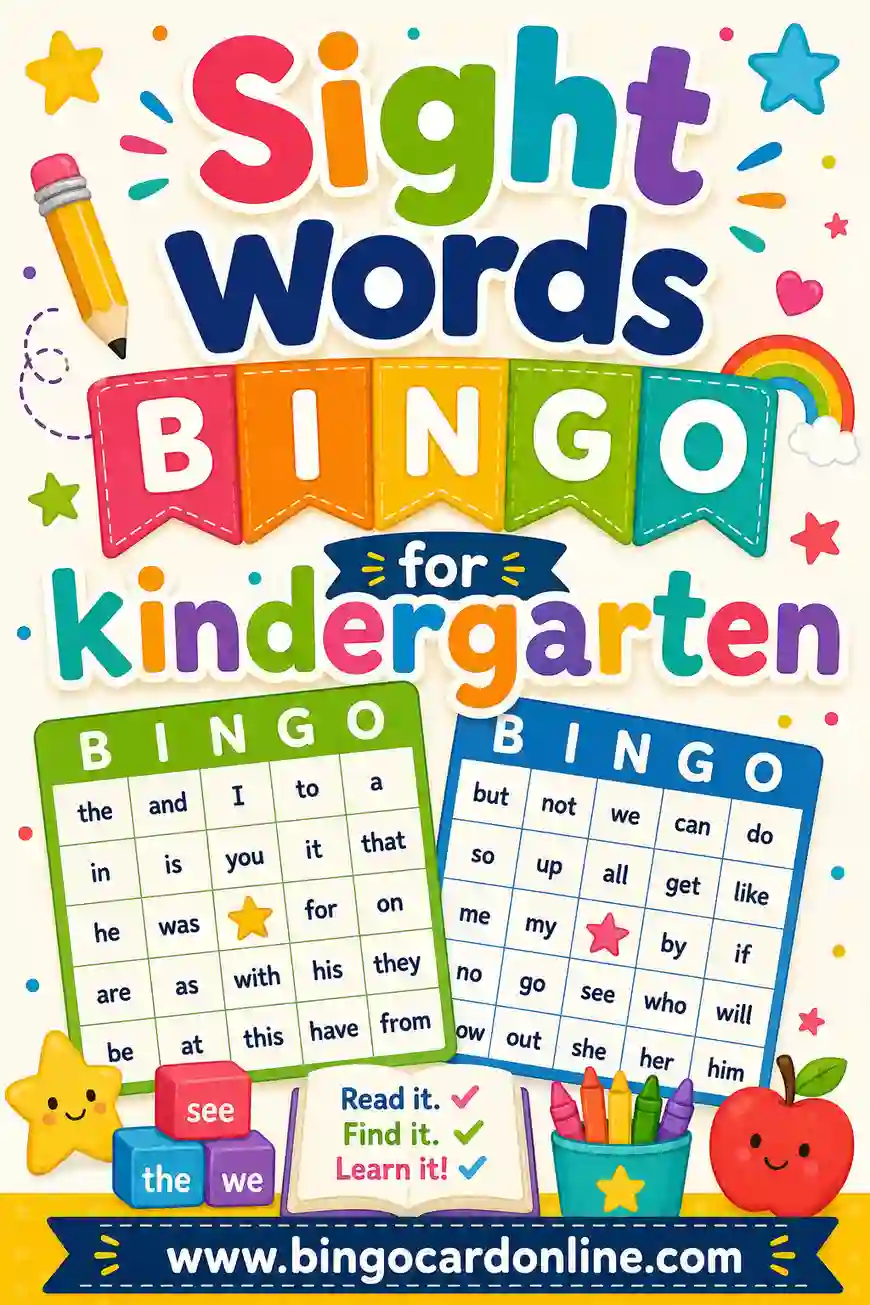
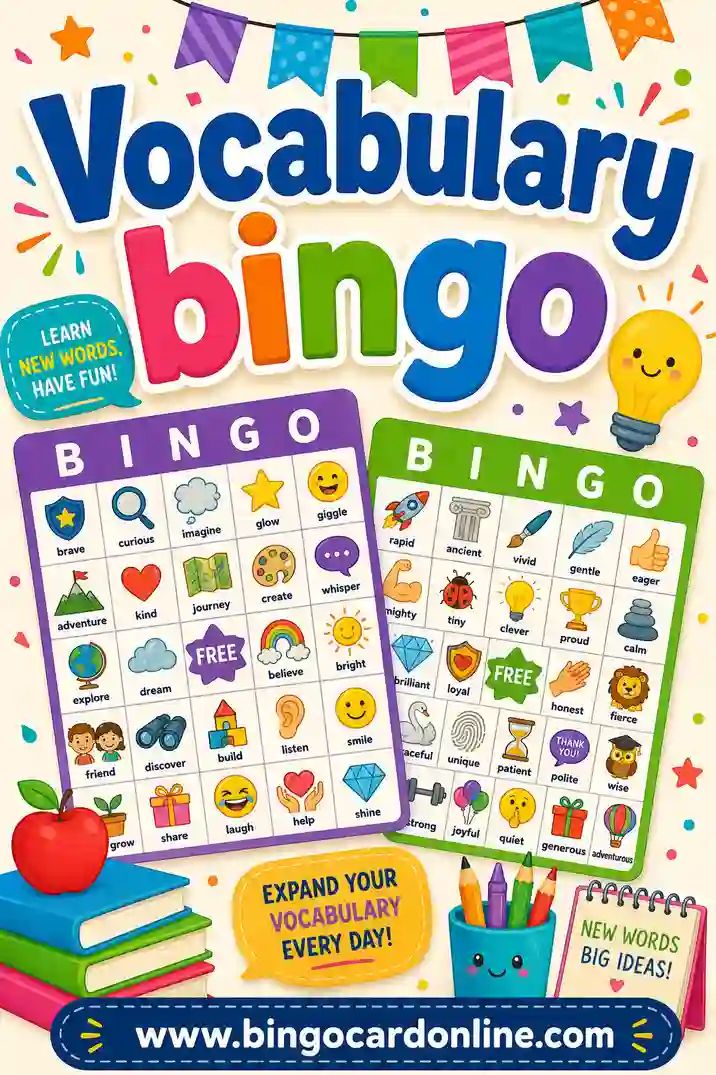
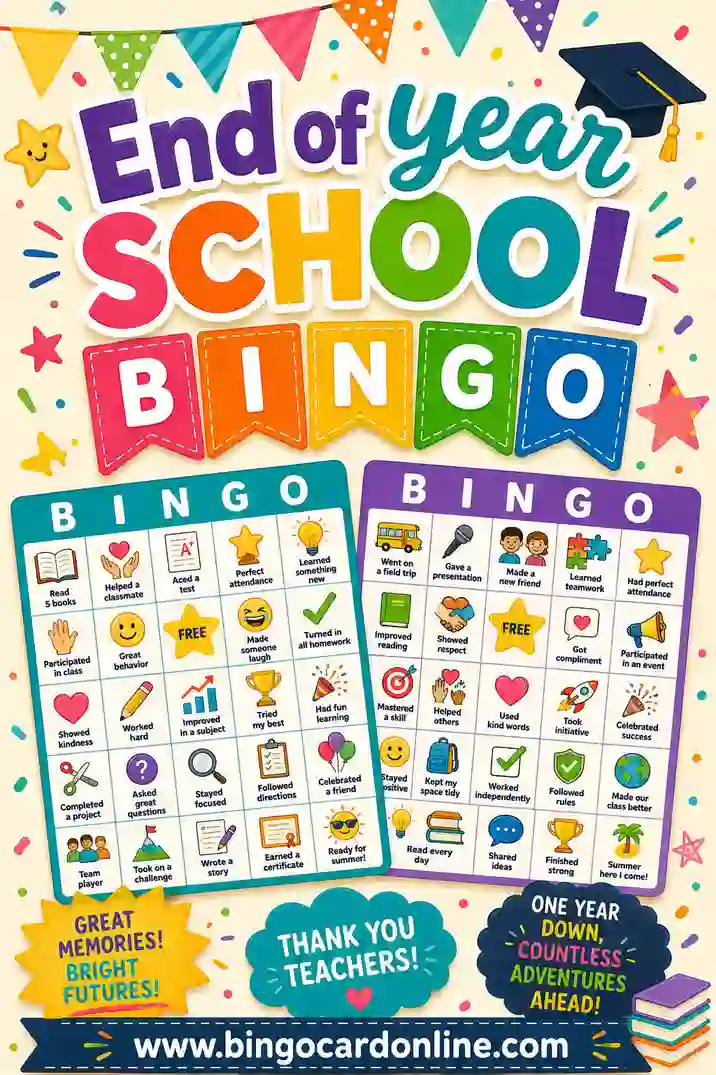
Want more classroom games? Try sight words bingo for kindergarten for new readers, vocabulary bingo for review days, or end of year school bingo when summer rolls around.