Multiplication Bingo: Free Printable Times Table Cards
Multiplication bingo is a grid game where the squares hold products (answers to times-table facts) and the caller reads out the problems. You call "6 times 7," and players who have 42 on their card mark it. The first to fill a line shouts "Bingo!" It turns memorizing the times tables into a game kids actually look forward to. The fastest way to build a set is a free bingo card generator that shuffles your products into unique cards everyone can print.
Want to skip ahead? Open the free generator, paste in a list of products (there's a ready-made one below), and print as many different cards as your class needs. No sign-up, no fee, nothing to install.
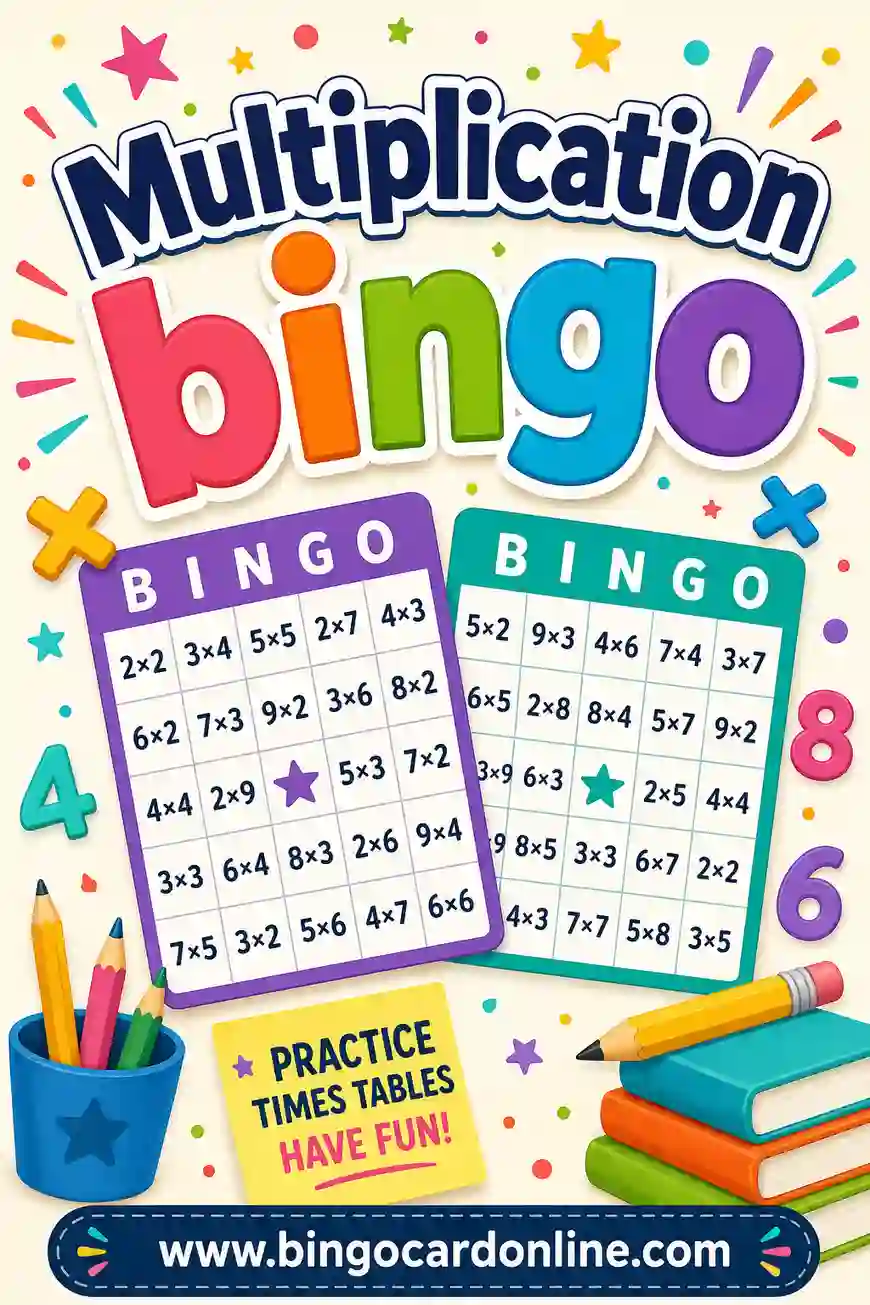
Picture regular bingo, but every square is the answer to a multiplication fact. Each card is a grid filled with products like 12, 24, 36, and 42. You call out a problem, and players hunt for the answer on their card. Common sizes are 3x3 for a quick game, 4x4 for a faster round, and the classic 5x5 with a free space in the middle.
You can focus the game however you like:
- Single-table bingo. Drill one table at a time, like the 7s, so every product comes from 7 × something.
- Mixed-table bingo. Pull from several tables for a broad review.
- Fact-family bingo. Group related facts (6 × 4, 4 × 6, 24 ÷ 6) to show how they connect.
One rule keeps it fair: every card has to be different. If two students share a layout, they both win at once and the round fizzles. A generator scrambles your product list into unique grids in seconds, which beats hand-drawing cards every time.
Why Multiplication Bingo Beats Flash Cards
Flash cards work, but they get boring fast. Bingo sneaks in the same repetition with a game wrapped around it.
- Tons of reps, zero groans. Students solve fact after fact without realizing they're drilling.
- It builds recall speed. The gentle time pressure pushes kids toward instant recall instead of counting on fingers.
- Everyone plays at once. A whole class practices together, not one student at a time.
Setup is quick too. Most teachers go from "let's review the times tables" to a printed class set in under ten minutes.
Free Multiplication Bingo Product List (Copy & Paste)
Here's a ready-to-use set of products covering the most-used tables. Drop these numbers into the generator as your card content, then call the matching problems. Copy the column you want straight in.
| 2s, 3s, 4s | 5s, 6s, 7s | 8s, 9s, 12s |
|---|---|---|
| 4 | 25 | 16 |
| 6 | 30 | 24 |
| 8 | 35 | 32 |
| 9 | 36 | 40 |
| 12 | 42 | 48 |
| 14 | 48 | 54 |
| 16 | 49 | 63 |
| 18 | 54 | 64 |
| 20 | 56 | 72 |
| 24 | 63 | 96 |
Mix products from across the columns so a single card covers a range of tables. Then prep a matching list of problems, like "6 × 8 = 48" or "9 × 7 = 63," to call from. For a single-table game, just use the products from that one table and repeat them across squares.
Theme variations to try
- Beat-the-clock bingo. Set a timer and see how many lines the class can complete before it buzzes.
- Division flip. Call the division version ("48 ÷ 6"), and players mark the matching product. Ties multiplication to division.
- Square-numbers bingo. Load cards with perfect squares (4, 9, 16, 25…) and call "5 squared." A nice challenge round.
Multiplication Table Bingo Cards: One Table at a Time
When a class is drilling a single times table, a focused multiplication table bingo card beats a mixed one — every square reinforces the same table until it sticks. To make a one-table card, load the generator with just that table's products (repeated as needed to fill the grid), then call the problems in random order. Here are the ready-to-paste products for each table:
- 2 times table: 2, 4, 6, 8, 10, 12, 14, 16, 18, 20, 22, 24
- 3 times table: 3, 6, 9, 12, 15, 18, 21, 24, 27, 30, 33, 36
- 4 times table: 4, 8, 12, 16, 20, 24, 28, 32, 36, 40, 44, 48
- 5 times table: 5, 10, 15, 20, 25, 30, 35, 40, 45, 50, 55, 60
- 6 times table: 6, 12, 18, 24, 30, 36, 42, 48, 54, 60, 66, 72
- 7 times table: 7, 14, 21, 28, 35, 42, 49, 56, 63, 70, 77, 84
- 8 times table: 8, 16, 24, 32, 40, 48, 56, 64, 72, 80, 88, 96
- 9 times table: 9, 18, 27, 36, 45, 54, 63, 72, 81, 90, 99, 108
- 12 times table: 12, 24, 36, 48, 60, 72, 84, 96, 108, 120, 132, 144
A single table only has 12 products, so for a 5x5 card either repeat some products across squares or combine two tables the class already knows (say, the 6s and 7s) for a 24-square mixed card. Print one unique card per student and the same "6 × 8" call marks a different square on every desk.
How to Make Multiplication Bingo Cards in 4 Steps
No prep headaches. Here's the whole process.
- Pick your grid size. 5x5 for a full review, 4x4 for a faster round, 3x3 for a quick warm-up.
- Add your products. Paste in the answers from the tables you're focusing on. More products means more variety between cards.
- Choose how many cards. One per student, plus spares. The generator makes each one unique automatically.
- Print and prep your call list. Print the cards, then write out the multiplication problems you'll read aloud.
That's it. Print on cardstock or use clear sleeves if you want students to mark with dry-erase markers and reuse the cards.
Who Multiplication Bingo Is Great For
This game adapts to almost any group learning their tables.
3rd to 5th grade classrooms
This is the sweet spot, when students are memorizing the times tables. Use it to drill one table at a time, then mix tables for a review before a quiz. It keeps a whole class engaged and practicing together.
Homeschool families
Multiplication bingo turns table drills into a game for one or two kids at the table. Print a couple of cards, grab some buttons for markers, and you've got a focused, screen-free practice session.
Math intervention and tutoring
For students who are stuck on certain facts, target the answer list to just those tables. The repetition feels like play instead of a worksheet, which lowers the frustration.
Family game night with a twist
If your family has a kid working on multiplication, bingo makes practice something everyone can join. Keep the problems within reach for the youngest player and let older players race on speed.
Printing Tips for Crisp, Reusable Cards
A few small choices make a big difference.
- Use cardstock if you can. It survives a busy classroom and feels nicer to hold.
- Print in black and white to save ink. The products read clearly without any color.
- Laminate or use sleeves for reuse. Students mark with dry-erase markers, then you wipe the cards clean.
- Check your margins. Print one test card first so numbers aren't cut off on a full stack.
- Bigger squares for younger learners. A 3x3 or 4x4 grid leaves more room per square.
What to use as markers
No special supplies needed:
- Dried beans, buttons, or coins
- Counting cubes or other math manipulatives
- A pen or crayon to cross squares off
- Bingo daubers, if you have them
Fun Ways to Change Up the Game
When straight-line bingo gets stale, try these twists.
- Blackout round. Players race to fill the whole card. A thorough review of every product.
- Four corners. First to mark all four corners wins. Quick and easy.
- Explain-it bingo. Before marking a square, the student says the full fact out loud, like "six times seven is forty-two."
- Team bingo. Split into small teams that solve together. Good for very large groups.
Tie tiny prizes to the theme, like a homework pass, first pick at the next activity, or line-leader for the day.
Multiplication Bingo for Different Ages
The same game stretches across grade levels with a few tweaks.
| Grade / level | Grid size | Tips |
|---|---|---|
| 2nd grade (intro) | 3x3 | Focus on 2s, 5s, and 10s only. |
| 3rd grade | 4x4 | One or two tables at a time. Keep rounds short. |
| 4th grade | 5x5 | Mixed tables up through the 9s. |
| 5th grade | 5x5 | Full review, including 11s and 12s. |
| Review / intervention | 4x4 | Target the specific facts a student struggles with. |
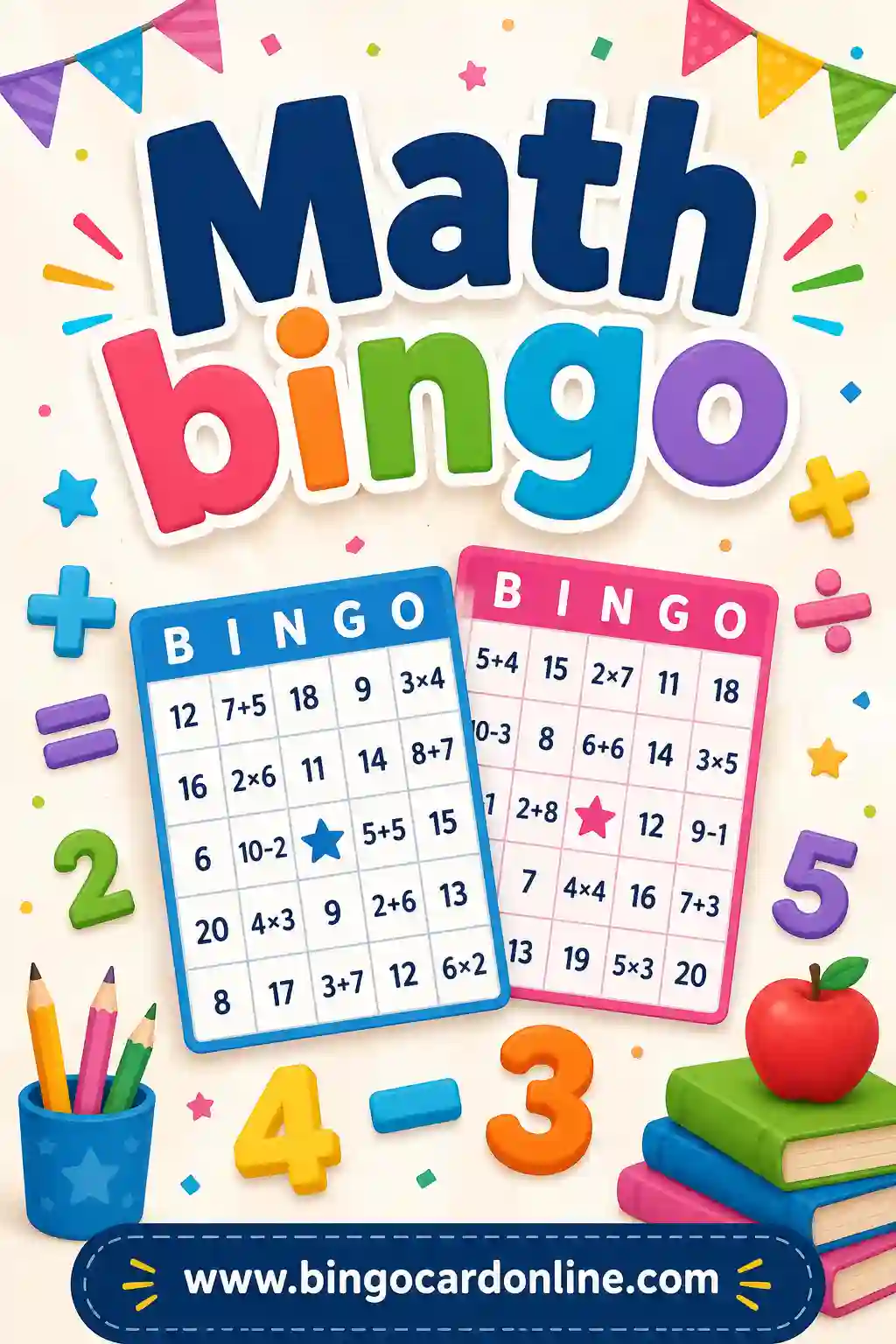
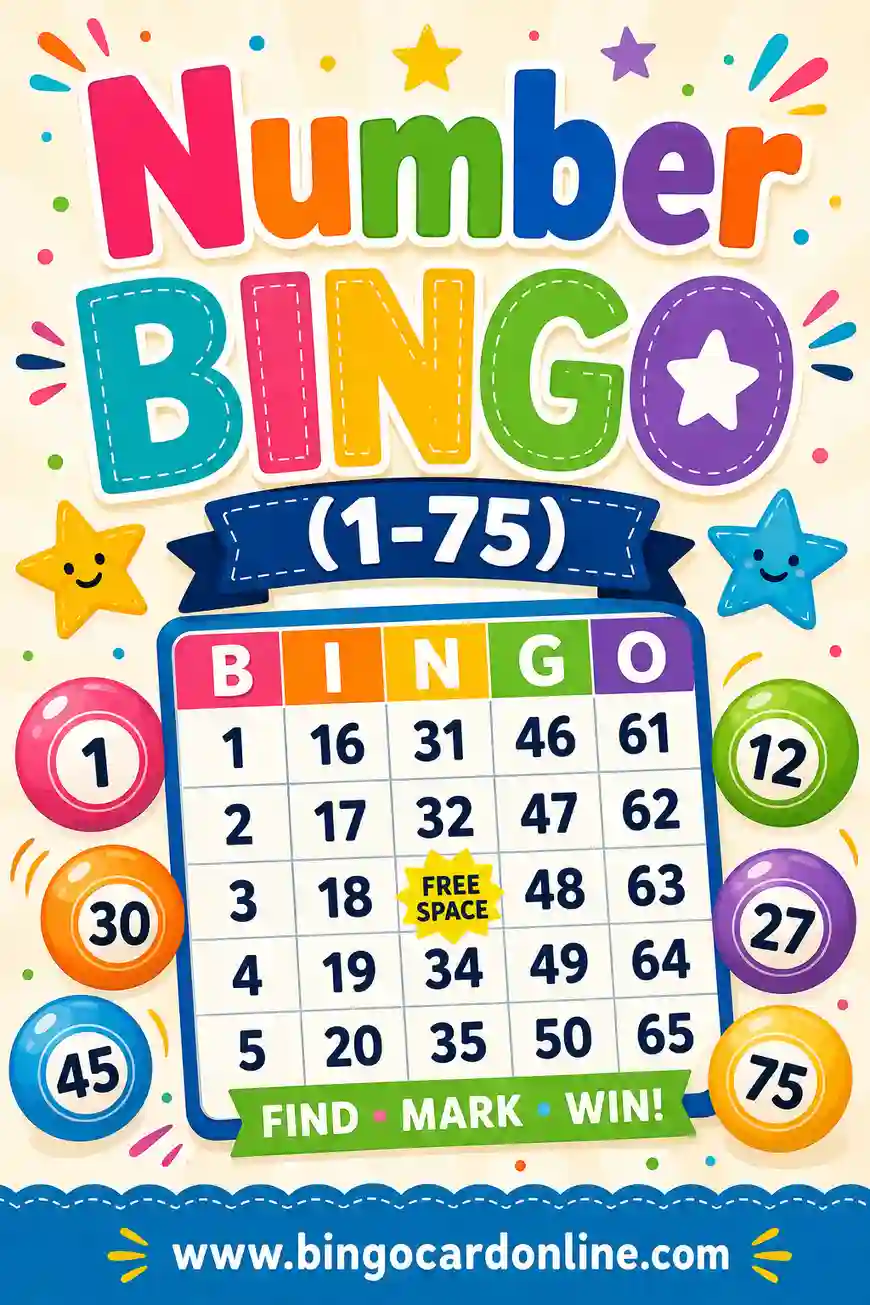
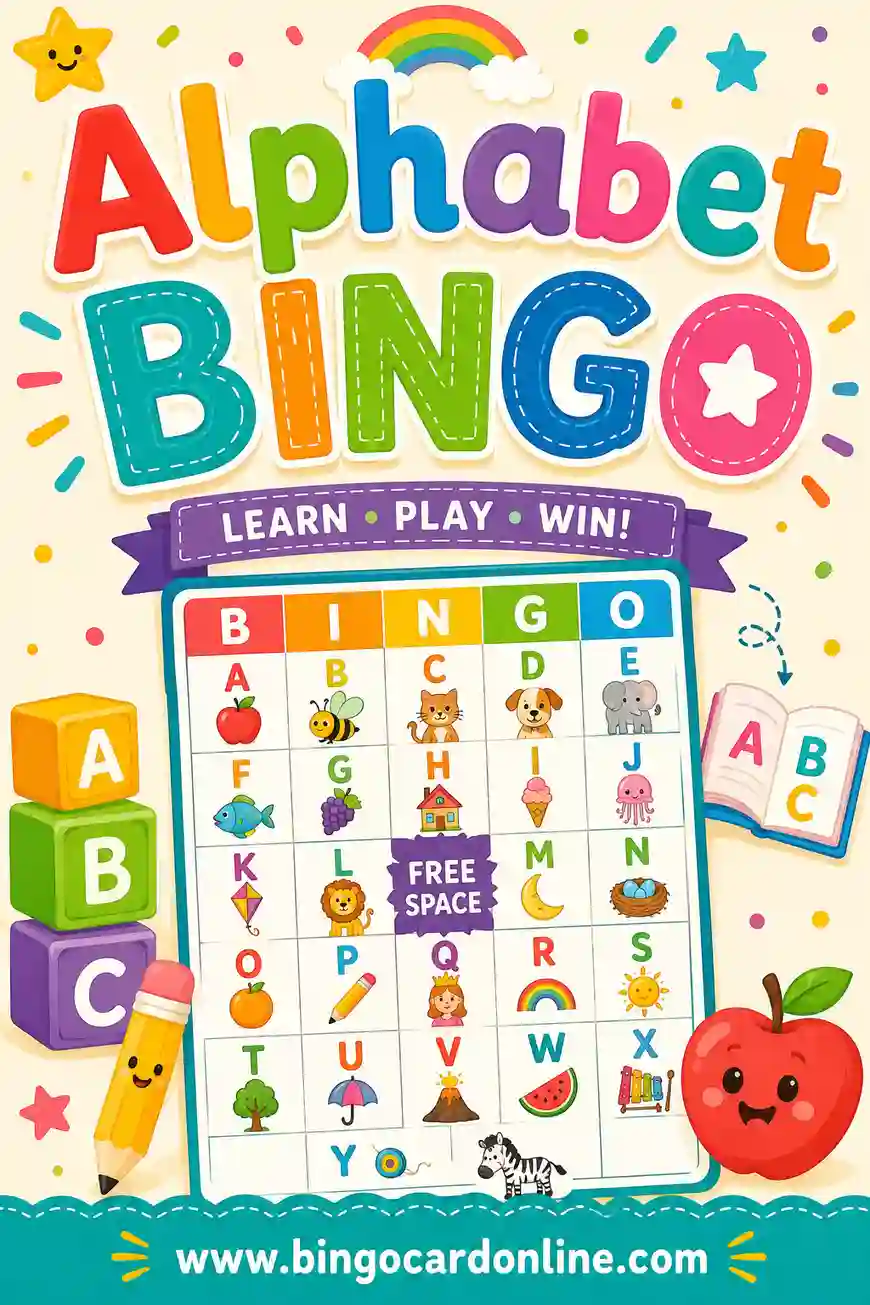
Want more number practice? You can build the same kind of game with our math bingo, number bingo (1-75), and alphabet bingo.
How to Run a Multiplication Bingo Game
If you've never called multiplication bingo before, it's easy to get the hang of. Here's how a clean round goes from start to finish.
- Hand out cards and markers. One card per student, a pile of markers within reach.
- Explain the win condition. Decide before you start whether it's a single line, four corners, or a full blackout, and say it out loud so nobody's surprised later.
- Call one fact at a time. Pull a problem from your list, like "six times nine," and say it clearly. Give students a few seconds to recall the product and scan their cards.
- Track what you've called. Cross each fact off your master list and note its product. You'll need this to verify the winner.
- Check the winning card. When a student calls "Bingo!", read their marked squares back against the products you called. If they all match, they win. If not, the round keeps going.
A good pace is one fact every 12 to 15 seconds for students who know their tables, slower while they're still learning. Keep prizes small so you can fit in several quick rounds.
Common mistakes to avoid
- Too few products. With only 24 different products for a 5x5, the cards look almost identical. Aim for 30 or more so the generator can make distinct cards.
- Forgetting to track calls. If you don't record each fact and its product, you can't verify a win. Always cross off as you go.
- Jumping to mixed tables too soon. Drill one table until it's solid before mixing several, or beginners will fall behind.
- Calling too fast. If students are still counting up to the answer, slow your pace so the game stays fun instead of frustrating.
Frequently Asked Questions
How many multiplication bingo cards do I need?
One card per student, plus a few spares for latecomers or damaged cards. For a class of 25, print around 30. The generator makes as many unique cards as you want in one go.
What should go on a multiplication bingo card?
Put products (the answers) on the cards, not the problems. Fill the squares with the results of the facts you plan to call. Aim for enough different products that a 5x5 card fills completely with variety.
Is multiplication bingo really free to print?
Yes. You make and print the cards yourself at no cost. There's no sign-up and no watermark, so you can run a whole classroom on one free product list.
Should I drill one times table or mix them?
Both have their place. Drill one table at a time when students are first learning it, so they get focused repetition. Once they know several tables, mix the products for a review round that keeps them on their toes.
How do I make every multiplication bingo card different?
Use a generator that shuffles your product list. It rearranges the same numbers into a new layout for each card, so no two students have identical grids. Doing this by hand for a full class is slow and easy to get wrong.
Can multiplication bingo help with division too?
Yes. Call the division version of each fact, like "56 ÷ 8," and have players mark the matching product. It's a simple way to show how multiplication and division are two sides of the same fact family.
Ready to Print Your Multiplication Bingo Cards?
Grab the product list above, open the free bingo card generator, and you'll have a stack of unique, printable multiplication bingo cards in minutes. It's free, there's no sign-up, and every card comes out different, so your classroom or kitchen table is ready to practice. Have fun, and may the first "Bingo!" come from a quick mathematician.