Number Bingo (1-75): Free Printable Cards & Caller List
Number bingo (1-75) is the classic American version of the game: a 5x5 grid filled with numbers from 1 to 75, a free space in the middle, and the letters B-I-N-G-O across the top. Each column draws from its own range of numbers, the caller pulls a number like "B-7," and the first player to fill a line wins. The fastest way to get a full set of unique cards is a free bingo card generator that handles the column ranges for you and prints one-of-a-kind cards for everyone.
Want to skip ahead? Open the free generator, set it to numbers 1 through 75, and print as many different cards as you need. No sign-up, no fee, nothing to install.
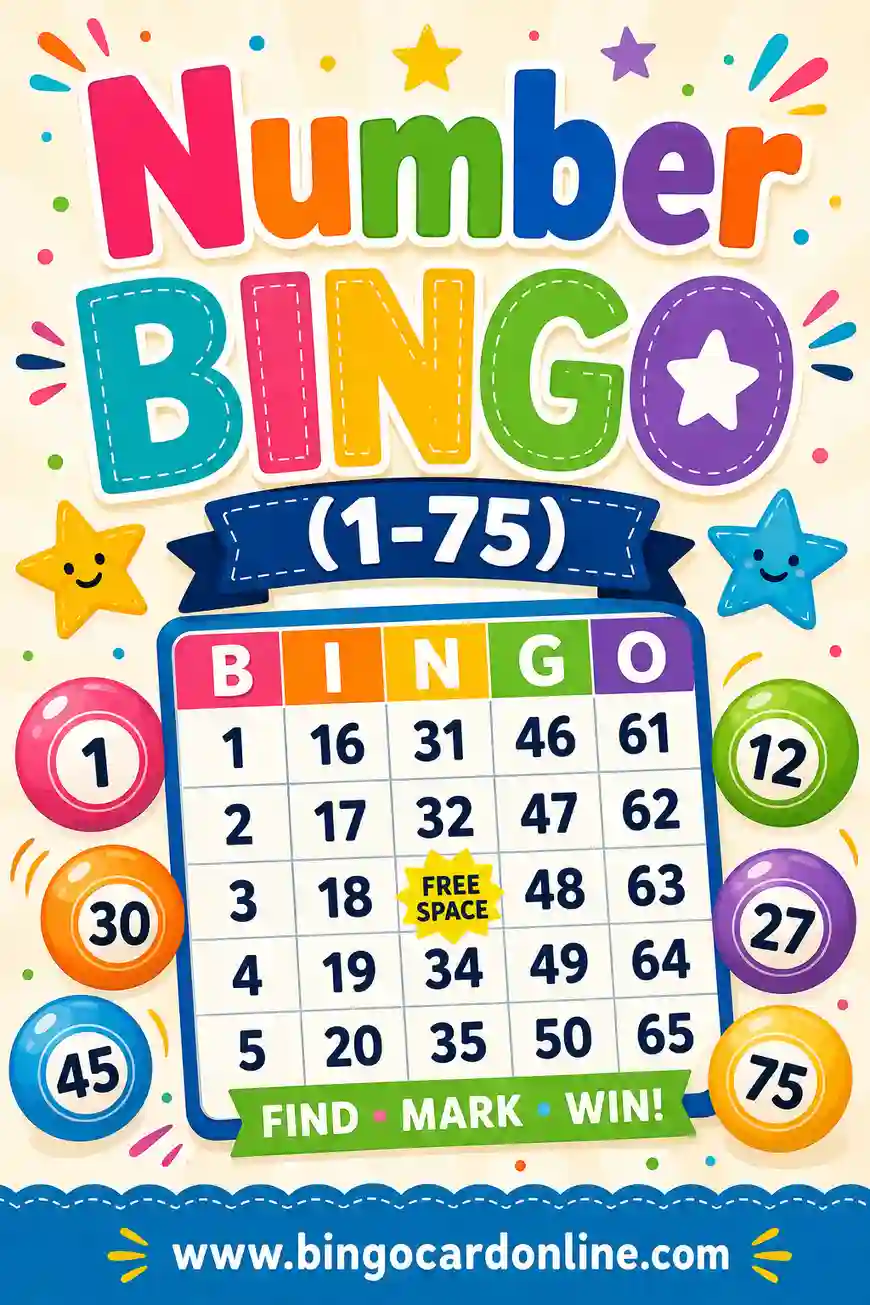
This is the version most people picture when they hear "bingo." The card is a 5x5 grid topped by the letters B, I, N, G, and O. Each letter sits over a column, and each column only holds numbers from a set slice of 1 to 75.
Here's how the ranges break down:
- B column: numbers 1–15
- I column: numbers 16–30
- N column: numbers 31–45 (with a free space in the middle)
- G column: numbers 46–60
- O column: numbers 61–75
So when the caller says "I-22," players only look in the I column. That little system keeps the game fast and easy to scan, even for big groups.
The one rule that makes or breaks a game: every card has to be different. If two players share a layout, they win at the same time and the round falls flat. A generator scrambles the numbers into unique grids in seconds, which is far quicker and more reliable than doing it by hand.
Why Use 1-75 Number Bingo
The 75-ball version is the standard at school fundraisers, family game nights, and senior centers across North America. There are good reasons it stuck around.
- It's fast to scan. The column ranges mean players check one column, not the whole card.
- It works for big crowds. You can run a hundred players off one caller list.
- It's familiar. Most people already know the rules, so you skip the long explanation.
Setup is quick too. You can go from "let's play bingo" to a printed stack of unique cards in under ten minutes.
Free Number Bingo Caller List (Copy & Paste)
Here's the full caller set, grouped by column so you can read calls correctly. Pull numbers at random and announce them with their letter, like "G-52." Copy this straight into your call sheet, or use it to double-check the generator's output.
| B (1–15) | I (16–30) | N (31–45) | G (46–60) | O (61–75) |
|---|---|---|---|---|
| 1, 2, 3 | 16, 17, 18 | 31, 32, 33 | 46, 47, 48 | 61, 62, 63 |
| 4, 5, 6 | 19, 20, 21 | 34, 35, 36 | 49, 50, 51 | 64, 65, 66 |
| 7, 8, 9 | 22, 23, 24 | 37, 38, 39 | 52, 53, 54 | 67, 68, 69 |
| 10, 11, 12 | 25, 26, 27 | 40, 41, 42 | 55, 56, 57 | 70, 71, 72 |
| 13, 14, 15 | 28, 29, 30 | 43, 44, 45 | 58, 59, 60 | 73, 74, 75 |
Write each number on a slip and draw from a bowl, or just cross them off this sheet as you call. Always track what you've called so you can verify a winner.
Number-game variations to try
- 90-ball bingo. The British and Australian version uses numbers 1–90 on a 9-column ticket. Good if your crowd grew up with that style.
- 30-ball speed bingo. A 3x3 grid with numbers 1–30. Lightning-fast rounds, perfect for kids or a quick filler.
- Picture-and-number bingo. Pair each number with a fun icon for younger players who are still learning their digits.
How to Make Number Bingo Cards in 4 Steps
No spreadsheet wrangling required. Here's the whole process.
- Pick the 1-75 format. Set the generator to the classic 75-ball, 5x5 layout.
- Confirm the column ranges. B 1–15, I 16–30, N 31–45, G 46–60, O 61–75 are standard. The tool handles this automatically.
- Choose how many cards. One per player, plus spares. Each card comes out unique.
- Print. Hit print, hand out the stack, and you're ready to call.
Print on cardstock or use clear sleeves if you want players to mark with dry-erase markers and reuse the cards.
Who Number Bingo Is Great For
The 75-ball game flexes to almost any age and group size.
School fundraisers and bingo nights
This is the workhorse. Print a big batch of unique cards, sell them at the door, and run several rounds with small prizes. The column system keeps even a noisy gym moving quickly.
Classrooms
Number bingo doubles as number-recognition practice for younger students. Use a smaller 3x3 grid with numbers 1–30 for early learners, then graduate to the full 1-75 board as they get confident.
Senior centers and care homes
It's a long-time favorite for good reason. Print large, clear numbers, keep a steady calling pace, and the familiar format means almost everyone can join in without instructions.
Family game night
One caller, a bowl of numbered slips, and a stack of cards is all you need. It's a rare game where a grandparent and a grade-schooler can play the same round and both have a real shot.
Printing Tips for Crisp, Reusable Cards
A few small choices go a long way.
- Use cardstock if you can. It survives many game nights and feels nicer in hand.
- Print in black and white to save ink. Numbers read perfectly clearly without any color.
- Laminate or use sleeves for reuse. Players mark with dry-erase markers, then you wipe the cards clean.
- Check your margins. Print one test card first so numbers aren't cut off on a full stack.
- Bigger print for seniors. Larger fonts and a 4x4 grid help players with low vision keep up.
What to use as markers
No special supplies needed:
- Dried beans, buttons, or coins
- Bingo daubers, if you have them on hand
- A pen or crayon to cross numbers off
- Poker chips for a sturdier marker
Fun Ways to Change Up the Game
Once a straight line gets old, mix in these patterns.
- Blackout round. Players race to fill the whole card. The longest, highest-stakes version.
- Four corners. First to mark all four corner squares wins. Quick and easy.
- Postage stamp. Mark a 2x2 block of squares in any corner. A fun middle-ground pattern.
- Letter X. Mark both diagonals through the free space. Looks great and takes a bit of luck.
Announce the winning pattern before each round so nobody's confused, and keep prizes small so you can play several games in a sitting.
Number Bingo for Different Ages
The same game stretches from little kids to seniors with a few tweaks.
| Age group | Grid / range | Tips |
|---|---|---|
| Kids (4–6) | 3x3, 1–30 | Big numbers, slow calling, picture clues. |
| Kids (7–10) | 4x4, 1–50 | Introduce the column idea. Keep rounds short. |
| Tweens & teens | 5x5, 1–75 | Full classic game. Try pattern rounds. |
| Adults | 5x5, 1–75 | Blackout and pattern rounds for variety. |
| Seniors | 4x4 or 5x5, 1–75 | Large print, steady pace, classic patterns. |
Like number-based games? You can build the same kind of practice with our alphabet bingo, math bingo, and multiplication bingo.
How to Run a Number Bingo Game
If you've never been the caller before, don't worry, it's easy. Here's how a clean game goes from start to finish.
- Hand out cards and markers. One card per player, a pile of markers within reach.
- Explain the win condition. Decide before you start whether it's a single line, four corners, or a full blackout, and say it out loud so everyone's on the same page.
- Draw and call one number at a time. Pull a numbered slip, then announce it with its letter, like "G-52." Say it twice and pause so players can scan the right column.
- Track what you've called. Set each called slip aside or cross it off your master sheet. You'll need this to verify the winner.
- Check the winning card. When someone yells "Bingo!", read their marked squares back against your called numbers. If they all check out, they win. If not, the game keeps going, no harm done.
A good pace is one call every 8 to 12 seconds for adults, slower for kids and seniors. Keep prizes small and rounds short, and you can fit in several games before anyone loses interest.
Common mistakes to avoid
- Calling without the letter. Saying just "52" instead of "G-52" makes players scan the whole card. Always include the column letter.
- Forgetting to track calls. If you don't keep the called slips or a record, you can't verify a win. Always set them aside as you go.
- Calling too fast. Rushing leaves players behind and causes missed numbers. Pause a beat between calls.
- One grid size for a mixed group. A full 5x5, 1–75 board overwhelms little kids. Run a separate 3x3 game for the youngest so they can keep up.
Frequently Asked Questions
How many number bingo cards do I need?
One card per player, plus a handful of spares for latecomers or damaged cards. For a fundraiser with 50 players, print 60 or so. The generator makes as many unique cards as you want in one go.
What are the B-I-N-G-O column ranges for 1-75 bingo?
B holds 1–15, I holds 16–30, N holds 31–45, G holds 46–60, and O holds 61–75. The N column has a free space in the middle, so it only shows four numbers.
Is number bingo (1-75) really free to print?
Yes. You make and print the cards yourself at no cost. There's no sign-up and no watermark, so you can run a whole fundraiser or family night on one free set.
How do I make every number bingo card different?
Use a generator that shuffles the numbers within each column. It rearranges them into a new layout for every card, so no two players have the same grid. Doing this by hand for dozens of cards is slow and error-prone.
Can young kids play 1-75 number bingo?
They can, but a smaller game is easier for early learners. Start with a 3x3 grid using numbers 1–30, then move up to the full 5x5, 1–75 board once they're comfortable spotting larger numbers.
What's the difference between 75-ball and 90-ball bingo?
The 75-ball game uses a 5x5 grid with numbers 1–75 and the B-I-N-G-O columns, and it's standard in North America. The 90-ball game uses a 9-column ticket with numbers 1–90 and is common in the UK and Australia.
Ready to Print Your Number Bingo Cards?
Grab the caller list above, open the free bingo card generator, and you'll have a stack of unique, printable number bingo cards (1-75) in minutes. It's free, there's no sign-up, and every card comes out different, so your fundraiser, classroom, or game night is ready to roll. Good luck, and may the first "Bingo!" be yours.