Human Bingo (Icebreaker): Free Printable Cards
Human bingo is an icebreaker game where each square is a fact like "has a pet" or "speaks two languages," and players mingle to find a different person who matches each one. When someone matches, they sign that square, and the first to fill a line (or the whole card) wins. The quickest way to make a set is with a free bingo card generator that shuffles your prompts into unique cards everyone can print.
Want to set it up fast? Open the free generator, drop in a list of "find someone who" prompts (there's a ready-made one below), and print unique cards for your group. No sign-up, no fee, no software to install.
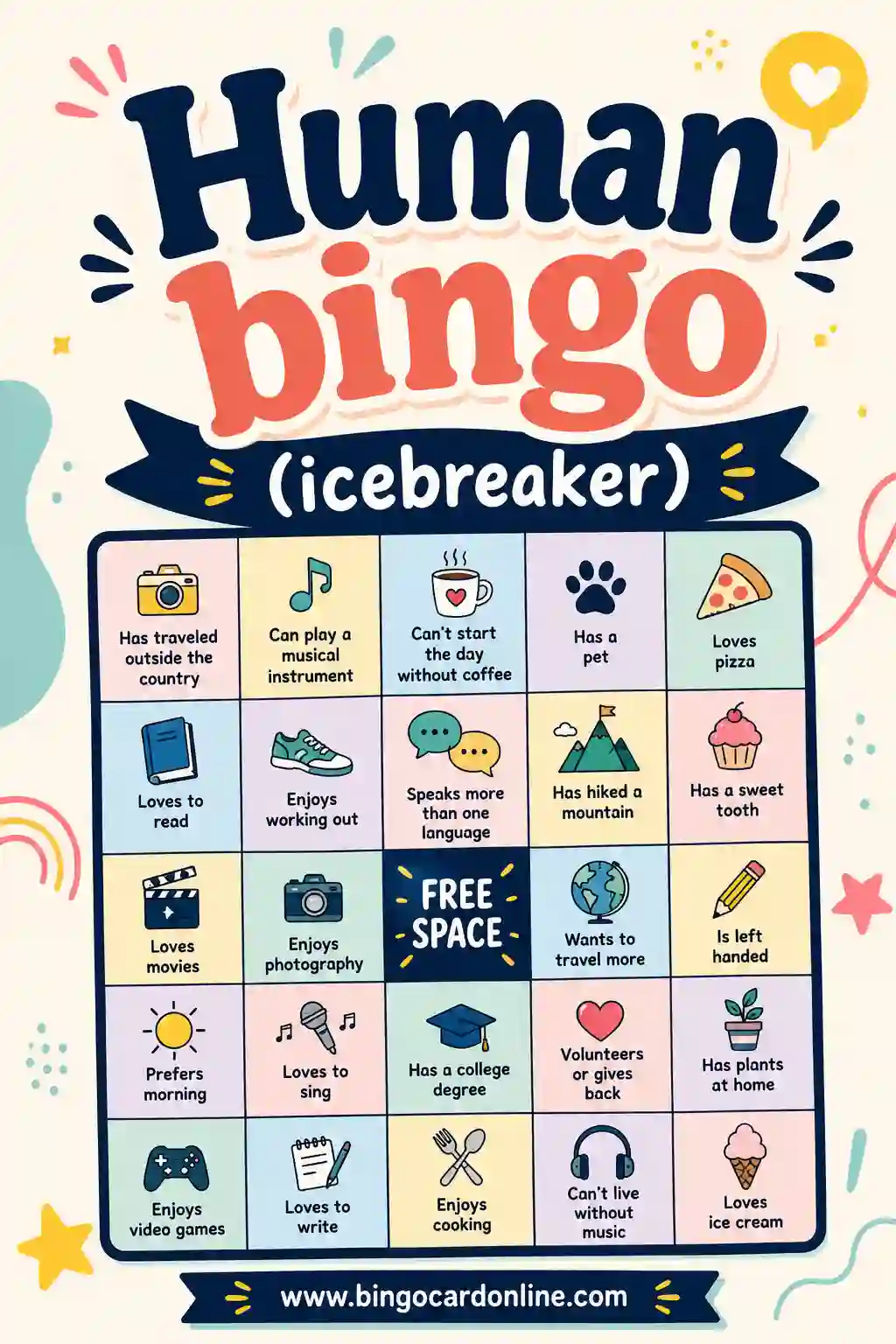
Human bingo, sometimes called "find someone who" bingo, flips the usual game on its head. Instead of covering numbers, players walk around and find real people who match the facts in each square. Each square has a blank line where the matching person signs their name.
The rules are simple:
- One signature per square. Each square needs a different person, so players have to talk to lots of people.
- One square per person (optional). For bigger groups, limit each person to signing just one or two squares so nobody's hogging.
- First to a line or blackout wins. Decide before you start whether a single row counts or you need the whole card.
It's the rare icebreaker that actually breaks the ice, because the game forces gentle conversation. You can't fill your card sitting in a corner. People have to mingle, ask questions, and discover little surprises about each other, which is exactly the point.
Why Human Bingo Is the Best Icebreaker
Most icebreakers feel forced. Human bingo works because the game does the social heavy lifting for you.
- It gets people moving. Players have to stand up and circulate, which beats awkward seated introductions.
- It creates real conversations. "You've been skydiving? Tell me about that!" Sparks form naturally.
- It's low-pressure. Nobody has to perform or share anything deep. The prompts keep it light.
- It works for any size. Ten people or two hundred, the game scales to fit.
- It levels the room. New hires, shy folks, and chatterboxes all play on equal footing.
By the time cards are full, strangers have swapped a dozen little facts and the room feels warmer. That's the whole goal of an icebreaker, and human bingo nails it without anyone feeling put on the spot.
Free Human Bingo Prompt List (Copy & Paste)
Here's a ready-to-use list of 30 "find someone who" prompts. Pick any 24 for a 5x5 card (the 25th is a free space), or grab 9 for a quick 3x3. Copy a column straight into the generator.
| Everyday Life | Skills & Hobbies | Fun & Surprising |
|---|---|---|
| Has a pet | Plays an instrument | Has been on TV |
| Has siblings | Speaks two languages | Met a celebrity |
| Loves coffee | Can whistle | Has a twin |
| Wears glasses | Bakes from scratch | Has run a marathon |
| Born in another state | Knows sign language | Been skydiving |
| Has the same birthday month | Codes or builds apps | Owns a vinyl record |
| Drinks tea daily | Plays a team sport | Has lived abroad |
| Is a morning person | Gardens | Can juggle |
| Has a houseplant | Draws or paints | Has a hidden talent |
| Loves spicy food | Cooks for fun | Has met someone famous |
Swap in prompts that fit your group. For a work event, add "started this year" or "works remotely." For a class, try "rides the bus" or "has read the book."
Prompt ideas by event type
- Workplace. "Has worked here five-plus years," "knows three coworkers' kids' names," "has a standing desk."
- Classroom. "Has a younger sibling," "can name five state capitals," "has a library card."
- Family reunion. "Shares your last name," "remembers Grandma's recipe," "was at the last reunion."
How to Run a Human Bingo Icebreaker in 5 Steps
It's easy to lead, even if you've never run an icebreaker before.
- Print a card per person. Use the generator so each card has prompts in a different order, which keeps the game fresh.
- Hand out cards and pens. Make sure everyone has something to write with. Pens beat pencils for signatures.
- Explain the rules. One signature per square, a different person each time, and the win condition (a line or a full card).
- Set a timer. Give people five to ten minutes to mingle. A clear time limit keeps the energy up.
- Call the winner. First to finish shouts "Bingo!" Verify the signatures, and you're done. Offer a small prize if you like.
For a nice wrap-up, ask a few people to share the most surprising thing they learned. It turns the game into a real conversation starter.
Human Bingo by Group Size
The game works for almost any crowd, but a few tweaks help it run smoothly at different sizes.
| Group size | Grid size | Tips |
|---|---|---|
| Small (5–10) | 3x3 | Allow people to sign more than one square so cards can fill |
| Medium (10–25) | 4x4 | One or two signatures per person keeps everyone mingling |
| Large (25–60) | 5x5 | Strict one-square-per-person rule, set a firm timer |
| Very large (60+) | 5x5 | Aim for a single line, not a blackout, so the game ends on time |
The key is matching the rule to the room. In a small group, you can't fill a 5x5 if everyone signs only once, so loosen the rule. In a huge group, tighten it so people keep moving.
Where Human Bingo Works Best
This icebreaker fits almost any setting where people need to meet. A few of the most popular:
New employee onboarding
Day-one nerves melt fast when new hires have to find "someone who's been here five years" or "someone on the marketing team." It maps the room and breaks the ice at once. HR teams love it for orientation.
Classrooms and first days
Teachers use human bingo on the first day to help students learn names and find things in common. It's a gentle way to build a friendly classroom from the start.
Conferences and networking
At a big event, human bingo gives attendees a reason to approach strangers without the usual awkwardness. The card is the excuse, and real connections follow.
Parties and family reunions
Use it to mix guests who don't know each other well, or to help distant relatives reconnect. Tailor the prompts to your crowd and watch the conversations spark.
Tips to Make Your Human Bingo a Hit
A few small choices take your icebreaker from fine to memorable.
- Keep prompts inclusive. Pick facts most people can match, so nobody's stuck with an impossible square.
- Mix easy and rare. A few common prompts keep cards filling, while rarer ones ("has met a celebrity") spark the best stories.
- Set a clear time limit. Open-ended mingling fizzles. A countdown keeps the buzz going.
- Offer a small prize. Even a chocolate bar gives players a reason to hustle.
- Print extra cards. Latecomers and torn cards happen. A few spares save the day.
For a friendlier feel, encourage players to actually chat, not just collect signatures. The whole point is the conversation, not the autograph.
Fun Variations to Try
Once your group knows the basic game, mix it up.
- Blackout edition. Players must fill every square. Longer game, more mingling, great for a longer event.
- Team human bingo. Split into small teams that share one card. Good for very large groups.
- Speed round. Two minutes only. Whoever has the most signatures wins. High energy and fun.
- Themed cards. Build the whole card around your event, like "summer camp human bingo" or "holiday party edition."
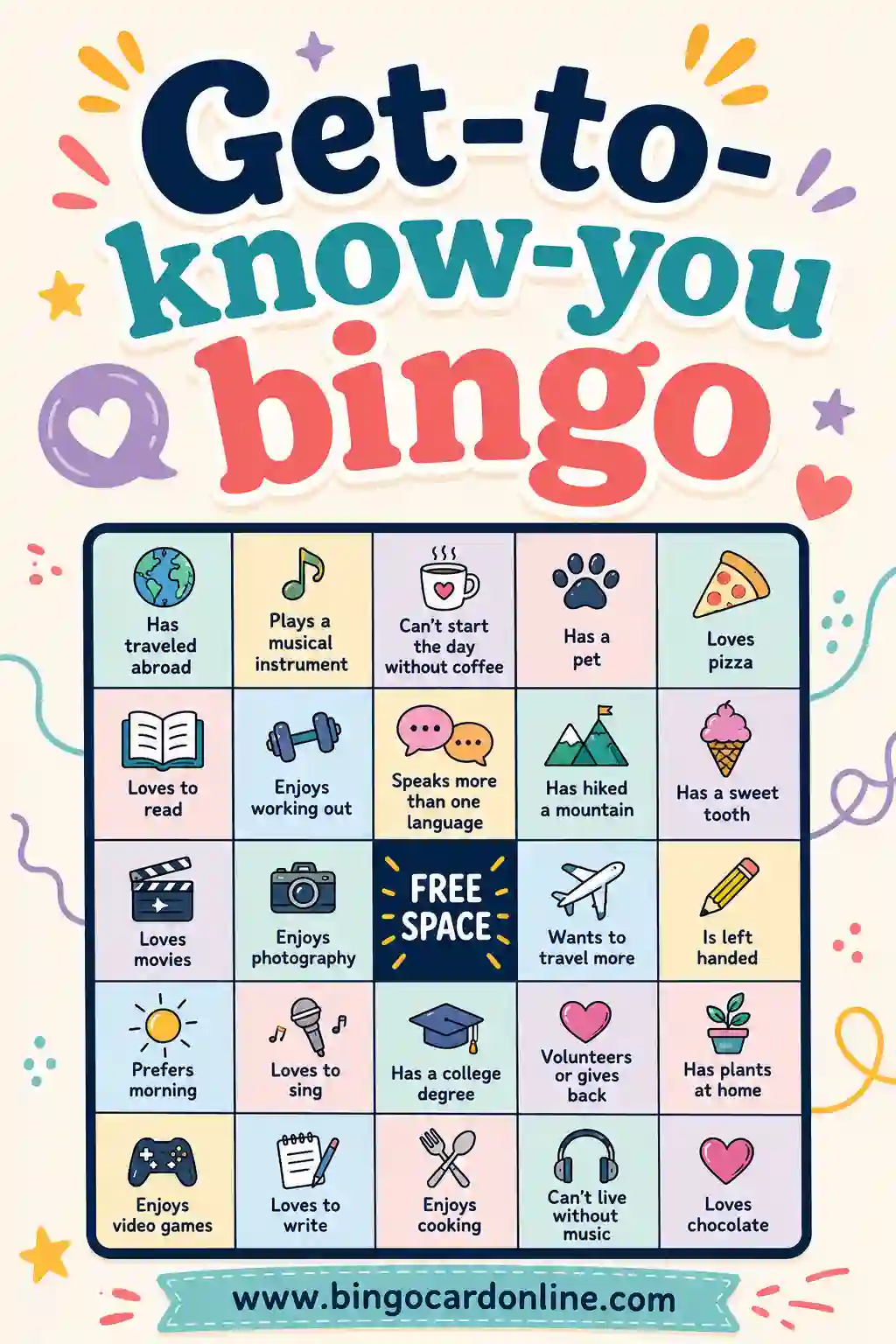
You can also pair it with a get-to-know-you bingo round for a deeper second activity once the ice is broken.
How to Write Prompts That Actually Spark Conversation
The prompts make or break the game. A flat list of "has a pet, wears glasses, likes pizza" will fill cards fast, but it won't get anyone talking past a yes-or-no. The trick is to mix prompts that are easy to match with prompts that beg a follow-up question.
Here's the rule of thumb: for every three "anyone could match this" prompts, add one that makes people stop and ask "wait, really?" Those are the squares that turn a signature hunt into an actual chat.
- Easy fillers. "Has a sibling," "drinks coffee," "owns a phone case with a pattern." These keep cards moving so nobody stalls out.
- Story-starters. "Has lived in another country," "once met someone famous," "has a scar with a good story." Players can't sign these without explaining, and that's the whole point.
- Group-specific. "Has been on the team longer than two years," "knows what the break-room printer is named." These reward people for knowing the room and make insiders feel seen.
One more tip: phrase prompts in plain, everyday language. "Possesses musical proficiency" is a square nobody wants to read. "Plays an instrument" gets signed in seconds. Short and concrete always wins.
Prompts to avoid
A few kinds of prompts quietly sink the game, so skip these:
- Too personal. Anything about relationships, money, health, or politics. A good icebreaker stays light and safe for everyone.
- Too rare. If only one person in fifty could match a square, most cards will have a dead spot that never fills.
- Hard to verify. "Is a kind person" can't really be signed off. Stick to facts people can confirm out loud.
Running Human Bingo Virtually
Human bingo isn't just an in-person game. It works surprisingly well over a video call, and remote teams use it to warm up a meeting or kick off an onboarding week.
The mechanics shift a little. Since people can't physically mingle, you swap the wandering for a shared chat or breakout rooms. Here's a setup that runs smoothly online:
- Send unique cards ahead of time. Email each person a card, or share a link. The generator makes a different card for everyone so no two people chase the same squares.
- Use the chat or breakout rooms. Players type a question in the group chat ("Who's lived abroad?") and whoever matches replies. Or split into small breakout rooms where people swap facts face to face.
- Mark instead of sign. Nobody can hand-sign a square over a screen, so players just jot the matching person's name in the box, or check it off in a fillable PDF.
- Set a tight timer. Five to seven minutes keeps a remote group focused. Online energy dips faster than in a room, so keep it brisk.
- Share the wins out loud. Ask the winner, and a couple of others, to read out the most surprising thing they learned. It pulls quiet remote folks into the conversation.
Virtual human bingo is a small thing that does a lot. It gives a scattered team a reason to talk about something other than work, and it makes new remote hires feel like they've actually met people instead of just names on a screen.
Frequently Asked Questions
What is human bingo as an icebreaker?
Human bingo is a mingling game where each square names a fact, like "has a pet," and players find a different person who matches each one and gets them to sign it. It gets a room talking and is a top icebreaker for work, school, and parties.
How many squares should a human bingo card have?
For a 5x5 card you need 24 prompts plus a free space, which suits medium and large groups. Use a 3x3 with 9 prompts for small groups so cards can actually fill. The generator makes both sizes in seconds.
How long does a human bingo game take?
Usually five to fifteen minutes, depending on group size and whether you play for a line or a full card. Set a timer to keep the energy up. Smaller groups finish faster; larger ones need a bit more time to mingle.
Can one person sign multiple squares?
It depends on your group size. In small groups, let people sign two or three squares so cards can fill. In large groups, limit each person to one square so players keep moving and meet more people.
What prompts work best for a work icebreaker?
Mix everyday facts ("drinks coffee," "wears glasses") with work-friendly ones ("works remotely," "joined this year"). Keep them light and inclusive so everyone can match several squares. The list above gives you 30 ready to copy.
Are these human bingo cards free to print?
Yes. You make and print them yourself at no cost. There's no sign-up and no watermark, so you can run an icebreaker for a whole team or classroom on a single free prompt list.
Can you play human bingo over a video call?
Yes. Email each person a unique card, then let players find matches through the group chat or breakout rooms. They mark the matching person's name instead of collecting signatures. Keep the timer short, around five to seven minutes, since remote energy fades faster than in a room.
What's a good prize for human bingo?
Keep it small and fun. A chocolate bar, a coffee gift card, or a silly title like "Most Social" all work. The prize is just a nudge to get people hustling, so it doesn't need to be valuable, it just needs to give players a reason to push past the first awkward hello.
Ready to Print Your Human Bingo Cards?
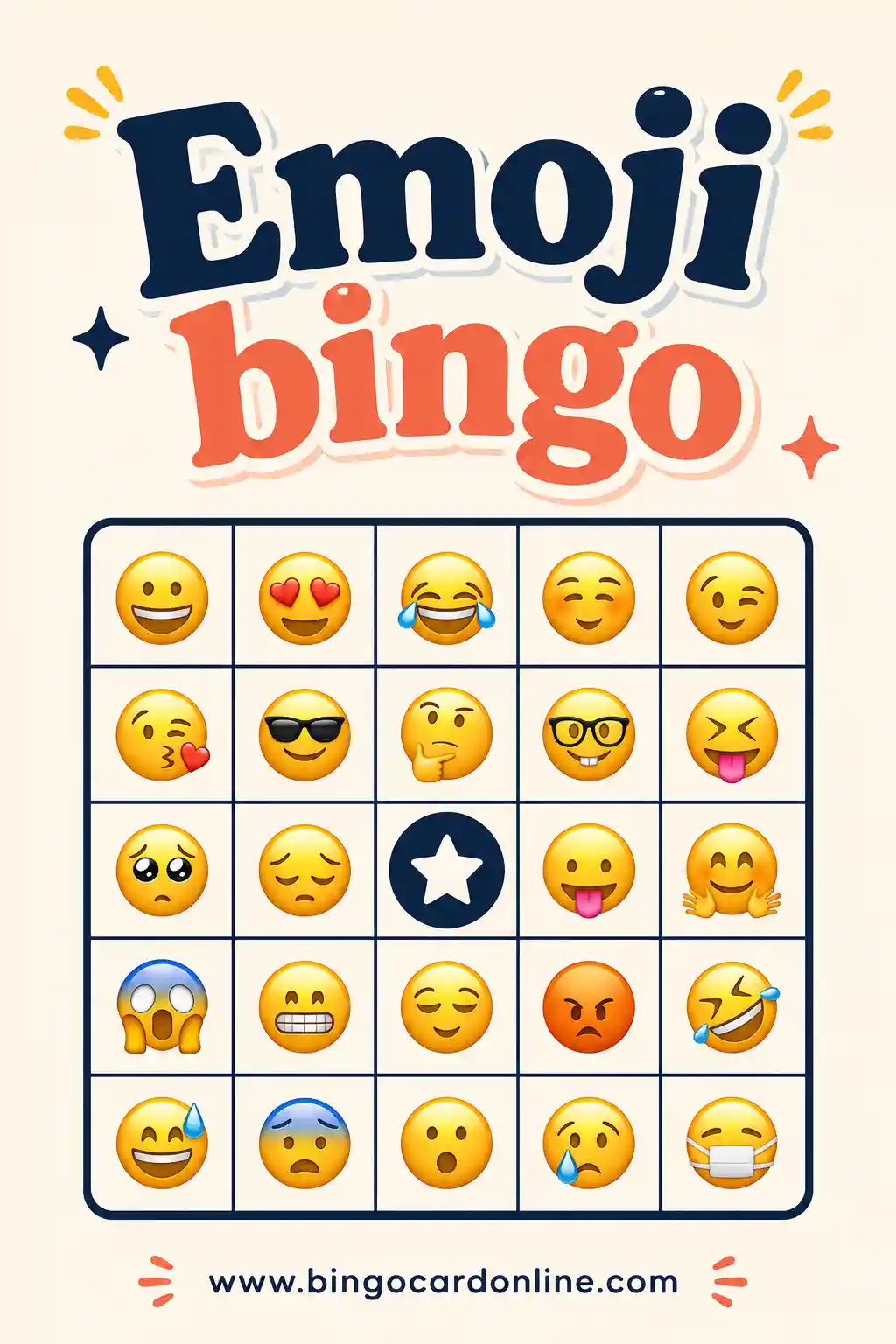
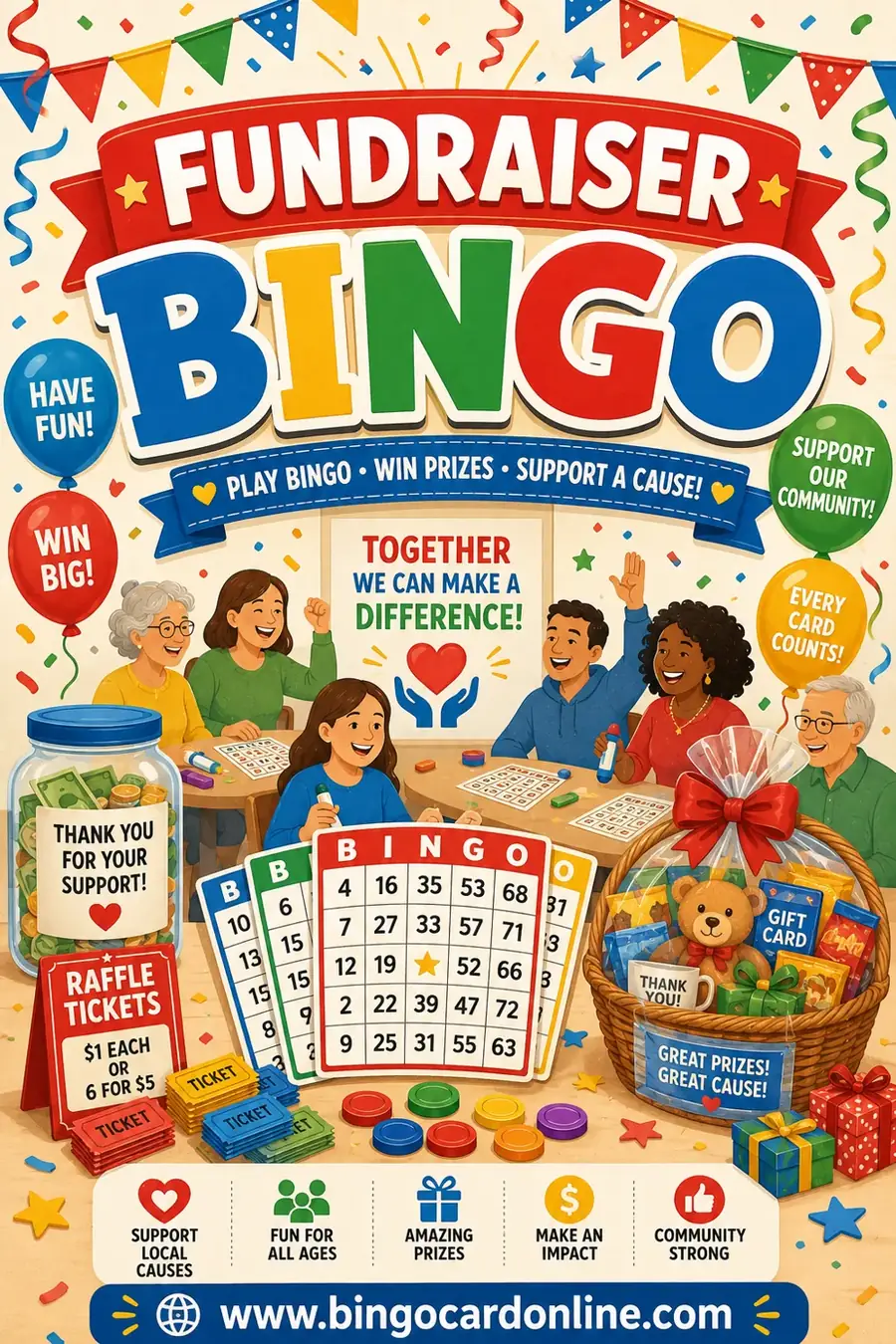
Grab the prompt list above, open the free bingo card generator, and you'll have a stack of unique, printable human bingo cards in minutes. It's free, there's no sign-up, and every card prints with prompts in a fresh order, so your icebreaker is ready to get the room talking. For more ways to help a group connect, try our get-to-know-you bingo, emoji bingo, and fundraiser bingo. Have fun breaking the ice.