Bingo for Team Building: Free Printable Cards & Ideas
Bingo for team building is a simple group game where coworkers mark squares that describe people, habits, or shared experiences on your team instead of numbers, like "drinks too much coffee" or "has worked here over five years." It gets quiet teams talking, helps new hires learn names fast, and works in person or over video. The quickest way to set it up is a free bingo card generator that turns one word list into a unique card for every person.
Want to run a session this week? Open the free generator, paste in a list of traits or prompts (there's a ready-made one below), and print a unique card for each teammate. No sign-up, no software, no awkward setup.
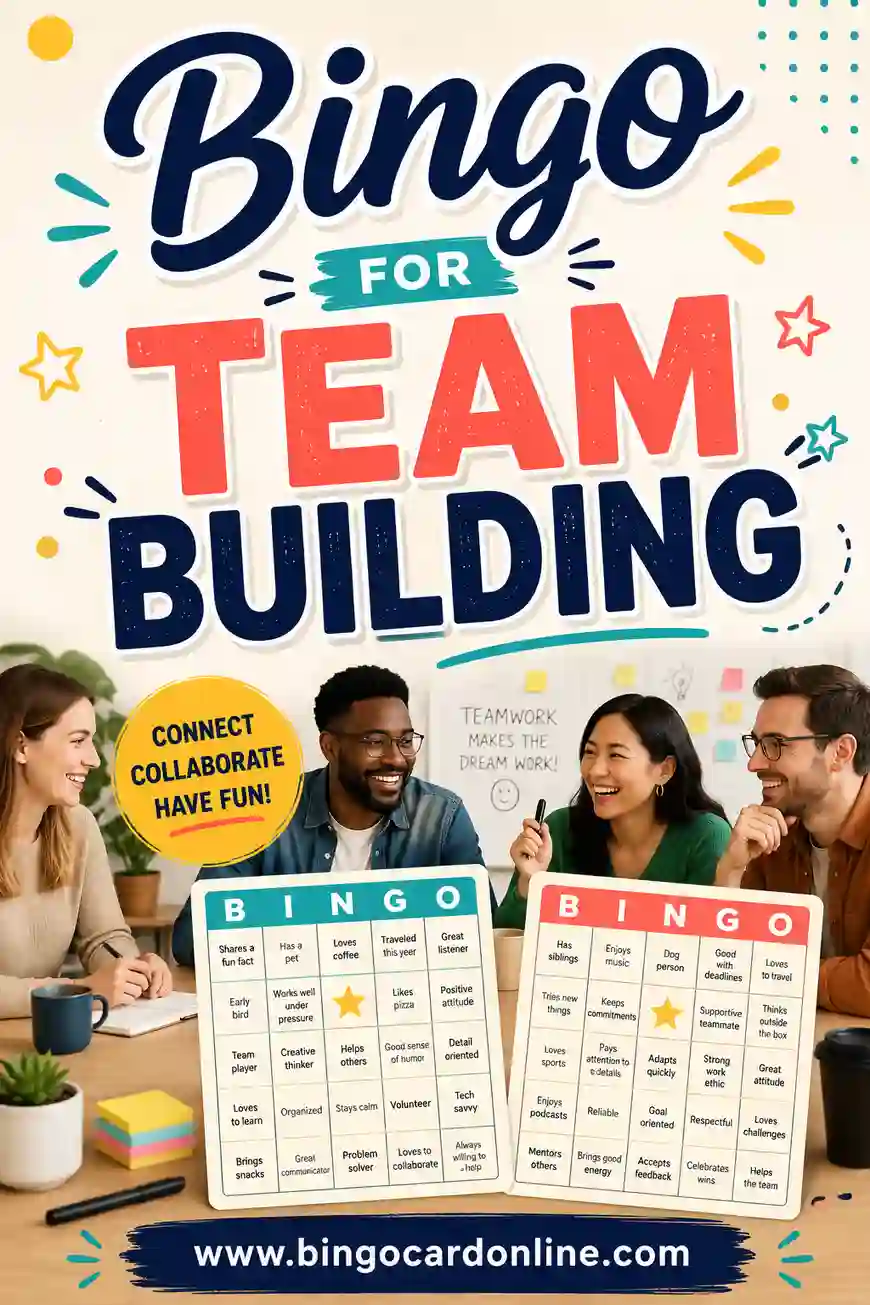
Picture regular bingo, then swap the numbers for things that are true about your coworkers. Each card is a grid of squares with statements like "has a pet dog," "works remotely," or "joined this year." Players walk around (or hop into breakout rooms) and find a person who matches each square. When they do, they write that person's name in the box.
It's often called "human bingo" or "icebreaker bingo." The goal isn't to win fast. It's to give people a reason to start conversations they'd never start on their own.
You can run it two ways:
- Mingle bingo. Everyone moves around the room finding people who match each square. First to fill a line (or the whole card) wins. Best for kickoffs and onboarding.
- Caller bingo. One host reads prompts aloud and players mark squares that apply to them. Quieter, faster, and great for a short warm-up before a meeting.
Why Bingo Works So Well for Teams
Most icebreakers feel forced. Bingo doesn't, because it gives people a clear task and a little friendly pressure. Here's why it lands:
- It breaks the silence. New teammates have an excuse to walk up and ask, "Hey, is this you?" That first question is the hard part, and bingo hands it to them.
- It surfaces surprises. You'll learn a colleague climbed a mountain or speaks three languages. Those facts stick and spark future chats.
- It's quick to set up. With a generator, you go from idea to printed stack in under ten minutes.
- It scales. Five people or fifty, in the office or on a video call, the same card works.
It also flattens the room. The intern and the VP are both just trying to find someone who "hates cilantro," and that shared silliness does more for team chemistry than a trust fall ever could.
Free Team Building Bingo Word List (Copy & Paste)
Here's a ready-to-use list of 30 squares for human bingo. Pick any 24 for a 5x5 card (the 25th is your free space), or grab 9 for a quick 3x3 warm-up. Copy the column you like straight into the generator.
| Fun Facts | Work Life | Hobbies & Quirks |
|---|---|---|
| Has a pet dog | Works remotely | Plays an instrument |
| Has traveled abroad | Joined this year | Loves spicy food |
| Has run a 5K | Drinks too much coffee | Hates cilantro |
| Speaks two languages | Has a standing desk | Is a morning person |
| Has lived in 3+ cities | Brings lunch daily | Watches true crime |
| Has met someone famous | Has back-to-back meetings | Plays video games |
| Can do a magic trick | Loves spreadsheets | Has a tattoo |
| Has a green thumb | Started in a different role | Collects something |
| Bakes from scratch | Has mentored a coworker | Roots for a sports team |
| Is left-handed | Took a sabbatical | Hates onions |
Swap in inside jokes or facts specific to your company for extra laughs. The more your team recognizes themselves in the squares, the harder they'll play.
Theme variations to try
- New-hire bingo. Fill squares with team trivia ("knows where the good coffee is," "has met the CEO") so newcomers learn the lay of the land.
- Remote-team bingo. Use video-call staples: "has a pet on camera," "is on mute by accident," "has a fun background." Great for distributed teams.
- Project-kickoff bingo. Seed squares with skills you need ("knows SQL," "has run a launch") so people self-identify their strengths.
How to Make Team Building Bingo Cards in 4 Steps
No design skills required. Here's the whole process.
- Pick your grid size. 5x5 for big groups and longer sessions, 4x4 for a faster round, 3x3 for a quick five-minute warm-up.
- Add your prompts. Paste at least 24 traits for a 5x5. More is better, since it gives each card more variety.
- Choose how many cards. One per person, plus a couple of spares. The generator makes each card unique automatically.
- Print or share. Print a stack for the office, or save as a PDF and drop it in the chat for a remote crew.
That's it. For repeat use, print on cardstock or share a fresh PDF each time so people can't memorize layouts.
Where Team Building Bingo Shines
This game flexes to almost any work setting. A few of the best fits:
Onboarding and new-hire weeks
Bingo turns a stiff orientation into something people actually enjoy. Hand new hires a card and watch them learn twenty names in ten minutes. It beats a slideshow of org charts every time.
Company offsites and retreats
A mingle round is the perfect opener before the real agenda starts. It loosens people up, gets them moving, and gives everyone something to laugh about over lunch.
Remote and hybrid teams
Drop the card in your video call chat and run it during the first five minutes. "Has a cat that interrupts meetings" hits different when half the team is nodding. It's a low-effort way to build connection across screens.
Department mixers
When two teams who rarely talk get put in a room, bingo gives them a reason to. By the time someone shouts "Bingo!", they've already swapped a dozen small stories.
Tips for Running a Smooth Game
A few small choices make the session land.
- Set a time limit. Five to ten minutes keeps the energy up. Don't let it drag.
- One name per square. A common rule: you can only use each person once, so players have to talk to more people.
- Offer a small prize. A gift card, first dibs on a good parking spot, or bragging rights. Keep it light.
- Read the room. For shy teams, start with caller bingo before jumping to full mingle mode.
- Have a tiebreaker ready. If two people finish at once, ask a quick fun question to settle it.
What to avoid
- Too-personal prompts. Keep squares fun and safe. Skip anything about salary, health, or relationship status.
- Squares nobody matches. If "has skydived" stumps everyone, the card stalls. Mix in easy ones like "drinks coffee."
- Making it mandatory feeling. Frame it as a game, not a test. People play harder when it feels optional.
- One grid size for a mixed group. A 5x5 can feel long for a five-minute slot. Match the grid to your time.
Fun Twists to Keep It Fresh
Once your team has played the basic version a few times, mix it up to keep the energy high.
- Blackout round. Instead of one line, players race to fill the entire card. It forces more conversations and runs longer, which is great for a longer offsite slot.
- Team vs. team. Split the room in half and have each side fill a shared card together. Good for very large groups and a bit of friendly rivalry.
- Bingo with a story. When players fill a square, they have to share a one-sentence story about that fact. "Yes, I did run a marathon, in the pouring rain." It surfaces great little moments.
- Speed bingo. Set a tight three-minute timer and see who gets the most squares filled. No winner needs a full line; most matches takes it.
- Recurring bingo. Run a fresh card at the start of every team meeting for a month. People look forward to it, and you keep learning new things about each other.
You can also tie the prize to your team's culture, like first pick of project assignments, a coffee on the boss, or naming rights to the next sprint.
Making Bingo Part of Your Team Culture
The best icebreakers don't stay one-off events. A little repetition turns bingo into something your team genuinely looks forward to.
Try running a quick round at major moments: the first day of a new hire, the kickoff of a big project, or the start of a quarterly all-hands. Over time, people start associating those milestones with a fun, low-pressure way to connect. That association does quiet, real work on team morale.
It also gives quieter team members an equal footing. In a normal meeting, the loudest voices fill the room. In bingo, everyone has the same simple task, which means your introverts get just as many wins and just as many conversations. That balance matters more than most managers realize.
Keep the prompts evolving, too. Swap in fresh facts each round, work in recent team wins, or tailor squares to whatever your group is going through. A card that feels current and personal always plays better than a generic one.
Team Building Bingo by Group Size
The same game scales up or down with a few tweaks.
| Group size | Grid size | Tips |
|---|---|---|
| Small (4–8) | 3x3 | Quick warm-up. Use easy-to-match prompts. |
| Medium (9–20) | 4x4 | One name per square. Add a small prize. |
| Large (21–50) | 5x5 | Full mingle mode. Give 10 minutes. |
| Remote team | 4x4 | Use video-call prompts. Run in chat. |
| Cross-department | 5x5 | Mix prompts from both teams. |
Planning more group fun? You can build the same kind of game for other crowds with our kids' birthday party bingo, baby shower bingo, and Sunday school bingo.
Frequently Asked Questions
How do I make team building bingo cards?
Write a list of 24 or more traits or prompts about your team, then drop them into a bingo card generator. It shuffles your list into a unique card for each person. Print the stack or save it as a PDF for a remote group.
What should go on a team building bingo card?
Use fun, safe facts your coworkers might share: has a pet, speaks another language, joined this year, loves spicy food. The word list above gives you 30 ready to copy. Avoid anything too personal.
Does team building bingo work for remote teams?
Yes. Share the card as a PDF or image in your video-call chat and run a caller round, or use breakout rooms for mingle mode. Video-themed prompts like "has a pet on camera" work especially well.
How long does a game take?
A quick warm-up round runs about five minutes. A full mingle session with a 5x5 card usually takes ten to fifteen. Setting a timer keeps the energy high and stops it from dragging.
How many cards do I need?
One per person, plus a few spares. For a team of 20, print around 25. The generator makes as many unique cards as you want in one go, so spares cost nothing.
Can I reuse the cards for the next event?
You can, but it's better to generate fresh ones so people don't recognize old layouts. Making a new set takes a couple of minutes, and you can tweak the prompts to fit each new group.
Ready to Build Your Team Building Bingo Cards?
Grab the word list above, open the free bingo card generator, and you'll have a unique card for every teammate in minutes. It's free, there's no sign-up, and each card comes out different, so your icebreaker actually breaks the ice. Print a stack or share a PDF, and watch your team start talking.