Vocabulary Bingo: Free Printable Cards for the Classroom
Vocabulary bingo is a word game where each square holds a vocabulary word, and instead of calling the word itself, you read its definition or use it in a sentence. Students figure out which word matches and cover it. The first to fill a line shouts "Bingo!" The fastest way to set it up is a free bingo card generator that scrambles your word list into a stack of unique cards for the whole room.
Want to get straight to it? Open the free generator, paste in your vocabulary list (there's a sample one below), and print a card for each student. No sign-up, no fee, no software to install.
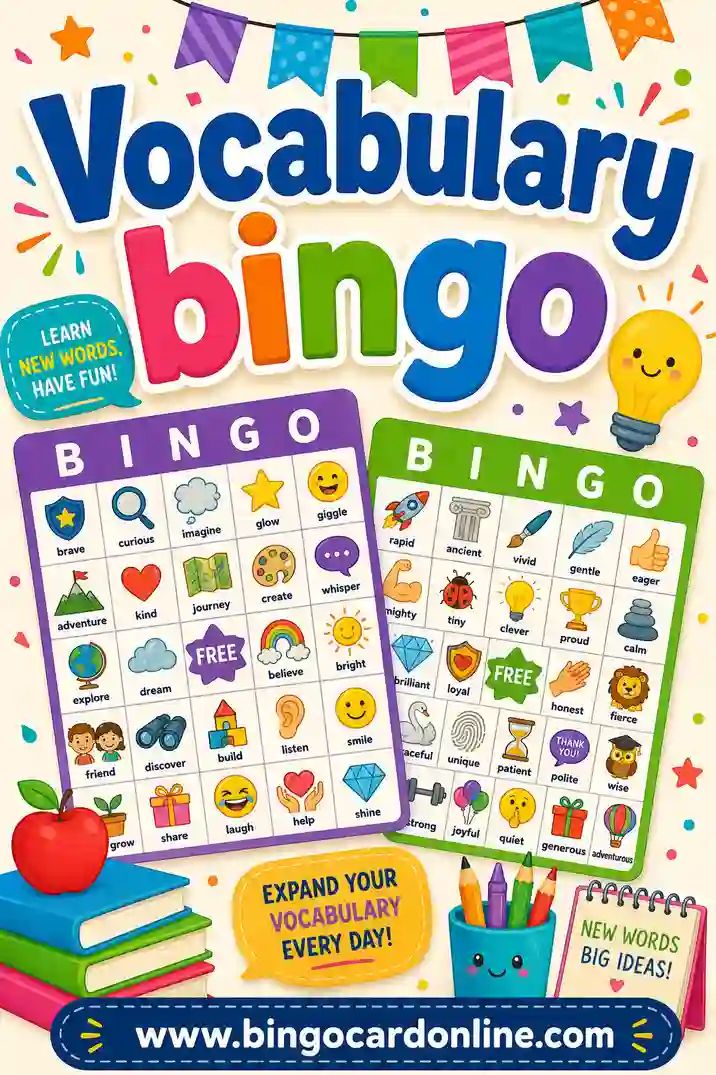
Regular bingo calls a number and you find it. Vocabulary bingo flips that. You read a clue, the definition or a sentence with the word missing, and students have to know the word well enough to spot it on their card. That tiny twist turns a luck game into a real learning tool.
Each card is a grid of vocabulary words. When you say "a feeling of great happiness," a student scans for "joy" and covers it. Because winning depends on knowing the words, kids end up reviewing the whole unit without it feeling like a worksheet.
Here's what people overlook: every card in your stack needs to be different. If two students share a layout, they win together and the game falls flat. That's why a generator beats hand-drawing cards. It takes one word list and shuffles it into dozens of unique grids in a couple of clicks.
Why Teachers Love Vocabulary Bingo
It's one of those rare review games that's both genuinely useful and genuinely fun. A few reasons it works:
- It tests real understanding. Matching a definition to a word is deeper than just recognizing the word.
- It reviews a whole unit at once. One game can cover 20 to 30 terms in fifteen minutes.
- It's quiet and focused. Students listen hard so they don't miss their word.
- It works for any subject. Science terms, history names, math words, a new language. If it's a vocabulary list, it works.
It's fast to run too. Most teachers go from "let's review" to a finished round in about fifteen minutes, free space included.
Free Vocabulary Bingo Word List (Copy & Paste)
Here's a ready-to-use list of 30 versatile vocabulary words, the kind that show up in middle-grade reading and writing. Pick any 24 for a 5x5 card (the center is your free space), or grab 16 for a 4x4. Copy a column straight into the generator, or better yet, swap in your own unit's words.
| Feelings & States | Describing Words | Action & Idea Words |
|---|---|---|
| joy | enormous | observe |
| courage | fragile | predict |
| curiosity | ancient | persuade |
| patience | brilliant | analyze |
| anxiety | gentle | summarize |
| relief | stubborn | compare |
| pride | curious | describe |
| envy | weary | explain |
| gratitude | clever | demonstrate |
| confidence | timid | imagine |
Mix and match across the columns for variety. The real power, though, is using your own list, this week's spelling words, a novel's key terms, or a science unit.
Make it fit your subject
- Science bingo. Fill squares with unit terms and call out their definitions: "the powerhouse of the cell" for "mitochondria."
- Foreign language bingo. Put words in the target language on the cards and call the English meaning, or the reverse.
- Synonym bingo. Call a synonym and students cover the matching vocabulary word. Great for older students.
How to Make Vocabulary Bingo Cards in 4 Steps
No design skills required. Here's the whole process.
- Pick your grid size. 5x5 for a full unit of 24-plus words, 4x4 for a shorter list, 3x3 for a quick quiz.
- Add your words. Paste at least 24 terms for a 5x5 (more is better, since it boosts variety between cards).
- Choose how many cards. One per student, plus a few spares. The generator makes each one unique automatically.
- Print. Hit print, grab your stack, and you're ready to play.
That's it. Print on cardstock or use clear sleeves so students can mark with dry-erase markers and you can reuse the set every unit.
How to Play Vocabulary Bingo
If you've never run a definition-call game, it's simpler than it sounds. Here's a clean round start to finish.
- Hand out cards and markers. One card per student, a pile of chips or beans within reach.
- Explain the win. Decide before you start: one line, four corners, or a full blackout. Say it out loud so nobody's surprised later.
- Call a clue, not the word. Read the definition, a sentence with a blank, or a synonym. Pause so students can think and scan.
- Track what you've called. Keep your master list and check off each word as you call it. You'll need it to verify the winner.
- Check the card, and the learning. When a student calls "Bingo!", have them read back each covered word and its meaning. This step doubles as a final review.
Having the winner explain each word is the best part. It catches lucky guesses and turns the win into one more round of review for the whole class.
Common mistakes to avoid
- Calling too fast. Students need a moment to recall, not just recognize. Give 15 to 20 seconds per clue.
- Too few words. With only 24 words for a 5x5, every card is nearly identical. Aim for 30 or more so the generator can make distinct cards.
- Definitions that are too easy. If the clue gives the answer away, you're not testing much. Make students think.
- Skipping the read-back. Always have the winner explain their words. Without it, the game rewards luck over learning.
Vocabulary Bingo by Grade Level
The same game works from early elementary to high school if you adjust the grid and the difficulty of your clues.
| Grade level | Grid size | Clue style |
|---|---|---|
| Grades 1–2 | 3x3 | Call the word and a simple picture clue. |
| Grades 3–5 | 4x4 | Call short, plain-language definitions. |
| Middle school | 5x5 | Call full definitions or sentences with blanks. |
| High school | 5x5 | Call synonyms, antonyms, or context clues. |
| Test review | 5x5 | Call the exact definitions from the upcoming quiz. |
Matching the clue style to the grade keeps the game challenging without leaving anyone behind.
Fun Ways to Change Up the Game
Once the basic version gets routine, these twists keep students on their toes.
- Blackout round. Students race to cover the whole card. Longer game, and it forces them to know every word.
- Four corners. First to cover the four corner squares wins. Quick and good for a warm-up.
- Antonym bingo. Call the opposite of a word and students cover the matching term. A nice brain-stretch.
- Team bingo. Split into teams sharing cards. Teammates discuss before covering, which sparks great conversations.
You can tie small rewards to the win, like a homework pass or first pick of the reading bin. Keep them small and the rounds quick.
Tips for Crisp, Reusable Cards
A few small choices make the set last all year.
- Use cardstock. It survives more game days than plain paper and feels nicer to handle.
- Print in black and white. Vocabulary words read clearly without color, and it saves a ton of ink.
- Laminate or use sleeves. Then students mark with dry-erase markers and you wipe the cards clean afterward.
- Print a test card first. Check your margins so you're not stuck with cut-off words on a whole stack.
- Keep a master list handy. Print your called-clues sheet so verifying a winner is quick.
Building Vocabulary Bingo Into Your Lessons
Bingo lands harder when it backs up the words you're already teaching. A few ways to fold it into your week:
- Friday review. Introduce a unit's words across the week, then close with a bingo round that covers all of them. Students get a low-stress recap right before the quiz.
- Pre-test check. Run a game the day before a vocabulary test. You'll quickly see which words students stumble on, and you can reteach the shaky ones.
- Sub-day activity. Leave a stack of cards and a list of definitions for a substitute. It's a self-running review that keeps the class on task and on topic.
- Center rotation. Set up a bingo station during small-group time. One student reads clues from a card while the others play.
The single best move is to use your own words. Generic lists are fine for a one-off game, but bingo earns its keep when the squares are this week's actual terms.
Make students do the calling
Once your class knows the routine, hand the caller role to a student. Reading definitions aloud, deciding how to phrase a clue, and confirming the winner all reinforce the vocabulary even more than playing does. Rotate the job so everyone gets a turn, and you've turned a review game into a speaking-and-thinking exercise too.
Frequently Asked Questions
How many vocabulary bingo cards do I need?
One card per student, plus a few spares in case a card gets damaged or someone joins late. For a class of 28, print around 32. The generator lets you make as many unique cards as you want in one go.
What's the best way to call vocabulary bingo?
Read the definition or a sentence with the word missing instead of saying the word itself. This makes students prove they actually know the term, which turns the game into real review rather than a matching exercise.
Can I use my own vocabulary list?
Absolutely, and you should. Paste this week's spelling words, a unit's key terms, or a novel's vocabulary straight into the generator. The sample list above is just a starting point.
Are these vocabulary bingo cards really free to print?
Yes. You make and print them yourself at no cost. There's no sign-up and no watermark, so you can run a whole class or a full unit's worth of games on one free word list.
How do I make every bingo card different?
Use a generator that shuffles your word list into a new layout for each card. No two students get matching grids, so the game stays fair. Doing this by hand is slow and error-prone, which is exactly why the tool exists.
What grades is vocabulary bingo good for?
Any grade with a vocabulary list, from early elementary to high school. Just adjust the grid size and clue difficulty. Younger kids do well on a 3x3 with picture clues, while older students handle a 5x5 with full definitions.
Ready to Print Your Vocabulary Bingo Cards?
Grab the word list above (or paste your own), open the free bingo card generator, and you'll have a stack of unique, printable vocabulary bingo cards in minutes. It's free, there's no sign-up, and every card comes out different, so your class is set for a review session that actually feels like a game.
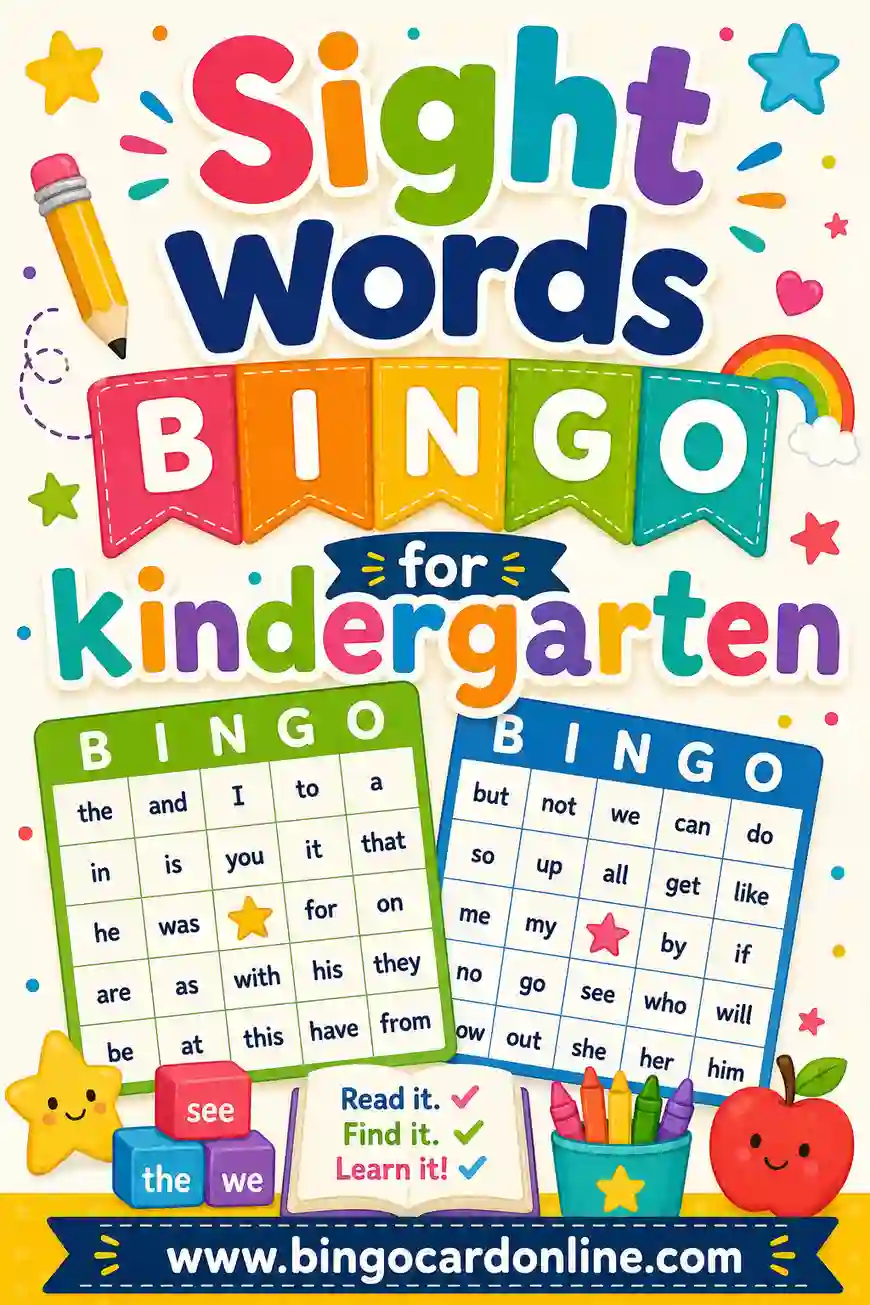
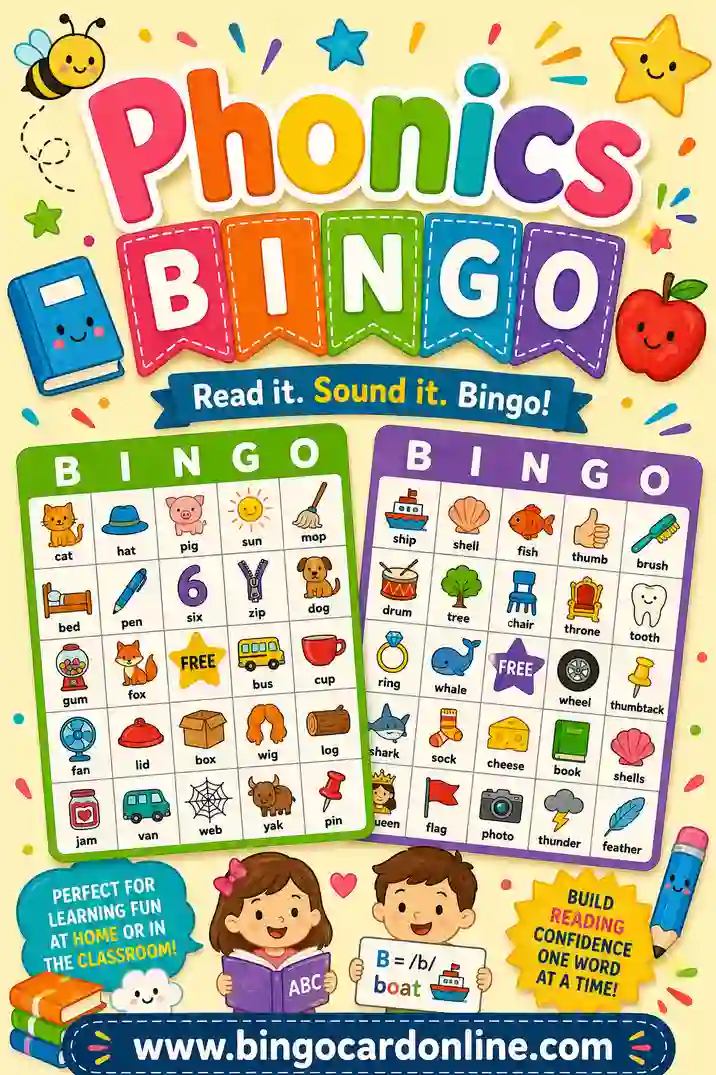
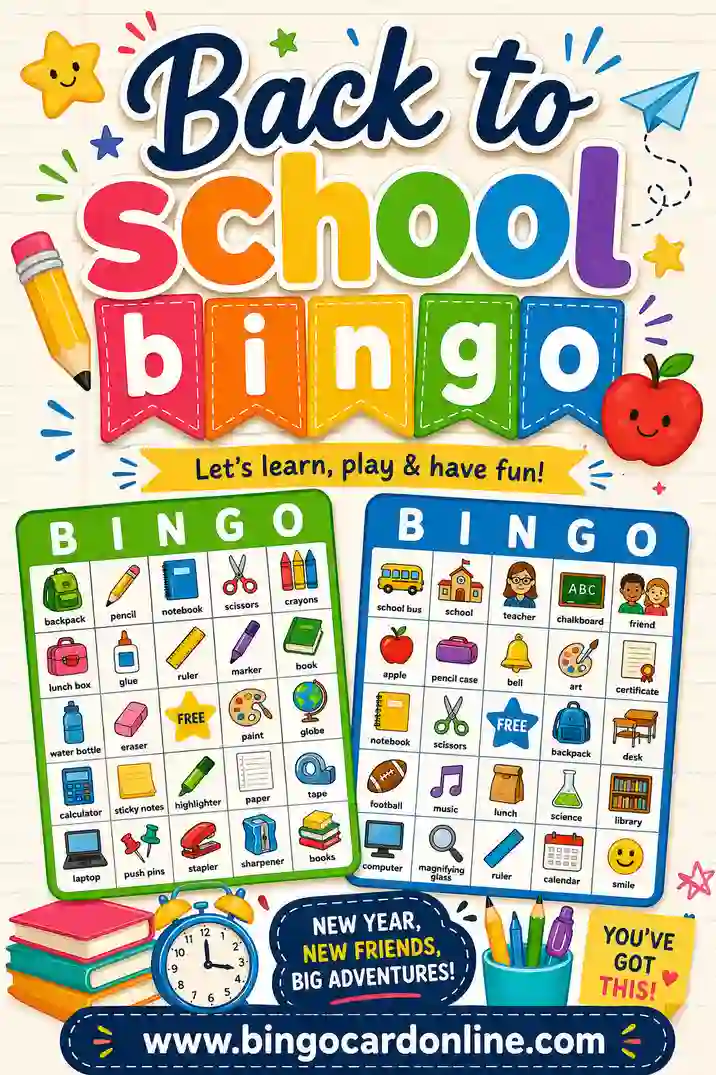
Want more classroom games? Try sight words bingo for kindergarten for new readers, phonics bingo for sounding-out practice, or back to school bingo to start the year strong.