Sight Words Bingo for Kindergarten: Free Printable Cards
Sight words bingo for kindergarten is a simple word game where each square holds a common high-frequency word like "the," "and," or "see" instead of a number. You call the word out loud, kids find it on their card and cover it, and the first to fill a line shouts "Bingo!" The quickest way to set it up is a free bingo card generator that turns one word list into a stack of unique cards for the whole class.
Want to skip ahead? Open the free generator, paste in a kindergarten sight word list (there's a ready-made one below), and print one card per child. No sign-up, no fee, no software to install.
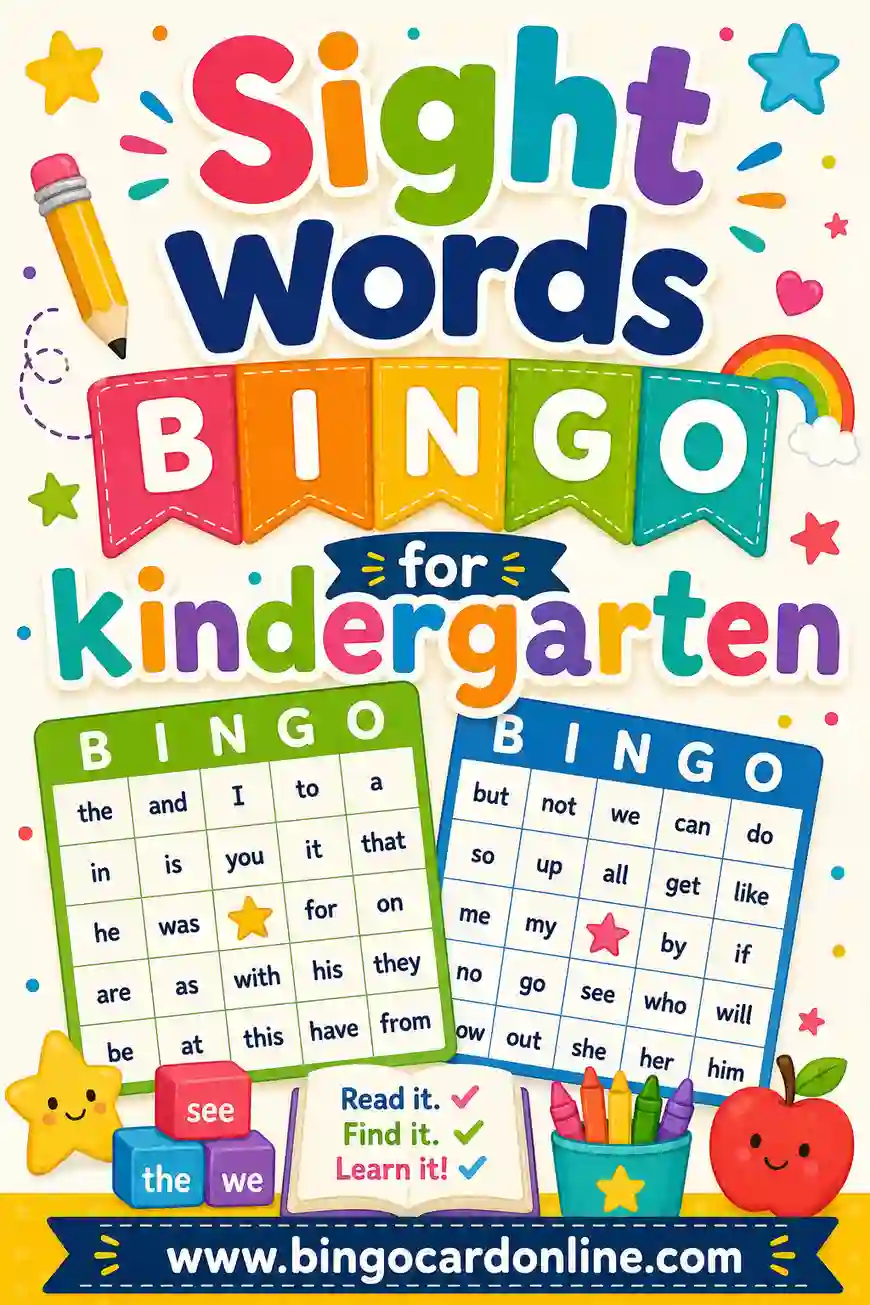
Sight words are the little words kids see over and over in books, the ones they're meant to recognize instantly instead of sounding out. Think "a," "is," "you," "to," and "my." Lists like Dolch and Fry group these by grade so teachers know which words to teach first.
Bingo turns that memorizing into a game. Each card is a grid of sight words. You read a word, kids scan their card, and they cover the match with a chip or a bean. Because the game rewards fast recognition, it's a perfect fit for the exact skill kindergarteners are building.
Here's the part people miss: every card in your stack should be different. If two kids share the same layout, they win at the same time and the game loses its spark. That's why a generator beats making cards by hand. It scrambles one word list into dozens of unique cards in seconds.
Why Sight Words Bingo Works So Well
Five-year-olds learn best when they don't realize they're learning. Bingo hides the drill inside a game, and that changes everything.
- It's repetition without the groan. Kids see the same words again and again across a few rounds, which is exactly how sight words stick.
- It builds speed. The game rewards quick recognition, so kids stop sounding out and start knowing.
- It's low-pressure. There's no reading aloud in front of the class. A shy kid can shine just by spotting a word.
- Everyone plays at once. The whole class is engaged, not waiting for a turn.
It's also fast to run. Most teachers go from "let's play bingo" to a finished round in about fifteen minutes, free space and all.
Free Kindergarten Sight Word List (Copy & Paste)
Here's a ready-to-use list of 30 kindergarten sight words, pulled from the words kids meet first. Pick any 9 for a 3x3 card, 16 for a 4x4, or grab a wider mix for variety across the class. Copy a column straight into the generator.
| Starter Words | Action Words | Connecting Words |
|---|---|---|
| the | go | and |
| a | see | is |
| I | look | to |
| my | come | for |
| me | run | of |
| we | jump | in |
| you | play | on |
| like | said | at |
| can | want | he |
| it | here | she |
Mix and match across the columns so no two cards feel the same. For your earliest readers, lean on the shortest words like "I," "a," "me," and "we."
Make it match your class
- Use your own word wall. Swap in the exact words you've taught that week so bingo doubles as review.
- Start small. A 3x3 grid with nine words is plenty for the first few games. Add squares as kids gain confidence.
- Add a picture clue. For words like "look" or "jump," a tiny matching icon helps non-readers stay in the game.
How to Make Sight Words Bingo Cards in 4 Steps
You don't need any design skills. Here's the whole thing.
- Pick your grid size. 3x3 for the start of the year, 4x4 once kids know more words, 5x5 only for confident readers.
- Add your words. Paste at least 16 words for a 4x4 (more is better, since it boosts variety between cards).
- Choose how many cards. One per child, plus a few spares. The generator makes each one unique automatically.
- Print. Hit print, grab your stack, and you're ready to play.
That's it. Print on cardstock or slip the cards into clear sleeves so you can reuse them with dry-erase markers all year.
How to Play Sight Words Bingo in Kindergarten
If you've never run a bingo game with little kids, don't worry. It's easy, and the routine settles fast.
- Hand out cards and markers. One card per child, a small cup of chips or beans within reach.
- Explain the win. Decide before you start: one line across, down, or diagonal, or four corners. Say it out loud so nobody's confused.
- Call one word at a time. Read the word clearly, then show it written on the board so kids can match the letters. Pause so everyone has time to scan.
- Track what you've called. Keep your called words in a pile or check them off a list. You'll need this to verify the winner.
- Check the card. When a child calls "Bingo!", read their covered squares back against your list. If it checks out, they win. If not, the game keeps going, no harm done.
Showing each word on the board as you call it is the secret sauce for kindergarten. It turns the game into reading practice instead of a listening test, and it keeps your non-readers in the running.
Common mistakes to avoid
- Calling too fast. Five-year-olds need a beat to scan. One word every 15 to 20 seconds is plenty.
- Too few words. With only 16 words for a 4x4, every card is nearly identical. Aim for 24 or more so the generator can make distinct cards.
- Forgetting to show the word. Saying a word out loud isn't enough for new readers. Always write it where they can see it.
- One grid size for everyone. If a few kids are ahead, run them on a 4x4 while the rest play 3x3.
Sight Words Bingo by Skill Level
The same game stretches across the whole kindergarten year if you adjust the grid and the word list.
| Stage | Grid size | Word tips |
|---|---|---|
| First weeks | 3x3 | 6–9 of the easiest words. Show each word on the board. |
| Mid-year | 4x4 | Add action words like go, see, and look. |
| Confident readers | 5x5 | Mix in trickier words like said, here, and want. |
| Small-group review | 3x3 | Use just the words a group is still learning. |
| Whole-class fun | 4x4 | Pull from the full word wall for variety. |
Adjusting the grid keeps every child in the sweet spot, challenged but not lost.
Fun Ways to Change Up the Game
Once the basic version gets familiar, these twists keep your class interested.
- Blackout round. Instead of one line, kids race to cover the whole card. Longer game, bigger cheer at the end.
- Four corners. First to cover the four corner squares wins. Quick and great for short attention spans.
- Buddy bingo. Pair a strong reader with a beginner to share one card. They help each other spot words.
- Stand-up bingo. Kids stand when their word is called and sit when they cover it. Burns off the wiggles.
You can tie tiny rewards to the win, like first pick of the reading corner or a sticker. Keep prizes small and rounds short, and you'll fit in several games before anyone fades.
What to Use as Markers
No fancy supplies needed. Any of these work fine:
- Dried beans, buttons, or bottle caps
- Mini erasers or pom-poms (kids love these)
- Cereal pieces or mini crackers (edible markers are a hit)
- Dry-erase markers, if your cards are laminated
For tiny hands, bigger markers are easier to place and pick up. Pom-poms and large dried beans are forgiving.
Pairing Bingo With Your Reading Lessons
Bingo is even more powerful when it backs up what you're already teaching. A few easy ways to weave it in:
- Word-of-the-week warm-up. Start the week introducing a few new sight words, then run a bingo round on Friday using just those words plus a handful of old favorites. The game becomes a built-in review.
- Center activity. Set up a bingo station kids can run in small groups during literacy centers. One child acts as the caller (you can pre-record yourself if your readers aren't ready to lead), and the rest play.
- Home practice. Send a card home with a list of called words. Families can play a quick game at the kitchen table, and you've turned screen-free home time into reading practice.
- Brain break. When the class gets restless, a five-minute bingo round resets the energy and sneaks in a little learning at the same time.
The trick is to keep the word list tied to what kids are actually working on. When the bingo words match the word wall, every round reinforces the lesson instead of pulling in random vocabulary.
A simple weekly routine
Here's a rhythm that works for a lot of teachers:
- Monday: introduce 4 to 6 new sight words.
- Wednesday: practice them in reading and writing.
- Friday: play a bingo round mixing this week's words with last week's.
Over a month, that's four games and a steady drip of review, with almost no extra prep once your cards are made.
Frequently Asked Questions
How many sight words bingo cards do I need?
One card per child, plus a few spares in case a card gets bent or a student joins late. For a class of 20, print around 25. The generator lets you make as many unique cards as you want in one go.
What sight words should go on a kindergarten bingo card?
Start with the words kids meet first: the, a, I, see, go, and, is, to, my, and like. The list above gives you 30 ready to copy. Match them to the words you've already taught so the game doubles as review.
Are these sight words bingo cards really free to print?
Yes. You make and print them yourself at no cost. There's no sign-up and no watermark, so you can run a whole class on a single free word list.
How do I play sight words bingo with kids who can't read yet?
Show each word on the board as you call it so kids match the letters instead of relying on sound. Start with a 3x3 grid and the shortest words, and add a tiny picture clue next to tricky ones.
How do I make every bingo card different?
Use a generator that shuffles your word list. It rearranges the same words into a new layout for each card, so no two kids have matching grids. Doing this by hand is slow and easy to mess up, which is why the tool exists.
Can I reuse the cards next year?
Yes. Print on cardstock and laminate them, or use clear sleeves, then have kids cover squares with chips or dry-erase markers. Wipe them clean and they're ready for the next class.
Ready to Print Your Sight Words Bingo Cards?
Grab the word list above, open the free bingo card generator, and you'll have a stack of unique, printable cards in minutes. It's free, there's no sign-up, and every card comes out different, so your whole class is set to play and learn at the same time.
Want more classroom games? Try our vocabulary bingo for older readers, phonics bingo for sounding-out practice, or back to school bingo to kick off the year.