Phonics Bingo: Free Printable Cards for Reading Practice
Phonics bingo is a reading game where each square holds a letter, sound, or simple word, and you call out a sound while kids find the match and cover it. The first to fill a line shouts "Bingo!" It's a fun way to practice the letter-sound connections that early readers are building. The quickest way to set it up is a free bingo card generator that turns one list into a stack of unique cards for the whole class.
Want to get started right away? Open the free generator, paste in a phonics list (there's a ready-made one below), and print one card per child. No sign-up, no fee, no software to install.
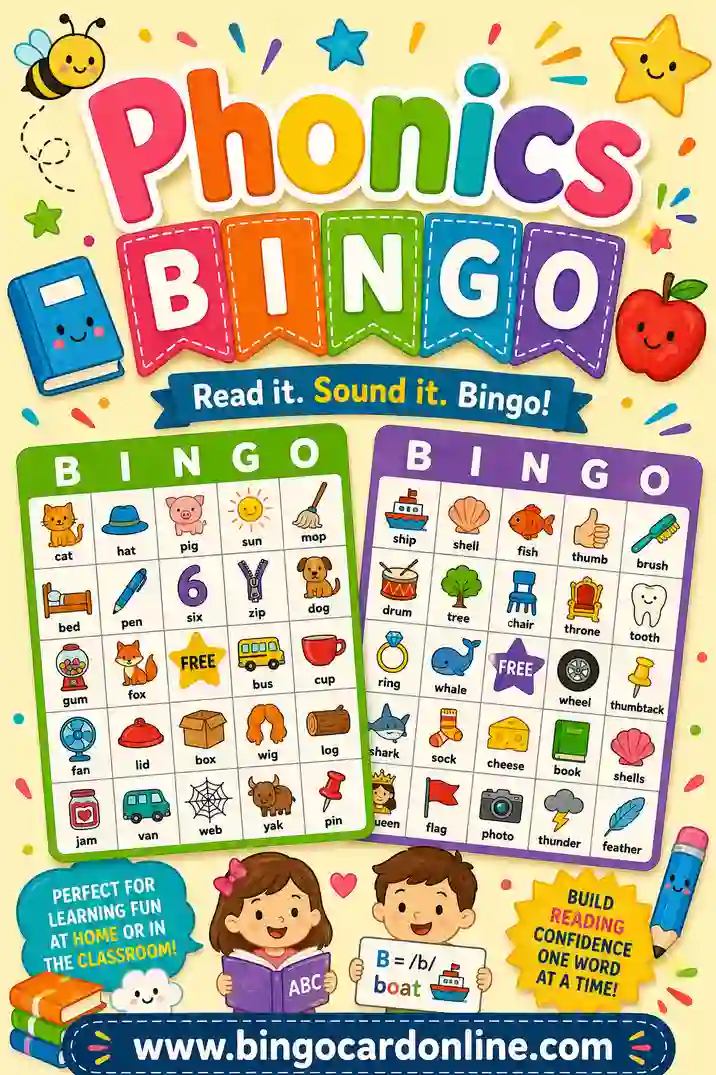
Phonics is all about connecting letters to the sounds they make. Before kids can read words, they need to hear the /b/ in "ball" and know which letter makes it. Phonics bingo practices that exact skill in a way that feels like play instead of a drill.
Each card is a grid of phonics targets: single letters, letter blends like "sh" and "ch," word families like "-at" and "-ig," or short decodable words. You call out a sound or word, and kids find and cover the match. Because the game rewards quick sound recognition, it builds the foundation every reader needs.
Here's what trips people up: every card in your stack should be different. If two kids share a layout, they win together and the game loses its fun. That's why a generator beats making cards by hand. It scrambles one list into dozens of unique cards in seconds.
Why Phonics Bingo Helps New Readers
Learning to read is a lot of small steps, and phonics bingo turns the repetition into something kids ask to play again.
- It links sound to symbol. Kids hear a sound and connect it to a letter, the core skill of decoding.
- It builds listening skills. They have to really hear the sound to find the match, which sharpens their ear.
- It's repetition in disguise. Several rounds means lots of practice, without the worksheet groan.
- It meets kids where they are. Use letters for beginners, blends and word families for kids who are further along.
It's quick to run too. Most teachers go from setup to a finished round in about fifteen minutes, free space and all.
Free Phonics Bingo Lists (Copy & Paste)
Here are three ready-to-use lists, so you can match the game to where your readers are. Pick one column for a focused game, or mix them for a review. Grab 9 squares for a 3x3, 16 for a 4x4, or 24 for a 5x5, then copy them into the generator.
| Letter Sounds | Blends & Digraphs | Word Families |
|---|---|---|
| b | sh | cat |
| m | ch | hat |
| s | th | mat |
| t | wh | bag |
| p | bl | tag |
| f | cr | pig |
| n | st | wig |
| d | gr | dig |
| r | tr | hop |
| g | sl | top |
For beginners, lean on the single letter sounds. For kids who are decoding, the blends and word families give them a real challenge. You can always swap in the exact sounds you're teaching this week.
Match the game to the skill
- Sound-to-letter. Cards show letters; you call the sound. Kids cover the letter that makes it.
- Letter-to-sound. Cards show pictures; you call the letter and kids cover the picture that starts with it.
- Word family round. Cards show short words; you call a word and kids find it. Great for kids who are blending.
How to Make Phonics Bingo Cards in 4 Steps
No design skills needed. Here's the whole thing.
- Pick your grid size. 3x3 for the youngest, 4x4 once kids know more sounds, 5x5 for confident decoders.
- Add your list. Paste at least 16 sounds or words for a 4x4 (more is better, since it boosts variety between cards).
- Choose how many cards. One per child, plus a few spares. The generator makes each one unique automatically.
- Print. Hit print, grab your stack, and you're ready to play.
That's it. Print on cardstock or use clear sleeves so kids can cover squares with chips and you can reuse the set all year.
How to Play Phonics Bingo
If you've never run a phonics game, it's simple. Here's a clean round start to finish.
- Hand out cards and markers. One card per child, a small cup of chips or beans within reach.
- Explain the win. Decide before you start: one line, four corners, or a full card. Say it out loud so nobody's confused.
- Call the sound, not the letter name. Say "/sh/" as a sound, not "S-H." Kids find the match and cover it. Stretch the sound out so everyone can hear it.
- Track what you've called. Keep your called sounds in a pile or check them off a list. You'll need this to verify the winner.
- Check the card. When a child calls "Bingo!", have them say each covered sound or read each word. This turns the win into one more bit of practice.
Saying the sound instead of the letter name is the key. "Phonics" means sounds, so call "/m/" not "em." Having the winner say their sounds back catches lucky guesses and gives the whole class one more round of listening.
Common mistakes to avoid
- Saying letter names instead of sounds. Call "/t/" not "tee." The whole point is the sound-letter link.
- Going too fast. New readers need time to process each sound. Give 15 to 20 seconds between calls.
- Mixing too many skills at once. A card with letters, blends, and full words is overwhelming for beginners. Keep each game focused.
- Too few items. With only 16 sounds for a 4x4, every card is nearly identical. Aim for 24 or more so the generator can make distinct cards.
Phonics Bingo by Skill Level
The same game grows with your readers if you adjust the grid and what's in the squares.
| Stage | Grid size | What goes on the card |
|---|---|---|
| Beginning sounds | 3x3 | Single letters; call the sound. |
| Early blending | 4x4 | Short CVC words like cat, hop, pig. |
| Blends & digraphs | 4x4 | sh, ch, th, bl, cr, st. |
| Word families | 5x5 | Rhyming words like cat, hat, mat. |
| Review & mix | 5x5 | A blend of sounds, blends, and words. |
Matching the squares to the stage keeps every reader challenged without getting lost.
Fun Ways to Change Up the Game
Once the basic version gets familiar, these twists keep kids engaged.
- Blackout round. Kids cover the whole card. More sounds, more practice, bigger cheer at the end.
- Four corners. First to cover the four corners wins. Quick and good for short attention spans.
- Beat the sound. Stretch a sound out slowly and see who can find it before you finish. Builds quick recognition.
- Buddy bingo. Pair a confident reader with a beginner to share one card. They sound things out together.
Tie tiny rewards to the win, like first pick of the reading corner or a sticker. Keep prizes small and the rounds short, and you'll fit in several games.
What to Use as Markers
No special supplies needed. Any of these work:
- Dried beans, buttons, or pom-poms
- Mini erasers or counting bears
- Cereal pieces or mini crackers (edible markers are a hit)
- Dry-erase markers, if your cards are laminated
For little hands, bigger markers are easier to place and pick up. Pom-poms and counting bears are forgiving and fun.
Fitting Phonics Bingo Into Your Day
Phonics bingo works best as a regular part of your reading routine, not a once-in-a-while treat. A few easy ways to use it:
- Sound of the week. Focus your reading lessons on one sound or pattern, then play a Friday bingo round that features it heavily. The game cements the week's target.
- Warm-up before reading. A quick five-minute round wakes up kids' ears before a guided reading lesson, priming them to listen for sounds in text.
- Small-group practice. Pull a group that's working on the same skill and run a focused game just for them. A 3x3 card with their target sounds is plenty.
- Decoding bridge. Once kids know their letter sounds, move to word-family cards. Calling "cat, hat, mat" helps them hear how changing one sound changes the word, which is the heart of blending.
Match the game to the scope and sequence
Most phonics programs teach sounds in a set order, simple consonants first, then short vowels, then blends and digraphs, then trickier patterns. Keep your bingo cards in step with that sequence. If your class just learned "sh" and "ch," build a card around those rather than tossing in sounds they haven't met yet. Staying in your lane keeps every round a confidence builder instead of a guessing game.
When the bingo squares mirror your lessons, the game stops being a break from learning and becomes part of it. Kids get the repetition they need to make sounds automatic, and they're having too much fun to notice they're drilling.
Frequently Asked Questions
How many phonics bingo cards do I need?
One card per child, plus a few spares in case a card gets bent or a student joins late. For a class of 20, print around 25. The generator lets you make as many unique cards as you want in one go.
Should I call the letter name or the sound?
Always call the sound. Say "/sh/" or "/m/" as you'd hear it in a word, not the letter name. Phonics is about connecting sounds to letters, so calling the sound is what builds the skill.
What goes on a phonics bingo card?
It depends on your readers. Beginners do well with single letters, kids who are decoding handle blends like "sh" and "ch," and stronger readers can match short words or word families. The lists above give you all three ready to copy.
Are these phonics bingo cards really free to print?
Yes. You make and print them yourself at no cost. There's no sign-up and no watermark, so you can run a whole class on a single free list.
How do I make every bingo card different?
Use a generator that shuffles your list into a new layout for each card. No two kids get matching grids, so the game stays fair. Doing this by hand is slow and easy to mess up, which is why the tool exists.
Can I use phonics bingo with picture cards?
Definitely. Put pictures on the cards and call the beginning sound or letter, and kids cover the picture that matches. It's a great way to play with kids who aren't reading words yet but know their sounds.
Ready to Print Your Phonics Bingo Cards?
Grab a list above, open the free bingo card generator, and you'll have a stack of unique, printable phonics bingo cards in minutes. It's free, there's no sign-up, and every card comes out different, so your class is set for a reading game that actually builds skills.
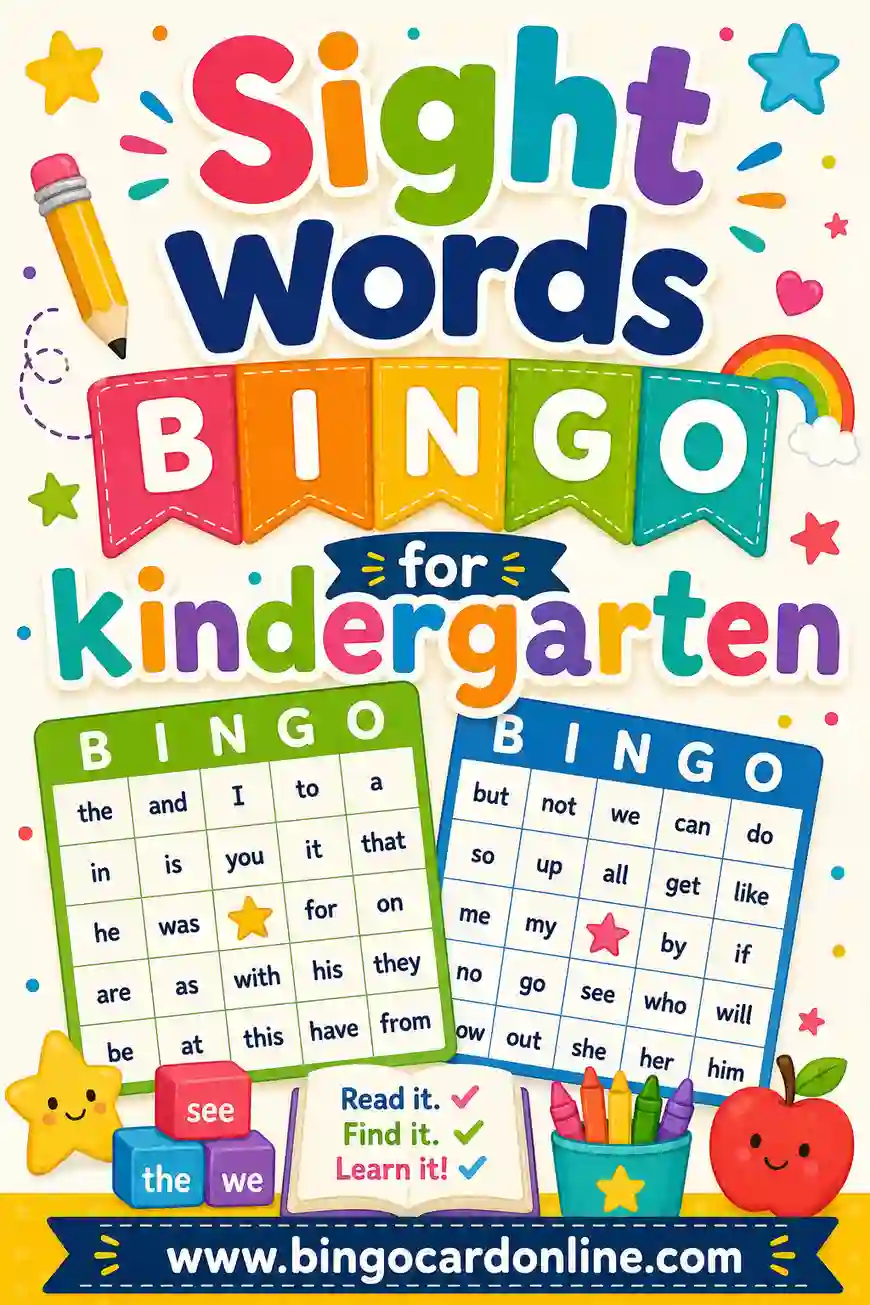
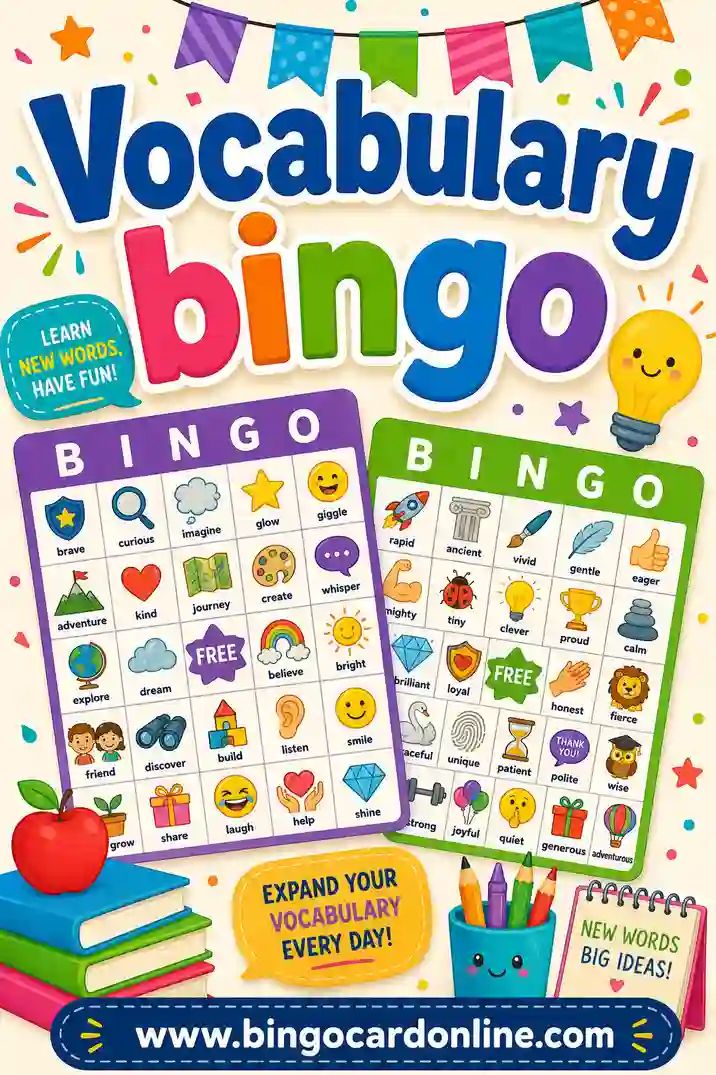
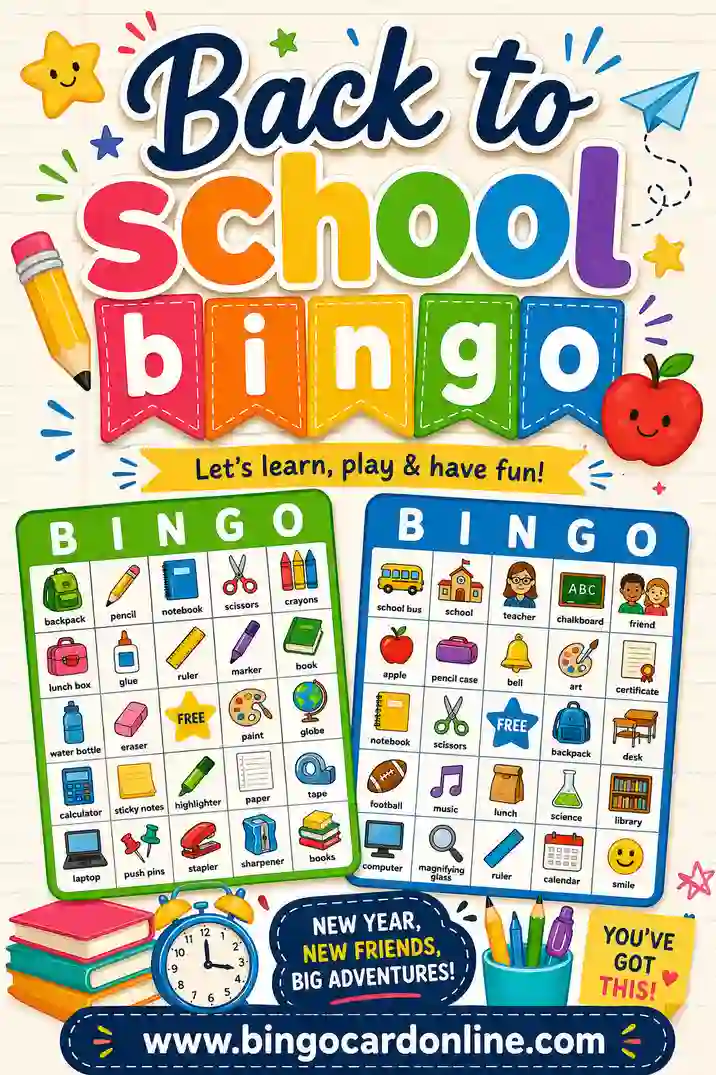
Want more classroom games? Try sight words bingo for kindergarten for high-frequency words, vocabulary bingo for older readers, or back to school bingo to start the year.