Types of Bingo: 75-Ball, 90-Ball, Pattern and Theme Games
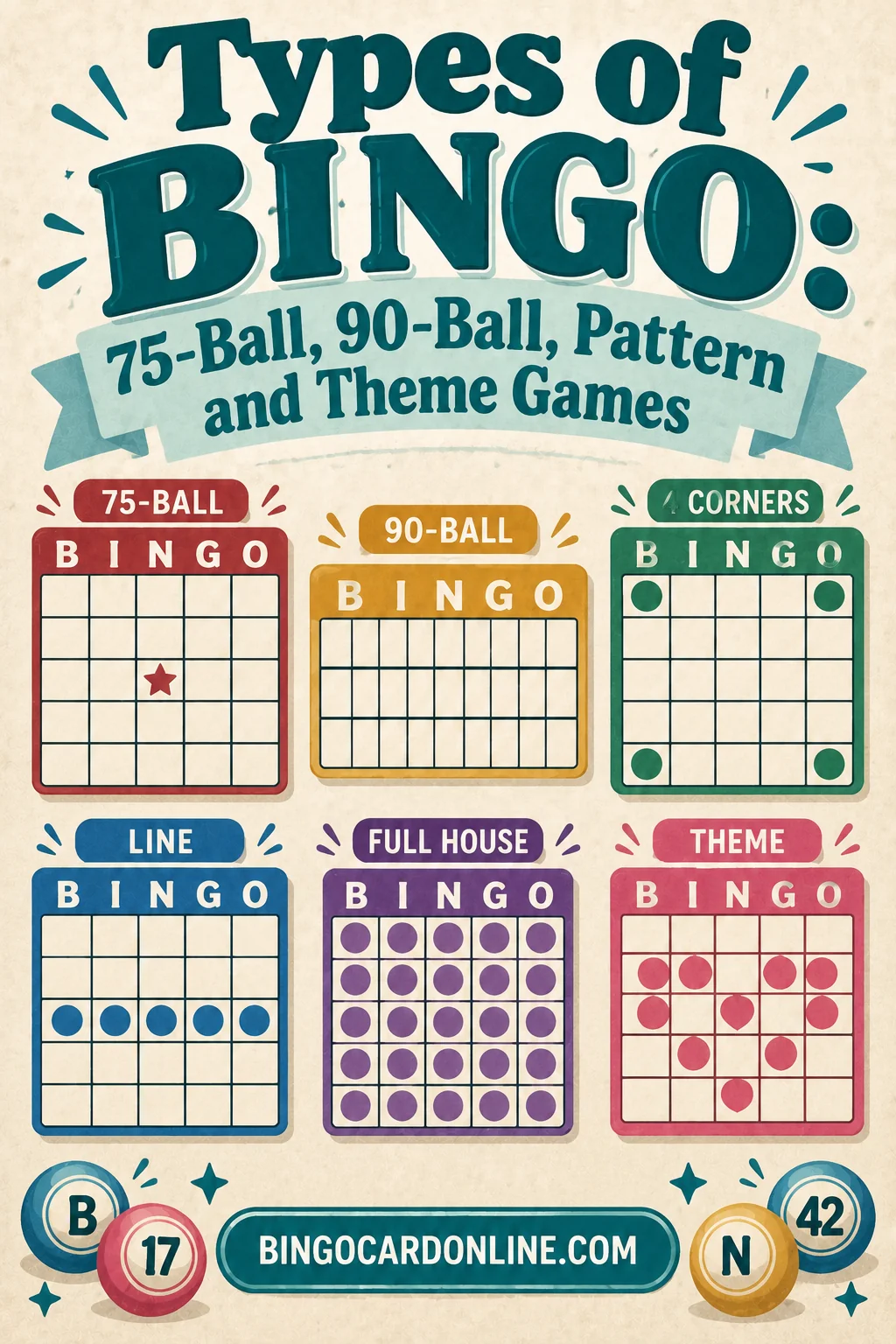
There are four number formats in common use — 75-ball, 90-ball, 80-ball and 30-ball — and everything else is a variation layered on top of one of them, either by changing the winning pattern or by replacing the numbers with words, pictures or prompts. The format sets the card shape and the length of the game; the pattern sets how long a single round runs; the theme sets who wants to play.
Pick in that order and the decision gets easy. A classroom needs a 30-ball card and a short pattern. A two-hour fundraiser needs 75-ball with a running order of increasing patterns. A family holiday game needs pictures and no numbers at all. Here is what each type actually does.
What Is Bingo in Its Basic Form
What is bingo stripped to its mechanics? A caller draws from a fixed pool of items at random and announces each one. Every player holds a card carrying a subset of that pool. Players mark what they hold, and the first to complete an agreed shape calls out and wins. There is no decision to make at any point, which is why the variations all attack the format, the pattern or the content rather than the play.
That is also why the types below combine freely. A 75-ball game can run a postage stamp pattern on holiday-themed cards. A 30-ball game can be played as a blackout. The three layers are independent.
The Four Number Formats
| Format | Card shape | Number pool | Typical round length |
|---|---|---|---|
| 75-ball | 5x5 grid, free center square | 1 to 75 | Medium, and highly adjustable by pattern |
| 90-ball | 3 rows by 9 columns, 15 numbers | 1 to 90 | Long, played in three stages |
| 80-ball | 4x4 grid, colored columns | 1 to 80 | Short to medium |
| 30-ball | 3x3 grid, 9 numbers | 1 to 30 | Very short |
75-Ball Bingo
The North American standard, and the one most people picture. A five-by-five grid with the letters B, I, N, G and O across the top, a free space in the middle, and twenty-four printed numbers. Each column draws from its own range: B holds 1 to 15, I holds 16 to 30, N holds 31 to 45, G holds 46 to 60, and O holds 61 to 75.
The column letters are not decoration. When the caller says B-7 rather than 7, you search five squares instead of twenty-five, which roughly doubles the pace a game can be called at without losing anyone.
The real advantage of 75-ball is that the grid supports shapes. Because it is square, you can ask for a line, a diagonal, corners, a stamp, a letter, a frame or the whole card, and each of those takes a predictable amount of time. That makes 75-ball the only format that can be tuned to a schedule, which is why every organized session of any length uses it.
90-Ball Bingo
The British, Irish, Australian and Latin American standard, and the direct descendant of the French lotto ticket. A ticket is three rows by nine columns, with only fifteen of the twenty-seven spaces carrying numbers. Columns hold ranges again: the first holds 1 to 9, the second 10 to 19, and so on to 80 to 90.
The distinctive feature is that one ticket produces three separate wins. The game runs in stages: one line, then two lines, then the full house, with a prize at each stage. That structure means nobody is out of contention until the very end, and it stretches a single round into something closer to a mini-session.
Tickets are usually sold in strips of six, arranged so that all ninety numbers appear exactly once across the strip. That is an elegant piece of design: buy a full strip and you are guaranteed to mark something on every single call.
80-Ball Bingo
A four-by-four grid, sixteen numbers, no free space, with each column color-coded and drawing from its own twenty-number range. It emerged as an online format and sits deliberately between 75 and 90 — faster than a full 75-ball card, more pattern-friendly than a 30-ball one.
The colored columns do the work the letters do in 75-ball, and they make the format unusually good for younger players who can find a color faster than they can read a letter.
30-Ball Speed Bingo
Nine numbers on a three-by-three grid, drawn from 1 to 30, and there is only one winning condition: cover the card. A round is over in well under a minute.
Do not dismiss it as a lesser version. Speed bingo is the correct choice whenever attention span is the binding constraint — young children, a noisy party, a classroom transition with four minutes left. It also has the useful property that you can play it three or four times in a row with fresh cards in the time one 75-ball coverall takes.
Pattern Games: The Real Variety
Within 75-ball, the pattern is where the actual variety lives, and choosing patterns is how you control the length of an evening. The rough rule: the more squares a pattern needs, the longer the round, and the relationship is steep at the top end.
| Pattern | Squares needed | Round length |
|---|---|---|
| Single line through the free space | 4 | Short |
| Single line, no free space | 5 | Short |
| Four corners | 4 | Short |
| Postage stamp, a 2x2 block in a corner | 4 | Short |
| Letter T, L or X | 8 to 12 | Medium |
| Kite, diamond or arrow | 8 to 13 | Medium |
| Picture frame, the outer border | 16 | Long |
| Blackout or coverall | 24 | Longest |
A few of these are worth knowing in detail. Four corners bingo is the fastest satisfying pattern there is, because it needs only four specific numbers and the shape is instantly checkable from across a room. The postage stamp is equally quick and produces more near-misses, which keeps a room noisier. The picture frame is the right choice when you want a long round that is not quite a coverall. And coverall bingo — every square on the card — is the traditional last game of the night, because it uses nearly the whole ball cage and cannot be followed by anything.
There are also rule-level variants rather than shape variants. Hardway bingo requires a straight line without using the free space, which turns a four-number pattern into a five-number one and lengthens the round without changing the shape. Crazy bingo allows the chosen pattern to count in any rotation, which quadruples the ways to win and speeds everything up. Both are single-sentence rule changes that meaningfully alter pacing.
Word, Picture and Theme Bingo
The oldest variation is not a pattern at all. Nineteenth-century German teachers replaced the numbers on lotto cards with spelling words and arithmetic problems, and that idea produced the entire modern category of non-numeric bingo.
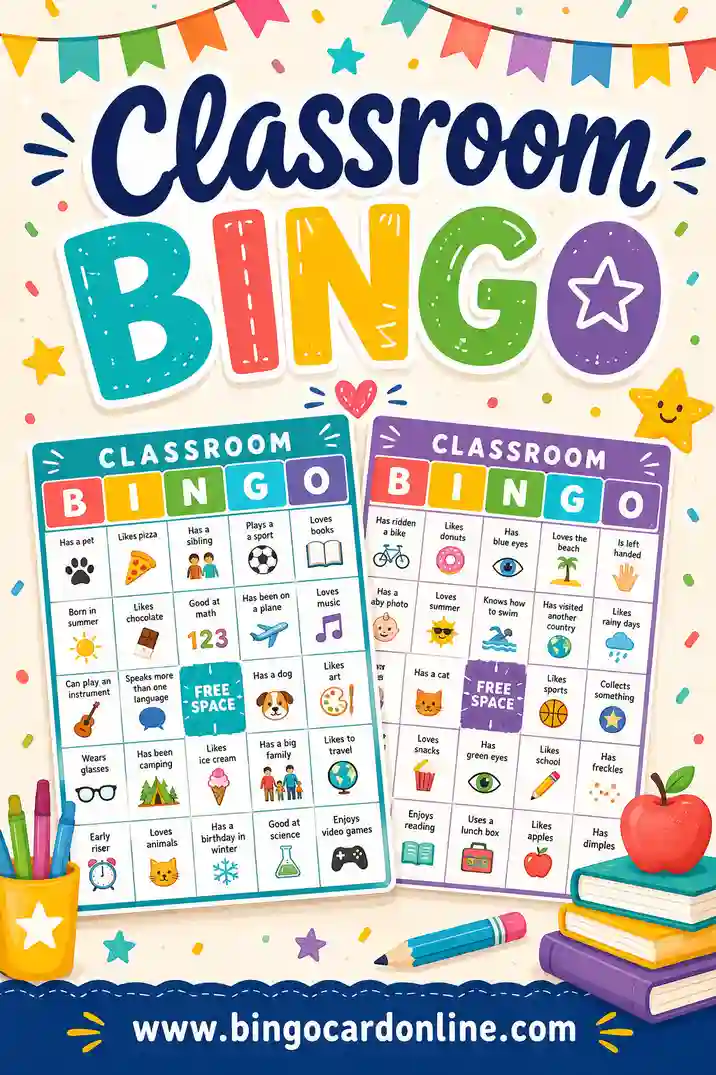
Classroom cards. Sight words, vocabulary, sums, letter sounds, shapes, colors. The caller reads a prompt and the player finds the answer, which turns a drill into a game the class asks for.
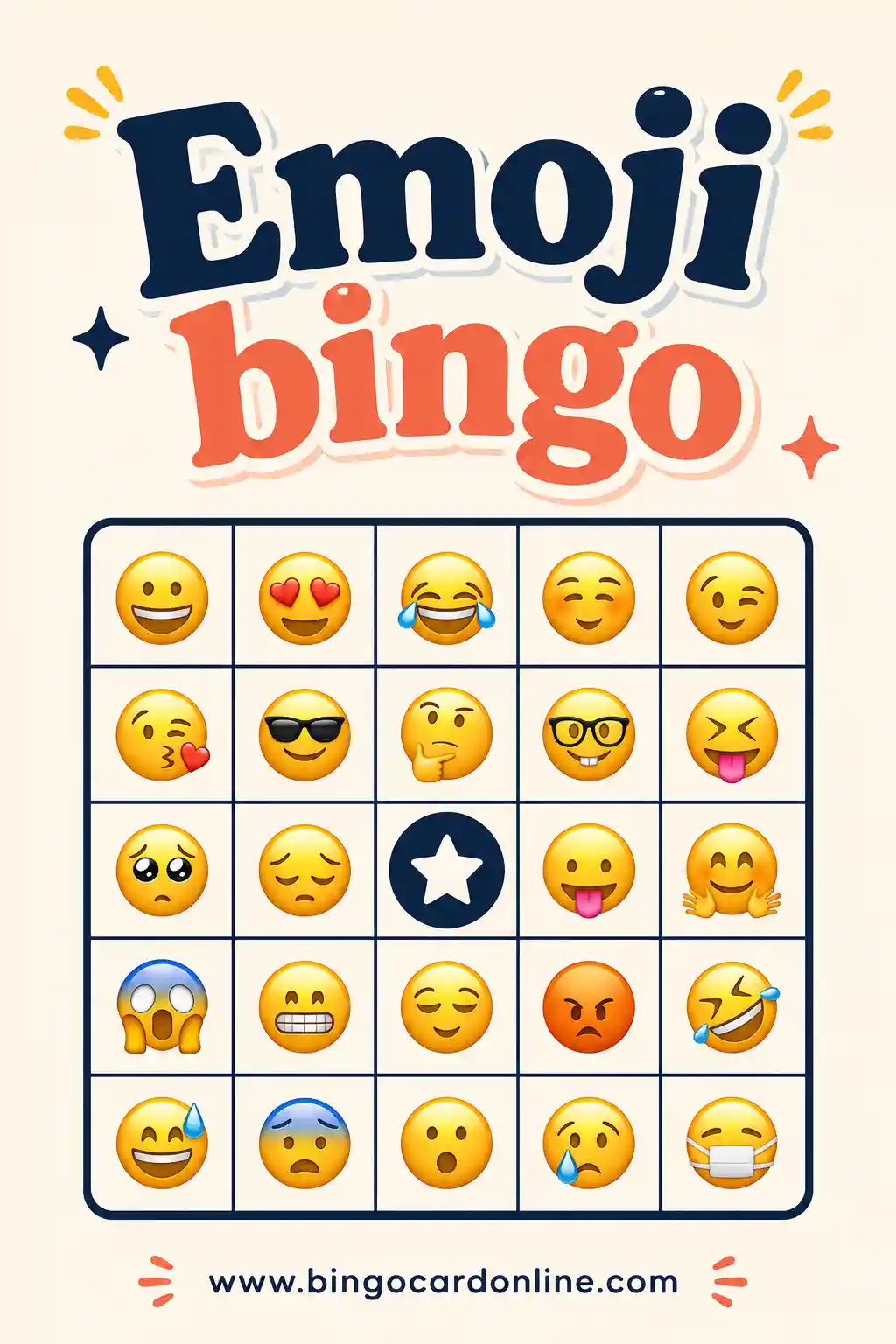
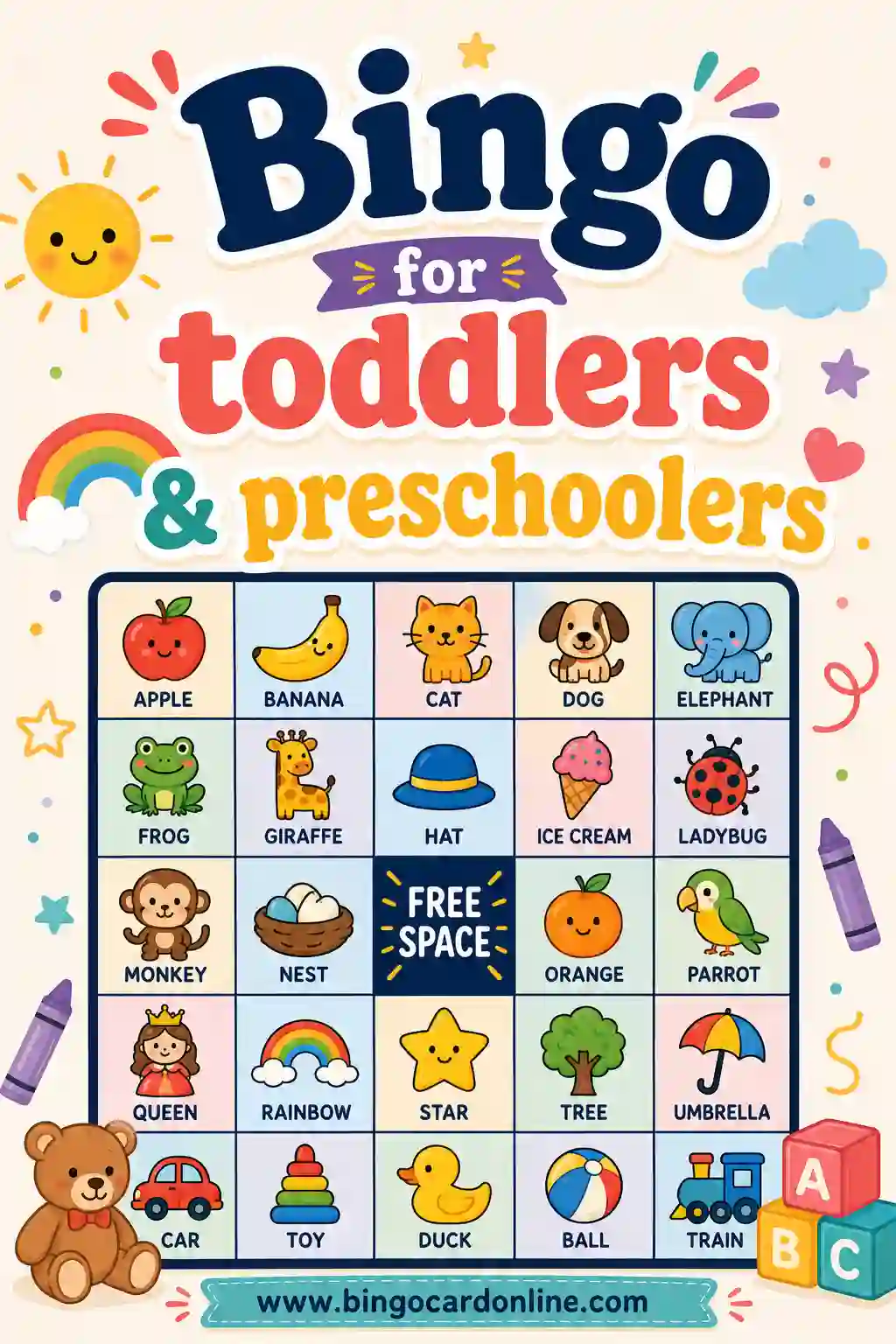
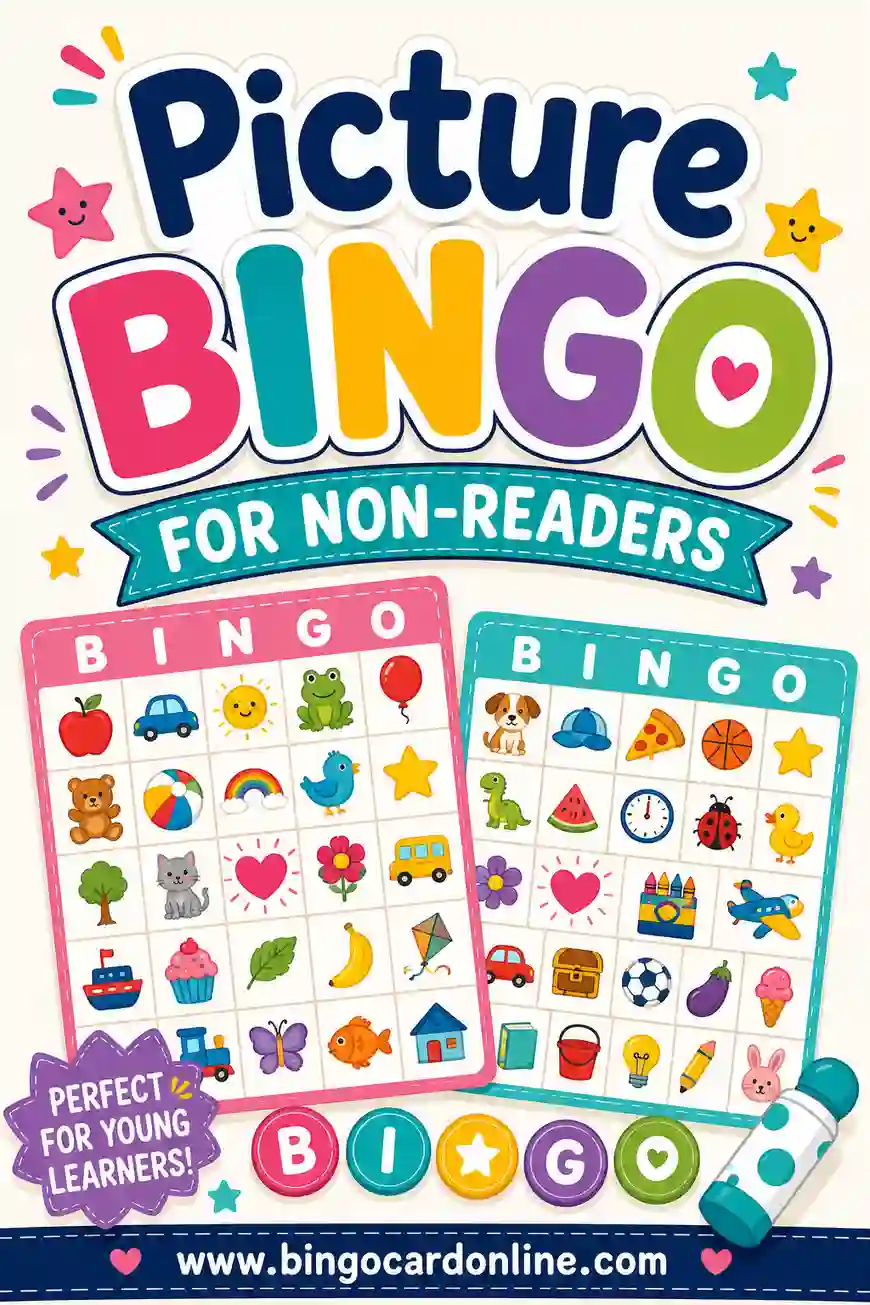
Picture and emoji cards. For pre-readers, the card carries images and the caller names the thing. This is the most common format for young children and it works with no reading ability at all.
Social and icebreaker cards. People bingo, where each square describes a person to find in the room, and office or meeting variants where the squares are phrases likely to be said. These are not really games of chance — they are structured conversation, wearing a bingo card as a costume.
Holiday and event cards. Christmas, Halloween, road trips, movie nights, sports broadcasts, baby showers. The card carries things you expect to see or hear, and the round runs as long as the event does.
The mechanics are identical across all of them. Only the content changes, and that is precisely why the format has survived four centuries of being borrowed.
Choosing a Type for Your Group
| Situation | Format | Pattern | Why |
|---|---|---|---|
| Preschool or kindergarten | 30-ball or picture cards | Coverall | Short rounds, no reading needed |
| Elementary classroom | 30-ball or word cards | Coverall or line | Fits a transition window |
| Family evening | 75-ball | Mixed patterns | Everyone knows the format already |
| Two-hour fundraiser | 75-ball | Escalating, coverall last | Predictable schedule |
| Large hall, mixed ages | 90-ball | Line, two lines, full house | Three prizes per round keeps interest |
| Office party | Theme or buzzword cards | Line | The joke is the content |
| Ten spare minutes | 30-ball | Coverall | Three full games in ten minutes |
The most common planning mistake is running a long pattern with a small group. Patterns get faster as you add cards, because every extra card is another chance at an early completion — but that effect is strong for short patterns and weak for long ones. A coverall round runs close to the full ball cage no matter how many people are playing, so it takes just as long with eight players as with eighty.
Callers, Equipment and What You Actually Need
Every type on this page needs the same three things: a set of unique cards, a randomized draw, and a master list to verify a win against.
Unique cards are the one that gets skipped. If two people hold the same card, they win at the same moment, and a round that ends in a tie ends flat. This was the exact problem that nearly killed commercial bingo in 1930, and it is still the most common failure in a homemade game.
For the draw, a caller can pull numbered slips, use a physical cage, or run an online bingo caller on a screen everyone can see. Any of the three works. What matters is that the draw is genuinely random and that every called item is recorded, because you cannot verify a win against a memory.
If you are building a set for any of the types above, this free bingo card generator produces unique 3x3, 4x4 and 5x5 cards with or without a free space, along with the master call list. That covers 30-ball, 80-ball and 75-ball layouts and any word or picture variant you want to type in.
Bingo Online and What It Changed
Bingo online arrived in the late 1990s, and its effect on the types of the game is easy to overstate. The 80-ball format is genuinely a product of the internet era. Beyond that, online bingo mostly automated jobs that people used to do: the caller became a generator, marking became automatic, and pattern verification became instant.
The one real change is who can run a game. Free online bingo means a teacher, a parent or a party host can generate cards and call a round with no equipment at all, which was impossible for the first four centuries of the game's existence. Search traffic shows people reaching for that in every possible word order — free bingo, bingo online free, bingo free online — and all of it means the same thing: a game you can start now without buying anything.
For a home or classroom game, printed cards and a live caller are still better than a screen, for a reason that has nothing to do with technology. A person calling numbers can slow down when someone is struggling, repeat a call, and read the room. A generator cannot.
Frequently Asked Questions
What are the main types of bingo? The four number formats are 75-ball, 90-ball, 80-ball and 30-ball, distinguished by card shape and number pool. On top of those sit pattern variants — line, four corners, postage stamp, letter shapes, picture frame and coverall — and content variants such as word, picture, holiday and icebreaker cards. Any content variant can be played on any format with any pattern.
What is the difference between 75-ball and 90-ball bingo? 75-ball uses a five-by-five grid with a free center square and twenty-four numbers, and it supports a wide range of winning shapes. 90-ball uses a three-by-nine ticket with fifteen numbers and runs in three stages: one line, two lines, then a full house. 75-ball is standard in North America, 90-ball across Britain, Ireland, Australia and much of Latin America.
Which type of bingo is best for young children? 30-ball speed bingo or a picture card with no numbers at all. Both give a complete round in a minute or two, which matches how long a young child will stay with one activity, and picture cards require no reading. Play three short rounds rather than one long one.
Can you play the same card types online and on paper? Yes. The formats are identical either way, and a card generated for printing carries the same grid an online game would show you. The practical difference is verification: on paper someone reads the winning card back against the master list, while an online game checks it automatically.