Bingo for Special Needs Classrooms: A Practical Guide
Bingo for special needs classrooms is a flexible, low-pressure game where you swap the usual number grid for pictures, sight words, colors, or shapes that match each student's level. You adjust the grid size, the pace, and the markers so every learner can join in and win. The quickest way to build a full set of adaptive cards is to use a free bingo card generator that turns one word list into unique, printable cards for the whole class.
Want to build a set right now? Open the free generator, drop in a simple picture-friendly word list (there's a ready-made one below), and print a card for each student. No sign-up, no cost, and you control every square.
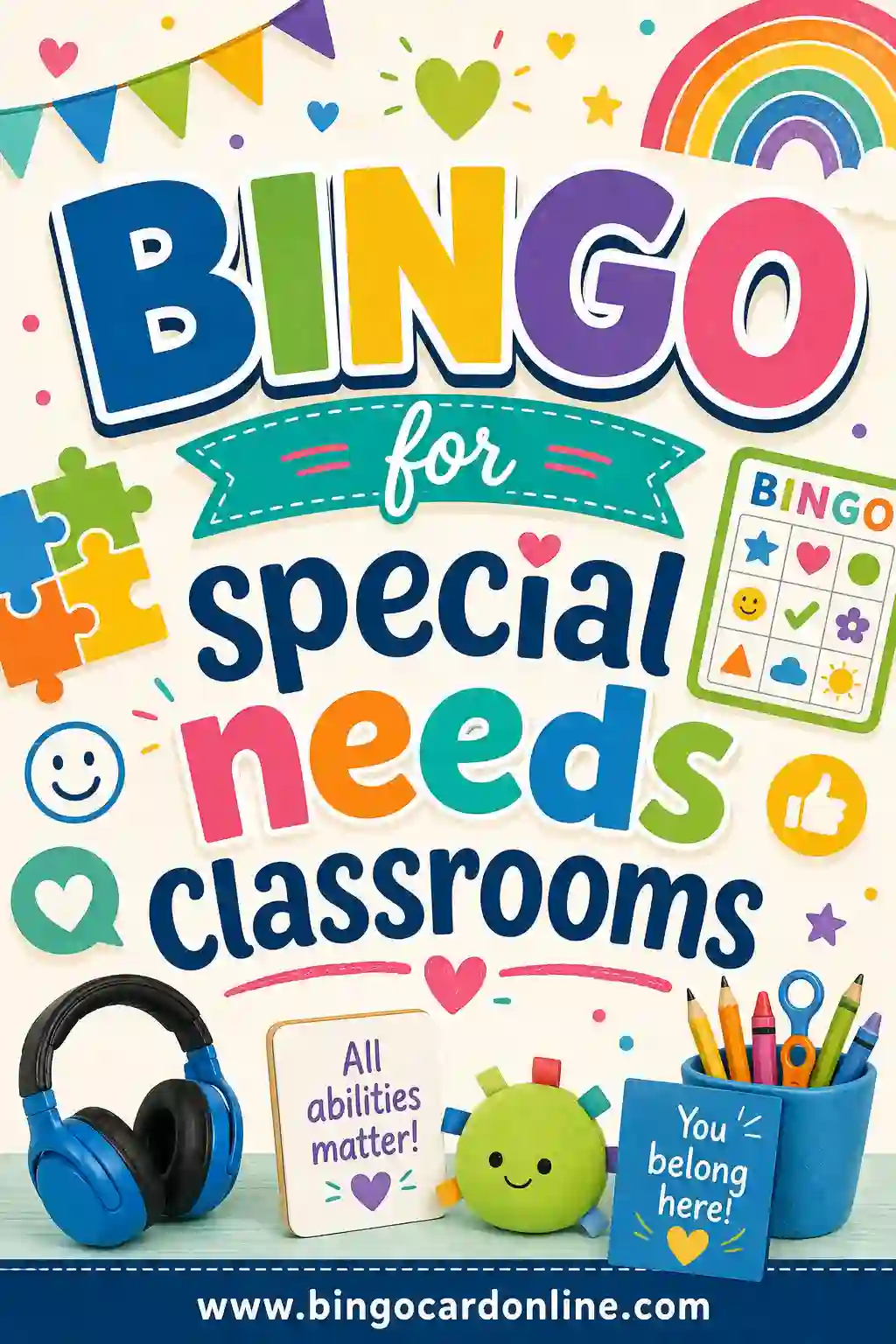
Bingo hits a lot of teaching goals at once, and it does it gently. There's no reading aloud in front of the group, no being put on the spot, and no losing in a way that feels harsh. Students just listen, look, and mark a square.
The game also builds skills without feeling like work. Depending on what you put on the cards, a single round can practice:
- Vocabulary and sight words for early and emerging readers.
- Listening and attention as students wait for their square to be called.
- Visual scanning as they search the grid for a match.
- Turn-taking and patience while the round plays out.
- Fine motor skills when they place a marker or stamp a square.
Because you can dial every one of these up or down, the same activity stretches across a whole range of abilities. That's rare in a classroom game.
Adapting the Grid to Each Student
One size does not fit all here, and that's the whole point. The grid you choose should match the student, not the calendar.
- 3x3 grids are the workhorse for most special needs classrooms. Bigger squares, fewer choices, less visual clutter.
- 2x2 or single-row strips suit students who are just learning the game or who get overwhelmed by a full grid.
- 4x4 grids work for students who are ready for a longer round and more scanning.
- 5x5 grids with a free center space fit your most independent learners.
A good rule: if a student finishes too fast or gives up, change the grid before you change anything else. The generator lets you switch sizes in one click, so you can print a mixed stack with different grids for different students and still call from the same word list.
Free Picture & Sight-Word Bingo List (Copy & Paste)
Here's a ready-to-use list of 30 squares built around concrete, easy-to-picture items. Pick any 9 for a 3x3 card or any 24 for a 5x5. Copy a column straight into the generator.
| Everyday Objects | Animals | Food & Nature |
|---|---|---|
| Cup | Dog | Apple |
| Ball | Cat | Banana |
| Book | Fish | Star |
| Shoe | Bird | Sun |
| Hat | Cow | Tree |
| Spoon | Duck | Flower |
| Chair | Frog | Milk |
| Key | Bear | Egg |
| Sock | Pig | Cookie |
| Bus | Bee | Cloud |
Stick to words your students can recognize at a glance. If a learner knows pictures better than words, print the picture-only version and call out the word while holding up a matching card.
Easy theme swaps
- Color bingo. Fill squares with solid color blocks instead of words. Call the color, students mark it.
- Shape bingo. Use circle, square, triangle, and so on for early geometry.
- Routine bingo. Squares show daily-schedule pictures: backpack, lunch, recess, bus. Great for building independence.
- Feelings bingo. Use simple face cards for happy, sad, tired, calm to support social-emotional learning.
How to Run an Inclusive Bingo Game
A few small choices make the game work for everyone in the room.
- Slow the pace way down. Call one item, then pause and give students time to scan. Five to fifteen seconds per call is normal here.
- Use multiple cues. Say the word, hold up a picture, and point. The more ways in, the more students stay with you.
- Pair students if needed. A buddy or aide can help a student scan and mark without taking over.
- Pick a generous win condition. Any single line, or even "mark three squares," keeps the round short and the wins frequent.
- Celebrate every win the same way. A clap, a sticker, a high-five. Keep it predictable so it feels safe.
The goal isn't a fast, competitive game. It's a calm, repeatable routine where everyone gets to succeed.
Sensory-Friendly Markers and Setup
Standard bingo chips aren't always the best fit. Choose markers based on each student's sensory needs and motor skills.
- Large foam or wooden chips for students who struggle with small pieces.
- Bingo daubers or stampers for kids who love the visual and motor feedback.
- Velcro-backed picture tokens so squares stay put and don't slide around.
- Crayons or markers for students who'd rather cross squares off than place a chip.
- Edible markers like crackers or cereal for a motivating, low-stakes round (check allergies first).
A few sensory tips for the wider setup:
- Keep the calling voice calm and steady. Loud, fast calling can overwhelm.
- Reduce background noise so students can focus on the call.
- Offer a quiet alternative, like a "spot it yourself" card, for students who need a break from the group pace.
Printing Tips for Durable, Reusable Cards
You'll likely run this game again and again, so build cards that last.
- Print on cardstock. It survives daily handling and doesn't crumple.
- Laminate or use sleeves. Then students mark with dry-erase markers and you wipe the cards clean.
- Go big with squares. Larger squares help students with low vision or motor challenges. A 3x3 grid gives you the most room.
- High contrast wins. Black text or images on a white background reads best for everyone.
- Print one test card first. Check the square size and contrast before you run a full class set.
Make markers easy to handle
Set out markers in a shallow tray or bowl so students can grab them without digging. Pre-count a small pile per student so the table stays calm and clutter-free.
Building a Routine Around the Game
Bingo shines when it becomes a familiar part of the week. Students with autism and other needs often thrive on predictability, and a repeating game gives them something to look forward to and master.
Try anchoring it to a regular slot, like Friday morning circle time. Use the same call-and-mark routine each time so the structure becomes second nature. Once students know the flow, you can quietly swap the content, sight words one week, shapes the next, without reteaching the rules.
You can also tie it to current learning. If the class is working on farm animals, build an animal card. If it's the letter "S," fill the grid with S-words and pictures. The game stays the same; only the squares change.
Bingo Setups by Skill Level
Use this quick guide to match the game to where each student is right now.
| Skill level | Grid size | Card content | Win condition |
|---|---|---|---|
| Just learning the game | 2x2 or strip | Big pictures | Mark any 2 |
| Emerging | 3x3 | Pictures + a few words | Any line |
| Developing | 3x3 or 4x4 | Sight words with picture cues | Any line |
| Confident | 4x4 | Sight words | Any line or four corners |
| Independent | 5x5 | Words, free center | Any line or blackout |
Adjust freely. A student might use a 3x3 for sight words but a 5x5 for colors they already know cold. Meet them where they're strongest.
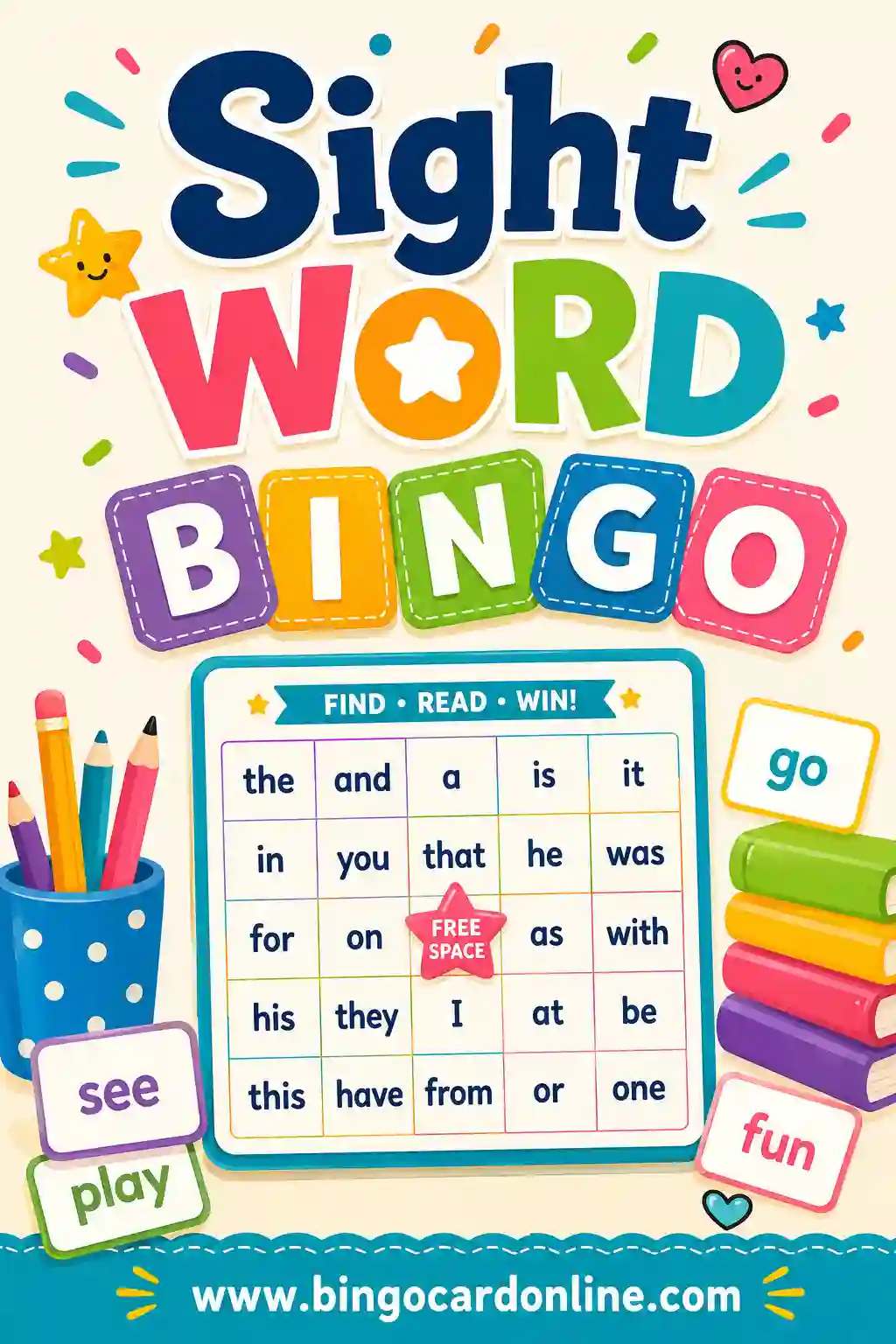
Want more ready-made setups? Try our picture bingo for kids for non-readers, sight word bingo for early literacy, and bingo for libraries if you run reading programs.
Frequently Asked Questions
What grid size is best for special needs classrooms?
A 3x3 grid is the best all-around choice. The squares are large, the choices are few, and the round stays short. Move down to a 2x2 strip for students just learning the game, or up to a 4x4 or 5x5 for more independent learners. The generator lets you mix grid sizes in one printed set.
How do I make bingo accessible for non-readers?
Use pictures instead of words. Fill the squares with clear, recognizable images like an apple, a dog, or a star, and call out the word while holding up a matching picture. This lets non-readers play fully while still building word-picture connections.
What can I use as bingo markers for students with motor challenges?
Large foam chips, wooden discs, bingo daubers, or velcro-backed tokens all work well. Daubers and stampers give helpful motor and visual feedback. For students who'd rather not place a piece, let them cross squares off with a crayon or dry-erase marker.
How do I keep the game from overwhelming students?
Slow the pace, lower the noise, and use a smaller grid. Call one item at a time with a long pause, add a picture and a point to each call, and pick a generous win condition like "mark any three." Keep the routine the same every time so it feels safe and predictable.
Is this bingo really free to print?
Yes. You make and print the cards yourself at no cost. There's no sign-up and no watermark, so you can run a whole class on a single free word list and reprint whenever you need fresh cards.
Can I tie bingo to what we're already learning?
Absolutely. The game stays the same while you swap the squares to match your unit, whether that's farm animals, the letter S, shapes, or daily routines. Build a fresh card from your current vocabulary and the familiar game does the rest.
Ready to Build Your Classroom Bingo Set?
Grab the picture word list above, open the free bingo card generator, and you'll have a stack of adaptive, printable cards ready in minutes. Choose your grid size, print one card per student, and you've got a calm, inclusive activity the whole class can win at. It's free, there's no sign-up, and every card comes out unique.