Bingo for Libraries: Free Printable Ideas & Word Lists
Bingo for libraries is a flexible program tool you can use for summer reading challenges, story time, book club icebreakers, and library scavenger hunts. Instead of numbers, the squares hold reading tasks, genres, story words, or library landmarks, so the game doubles as a learning activity. The fastest way to set one up is a free bingo card generator that turns your task list into a stack of unique, printable cards for patrons of any age.
Ready to plan your next program? Open the free generator, paste in a reading-challenge list (there's a full one below), and print enough cards for your group. No sign-up, no software, and you choose every square.
Bingo fits the library mission almost perfectly. It's free, it's inclusive, and it nudges people toward books and the building itself without feeling like homework. A single card can quietly encourage someone to try a new genre, attend an event, or just keep reading through a long summer.
It also scales beautifully. The same game works for a toddler story time, a teen reading club, and a community-wide adult challenge. You only change the squares, never the rules.
A few reasons it earns its place in a library program:
- It's low-cost. All you need is paper and a way to print.
- It's self-paced. Reading bingo can run over weeks, not minutes.
- It builds habits. Each square is a gentle prompt to read or explore.
- It's measurable. Completed cards make a tidy, visible record of participation.
Reading Challenge Bingo (The Library Classic)
The most popular library bingo isn't a called game at all. It's a reading challenge. Each square is a task, patrons complete them on their own time, and a finished line (or full blackout) earns a prize or entry into a raffle.
This format powers most summer reading programs. Patrons pick up a card at the desk, take it home, and bring it back marked. Because the generator makes every card unique, you can even run friendly competition without two people having the identical challenge order.
Good reading-challenge squares mix easy wins with light stretches:
- Easy: "Read for 20 minutes," "Read a picture book," "Read outside."
- Stretch: "Read a genre you've never tried," "Finish a book over 300 pages."
- Library-specific: "Attend a library event," "Ask a librarian for a recommendation."
Free Library Bingo Word List (Copy & Paste)
Here's a ready-to-use list of 30 reading-challenge squares. Pick any 24 for a 5x5 card (the center is a free space) or any 9 for a quick 3x3. Copy a column straight into the generator.
| Reading Tasks | Genre Goals | Library & Beyond |
|---|---|---|
| Read 20 minutes | Read a mystery | Visit the library |
| Read before bed | Read a biography | Attend an event |
| Read a picture book | Read a fantasy | Ask for a rec |
| Read outside | Read poetry | Use the catalog |
| Reread a favorite | Read nonfiction | Borrow an audiobook |
| Read to someone | Read a comic | Get a new card |
| Read a short story | Read historical fiction | Explore a new section |
| Read in the morning | Read a graphic novel | Join a book club |
| Read a magazine | Read a classic | Recommend a book |
| Read 100 pages | Read a new author | Write a review |
Adjust the difficulty for your crowd. Toddlers get picture-friendly tasks like "read a bedtime story," while adults can handle "finish a 400-page book."
Other library bingo themes
- Story time bingo. Squares are story words (dragon, castle, rain, friend) that kids mark when they hear them in the read-aloud.
- Library scavenger bingo. Squares are spots to find: the help desk, a globe, a graphic novel, the largest book on a shelf.
- Genre explorer bingo. Each square is a genre. Patrons read one title from each to win.
- Author bingo. Squares feature authors or series the library wants to spotlight.
Bingo Programs for Every Age Group
One of bingo's strengths is how it bends to fit your audience. Here's how libraries put it to work across age groups.
Toddlers and preschoolers
Use a 3x3 picture card during story time. As you read, kids listen for words like "moon" or "bear" and mark the matching square. It builds listening skills and keeps little ones engaged through a longer book.
School-age kids
Summer reading bingo is the headliner here. A 5x5 challenge card runs all summer, with small prizes for completed lines and a bigger reward for a full blackout. Mix reading tasks with library visits to keep them coming back.
Teens
Lean into genre challenges and a touch of competition. Squares like "read a book that became a movie" or "read a banned book" spark curiosity. Pair it with a social media check-in or a teen lounge prize.
Adults
Adult reading challenges have a big following. Keep the squares varied and a little ambitious, and offer raffle entries instead of prizes per line. It's a low-effort program that runs itself for weeks.
How to Run a Live Bingo Event
Some libraries also host bingo nights as community programs. These are called games, just like the classic version, and they pull a friendly crowd.
- Pick a theme. Book-themed, classic numbers, or a "famous first lines" round all work.
- Print unique cards. One per player, plus spares. The generator handles the uniqueness for you.
- Set the win condition out loud. A single line, four corners, or a blackout. Say it before you start.
- Call at a steady pace. Roughly one call every 15 seconds, slower for kids or seniors.
- Verify the winner. When someone calls "Bingo!", check their squares against your called list before handing out the prize.
Keep prizes modest, books, bookmarks, or a fine-forgiveness coupon, and the rounds short so you can fit in several before the night's over.
Printing and Display Tips
A little prep keeps your program running smoothly.
- Print challenge cards on regular paper. Patrons take these home and mark them, so durability isn't a concern.
- Use cardstock for event cards. For in-library bingo nights, sturdier cards survive being passed around.
- Laminate reusable sets. For story time cards you'll use weekly, laminate and provide dry-erase markers.
- Make a display card. Print one oversized sample to pin near the desk so patrons see the program at a glance.
- Add your branding. Leave a footer for the library name and the program dates.
Tracking participation
Have patrons add their name to completed cards and drop them in a box at the desk. It makes prize drawings easy and gives you clean numbers for your program report.
Choosing Prizes That Fit a Library Budget
Prizes are where a lot of programs overthink things. You don't need much. The card itself, plus a little recognition, does most of the work. Save your budget for a few small incentives and one or two bigger draws.
Here are prize ideas that stretch a tiny budget:
- Bookmarks and stickers. Cheap, on-theme, and kids genuinely love them. Order a bulk pack and you're set for the whole season.
- A small new paperback. Let a completed card earn a book the patron gets to keep. It reinforces the whole point of the program.
- Fine-forgiveness coupons. If your library still charges fines, a "waive one late fee" slip is a popular, no-cost reward for adults.
- A "skip the hold line" pass. Bump a patron to the front of the queue for a popular title. Costs nothing, feels like a treat.
- Raffle entries. Each finished card earns one entry into a single bigger prize, like a tote bag of books or a gift card. This keeps the per-card cost near zero.
For adult challenges, the raffle model works best. Nobody expects a prize for every line, and one good grand prize draws more entries than a pile of small ones. For kids, flip it: lots of little wins keep momentum going across a long summer.
Ask your Friends of the Library group or a local business to sponsor the grand prize. A coffee shop or bookstore is often happy to donate a gift card in exchange for a mention on your program flyer.
Promoting Your Bingo Program
A great card does nothing if patrons don't know it exists. The good news is that bingo is easy to promote because the card itself is the advertisement.
A few low-effort ways to spread the word:
- Pin an oversized sample card near the entrance and the circulation desk. People stop to read it.
- Hand a card to every patron at checkout during launch week. A librarian saying "have you tried our reading challenge?" beats any flyer.
- Post a photo of a blank card on your library's social media with the dates. Reading challenges share well online.
- Slip a card into new library-card welcome packets so first-time patrons start with a reason to come back.
- Tell your story time families directly. Parents are your best multipliers; one excited parent tells five others.
Keep the dates visible everywhere. A challenge with a clear start and end ("June 1 to August 15") gives patrons a reason to act now instead of someday.
Bingo Setups by Library Program
Match the format to your goal with this quick guide.
| Program | Best grid | Card content | How it runs |
|---|---|---|---|
| Story time | 3x3 | Story words | Mark words heard in the read-aloud |
| Summer reading (kids) | 5x5 | Reading tasks | Take-home, complete over weeks |
| Teen challenge | 4x4 or 5x5 | Genre goals | Self-paced, prize per line |
| Adult challenge | 5x5 | Varied reading tasks | Self-paced, raffle entry |
| Bingo night | 5x5 | Book themes or numbers | Live called game |
| Scavenger hunt | 4x4 | Library landmarks | Find and mark in the building |
Pick the row that fits your crowd and you're halfway to a finished program.
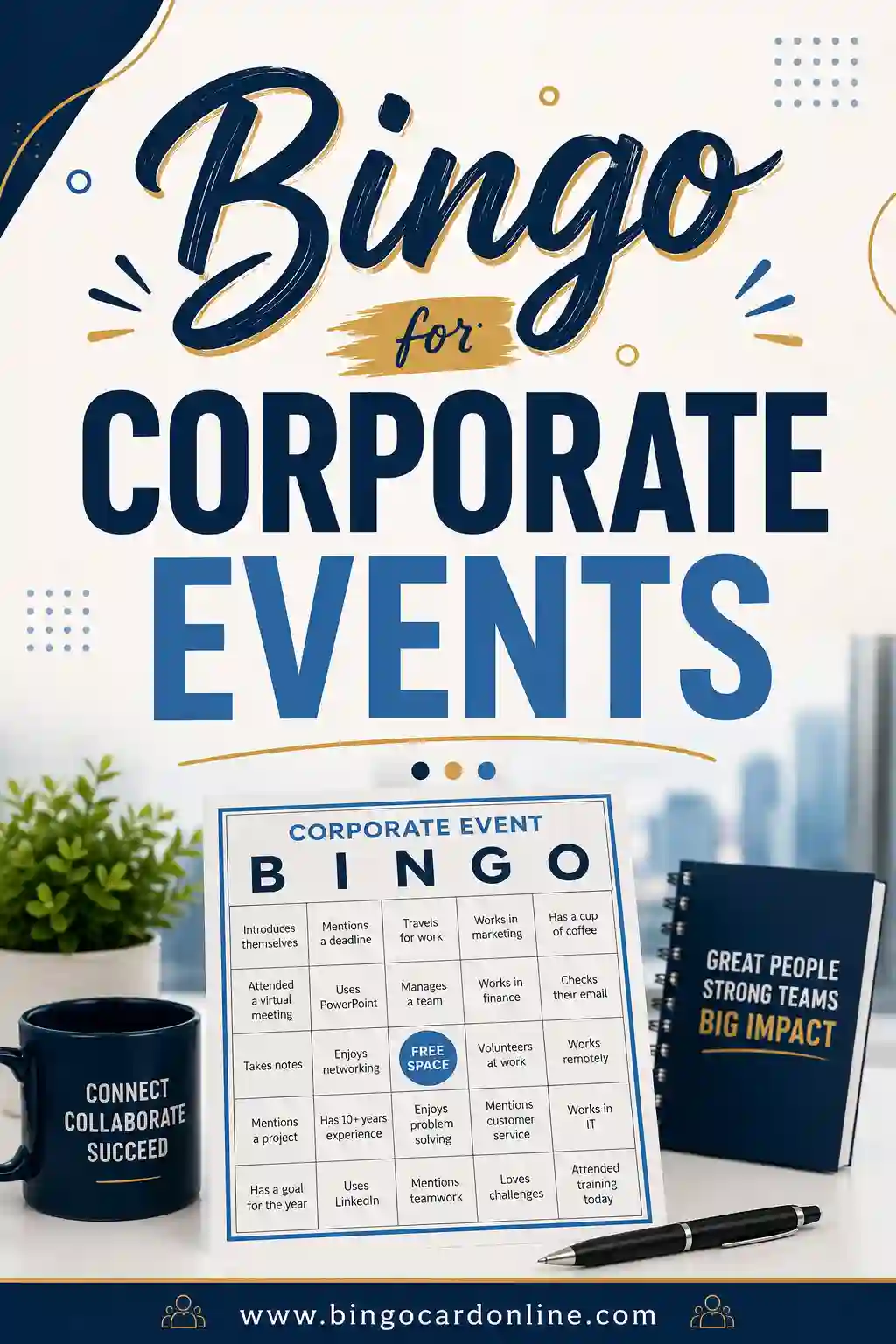
Running programs for other groups too? See our bingo for special needs classrooms for adaptive cards, summer reading bingo for seasonal challenges, and bingo for corporate events for staff and volunteer mixers.
Frequently Asked Questions
What is library reading bingo?
Library reading bingo is a challenge card where each square is a reading task instead of a number, like "read a mystery" or "attend a library event." Patrons complete squares on their own time and turn in finished cards for a prize or raffle entry. It's the backbone of most summer reading programs.
How do I make a summer reading bingo card?
List 24 or more reading tasks that fit your audience, then open the free generator, paste them in, choose a 5x5 grid, and print a unique card for each patron. Mix easy tasks with light stretches and a few library visits to keep people coming back through the season.
What grid size works best for library bingo?
For take-home reading challenges, a 5x5 grid gives plenty of tasks and a satisfying card to fill. For toddler story time, drop to a 3x3 with picture squares. For scavenger hunts or teens, a 4x4 is a nice middle ground.
Is library bingo free to print?
Yes. You build and print the cards yourself at no cost, with no sign-up and no watermark. That means you can run an entire summer reading program or a full bingo night on a single free word list.
Can I run bingo for adults at the library?
Definitely. Adult reading challenges are popular and easy to run. Use varied, slightly ambitious squares like "finish a 400-page book" or "read a new author," and offer raffle entries instead of per-line prizes. The self-paced format means the program runs for weeks with little staff effort.
How do I track who completed a card?
Have patrons write their name on finished cards and drop them in a collection box at the desk. This makes prize drawings simple and gives you clean participation numbers for your end-of-program report.
How long should a library reading challenge run?
Most summer reading bingo runs six to ten weeks, which is long enough for patrons to fill a 5x5 card without rushing and short enough to keep a sense of urgency. Story time bingo, by contrast, lasts a single session. Pick a clear start and end date and post it everywhere so people know the window.
Do I need prizes to make library bingo work?
No, though small incentives help. Many patrons finish cards just for the satisfaction and the recognition. If you want a budget-friendly nudge, lean on bookmarks, fine-forgiveness coupons, or a single raffle entry per completed card instead of a prize for every line.
Ready to Plan Your Library Bingo Program?
Grab the reading-challenge list above, open the free bingo card generator, and you'll have a stack of unique, printable cards ready in minutes. Whether it's summer reading, story time, or a community bingo night, the tool handles the cards so you can focus on the fun. It's free, there's no sign-up, and every card comes out different.