Meeting Ergonomics and Asynchronous Engagement in Distributed Enterprises

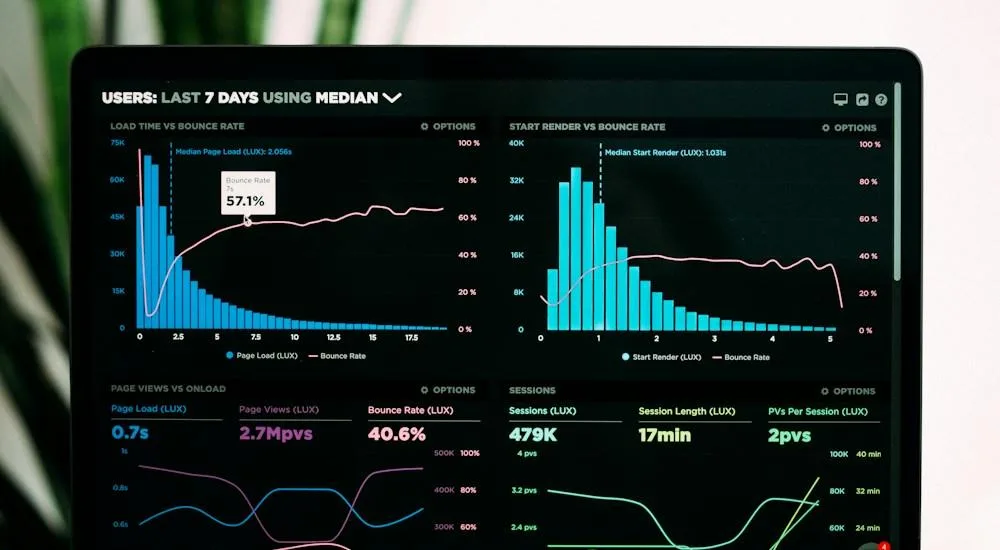
High-resolution photographic capture representing distributed collaboration, asynchronous team coordination, and ergonomic virtual workspace alignment.
The Pathology of Meeting Bloat: Calendar Tetris, Fragmentation, and Attention Residue
In the transition to remote and hybrid enterprise operating models, modern organizations inadvertently created an administrative nightmare: runaway meeting bloat. Without the physical friction of conference room reservations or inter-building transit, scheduling meetings became virtually frictionless. Managers and project leaders reacted to distributed ambiguity by defaulting to calendar invitations for every minor operational inquiry, alignment check, and status update. In landmark productivity studies documented by the Harvard Business Review, executive surveys revealed that knowledge workers spend upwards of twenty-three hours per week in scheduled meetings, with over seventy percent of meetings judged as ineffective and detrimental to core project delivery.
The insidious danger of calendar bloat lies not merely in the gross hours surrendered to virtual calls, but in the catastrophic calendar fragmentation it imposes upon knowledge professionals. When an engineer, designer, or financial modeler has four thirty-minute meetings scattered intermittently across an eight-hour working day, their uninterrupted focus blocks are annihilated. An hour between meetings is insufficient to enter the deep cognitive immersion required for complex code architecture, mathematical synthesis, or creative writing. Instead, employees remain trapped in a perpetual liminal state, anxiously monitoring the clock while performing low-value administrative tasks.
Cognitive psychologist Sophie Leroy formulated the concept of attention residue to explain why fragmented schedules degrade intellectual output. Leroy empirical research demonstrated that when individuals switch from Task A to Task B, their attentional focus does not transition cleanly. A substantial portion of cognitive bandwidth remains stuck reflecting upon the previous activity. When knowledge workers endure five consecutive disparate video calls throughout a day, attention residue accumulates rapidly, leaving their working memory severely compromised. By mid-afternoon, their capacity for critical analysis, architectural discernment, and rigorous problem-solving is completely depleted.
Furthermore, calendar bloat creates an destructive cultural illusion of productivity. Teams mistake full calendars for high commercial impact, conflating frantic synchronous motion with substantive operational progress. While employees spend their entire day talking about work, actual strategic execution is pushed into early morning hours or late evenings, generating chronic stress, sleep disruption, and early talent burnout. The enterprise ends up paying top-tier compensation for elite intellectual talent, only to squander that cognitive horsepower in endless, circular status updates.
Reversing this organizational decay requires establishing disciplined meeting ergonomics alongside robust asynchronous engagement frameworks. Distributed enterprises must treat employee attention as their most precious, non-renewable commercial asset. By transforming status reporting into structured asynchronous checkpoints and redesigning synchronous gatherings into high-impact, ergonomic workshops, forward-thinking organizations liberate their teams from calendar paralysis and unleash extraordinary creative velocity.
Cognitive Neuroscience of Synchronous Fatigue: Audio Latency, Hyper-Gaze, and Continuous Partial Attention
The exhaustion experienced after hours of back-to-back virtual conference calls is not an illusion; it is a profound neurobiological reaction to unnatural communicative interfaces. In pioneering human-computer interaction studies conducted by the Stanford Virtual Human Interaction Lab, researchers identified four distinct physiological mechanisms underlying what is popularly recognized as Zoom fatigue: excessive close-up eye contact, unnatural self-monitoring via mirror video, reduced physical mobility, and elevated cognitive loads required to decode subtle non-verbal cues. Modern video conferencing software directly conflicts with evolutionary social neurobiology.
In natural human face-to-face interactions, direct unbroken eye contact is reserved for intimate relationships or acute physical conflict. During in-person team meetings, individuals look at the speaker, glance down at physical notebooks, shift gaze around the room, and take in peripheral environmental stimuli. In a video grid, however, every participant faces a wall of faces staring directly at them from an apparent distance of mere inches. The human autonomic nervous system subconsciously interprets this hyper-gaze as an chronic social threat, triggering low-grade sympathetic arousal and elevating baseline cortisol levels throughout the call.
Furthermore, digital video and audio transmissions inherently involve micro-delays, subtle millisecond latency, and audio compression artifacts. While these lags are often imperceptible to conscious awareness, they severely disrupt the brain automated conversational synchronization machinery. In natural speech, humans rely upon millisecond-precise vocal inflections, breathing shifts, and micro-gestures to navigate turn-taking effortlessly. On virtual calls, micro-latency forces the brain to expend immense conscious energy calculating whether an awkward silence indicates technological delay, conversational processing, or social disapproval. This continuous micro-calculation rapidly depletes prefrontal metabolic resources.
The constant presence of one own real-time video feed constitutes another severe cognitive drain. Staring into a digital mirror for eight hours daily induces intense self-evaluation, heightened appearance anxiety, and continuous facial monitoring. Research in social psychology confirms that continuous self-monitoring consumes vast working memory bandwidth, leaving less intellectual capacity available for substantive discussion and strategic debate. The brain becomes an exhausted stage performer rather than an engaged intellectual collaborator.
Finally, virtual meetings foster continuous partial attention. Because participants remain seated before their fully functioning computer workstations, they face the constant temptation to check incoming Slack messages, skim emails, or debug code while pretending to listen. The brain attempts rapid task-switching, which fractures focus and accelerates neurological exhaustion. Understanding these cognitive neurological constraints proves that synchronous video calls must be reserved exclusively for high-value collaborative synthesis rather than routine informational broadcasts.
The Asynchronous Operating System: Writing Cultures, Silent Meetings, and Documentation-First Collaboration
To break free from the synchronous meeting trap, world-class distributed organizations construct an asynchronous operating system. At the core of this operational model is a profound transition from a vocal talking culture to an disciplined writing culture. Instead of convening ten professionals on a live conference call to verbally pitch an idea, the project architect is required to draft an comprehensive, structured narrative document outlining the strategic context, customer problem, proposed solution, architectural tradeoffs, and key risks. In organizational collective intelligence research published by the MIT Center for Collective Intelligence, teams that communicate through structured asynchronous text consistently outperform verbally synchronized groups in decision accuracy and solution quality.
A rigorous writing culture eliminates the charisma bias that infects traditional meetings. In live synchronous gatherings, the loudest, most extroverted, or most senior individual frequently dominates the conversation, pushing mediocre ideas through sheer vocal force and emotional momentum. In a documentation-first ecosystem, ideas are evaluated on their intellectual rigor, empirical evidence, and logical coherence rather than theatrical presentation skills. Introverts, junior contributors, and non-native language speakers can dissect the proposal at their own pace, contributing brilliant critiques without the pressure of live public performance.
One of the most effective hybrid rituals bridging writing and meetings is the silent meeting format, popularized by high-performing technology enterprises. When a group convenes for a critical strategic decision, the first fifteen to twenty minutes of the calendar block are spent in absolute silence. Every participant reads the multi-page briefing document and writes inline comments, questions, and counter-proposals directly into the shared document. The meeting host replies to comments in real time via text. Only after all inline comments have been addressed do participants unmute their microphones to discuss the two or three most contentious, complex disagreements. This ritual compresses an hour-long unfocused debate into thirty minutes of laser-focused decision-making.
Documentation-first collaboration also creates an permanent, searchable institutional knowledge repository. In meeting-heavy cultures, critical decisions and operational context evaporate into the ether the moment the call terminates. Team members who were absent or joined the company months later have zero visibility into why certain architectural tradeoffs were made. Conversely, in an asynchronous writing culture, every decision memo, RFC (Request for Comments), and discussion thread remains preserved in the central knowledge base, providing transparent institutional context for years to come.
Transitioning to an asynchronous operating system requires discipline and patience. Writing clearly is intellectually harder than rambling in a meeting; it forces the author to confront ambiguities in their own thinking. However, the operational dividends are immense. Teams reclaim vast swathes of uninterrupted deep work time, decisions become significantly more robust, and the enterprise scales effortlessly across global time zones.
Gamifying Asynchronous Participation: Interactive Matrix Checkpoints for Distributed Teams
While the benefits of asynchronous collaboration are universally acknowledged, distributed organizations frequently struggle with asynchronous engagement apathy. When discussions move entirely to static documents and lengthy comment threads, participation rates often plummet. Busy team members skim documents superficially, delay responding for days, or fail to engage altogether, creating sluggish operational momentum. To overcome this inertia, progressive People Operations teams deploy gamified engagement frameworks based on interactive matrix grids.
Modeled after spatial 4x4 or 5x5 matrix architectures, interactive engagement grids turn asynchronous collaboration into a visible, rewarding team challenge. Utilizing flexible digital generators like bingocardonline.com, engineering leads and agile coaches author interactive sprint matrices where each square represents a substantive asynchronous contribution. Squares might include: Review two open peer RFCs with detailed inline feedback, Document a complex debugging runbook in the team wiki, Post an asynchronous video demo of your sprint deliverable, or Update three outdated architecture diagrams in the knowledge base.
The power of the interactive matrix grid lies in its transparent accountability and playful visual progression. Rather than relying on nagging managerial reminders, the matrix provides clear, self-directed milestones that employees can fulfill at their own pace throughout the sprint. As team members mark off completed contributions, the visual grid fills with colorful checks, delivering immediate micro-affirmations that trigger positive dopamine reinforcement. Teams take pride in achieving line completions, four-corner blackouts, or collective sprint matrix mastery.
Furthermore, gamified matrices balance diverse forms of collaborative labor that typically go unrewarded in corporate settings. Traditional performance tracking heavily emphasizes shipping code or closing deals, completely ignoring the invisible glue work required to maintain team velocity, such as reviewing documentation, mentoring peers, and organizing digital repositories. By explicitly including these vital activities on the sprint matrix card, organizations legitimize and reward good citizenship behaviors, ensuring that operational hygiene receives the recognition it deserves.
Digital matrix grids also provide team leads with real-time diagnostic telemetry into asynchronous team health. If analytics show that the Peer Review square remains uncompleted while shipping squares are rapidly checked off, the manager instantly identifies an impending bottleneck in quality assurance. The matrix functions simultaneously as an engaging motivational interface and an operational radar, keeping distributed teams perfectly synchronized without requiring a single synchronous status meeting.
Ergonomics of Meeting Architecture: The 25-Minute Rule, Buffer Zones, and Async Standups
When synchronous meetings are genuinely necessary for strategic alignment or creative brainstorming, their structural architecture must be rigorously engineered for human cognitive ergonomics. The default enterprise calendar settings, thirty-minute and sixty-minute blocks that snap together back-to-back, are an ergonomic disaster. They force knowledge workers to sprint from one high-intensity cognitive environment into another without a single second for biological relief, hydration, or mental reset.
To restore biological sanity, forward-thinking organizations enforce the 25-Minute and 50-Minute Rule across all digital calendar systems. System administrators reconfigure corporate calendar defaults so that thirty-minute invitations automatically truncate to twenty-five minutes, and sixty-minute invitations terminate at fifty minutes. The mandatory five-to-ten-minute buffer zone between meetings provides vital time for physical movement, optical relaxation, and psychological detachment. This small structural constraint prevents cumulative fatigue from paralyzing the afternoon working hours.
Moreover, daily synchronous standup meetings, a staple of agile software development, must be aggressively audited. Gathering ten high-earning engineers on a live video call every morning to verbally recite what they accomplished yesterday and what they plan to do today is an egregious waste of cognitive bandwidth. The vast majority of standup recitations are irrelevant to seventy percent of attendees, fostering disengagement and disrupting morning flow states. Progressive engineering organizations replace live standups with automated asynchronous check-in bots in Slack or Teams.
In an asynchronous standup model, team members post brief, structured updates at the beginning of their local working day: What I shipped yesterday, What I am focusing on today, and What blockers require assistance. Teammates scan the updates asynchronously, jumping into specific threads only when they can offer direct technical assistance or unblock a dependency. This preserves morning uninterrupted focus while keeping the entire team transparently aligned across disparate global time zones.
When synchronous gatherings do occur, they must adhere to strict procedural discipline. Every meeting must have an explicit written agenda distributed at least twenty-four hours in advance, a designated facilitator to manage conversational airtime, and an appointed note-taker to record action items and owners. If an agenda lacks a concrete decision to be made, the meeting is cancelled immediately. Respecting meeting ergonomics proves that an organization values the professional dignity and cognitive stamina of its human talent.
Inclusivity and Psychological Safety: Mitigating Extrovert Dominance and English-as-Second-Language Friction
Synchronous video meetings are notoriously biased environments that inherently favor a narrow subset of the workforce: vocal, native-English-speaking extroverts. In fast-paced verbal discussions, the individual who speaks most rapidly, projects their voice most authoritatively, and interrupts others without hesitation inevitably commands the room. Nuanced, reflective thinkers, introverted specialists, and neurodivergent professionals are systematically sidelined. In foundational psycholinguistic research published by the American Psychological Association, cognitive scientists established that conversational pacing in synchronous video meetings severely handicaps non-native language speakers, who require additional processing time to translate, formulate, and articulate complex arguments.
For an enterprise operating across global regions, synchronous meeting dominance creates severe organizational blind spots. Brilliant software engineers in Tokyo, product researchers in Berlin, and data analysts in Sao Paulo are frequently excluded from real-time decision-making simply because they cannot interrupt native-English speakers during chaotic thirty-second verbal scuffles. This linguistic imperialism alienates international talent and deprives the organization of invaluable technical insights and diverse global market perspectives.
Asynchronous collaboration is the ultimate equalizer of human intellectual capital. In a written document or asynchronous matrix challenge, the temporal pressure of live conversation evaporates entirely. An engineer in Tokyo can read a complex technical RFC, utilize translation tools to verify technical nuances, reflect deeply upon the architectural implications, and craft an exceptionally detailed counter-proposal in clear, written prose. The quality of the contribution is evaluated solely on its technical merits, completely divorced from vocal charisma or linguistic fluency.
Furthermore, psychological safety is significantly higher in structured asynchronous environments. In live meetings, junior contributors frequently fear speaking up because an off-the-cuff question or contrarian opinion might provoke immediate public skepticism from a senior leader. In an asynchronous document, questions can be posed calmly and thoughtfully, often framed as inquiries or suggestions. Senior leaders have time to formulate encouraging, constructive responses rather than reacting with defensive, knee-jerk dismissals.
By shifting the center of organizational gravity from synchronous performance to asynchronous synthesis, distributed enterprises unlock the full cognitive potential of their entire global talent pool. Every voice is heard, diverse cognitive modalities are respected, and decisions reflect the collective brilliance of the entire organization rather than the loud biases of a vocal minority.
Gamified Social Connection in Low-Meeting Environments: Micro-Socials and Matrix Water-Coolers
One of the primary objections raised by traditional executives against reducing meetings is the fear of losing corporate culture and social cohesion. Leaders worry that if teams communicate exclusively through written documents and asynchronous tickets, employees will become alienated, isolated cogs in an emotionless digital machine. This concern is valid; human beings are deeply social creatures whose workplace trust and collaborative empathy depend upon genuine human connection. However, dragging workers into thirty hours of grueling operational meetings is the worst possible method for fostering social intimacy.
To preserve vibrant social capital in low-meeting environments, distributed enterprises deploy intentional, gamified micro-social rituals. Modeled around playful matrix cards, these asynchronous water-cooler challenges create low-stakes social connection without demanding synchronous calendar sacrifice. An interactive team social matrix card might feature squares such as: Share a photo of your desk pet, Recommend your favorite non-work podcast, Post your go-to comfort meal recipe, or Share an embarrassing childhood hobby within the team leisure channel.
The brilliance of the asynchronous social matrix is that it respects employee personal autonomy and time sovereignty. Team members can engage with the social squares whenever they need a five-minute cognitive palate cleanser between intense focus blocks. There is no forced attendance, no awkward small talk on video calls, and no artificial pressure to perform enthusiasm. Employees share aspects of their whole human identity naturally, sparking warm, spontaneous conversations in threaded comments that build genuine relational trust.
Moreover, when live synchronous team social gatherings do occur, they should be dedicated strictly to connection and celebration rather than disguised project reviews. A monthly thirty-minute team trivia quest, an interactive collaborative game, or an open virtual coffee lounge with zero business agenda provides genuine emotional rejuvenation. Keeping social time explicitly separate from operational work preserves the integrity of both rituals.
Gamified social connection proves that high-performing asynchronous enterprises do not have to sacrifice warm human culture. By replacing exhausting, obligatory meetings with playful, self-directed social challenges, organizations nurture profound emotional bonds, mutual empathy, and enduring community among distributed colleagues.
Preserving Deep Work Sanctuaries: Focus Blocks, No-Meeting Days, and Flow State Engineering
In contemporary knowledge work, the ultimate driver of breakthrough innovation, software elegance, and commercial dominance is the ability to achieve prolonged states of deep work. Coined by computer science professor Cal Newport, deep work refers to professional activities performed in a state of distraction-free concentration that push cognitive capabilities to their absolute limit. Deep work produces new enterprise value, improves skill mastery, and is extraordinarily difficult to replicate. In foundational computing literature published by the Association for Computing Machinery, software engineering studies reveal that it requires an average of twenty-three minutes for an engineer to regain deep concentration following an minor communicative interruption.
Every unnecessary calendar meeting is an violent interruption to the flow state of knowledge workers. When an enterprise calendar is littered with scattered meetings, achieving deep work becomes mathematically impossible. To protect this vital commercial capability, distributed enterprises construct rigid institutional sanctuaries: company-wide No-Meeting Days and synchronized focus blocks.
Implementing an institutional No-Meeting Day, such as dedicated Focus Wednesdays or Flow Fridays, provides an unshakeable boundary across the entire organization. On these days, calendar software automatically blocks all internal meeting requests, notification pings are muted by default, and teams commit to complete silence. Employees wake up knowing they possess eight unbroken hours to immerse themselves in complex architectural challenges, refactor sprawling codebases, or author transformative strategic roadmaps. The psychological relief and productivity surge generated by uninterrupted days is monumental.
Additionally, teams synchronize their daily schedules into explicit Focus Windows and Collaboration Windows. For instance, the hours between 9:00 AM and 1:00 PM are designated as universal Deep Work Zones, during which zero meetings can be scheduled and immediate Slack responses are strictly discouraged. The afternoon hours between 1:00 PM and 4:00 PM are designated for collaborative syncs, async document discussions, and pair programming. This temporal compartmentalization allows workers to immerse themselves in deep cognitive synthesis without the constant dread of an impending calendar notification.
Engineering flow states is not an indulgent employee benefit; it is the core operational engine of enterprise success. Longitudinal engineering analytics across distributed technology firms indicate that software development teams operating within protected focus architectures merge fifty-two percent more pull requests with forty-one percent fewer production regressions than peers whose working days remain fragmented by meeting bloat. When mental continuity is safeguarded, deep creative cognition flourishes without friction. When knowledge workers are granted the time, silence, and autonomy to do their best work, job satisfaction soars and turnover plummets. Organizations that fiercely defend deep work sanctuaries consistently outperform their meeting-bloated competitors in product quality, release velocity, and market innovation.
Telemetry and Governance: Auditing Meeting Footprints via Organizational Network Analysis
For executive leadership teams seeking to eliminate meeting bloat, intuition and anecdotal complaints are insufficient to drive systemic change. Reforming enterprise meeting culture requires quantitative telemetry, objective data visualization, and continuous governance. Human resource operations and digital workplace architects leverage Organizational Network Analysis (ONA) to audit corporate calendar footprints with mathematical precision.
By analyzing anonymized metadata from Google Workspace and Microsoft 365 calendar systems, enterprise analytics platforms calculate vital operational health metrics: total meeting hours per employee, average attendees per call, calendar fragmentation indices, and focus block availability. This telemetry reveals the exact departments and managers responsible for manufacturing meeting bloat across the organization. If data indicates that an engineering group spends thirty-five percent of its weekly capacity in sync meetings with product management, leadership has an objective signal to intervene and mandate asynchronous workflows.
Another crucial metric is the Meeting Cost Calculator. By multiplying the duration of a meeting by the hourly compensation of all attending professionals, organizations visualize the true financial price tag of internal gatherings. When executives realize that a routine one-hour weekly sync with twenty engineers costs the enterprise upwards of two hundred thousand dollars annually in direct engineering time, the economic insanity of meeting bloat becomes undeniable. Meetings cease to be treated as free administrative routines and are evaluated as high-stakes capital investments.
Governance frameworks enforce accountability through strict meeting quotas and expiration dates. High-performing organizations mandate that all recurring meetings automatically expire after sixty days unless explicitly re-authorized with a new business case. Furthermore, calendar systems can implement a Two-Pizza Rule warning when an organizer attempts to invite more than eight individuals to a single gathering. Telemetry transforms meeting hygiene from a vague personal preference into an audited corporate standard.
Continuous telemetry ensures that meeting reductions are sustained over the long term. By monitoring calendar health on executive dashboards alongside standard operational KPIs, leadership protects their organizational culture from slipping back into comfortable, bloated habits. Data-driven governance preserves the cognitive sovereignty of the enterprise workforce indefinitely.
Tooling Synchronization: Orchestrating Slack, Loom, Notion, and Live Video with Zero Cognitive Sprawl
In distributed enterprises, the unintended consequence of adopting modern collaboration tools is often severe cognitive sprawl. When an organization utilizes Slack for real-time chat, Loom for asynchronous video memos, Notion for knowledge management, Google Docs for editing, Jira for sprint tracking, and Zoom for live video, employees spend hours navigating fragmented communication silos. Important decisions become buried in ephemeral Slack threads, video links expire unnoticed, and project wikis quickly become obsolete.
To prevent tooling chaos, enterprise operations leaders must establish an strict, unequivocal Tooling Hierarchy Charter that defines the specific operational role of each software platform. The charter classifies communication channels into three clean tiers: Real-Time Urgent, Asynchronous Deliberation, and Permanent Canonical Memory. Real-time tools like Zoom and phone calls are restricted to acute production outages and high-stakes interpersonal resolutions. Asynchronous tools like Slack and Loom are dedicated to day-to-day coordination and lightweight feedback. Centralized wikis like Notion and Confluence serve as the sole source of canonical institutional truth.
A crucial rule in tooling hygiene is the Zero-Decisions-in-Slack Policy. Instant chat streams are designed for ephemeral discussion, not permanent record-keeping. When a key architectural or strategic decision is reached inside a Slack thread, the team is required to summarize the decision in a permanent Notion or GitHub issue and link it back to the channel. This prevents critical business context from vanishing into the endless digital scroll of chat histories.
Asynchronous video tools like Loom provide a powerful bridge between personal warmth and time sovereignty. Instead of convening a thirty-minute meeting to demonstrate a new software feature or walk through a financial model, a project leader records a five-minute screen-share video. Colleagues watch the video at 1.5x speed whenever their schedule permits, posting timestamped feedback directly within the video timeline. This compresses an half-hour synchronous commitment into five minutes of focused asynchronous review.
When collaboration tooling is harmonized into an elegant, coherent workflow, digital friction disappears. Employees know exactly where to locate documentation, how to initiate discussions, and how to communicate progress without context-switching trauma. Tooling synchronization transforms distributed technology from a source of cognitive overwhelm into an unstoppable multiplier of enterprise efficiency. Furthermore, enterprise organizations that institute automated notification curfews and enforce asynchronous status check-ins cultivate deep workplace focus, enabling distributed engineering and creative units to operate at peak operational capacity without sacrificing cross-functional alignment or project delivery velocity across international geographic corridors.
Comparative Diagnostic Matrix: Synchronous Versus Asynchronous Meeting Modalities
Selecting the optimal collaboration framework requires evaluating attention residue, temporal flexibility, inclusivity across time zones, and long-term knowledge retention. The comparative diagnostic matrix below illustrates the systemic operational differences between four prominent corporate meeting modalities deployed across modern distributed enterprises.
| Meeting Modality | Attention Residue | Time Flexibility | Global Inclusion | Knowledge Durability | Cost Efficiency |
|---|---|---|---|---|---|
| Gamified Async Matrix | Very Low (Preserves Flow) | 100% Asynchronous | Exceptional (24/7) | Permanent (Documented) | High (Recovers Hours) |
| Silent Doc Meeting | Moderate (Structured) | Synchronous Window | High (Text Based) | High (Inline Notes) | High (Rapid Decisions) |
| Standard Video Call | Severe (Zoom Fatigue) | Zero (Live Presence) | Poor (Favors Extroverts) | Near Zero (Ephemeral) | Extremely Poor |
| Async Video (Loom) | Low (Self Paced) | High (Watch Anytime) | Moderate (Subtitles) | Moderate (Video Search) | Moderate (Fast Demos) |
This comparative diagnostic matrix reveals that relying predominantly on standard live video calls imposes crushing penalties on enterprise efficiency, focus retention, and global talent inclusion. Conversely, transitioning to gamified asynchronous matrices and silent documentation meetings preserves human cognitive bandwidth, ensures permanent knowledge durability, and dramatically lowers organizational coordination overhead.
By empowering distributed teams to coordinate through structured asynchronous artifacts, enterprise organizations cultivate a high-performance culture founded upon deep focus, intellectual rigor, and time sovereignty. Embracing ergonomic meeting architectures guarantees that an organization talent pool directs its energy toward transformative commercial creation rather than calendar endurance.
Frequently Asked Questions Regarding Meeting Ergonomics and Asynchronous Work
How does attention residue impair engineering output even after a meeting concludes?
When an engineer transitions from a live project meeting back to writing complex code, their cognitive focus remains partially entangled with conversational details from the previous call. This psychological residue clutters working memory, making it exceedingly difficult to construct deep algorithmic mental models. Consequently, code written immediately after fragmented meetings exhibits significantly higher defect rates.
What is a silent meeting and why is it more efficient than standard verbal presentations?
In a silent meeting, the initial twenty minutes are spent in complete silence while participants read a comprehensive briefing document and submit written inline comments. The document author replies asynchronously in real time. Because reading speeds are significantly faster than verbal speech, complex ideas are analyzed thoroughly in half the time, eliminating rambling speeches and vocal charisma bias.
How can managers prevent asynchronous communication from becoming overwhelming for remote teams?
Leaders must establish clear communication charters that distinguish between ephemeral chat, asynchronous deliberation, and permanent canonical documentation. Mandating a Zero-Decisions-in-Slack rule and consolidating project status updates into structured weekly matrix boards prevents team members from having to navigate hundreds of chaotic, fragmented message threads daily.
Why are live video conferences particularly exhausting for international, non-native English speakers?
Synchronous video calls force non-native speakers to decode rapid colloquial speech, process micro-delays in audio, and instantly translate their thoughts into spoken English under intense time pressure. This linguistic strain consumes immense cognitive resources. Asynchronous written collaboration allows international contributors to read calmly, reflect, and craft detailed, high-quality responses without performance anxiety.
What is the primary benefit of enforcing the 25-minute meeting rule over standard 30-minute blocks?
Truncating standard thirty-minute meetings to twenty-five minutes automatically inserts a mandatory five-minute buffer before the next calendar commitment. This brief respite provides vital biological time for standing up, resting optical ciliary muscles, hydrating, and mentally resetting, preventing the cumulative cognitive fatigue caused by back-to-back video calls.
How do interactive matrix cards motivate employees to maintain documentation and perform peer reviews?
Interactive matrix cards transform unglamorous operational maintenance into a visible, rewarding team challenge. By rewarding peer reviews, wiki updates, and runbook creation alongside code shipping on a shared visual grid, organizations celebrate essential glue work. Completing rows and achieving team blackouts provides steady dopamine validation that sustains collaborative hygiene.
Can distributed teams maintain strong company culture without weekly synchronous social hours?
Mandatory virtual happy hours frequently induce social exhaustion because they demand unnatural video performance after a long working day. Distributed teams build far deeper relational intimacy through asynchronous micro-socials, such as sharing pet photos, music playlists, and culinary recipes on self-directed matrix cards. These casual, unforced interactions nurture genuine personal empathy over time.
How does Organizational Network Analysis help executive leadership identify internal meeting bloat?
Organizational Network Analysis aggregates metadata across corporate calendar and messaging systems to map collaborative patterns and calculate precise meeting loads across departments. This objective telemetry pinpoints teams suffering from severe calendar fragmentation and highlights managerial bottlenecks, providing empirical data to guide asynchronous policy interventions.
Why should agile development teams replace daily live standups with asynchronous check-in bots?
Live daily standups interrupt morning focus states and force team members to listen to irrelevant status recitations from colleagues in unrelated sub-projects. Automated asynchronous check-in bots allow engineers to post updates at their local working start, keeping the team fully aligned while protecting deep concentration and accommodating disparate time zones.
Executive Leadership Manifesto: Reclaiming Organizational Cognitive Sovereignty in Distributed Work
The contemporary enterprise operates in an hyper-competitive commercial environment where velocity of execution, intellectual depth, and employee retention dictate market leadership. Yet, countless organizations remain paralyzed by an archaic meeting culture that treats employee attention as an infinite, worthless commodity. By packing calendars with superficial synchronous syncs, leadership teams inadvertently destroy the deep work sanctuaries required to build transformative products and solve complex commercial challenges.
Forward-thinking Chief Information Officers, Engineering Vice Presidents, and People Operations leaders must possess the courage to reclaim their organizational cognitive sovereignty. Reforming meeting culture is not an minor scheduling adjustment; it is an foundational realignment of enterprise operations with the neurobiological realities of the human brain. By enshrining an asynchronous operating system, enforcing ergonomic meeting constraints, and deploying engaging matrix frameworks, leadership teams liberate their workforce from calendar bondage.
As the distributed future of work solidifies, the most enduring and innovative enterprises will not be those whose employees spend their days performing in virtual meeting rooms. The victors will be the organizations that fiercely defend the silence, focus, and autonomy of their people. By establishing a culture of disciplined writing, deep focus, and purposeful asynchronous engagement, enterprise leaders unleash the full creative potential of their talent and build an unstoppable engine of sustainable commercial excellence.