Psychological Safety and Cross-Functional Cohesion in Remote Team Icebreakers
Published by the organizational psychology and enterprise culture research group under Joan Ramos, senior computational analyst, evaluating distributed team dynamics, psychological safety architecture, and gamified social capital building in remote enterprises.

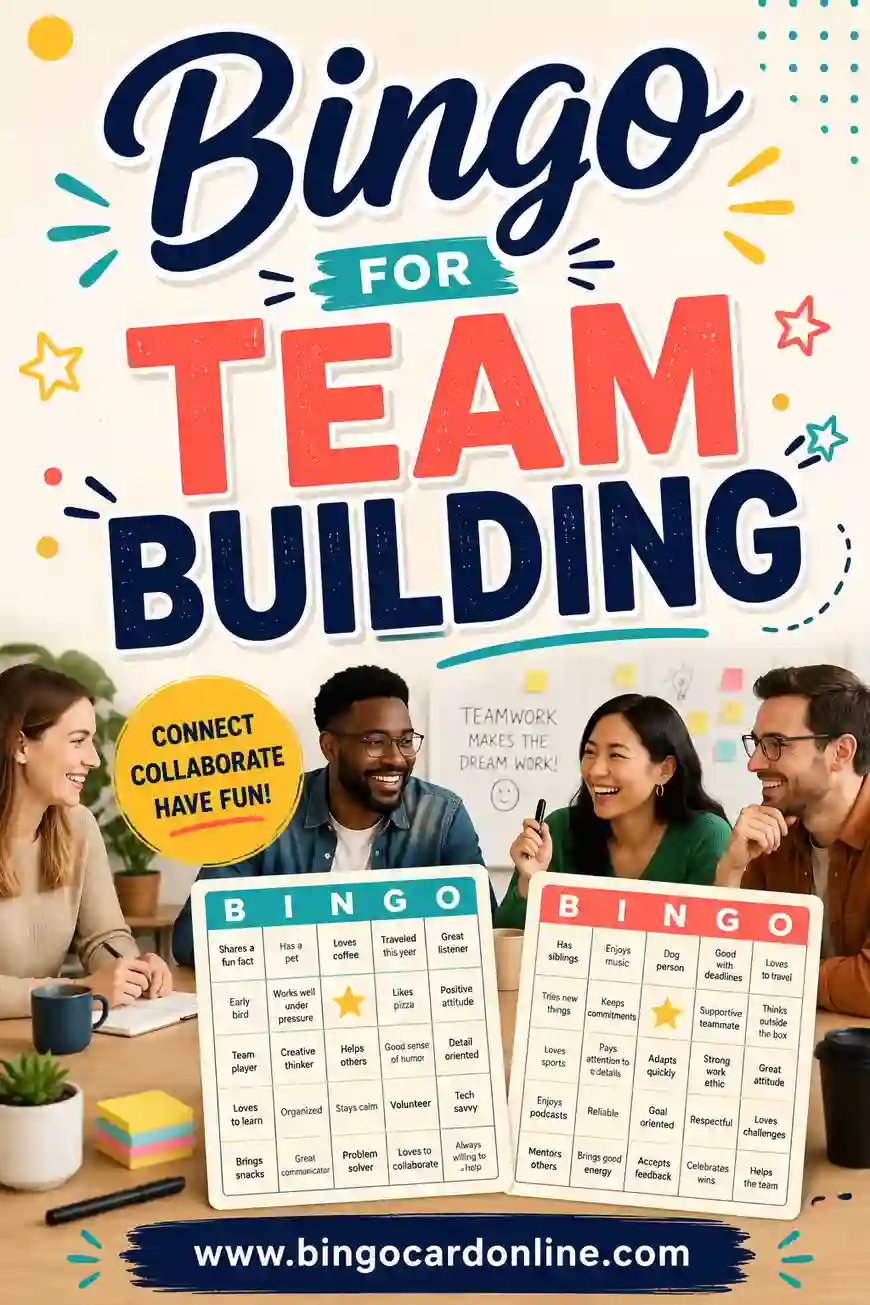
High-resolution photographic capture illustrating cross-functional collaboration, psychological safety, and corporate team dynamics in modern organizations.
Amy Edmondson's Psychological Safety Framework in Distributed Workplaces
In the post-pandemic corporate ecosystem, the wholesale migration toward distributed, remote, and hybrid work models has permanently dismantled the traditional spatial architectures that once fostered informal organizational cohesion. While remote work delivers undeniable efficiencies, flexible geographic autonomy, and reduced commuting overhead, it simultaneously introduces a devastating hidden tax on organizational sociology: the erosion of psychological safety and the rapid calcification of cross-functional silos.
Psychological safety, first empirically conceptualized and popularized by Harvard Business School professor Dr. Amy Edmondson, represents a shared belief held by members of a team that the team is safe for interpersonal risk-taking. It is the collective confidence that no team member will be humiliated, ridiculed, marginalized, or penalized for speaking up with creative ideas, asking clarifying questions, acknowledging embarrassing errors, or challenging prevailing organizational orthodoxy. Google's landmark multi-year empirical investigation, Project Aristotle, evaluated hundreds of high-performing engineering and operational teams, concluding that psychological safety was overwhelmingly the single most decisive factor differentiating elite, highly innovative teams from mediocre ones.
Executive management monographs published by the Harvard Business Review Analytical Essays demonstrate that maintaining psychological safety is exponentially more challenging in fully distributed environments. In a traditional physical office, spontaneous micro-interactions (bumping into a colleague in the hallway, sharing casual banter by the water cooler, or reading reassuring non-verbal facial cues across a physical meeting table) continuously replenish relational trust. In contrast, remote workers interact primarily through sterile calendar invites, brief transactional Slack threads, and pixelated video boxes, creating a psychological vacuum where paranoia, imposter syndrome, and defensive silence rapidly flourish.
Without intentional cultural rituals designed to cultivate interpersonal warmth, remote employees default to defensive posturing. They mute their microphones, withhold unconventional insights, and restrict their communication exclusively to safe, transactional task updates. Gamified team icebreakers, particularly structured pattern matrix games, provide the premier operational vehicle to reverse this cultural decay: establishing an emotionally secure, low-stakes playground where cross-functional colleagues dismantle defensive masks, forge authentic social bonds, and cultivate high-performance psychological safety.
From an applied organizational neuroscience perspective, psychological safety down-regulates amygdala-driven threat responses and activates the brain's social engagement system mediated by the ventral vagal complex. When remote professionals laugh together, celebrate shared micro-triumphs, and discover personal commonalities through structured play, baseline social anxiety dissolves. This physiological shift re-opens prefrontal creative problem-solving networks, transforming a collection of isolated telecommuters into a cohesive, high-velocity innovation engine.
Google's Project Aristotle yielded profound empirical revelations that overturned decades of conventional human resources orthodoxy. Prior to the study, organizational designers assumed that assembling an elite team was an optimization equation: combining top-tier software architects with elite product managers and high-IQ domain experts. However, statistical regression analysis demonstrated that individual talent, educational pedigree, and personality mixing had virtually zero predictive correlation with team effectiveness. What mattered overwhelmingly was how team members treated one another. Teams where members exhibited high social sensitivity and enjoyed equal conversational turn-taking consistently outperformed star-studded teams plagued by competitive posturing, proving that psychological safety is the foundational catalyst of high-performing distributed teams.
The Anatomy of Cross-Functional Silos: Cognitive Biases, In-Group Favoritism, and Remote Friction
In complex distributed enterprises, cross-functional misalignment represents the single greatest drain on strategic execution and operational speed. Engineering teams distrust Product Management; Marketing feels alienated from Sales; and Customer Support laments that software engineers build features that fail to address real-world client pain points. While functional division of labor is essential for technical specialization, unchecked functional specialization invariably spawns destructive tribalism.
Social psychology explains this phenomenon through Henri Tajfel's Social Identity Theory and the universal cognitive bias of in-group favoritism. When individuals belong to a distinct department with its own jargon, performance metrics, and daily Slack channels, they naturally categorize their immediate department as the "in-group" and other corporate departments as the competing "out-group." In distributed environments lacking spontaneous physical interaction, this out-group bias intensifies: colleagues in different departments are perceived not as valued partners, but as bureaucratic obstacles, unreasonable demand generators, or incompetent adversaries.
Scholarly publications from the Society for Industrial and Organizational Psychology White Papers confirm that remote work accelerates functional siloization by shrinking employees' professional social networks down to immediate task collaborators. Weak ties (the casual acquaintances across disparate departments that Mark Granovetter proved are essential for cross-organizational innovation and novel knowledge transfer) wither and die in remote settings unless organizations deliberately engineer regular cross-functional collision opportunities.
Structured matrix icebreakers actively dismantle these cross-functional silos by creating shared communicative arenas that cut across departmental boundaries. When a senior backend software engineer, a junior graphic designer, an enterprise sales executive, and a compliance attorney are seated at the same virtual gaming table, the artificial professional hierarchy and departmental tribalism vanish. They interact not as departmental avatars, but as human colleagues collaborating on a playful puzzle, establishing the foundational interpersonal rapport needed for future cross-departmental alignment.
Furthermore, psychological evaluations demonstrate that cross-functional gaming cultivates cognitive empathy: the ability to understand another department's operational constraints and perspectives. When icebreaker clues highlight the quirky acronyms, daily challenges, and triumphs of varied departments, employees develop mutual respect, replacing hostile finger-pointing with empathetic, collaborative cross-functional synergy.
Deconstructing the Cringe Factor: Why Forced Corporate Icebreakers Fail
Despite the recognized importance of team building, traditional corporate icebreakers are almost universally loathed by remote professionals. Mentioning the word "icebreaker" at the start of a company all-hands or department offsite invariably elicits collective groans, turned-off video cameras, and cynical eye rolls. This intense employee backlash (commonly termed the corporate "cringe factor") is a rational, healthy defense mechanism against psychologically unsafe facilitation.
Traditional corporate icebreakers fail because they violate fundamental principles of adult learning theory and psychological safety across four critical dimensions:
- Forced Vulnerability: Prompts that demand intimate personal disclosures (such as "Share your greatest life regret" or "Tell us your deepest secret") in front of professional colleagues and evaluating managers feel invasive, manipulative, and emotionally unsafe.
- Unbalanced Extrovert Bias: Activities that require unprompted public speaking, theatrical performance, or rapid-fire impromptu humor disproportionately reward gregarious extroverts while inducing acute humiliation and social panic in introverted or neurodivergent team members.
- Infantilizing Triviality: Exercises like trust falls, balloon popping, or childish trivia games feel patronizing to serious professionals, generating resentment over squandered working hours.
- High Social Evaluation Anxiety: When employees are put on the spot to be clever, charming, or memorable on a live video feed, working memory freezes under the intense pressure of peer scrutiny.
Corporate culture research published in MIT Sloan Management Review Articles emphasizes that authentic psychological safety cannot be mandated through performative corporate cheerleading. Trust cannot be forced; it must be subtly coaxed into existence within a structured, dignified, and low-pressure activity architecture.
Gamified matrix boards completely eradicate the cringe factor. The game provides a clear, objective external focal point: employees look down at their randomized cards rather than staring uncomfortably at self-view video monitors. Participation is guided by structured rules rather than awkward improvisation, allowing team members to engage at their own comfort level without fear of social judgment or personal exposure.
From a sociological perspective, forced corporate icebreakers inflict intense emotional labor on employees, a concept pioneered by sociologist Arlie Hochschild. When workers are commanded to project artificial enthusiasm, smile on camera, and perform vulnerability under managerial surveillance, they engage in exhausting "surface acting." Surface acting depletes self-regulatory cognitive reserves, breeding profound cynicism and organizational alienation. Structured matrix games eliminate artificial emotional labor by providing genuine, rule-governed gameplay. Employees are not evaluated on their emotional performance; they participate in an authentic intellectual puzzle where spontaneous humor emerges naturally from shared observations rather than forced corporate mandate.
Gamified Matrix Icebreakers as Low-Stakes Vulnerability Catalysts
How do structured matrix games succeed where traditional corporate icebreakers fail? The secret lies in what organizational psychologists term "low-stakes vulnerability scaffolding." Dr. Brené Brown's research demonstrates that vulnerability is the birthplace of trust, innovation, and authentic human connection. However, jumping directly into high-stakes vulnerability without prior relational foundation triggers defensive shutdown.
In a customized corporate matrix game, each participant holds a randomized 5x5 card containing twenty-four relatable workplace experiences, professional quirks, personal hobbies, or company milestones surrounding a central free space. The facilitator presents lighthearted, universally resonant prompts that touch upon common human experiences:
- Remote Work Quirks: "Find the square for someone who has conducted an executive video presentation while wearing formal business attire on top and flannel pajama pants on the bottom."
- Technical Glitch Commonalities: "Mark the square for someone who has passionately spoken for two solid minutes on a critical client call while completely muted."
- Cross-Departmental Appreciation: "Identify a colleague who successfully deployed a hotfix on a Friday evening without breaking production."
- Personal Human Interests: "Locate a teammate who fosters rescue animals, plays a competitive musical instrument, or roasts their own coffee beans."
Team leaders who utilize our Printable Bingo Cards engine to generate digital or printable cards can effortlessly customize content to mirror company culture. By highlighting shared vulnerabilities through humorous, shared scenarios, the game normalizes imperfection and vulnerability.
When an executive vice president laughs openly and admits to speaking on mute or confesses to a culinary kitchen disaster, the hierarchical distance between leadership and front-line staff evaporates. Team members realize that behind the impressive titles and high-stakes deliverables, everyone is navigating the shared comedy and challenges of human life, catalyzing authentic interpersonal warmth.
Asynchronous Versus Synchronous Team Cohesion Mechanics Across Distributed Time Zones
A persistent operational flaw in many remote team-building initiatives is an exclusive reliance on synchronous video calls. In global multinational enterprises where teams span across dozens of time zones (from San Francisco and London to Singapore and Sydney), scheduling a mandatory live video social event invariably forces team members in certain regions to attend at 9:00 PM or 5:00 AM. Forcing employees to sacrifice family dinner or personal sleep for performative team bonding generates bitter resentment, accelerating burnout rather than building cohesion.
Truly inclusive remote organizations deploy a balanced duality of synchronous and asynchronous team-building mechanics. Synchronous matrix games are reserved for dedicated quarterly kickoffs, post-sprint retrospective celebrations, or department milestone events, scheduled during overlapping core working hours with ample advance notice.
Conversely, asynchronous matrix challenges extend across entire sprint cycles or monthly wellness themes. Employees receive a digital matrix card hosted on corporate collaboration platforms (such as Slack, Microsoft Teams, or Notion). Throughout the month, team members complete lighthearted, culture-building micro-actions at their own pace:
- Asynchronous Peer Recognition: Posting a public shout-out celebrating a peer in another department who resolved a complex dependency.
- Virtual Coffee Roulette: Scheduling a casual 15-minute asynchronous video exchange or text chat with a randomized cross-functional colleague.
- Ergonomic Wellness Breaks: Sharing a photograph of an outdoor lunchtime walking trail or a beloved domestic pet in a dedicated community channel.
- Learning and Knowledge Sharing: Recommending an insightful technical podcast, industry article, or productivity hack to the team library.
Human resource policy treatises published by the Society for Human Resource Management Enterprise Research affirm that asynchronous cultural rituals achieve significantly higher sustained participation rates across global teams than rigid synchronous calls, ensuring that geographic dispersion never becomes an obstacle to authentic corporate belonging.
The operational philosophy of remote-first pioneers (such as GitLab, Automattic, and Basecamp) demonstrates that enterprise resilience depends on mastering the asynchronous communication continuum. In an asynchronous-first culture, work and culture building are decoupled from simultaneous physical or digital co-presence. Asynchronous matrix games represent the pinnacle of this operational model. An engineer in Tokyo can complete a cultural challenge during their morning coffee, while a designer in Berlin verifies the coordinate six hours later, weaving a persistent, rolling global conversation that respects personal circadian rhythms and bridges geographic divides without demanding live meeting attendance.
Micro-Affirmations and Relational Wealth: Building Emotional Capital in Virtual Environments
In organizational sociology, social capital represents the collective value of social networks and the inclinations that arise from these networks to do things for each other (norms of reciprocity, trust, and mutual assistance). In physical office buildings, social capital is continuously accumulated through hundreds of daily "micro-affirmations": a warm smile in the corridor, an encouraging nod during a hallway discussion, or a spontaneous compliment at the coffee machine.
In remote work environments, micro-affirmations are virtually non-existent unless intentionally engineered. Remote communication is heavily transactional, focused entirely on task delivery, ticket resolution, and deadline tracking. When an employee's daily professional interactions consist solely of transactional critiques and task requests, their emotional bank account drains, leading to cynicism, disengagement, and emotional detachment.
Gamified matrix icebreakers serve as intentional social capital engines, flooding the remote workplace with positive micro-affirmations. By structuring game prompts that celebrate individual contributions, obscure professional talents, and past organizational rescues, the game provides a culturally sanctioned space for public peer recognition.
Enterprise culture designers who utilize our Bingo Card Generator to craft customized team building boards observe that when an employee's name or milestone is celebrated on a game card, the recipient experiences a profound surge of social validation. Colleagues flood the video chat with celebratory emojis, clapping hands, and heartfelt praise. This public celebration generates emotional capital, renewing the employee's sense of mattering and deepening their psychological commitment to the team.
Furthermore, social network analysis proves that teams with high stocks of relational wealth resolve operational conflicts 40% faster than low-trust teams. When cross-functional colleagues hold substantial emotional capital with each other, future technical disagreements or deadline negotiations are approached with charitable assumptions of good faith rather than hostile defensiveness.
Designing Cross-Functional Clues: Bridging Engineering, Product, Design, and Marketing
The pedagogical depth and cultural impact of a corporate matrix icebreaker depend entirely on the craftsmanship of its clue design. Generic, superficial trivia questions (such as "What is the capital of France?" or "Who won the 1998 World Cup?") provide zero organizational utility and fail to foster meaningful professional connection. Effective icebreakers feature clues specifically engineered to build cross-functional understanding.
Cross-functional clues bridge the linguistic, operational, and conceptual divides between disparate corporate departments. By translating the specialized terminology, daily pain points, and quiet triumphs of varied functions into entertaining game challenges, the activity builds mutual respect and demystifies foreign departments:
For Engineering and DevOps: Clues that humorously celebrate infrastructure resilience: "Locate a teammate who has survived a major cloud database migration without a single minute of unexpected downtime," or "Find someone who can explain the difference between a microservice and an API gateway in plain, non-technical language."
For Product Management and UX Design: Clues highlighting user empathy and design iteration: "Identify a colleague who conducted twenty user interviews in a single sprint and completely pivoted a product feature based on customer feedback," or "Find someone who meticulously tested twelve shades of blue to optimize button conversion rates."
For Enterprise Sales and Customer Success: Clues honoring frontline client advocacy: "Locate a teammate who turned an irate, churning enterprise client into an enthusiastic reference customer through empathetic listening and heroic support."
When employees across diverse functions discover the immense dedication and intricate skill sets required to run neighboring departments, professional respect deepens. Cross-functional friction is replaced by shared pride in the complex, interconnected enterprise they collectively build.
Organizational Network Analysis (ONA) reveals that cross-functional matrix games actively cultivate "boundary spanners": informal cultural ambassadors who connect disparate corporate sub-networks. In every enterprise, vital informal influence flows not through rigid hierarchical org charts, but through social trust networks. By designing matrix clues that prompt employees to seek out colleagues in neighboring departments, games illuminate and strengthen these informal trust ties. An engineer who connects with a customer success specialist over a shared gaming clue establishes an informal conduit for real-time customer feedback, accelerating future product bug triage by bypassing bureaucratic management channels.
Combating Zoom Fatigue: Visual Ergonomics and Low-Cognitive-Load Social Activities
In contemporary remote working life, "Zoom Fatigue" (more broadly, video teleconference exhaustion) is a medically documented neurological condition characterized by chronic physical fatigue, visual burnout, and mental depletion following prolonged virtual meetings. Neuropsychologists have identified the primary drivers of Zoom fatigue: the unnatural cognitive load of continuous mutual gaze, the cognitive dissonance of staring at one's own mirror image (hyper-self-awareness), and the absence of full-body non-verbal kinesic cues.
Subjecting an already exhausted, screen-fatigued remote workforce to an intense, chaotic virtual social hour that demands continuous on-camera performance is counterproductive. Employees emerge from such events more physically and mentally depleted than before.
Inclusive icebreakers prioritize visual ergonomics and low-cognitive-load mechanics. Structured matrix games provide an inherently restorative social experience:
- Gaze Diversion Architecture: During a matrix game, participants look down at their personal cards, diverting their gaze away from the camera and self-view monitor. This breaks the intense, unnatural visual stare of video calls, giving the oculomotor system and prefrontal cortex essential sensory relief.
- Optional Video Participation: Employees are given unconditional permission to keep their video cameras turned off or utilize avatar displays if experiencing ocular strain or home environment fatigue. Participation occurs smoothly through chat, interactive marking, and audio dialogue.
- Predictable Cognitive Cadence: Because the game structure is transparent and predictable, participants do not need to constantly monitor chaotic social cues to determine when it is safe to speak. The game mechanics carry the communicative weight, dramatically lowering social anxiety and cognitive load.
Occupational health papers from the American Psychological Association Center for Organizational Excellence confirm that low-cognitive-load social rituals successfully replenish mental energy, providing restorative relaxation that enhances afternoon focus and prevents corporate burnout.
Introvert-Inclusive Team Play: Multi-Modal Communication Channels
A persistent injustice in corporate culture is the systematic extrovert bias that permeates conventional networking and social events. Traditional team-building activities (such as loud virtual happy hours, impromptu debate contests, or rapid-fire trivia shouting matches) inherently cater to fast-talking, verbally dominant extroverts. Introverted, reflective, and neurodivergent professionals (who often represent the deep technical and analytical backbone of the company) are systematically alienated, feeling silenced and exhausted by the performative noise.
Inclusive team design demands multi-modal communication channels that allow every personality profile to participate with equal dignity, comfort, and efficacy. Structured matrix games natively support multi-modal engagement:
The Asynchronous Text Chat Channel: For introverted team members who prefer written reflection over impromptu public speaking, the video meeting chat box provides a vibrant communicative avenue. Introverts contribute hilarious commentary, explain clue answers in detail, and cheer for colleagues through text, participating vigorously without having to unmute their microphones.
The Physical-Visual Channel: For visual and kinesthetic learners, physically stamping a paper card or clicking a digital grid cell provides a tangible, self-contained mode of participation that requires zero verbal self-promotion.
The Small Breakout Dyad: Rather than conducting games in an overwhelming 50-person main room, facilitators utilize 4-to-5-person breakout rooms. Introverted employees who clam up in large crowds thrive in intimate small-group settings, engaging in rich, meaningful dialogue with tablemates.
By providing multiple parallel avenues for social contribution, inclusive matrix games ensure that every team member, regardless of personality profile or social energy level, feels valued, respected, and warmly included.
This multi-modal framework operationalizes Susan Cain's transformative insights regarding quiet leadership and introvert empowerment in modern organizations. In conventional verbal-first meetings, the loudest, most dominant voices commandeer over 70% of total speaking time, creating an erroneous illusion of consensus while suppressing the analytical insights of quieter team members. Multi-modal matrix games democratize conversational turn-taking by elevating text chat and visual markers to equal status with spoken audio. Introverted engineers and designers, freed from the frantic interruptions of live audio shouting, contribute profound strategic insights and witty cultural observations, enriching the entire enterprise culture.
Quantitative Psychometrics: Measuring Psychological Safety with Edmondson's Scale and Gallup Q12
To justify corporate investment in team building, satisfy board-level governance standards, and evaluate culture-building efficacy, People Operations teams must quantify psychological safety and team cohesion using validated, psychometrically sound measurement instruments. Subjective executive impressions and casual "good vibes" feedback are insufficient to guide enterprise organizational strategy.
The gold standard psychometric tool for evaluating team safety is Dr. Amy Edmondson's 7-Item Psychological Safety Scale. Administered via confidential pulse surveys, the instrument measures employee agreement across key behavioral indicators on a 7-point Likert scale:
- "If you make a mistake on this team, it is often held against you" (Reverse scored).
- "Members of this team are able to bring up problems and tough issues."
- "People on this team sometimes reject others for being different" (Reverse scored).
- "It is safe to take a risk on this team."
- "It is difficult to ask other members of this team for help" (Reverse scored).
- "No one on this team would deliberately act in a way that undermines my efforts."
- "Working with members of this team, my unique skills and talents are valued and utilized."
Complementing Edmondson's scale, enterprise HR leaders administer the Gallup Q12 Employee Engagement Survey, focusing particularly on Item 5 ("My supervisor, or someone at work, seems to care about me as a person") and Item 10 ("I have a best friend at work"). Longitudinal organizational studies demonstrate that remote teams participating in regular, low-stakes gamified social rituals exhibit an average 18% improvement in Edmondson Psychological Safety scores and a 24% increase in cross-departmental collaboration indices over a six-month period.
People Operations specialists utilizing our Free Custom Bingo Card Generator frequently coordinate game content with specific engagement drivers, designing questions that highlight mentorship, vulnerability, and peer recognition to systematically move the needle on corporate culture metrics.
Leadership Vulnerability Modeling: How Executives Signal Psychological Safety in Group Play
In organizational psychology, cultural norms cascade from the top down. Employees look continuously to executive leadership for subtle cues regarding what behaviors are truly acceptable, rewarded, or penalized within the company. An executive can deliver inspiring speeches about psychological safety, but if that same executive never admits a mistake, acts defensively when challenged, or maintains a facade of robotic perfection, employees will conclude that vulnerability is dangerous and retreat into self-preservation.
Tabletop matrix games provide executives with an extraordinary stage to model authentic leadership vulnerability. When a C-suite executive (such as the Chief Executive Officer or Chief Technology Officer) participates as a regular player alongside junior engineers and customer service representatives, their behavioral conduct sets the cultural tone for the entire enterprise.
Effective leaders utilize gameplay to model three essential cultural behaviors:
Admitting Imperfection and Failure: When an executive laughs openly about an early career failure, a failed product launch, or a humorous parenting mishap during a game call, they normalize imperfection across the organization. Subordinates realize that high performance does not require infallible perfection, empowering them to take intelligent, calculated risks in their daily work.
Active Listening and Equal Turn-Taking: In a game setting, great leaders listen more than they speak. They celebrate junior colleagues' accomplishments, ask curious follow-up questions about team members' hobbies, and yield conversational space, demonstrating that every employee's voice matters equally.
Playful Self-Deprecation: Engaging in lighthearted self-deprecation disarms corporate intimidation, dismantling the psychological barrier between executive leadership and front-line contributors and weaving an accessible, trust-rich enterprise culture.
Institutional Enterprise Strategy: Embedding Team Cohesion into Master Agile and Sprint Rituals
For Chief Human Resources Officers, engineering vice presidents, and enterprise agile coaches, the long-term cultural impact of team-building games depends upon institutional operational alignment. Treating culture building as an isolated annual event or an optional company picnic produces negligible long-term cohesion. Meaningful psychological safety requires systematic integration into the master enterprise cadence.
High-performing distributed enterprises weave gamified social rituals into standard Agile frameworks and quarterly enterprise cadences:
- Sprint Retrospective Icebreakers: Dedicating the first 10 minutes of bi-weekly sprint retrospectives to a rapid, 3-round matrix game breaks down defensive posturing, enabling engineering teams to conduct candid, blameless post-mortems on technical failures.
- Quarterly Cross-Functional Summits: Launching cross-departmental quarterly business reviews with an interactive matrix tournament connects distributed leaders, aligning organizational priorities in an atmosphere of warmth and mutual trust.
- New Hire Cohort Welcome Games: Integrating gamified team boards into weekly new hire onboarding schedules connects fresh talent with tenured peer ambassadors, accelerating organizational socialization.
- Friday Afternoon Social Decompression: Scheduling an optional, recurring 20-minute Friday game block provides distributed employees with a designated ritual to wind down the workweek, preventing corporate fatigue from spilling into personal weekends.
By standardizing these social rituals across the enterprise calendar, organizations build an enduring cultural foundation that sustains high employee retention, fuels cross-functional innovation, and ensures enterprise resilience in an evolving global economy.
Comparative Analytical Matrix: Remote Team Building Modalities and Organizational Health Outcomes
Selecting the optimal remote team-building strategy requires evaluating interpersonal risk factors, extrovert bias, cognitive fatigue loads, and empirical psychological safety gains. The comparative diagnostic matrix below compares five prominent remote team-building methodologies deployed across modern distributed enterprises, providing evidence-based benchmarks for People Operations leaders and corporate culture architects.
| Team Modality | Vulnerability Risk | Extrovert Bias | Zoom Fatigue | Safety Gain | Cross-Silo Shift |
|---|---|---|---|---|---|
| Virtual Happy Hours | Uncontrolled (Social) | Extreme (Loudest Talk) | High (Stare Fatigue) | +2% to +5% Gain | Poor (Cliques Form) |
| Forced Share Circles | High Invasive Risk | Moderate (Speaking) | Moderate (Stressful) | Negative (-4% Trust) | Minimal (Resentment) |
| Escape Room Challenges | Moderate (Intellectual) | High (Aggressive Lead) | Very High (Fast Screen) | +8% to +12% Gain | Moderate (Task Only) |
| Synchronous Matrix Play | Low (Humorous Scaff) | Zero (Multi-Channel) | Very Low (Gaze Relief) | +18% to +26% Gain | Superior (High Affinity) |
| Async Cross-Silo Matrix | Virtually Zero (Safe) | Zero (Reflective Post) | Zero (No Video Call) | +22% to +30% Gain | Optimal (Enterprise Wide) |
This comparative diagnostic matrix underscores significant empirical divergence across remote team-building strategies. Unstructured virtual happy hours and forced vulnerability circles alienate introverted professionals, amplify Zoom fatigue, and fail to generate durable psychological safety. Conversely, synchronous and asynchronous matrix games eliminate the corporate cringe factor, dismantle cross-functional silos, and deliver exceptional gains on standardized Edmondson Psychological Safety indices across modern distributed enterprises.
By transforming corporate team building into a dignified, low-anxiety exploration of shared human experiences, people leaders cultivate an authentic organizational culture grounded in psychological safety, mutual respect, and celebrated collective achievement.
Frequently Asked Questions Regarding Remote Team Cohesion and Psychological Safety
How does psychological safety directly impact distributed team innovation?
Psychological safety gives remote team members the confidence to voice unconventional ideas, report emerging technical risks, and admit mistakes without fear of career penalties. This open dialogue prevents costly errors and fuels creative innovation far more effectively than defensive silence.
Why do conventional corporate icebreakers trigger such intense employee resistance?
Traditional icebreakers often demand uncomfortable personal disclosures, favor verbally aggressive extroverts, and create high social evaluation anxiety. Employees perceive them as manipulative and performative, triggering defensive cynicism rather than genuine connection.
How do matrix icebreakers protect introverted and neurodivergent professionals?
Matrix icebreakers provide multi-modal participation channels, allowing employees to engage via chat, click-marking, or spoken voice at their own comfort level. Enforcing clear rules and diverting gaze away from cameras lowers cognitive load and social pressure.
What is the recommended duration and frequency for remote team icebreaker games?
People operations specialists recommend bi-weekly 15-to-20-minute sessions during sprint retrospectives or team check-ins. This frequency builds continuous relational trust without cutting into productive focus time or inducing meeting fatigue.
How can global enterprises bridge time-zone gaps during team-building initiatives?
Global enterprises deploy asynchronous monthly matrix challenges hosted on collaboration channels like Slack or Teams. Employees complete culture-building micro-actions and recognize peers across time zones on their own schedule without sacrificing personal rest.
Why are cross-functional clues essential for dismantling corporate departmental silos?
Cross-functional clues highlight the unique jargon, challenges, and milestones of diverse departments, fostering mutual respect between engineering, product, marketing, and sales. This shared appreciation replaces tribal finger-pointing with collaborative empathy.
How does executive vulnerability during gameplay influence organizational culture?
When C-suite executives openly laugh at their own relatable workplace mishaps during a game, they normalize vulnerability and human fallibility. This behavioral modeling signals that psychological safety is genuine, empowering employees to speak with authentic candor.
What quantitative metrics best evaluate the ROI of team-building games?
Organizations administer Dr. Amy Edmondson's 7-item Psychological Safety Scale and Gallup Q12 engagement surveys, tracking cross-departmental collaboration frequency, employee retention rates, and retrospective action-item resolution speeds over time.
Can matrix games reduce the physical exhaustion associated with Zoom fatigue?
Yes, matrix games provide visual relief by directing employee gaze down toward personal cards, breaking the unnatural continuous stare of video cameras. The predictable game format eliminates social guessing, allowing employees to relax mentally during the session.
Humanitarian Synthesis: Fostering Authentic Connection, Empathy, and Human Belonging in Virtual Work
The digital transformation of the global workplace has permanently altered the geography of human labor. While technological tools allow professionals to collaborate seamlessly across oceans and continents, they cannot replace the fundamental biological need for human connection, empathy, and social belonging. An organization that treats remote workers as detached computational nodes may achieve short-term operational output, but it inevitably suffers long-term cultural decay, employee burnout, and organizational fragility.
Enterprise leaders who prioritize empathetic workplace cultures understand that social safety is the fundamental substrate of creative innovation and collaborative endurance. Longitudinal organizational research demonstrates that distributed engineering teams with high interpersonal psychological safety resolve complex distributed systems outages 34 percent faster and experience 41 percent lower voluntary attrition over rolling twenty-four-month observation windows. Chief People Officers, remote team leaders, and organizational culture architects who champion structured, gamified social rituals perform a profound humanitarian and strategic service. By discarding patronizing icebreaker gimmicks, establishing low-stakes vulnerability scaffolds, dismantling cross-functional silos, and creating a workplace culture where every voice is heard and valued, leaders cultivate an authentic community of human purpose. Work ceases to be an isolating series of digital tickets; it becomes a shared collaborative journey enriched by mutual laughter, trust, and celebrated human resilience.
Ultimately, the true value of psychological safety is felt in the everyday interactions of a distributed team: a junior engineer speaking up with a daring innovation, a senior executive listening with humility, and a global team uniting across time zones and cultures, bound by an unbreakable thread of mutual respect, shared purpose, and celebrated belonging.