Cross-Generational Workplace Communication and Knowledge Transfer Games

High-resolution photographic capture representing multigenerational collaboration, bidirectional mentorship, and harmonious enterprise knowledge sharing.
The Multi-Generational Enterprise Demographic Shift: Navigating Five Cohorts in the Post-Pandemic Workplace
For the first time in modern economic history, contemporary enterprise organizations employ up to five distinct generational cohorts simultaneously. Traditionalists and Baby Boomers continue to occupy senior boardrooms, advisory positions, and executive suites; Generation X anchors senior operational and technical leadership; Millennials comprise the core management layer; and Generation Z enters the global workforce in accelerating waves. While demographic diversity offers an extraordinary breadth of life perspectives and historical context, it simultaneously introduces acute communicative friction. According to workforce demographic research published by AARP Research, multigenerational collaboration is recognized as an vital corporate imperative, with over eighty percent of surveyed enterprise managers confirming that multi-age teams drive superior innovation when communicative friction is actively mitigated.
The convergence of disparate generational cohorts within distributed and hybrid work environments magnifies cultural divergence. Each generation was shaped by profoundly different geopolitical milestones, educational paradigms, technological inflection points, and economic cycles. Baby Boomers developed their early professional identities within hierarchical, face-to-face corporate environments where tenure and institutional protocol commanded unquestioned authority. Generation X came of age amid corporate downsizing, fostering fierce self-reliance, pragmatism, and healthy skepticism of corporate rhetoric. Millennials witnessed the rapid digitization of knowledge work, prioritizing collaborative transparency, purposeful mission, and flat hierarchy. Generation Z, as true digital natives, brings unparalleled fluency in ubiquitous real-time communication alongside acute sensitivities toward psychological safety, mental well-being, and social authenticity.
When these diverse mental models collide without intentional organizational bridging, communication channels inevitably fracture. Younger employees misinterpret formal email cadences or direct phone calls from older colleagues as aggressive or inefficient. Conversely, senior contributors perceive abbreviated instant messaging pings, video memos, or informal emojis from junior staff as disrespectful or lacking professional rigor. These mutual misperceptions create invisible interpersonal silos, chilling cross-generational collaboration and fostering toxic in-group favoritism.
Furthermore, structural demographic shifts threaten enterprise stability through what workforce planners term the Silver Tsunami. As millions of veteran professionals reach retirement eligibility, decades of irreplaceable institutional memory, unwritten technical insights, and delicate client relationship instincts risk evaporating into thin air. If organizations fail to construct systematic bridges for intergenerational knowledge transfer, this intellectual capital departs permanently, exposing enterprises to catastrophic operational vulnerability.
Resolving this demographic challenge requires moving beyond passive diversity seminars toward active, structured engagement mechanics. By adopting gamified knowledge transfer architectures, forward-thinking organizations transform generational friction into an dynamic source of collective intelligence. The playful, structured framing of collaborative games disarms defensive generational posturing, allowing colleagues of all ages to learn from one another with authentic humility and mutual respect.
Sociological Stereotyping Versus Behavioral Reality: Dismantling Generational Myths in Corporate Communication
Corporate media and popular culture frequently reduce generational dynamics to simplistic, polarizing caricatures. Older workers are routinely stereotyped as technologically incompetent, resistant to change, and resistant to modern agile workflows. Simultaneously, younger professionals are derided as entitled, fragile, incapable of long-term organizational loyalty, and dependent upon instant gratification. In rigorous industrial psychology literature published by the Society for Human Resource Management, behavioral scientists emphasize that empirical workplace differences between generations are vastly overstated, with perceived rifts driven largely by cognitive confirmation bias and unexamined cultural stereotypes.
When examined through objective psychometric evaluation, professionals across all age groups share remarkably consistent core workplace desires. Employees of every generation crave meaningful professional work, fair compensation, transparent managerial communication, opportunities for autonomous mastery, and genuine respect from their colleagues. The differences that do exist are predominantly stylistic and technological rather than motivational. An older engineer and a recently graduated developer often share the identical commitment to software quality and architectural elegance; their friction arises entirely from divergent communication channels and habitual documentation practices.
Stereotyping becomes dangerously self-fulfilling when embedded in organizational culture. When managers assume that senior professionals cannot master new software platforms, they withhold advanced digital tooling training, effectively manufacturing the technological obsolescence they anticipated. Likewise, when leaders assume younger workers lack organizational loyalty, they treat them as disposable temporary labor, precipitating early resignations that confirm initial managerial prejudices. Breaking these vicious feedback loops requires structured behavioral interventions that force individuals to interact with specific human beings rather than abstract demographic labels.
Gamified interaction models serve as powerful cognitive debiasing mechanisms. In a game environment, participants interact based on shared rules, transparent objectives, and mutual problem-solving requirements. When a twenty-three-year-old developer and a sixty-year-old systems architect collaborate to solve an intricate technical scavenger hunt, stereotypical assumptions collapse beneath the weight of lived reality. The junior developer witnesses the senior architect deep diagnostic intuition in real time, while the veteran observes the newcomer rapid synthesis of emerging cloud frameworks.
By replacing stereotypical narratives with authentic personal experiences, enterprises cultivate genuine age equity. Colleague interactions shift from adversarial suspicion to curious exploration. Recognizing that generational divergence represents varied strengths rather than cultural deficiencies is the crucial philosophical foundation for building an resilient, cross-generational powerhouse.
The Tacit Knowledge Dilemma: Why Baby Boomer and Gen X Expertise Vanishes During Silent Departures
One of the most profound intellectual challenges confronting modern knowledge organizations is the extraction and preservation of tacit knowledge. Pioneering philosopher Michael Polanyi famously observed that humans know more than they can tell. Explicit knowledge encompasses information that can be easily codified, documented, and stored in standard operating procedure manuals, architectural schemas, and code repositories. Tacit knowledge, by contrast, represents deeply internalized mental models, subtle intuitive pattern recognition, historical context, and political navigation instincts developed over decades of trial, error, and operational mastery. In landmark management scholarship published by the Harvard Business Review, organizational researchers discovered that up to eighty-five percent of an organization competitive advantage resides in tacit knowledge that has never been committed to written text.
When senior professionals retire or transition out of an enterprise, standard exit interviews completely fail to capture this tacit reservoir. A departing director cannot simply summarize twenty-five years of delicate client negotiation instincts into an exit questionnaire or a sixty-minute handover call. Without structured extraction mechanisms, the departing employee walks out the door with irreplaceable institutional lore, leaving successors to repeat costly mistakes that were solved decades prior. This silent knowledge drain costs global enterprises hundreds of millions of dollars annually in duplicated effort and operational missteps.
Traditional corporate attempts to document tacit knowledge through mandatory documentation sprints fail because senior contributors find writing exhaustive manuals tedious and unrewarding. Furthermore, experts often suffer from the curse of knowledge: they perform critical diagnostic steps so automatically that they fail to recognize those steps as specialized knowledge worthy of documentation. An experienced reliability engineer intuitively knows which server log anomalies indicate an impending distributed database partition, but because that intuition has become second nature, it never appears in standard onboarding handbooks.
Extracting tacit wisdom requires interactive inquiry rather than passive documentation. The expert tacit knowledge remains dormant until triggered by specific operational prompts, unexpected anomalies, or inquisitive questioning from an engaged apprentice. Games and structured puzzles provide precisely the context-rich environments required to activate this dormant wisdom. When faced with an interactive scenario or a diagnostic challenge, senior experts naturally verbalize their decision-making heuristics, narrating their thought processes as they navigate the game.
Gamified knowledge transfer transforms tacit extraction from an burdensome chore into an engaging, celebratory social ritual. Senior professionals take deep pride in demonstrating their mastery, while junior colleagues receive an masterclass in practical problem-solving that no static manual could ever replicate. Preserving tacit enterprise capital transforms organizational succession from an high-stakes gamble into an orderly, compounding transfer of wisdom.
Gamified Bidirectional Mentorship: Structuring Mutual Learning Quests Between Senior Experts and Digital Natives
Conventional corporate mentorship programs are almost universally structured as unidirectional hierarchies. A senior executive is paired with a junior apprentice to impart professional guidance, critique career trajectories, and dispense top-down advice. While traditional mentoring offers value, it reinforces power differentials and often degenerates into sporadic, awkward coffee chats devoid of actionable progress. Modern workplace environments demand an revolutionary evolution: gamified bidirectional mentorship, often termed mutual questing.
Bidirectional mentorship recognizes that in today volatile technological landscape, every employee is simultaneously a teacher and a student. While tenured leaders possess unparalleled expertise in enterprise politics, strategic risk management, regulatory compliance, and client psychology, junior professionals possess intuitive mastery of emerging generative AI tools, rapid content creation workflows, digital subcultures, and decentralized collaborative platforms. Gamified bidirectional frameworks formalize this reciprocity, pairing senior and junior colleagues as co-op game partners on balanced developmental quests.
Rather than sitting passively in an office discussing abstract leadership philosophy, the mentor-mentee pair is assigned concrete collaborative quests. Quest 1 might challenge the senior executive to teach the junior colleague how to conduct an high-stakes stakeholder alignment meeting, complete with role-playing difficult objections. Quest 2 might invert the relationship, tasking the junior professional with coaching the executive on integrating multimodal generative AI workflows into daily administrative tasks. Each partner experiences the vulnerability of being a student and the confidence of being an instructor, dissolving hierarchical barriers and fostering profound mutual respect.
The gamified structure provides clear milestone checkpoints, objective scoring rubrics, and tangible rewards for both participants. As pairs complete their collaborative quests, they unlock team achievements and earn points toward departmental learning goals. This structured momentum prevents the scheduling neglect that routinely derails informal mentorship pairings. Both individuals remain accountable to the shared game, ensuring regular, substantive interactions that continually enrich their respective professional skill sets.
The cultural consequences of bidirectional questing are profound. Senior executives gain unfiltered, real-time insight into the operational realities, frustrations, and aspirations of frontline junior staff, preventing the dangerous executive insulation that leads to out-of-touch corporate mandates. Concurrently, younger professionals develop accelerated business acumen, deep organizational empathy, and direct sponsorship from senior champions. Bidirectional gamification weaves an resilient social fabric across generational boundaries, turning age diversity into an dynamic engine of enterprise innovation.
Matrix Grid Mechanics in Intergenerational Discovery: Interactive Knowledge Scavenger Hunts
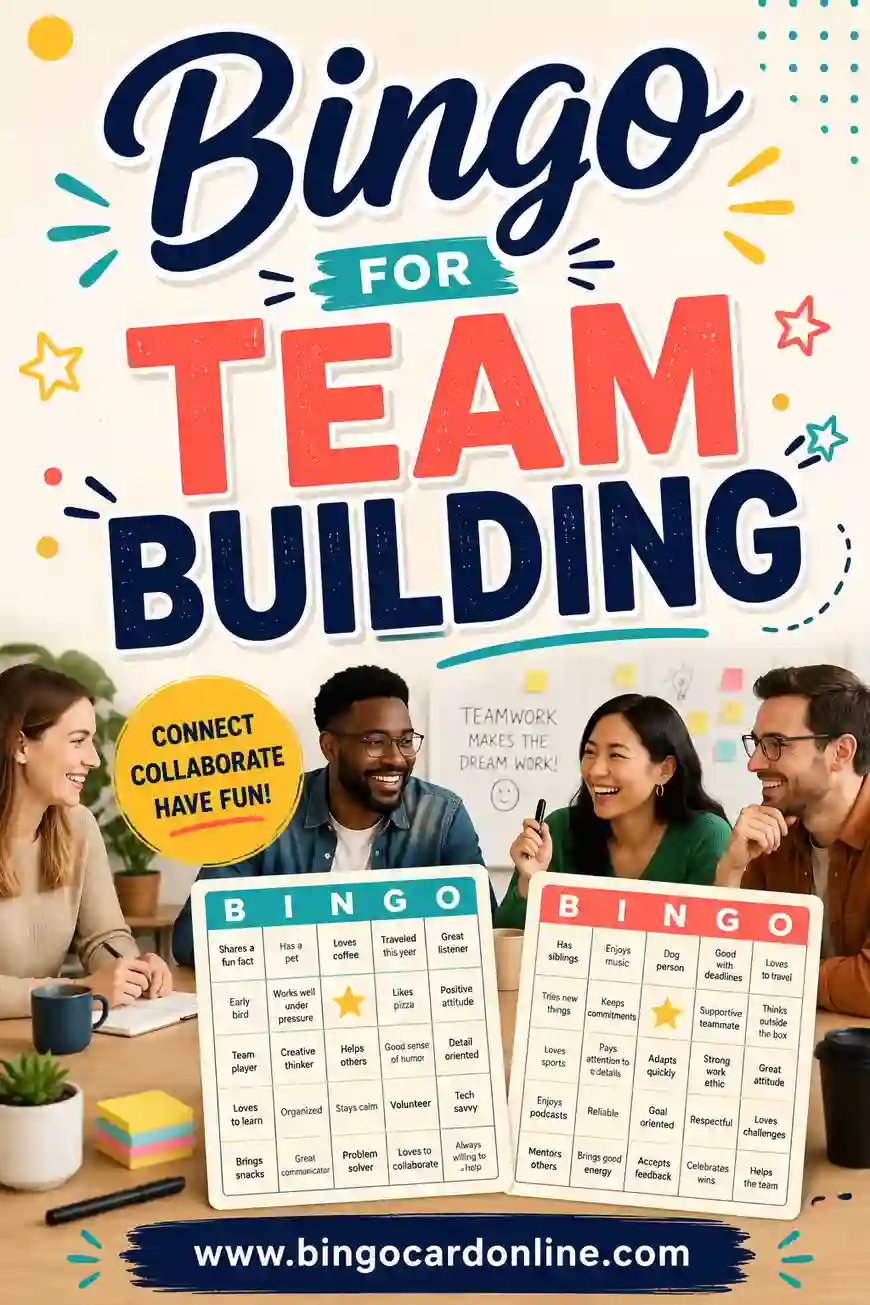
To scale cross-generational knowledge transfer across hundreds or thousands of distributed enterprise workers, talent architects require an intuitive, low-friction medium. Interactive matrix grids represent the premier pedagogical vehicle for operationalizing intergenerational discovery. Built upon flexible 4x4 or 5x5 spatial layouts reminiscent of classic bingo grids, these digital matrix boards turn generational knowledge transfer into an engaging workplace scavenger hunt. Leveraging dynamic web tools such as bingocardonline.com, People Operations teams can author role-specific, department-wide, or enterprise-wide intergenerational matrix boards in minutes.
Each square on an intergenerational matrix card contains an targeted inquiry quest, an historical discovery prompt, or an collaborative micro-challenge that requires cross-generational interaction to complete. For instance, a square designed for a junior employee might read: Find a colleague with fifteen-plus years of company tenure and learn the story behind our first major production outage. A complementary square for a senior contributor might read: Partner with a team member who joined in the past twelve months to co-design an automated workflow using modern AI tooling. These explicit prompts provide professional permission to initiate conversations across generational divides without awkwardness.
The non-linear geometry of the matrix grid allows participants to navigate the challenge according to their personal schedules and comfort levels. In rigid linear programs, an employee who encounters a busy colleague gets stalled immediately. With an interactive matrix, the individual can pivot toward a dozen alternative squares, chatting with colleagues in finance, operations, or product engineering. The quest becomes an self-directed adventure, empowering employees to build broad horizontal networks across the enterprise.
The visual progression mechanics of the matrix grid leverage innate human desires for completion and visual harmony. Watching an empty grid fill with verified checks creates a deeply satisfying sense of accomplishment. Furthermore, teams can participate in cohort-based matrix sprints, where cross-functional pods consisting of diverse age groups compete collectively to achieve full blackout boards. The shared pursuit of game victory aligns multi-generational contributors toward common objectives, replacing generational friction with joyful camaraderie.
Additionally, digital matrix grids provide enterprise learning leaders with invaluable diagnostic analytics. By tracking which knowledge squares are completed rapidly and which remain unfulfilled across cohorts, instructional designers gain clear empirical visibility into organizational knowledge gaps. If data reveals that almost zero junior engineers complete the square regarding legacy mainframe architecture, leadership can immediately schedule targeted training sessions before legacy expertise disappears. The matrix acts simultaneously as an engaging social catalyst and an real-time organizational intelligence radar.
Communication Medium Friction: Bridging the Divide Between Phone Calls, Email Threads, Slack, and Video Pings
A primary catalyst for cross-generational workplace conflict is the fragmentation of enterprise communication channels. In the contemporary workplace, communication does not occur along a single medium; it spans synchronous voice calls, structured formal emails, instant chat platforms like Slack and Teams, asynchronous video snippets, and collaborative comment streams inside documents. Different generational cohorts exhibit sharp, instinctive preferences for specific channels, often viewing alternative mediums with intense irritation or anxiety. In extensive sociolinguistic research conducted by the Stanford Center on Longevity, sociologists established that communicative channel friction accounts for the vast majority of perceived intergenerational conflict in modern distributed knowledge teams.
Baby Boomers and senior Gen X contributors frequently favor high-bandwidth synchronous communication: direct phone calls, scheduled voice meetings, or comprehensive emails with clear subject lines and polite salutations. To these experienced professionals, a direct conversation is the fastest, most nuanced method for resolving complex ambiguities and establishing personal accountability. In stark contrast, Millennials and Gen Z professionals often view unscheduled incoming phone calls as invasive, disruptive, and demanding an immediate performance without time for reflection. They prefer asynchronous, searchable text streams that allow them to process data calmly and integrate responses into their workflow without context-switching trauma.
Conversely, younger workers heavy reliance on abbreviated text, thread replies, and visual reactions (such as thumbs-up or heart emojis) is frequently misinterpreted by older colleagues as flippant, dismissive, or lacking professional rigor. When a senior manager sends a thoughtful three-paragraph project summary and receives a single thumbs-up emoji as a reply, the manager feels disrespected. The junior worker, meanwhile, felt they were communicating optimal efficiency and acknowledgment without generating redundant inbox clutter.
Gamified communication challenges actively bridge this medium divide by cross-training employees in multi-channel fluency. A designated Channel Swap Matrix Challenge prompts older workers to spend a week using threaded Slack huddles and emojis for quick approvals, while challenging younger workers to conduct three five-minute unscheduled phone check-ins or author formal project briefs. By experiencing alternative mediums within a playful, low-stakes game framework, employees build behavioral empathy for their colleagues communication styles.
Organizations must also establish clear, explicit channel charters that eliminate ambiguity. A comprehensive team communication charter defines exactly which situations warrant an phone call (such as catastrophic production outages), which belong in email (formal client documentation), and which belong in instant messaging (rapid operational questions). Removing guesswork eliminates anxiety, allowing cross-generational teams to communicate with precision, respect, and effortless velocity.
Psychological Safety Across Generational Hierarchies: Normalizing Vulnerability and Collaborative Inquiries
Cross-generational communication cannot thrive in an organizational climate characterized by intimidation, judgment, or fear of evaluation. In multi-generational environments, psychological safety is constantly threatened by dual-directional evaluation anxiety. Junior employees fear that asking foundational questions will expose their inexperience, confirming negative stereotypes about youthful incompetence. Concurrently, senior professionals experience intense anxiety that asking for help with new digital technologies or admitting unfamiliarity with emerging methodologies will brand them as obsolete relics in danger of restructuring. In psychological safety studies published by the American Psychological Association, psychologists emphasize that age-inclusive psychological safety is essential for team innovation, error mitigation, and talent retention.
Gamified learning environments serve as an psychological shield against evaluation dread. Games create an alternative behavioral arena where curiosity and fallibility are normalized and rewarded. When an exercise is framed as a diagnostic game or an collaborative quest, asking a question ceases to be an admission of ignorance; it becomes a legitimate, strategic move within the rules of the game. Both senior and junior participants feel liberated to explore concepts openly without risking their professional standing.
To cultivate deep safety, gamified matrix challenges should explicitly incorporate vulnerability-modeling quests. Squares such as Share a past project mistake that taught you an invaluable lesson or Ask an apprentice to show you their favorite software shortcut explicitly require participants to demonstrate intellectual humility. When a respected veteran executive openly discusses an multi-million-dollar forecasting error from their past, junior colleagues realize that mastery is born from resilient learning rather than infallible perfection.
Furthermore, cooperative game mechanics prevent the defensive posturing that often arises during direct managerial reviews. When employees work together on a team scavenger hunt or a collaborative puzzle, their focus is directed outward toward solving the game objective rather than inward toward self-preservation. This outward cognitive focus lowers physiological defensiveness, fostering genuine warmth and authentic camaraderie across corporate ranks.
Organizations that cultivate robust cross-generational psychological safety reap extraordinary intellectual rewards. When senior wisdom and youthful digital agility converse without fear, operational blind spots vanish and creative synthesis flourishes. Creating an workplace where every voice, regardless of age or tenure, is listened to with profound respect is the ultimate hallmark of an truly mature enterprise culture.
Gamifying Institutional History and Tribal Lore: Preserving Enterprise Memory Through Interactive Puzzles
Every long-standing enterprise possesses a rich, complex oral history known as tribal lore. This lore includes the untold narratives behind major corporate pivots, the legendary crises that forged company values, the humorous anecdotes surrounding past product launches, and the deep contextual reasons why certain business processes exist in their current form. All too often, this institutional memory remains locked inside the heads of a few veteran employees, completely inaccessible to newer generations. When these veterans depart, the organization loses its cultural soul and forgets the foundational lessons that defined its success.
Gamified history challenges transform dusty corporate archives into thrilling interactive puzzles. Rather than forcing new hires to read dry corporate timelines, People Operations teams can construct an Enterprise Lore Quest using interactive matrix cards. New hires are tasked with solving riddles that require interviewing long-tenured employees across different facilities: Uncover the secret origin of our main product mascot, Discover why our legacy database schema uses that peculiar naming convention, or Find out which customer crisis led to our 24/7 reliability guarantee.
These historical quests achieve multiple strategic objectives simultaneously. First, they provide veteran contributors with an deeply appreciated platform to share their life work and historical contributions, validating their enduring value to the organization. Second, they immerse incoming cohorts in the profound cultural heritage of the enterprise, instilling an authentic sense of pride, purpose, and institutional stewardship. Employees no longer feel like temporary wage earners; they recognize themselves as the next chapter in an ongoing corporate epic.
Moreover, understanding historical context prevents modern teams from making disastrous architectural and strategic mistakes. In software engineering, for instance, young developers frequently encounter an seemingly bizarre piece of legacy code and attempt to refactor it, only to cause an catastrophic outage because they did not understand the obscure regulatory requirement or hardware limitation that mandated that specific design. By gamifying institutional history, organizations ensure that the context behind architectural decisions is successfully passed down to future generations of engineers.
Preserving tribal lore through collaborative gaming strengthens organizational resilience during turbulent economic times. When employees understand the severe downturns, technical crises, and market disruptions that their predecessors conquered in decades past, they face modern challenges with greater fortitude and collective confidence. Enterprise history becomes not a museum exhibit, but an living wellspring of strategic wisdom and cultural endurance.
Designing Inclusive Cross-Generational Game Spaces: Multi-Modal Formats That Respect Diverse Technological Comfort
For a cross-generational game framework to succeed, the gaming environment itself must be radically inclusive, accessible, and welcoming to all participants regardless of their technological comfort levels. If an enterprise launches an knowledge transfer challenge hosted entirely inside an complex, cutting-edge virtual reality metaverse platform or a fast-paced multiplayer video game, it instantly alienates senior employees who may feel uncomfortable with 3D spatial navigation. Conversely, if the initiative relies strictly on physical paper cards distributed in a corporate headquarters, it excludes remote workers and digital natives who operate seamlessly in cloud ecosystems.
Universal design principles dictate that gamified knowledge transfer programs must be multi-modal, offering seamless interoperability across digital and physical interfaces. Interactive matrix generators such as bingocardonline.com excel in this capacity because they support both instant digital interaction via any web browser and high-resolution, print-ready PDF formats. A senior engineer working at their desk can print a physical, beautifully formatted matrix card and fill it out with a fountain pen, while a remote junior developer completes the identical interactive matrix card on their smartphone or dual-monitor workstation. Both participants contribute to the identical collective team score without technological friction.
Visual ergonomics and typographical clarity are paramount. Matrix interfaces must utilize high-contrast color palettes, clean sans-serif typography, and generous touch targets that accommodate diverse visual visual acuities and fine motor capabilities. The user interface must be clean, intuitive, and devoid of confusing gaming jargon that might make non-gamers feel out of place. The language of the challenge should emphasize professional collaboration, curiosity, and mutual discovery rather than juvenile arcade aesthetics.
Furthermore, time flexibility must be built into the framework. Grandparent employees managing family caregiving responsibilities or senior executives with relentless meeting schedules cannot participate in synchronized, fast-paced trivia speed runs. Providing asynchronous matrix formats with flexible multi-week completion horizons ensures that everyone can participate at their own optimal pace. True inclusion means meeting employees where they are, honoring their preferred modes of engagement, and celebrating their contributions equally.
When game spaces are thoughtfully engineered for universal accessibility, resistance to gamification evaporates. Skeptical professionals who initially dismissed the program as a superficial gimmick find themselves joyfully participating alongside their colleagues. Inclusive design creates an level playing field where generational barriers dissolve and genuine human connection flourishes.
Measuring Intergenerational Knowledge Transfer ROI: Succession Readiness and Tacit Retention Metrics
To establish cross-generational gamification as an permanent strategic program rather than a temporary HR experiment, organizational leaders must demonstrate measurable business return on investment. Historically, measuring knowledge transfer was notoriously elusive, relying upon subjective exit surveys or vague mentoring ratings. Modern talent development architectures, however, leverage quantitative psychometrics and operational telemetry to calculate knowledge retention, succession readiness, and communicative velocity with statistical rigor.
The primary quantitative metric for evaluating knowledge transfer is the Succession Readiness Index (SRI). This metric tracks the percentage of critical operational, technical, and strategic roles that possess at least two fully qualified, cross-trained internal successors capable of stepping into the role immediately upon a veteran departure. By evaluating the completion rates of specialized tacit knowledge matrices, organizations track how systematically junior and mid-level successors are absorbing critical heuristics from senior incumbents. Enterprises that implement gamified knowledge transfer frameworks routinely demonstrate an forty percent increase in succession readiness across critical technical roles within twelve months.
Another crucial metric is the Tacit Knowledge Retention Rate (TKRR), which measures whether key procedural workflows are successfully documented and replicated by junior staff following an expert transition. In engineering organizations, this is measured by tracking whether legacy system defect resolution times increase or remain stable following the retirement of original system architects. When junior engineers have completed gamified bidirectional questing with those architects, mean time to resolution (MTTR) remains rock-steady, preventing the catastrophic post-retirement productivity drops that typically plague legacy software maintenance.
Furthermore, organizations measure cross-generational communicative health through Net Mentorship Scores (NMS) and cross-cohort network density analysis. By analyzing internal communication metadata (such as cross-generational Slack interactions and collaborative pull requests), data teams track the proliferation of organic horizontal connections across age cohorts. Higher network density correlates directly with accelerated cross-functional problem solving, decreased inter-departmental friction, and superior overall organizational agility.
The financial return on investment generated by retaining institutional wisdom is immense. Avoiding a single botched enterprise software migration or preventing the loss of an major client account due to poorly managed relationship handovers saves the enterprise millions of dollars. Gamified knowledge transfer elevates succession planning from an reactive administrative crisis into an continuous, proactive competitive advantage that safeguards enterprise value indefinitely.
Comparative Diagnostic Matrix: Intergenerational Collaboration Modalities and Knowledge Preservation Efficacy
Selecting the optimal cross-generational engagement strategy requires evaluating knowledge retention durability, cross-generational participation rates, administrative friction, and psychological safety. The comparative diagnostic matrix below evaluates five common corporate approaches deployed across modern enterprises to foster multi-age collaboration.
| Collaboration Model | Tacit Retention | Mutual Reciprocity | Psych Safety | Engagement Rate | Succession ROI |
|---|---|---|---|---|---|
| Gamified Matrix Grid | Very High (88%) | Complete (Bidirectional) | High (Low Stakes) | 82% Cohort Average | Exceptional (Compounding) |
| Traditional Mentorship | Moderate (Unstructured) | Zero (Unidirectional) | Moderate (Hierarchy) | 24% (Drops Fast) | Moderate (Informal) |
| Passive Wiki Sprints | Low (Explicit Only) | Zero (Solitary Work) | Neutral | 12% Compliance | Negligible (Forgotten) |
| Exit Interview Handover | Extremely Poor (<10%) | Zero (Rushed Exit) | Low (Alienated) | 100% (Mandatory) | Near Zero (Too Late) |
| Generational Diversity Seminars | Zero (Theoretical) | Low (Passive) | Moderate | 30% (Attendance) | Low (No Skill Gained) |
This comparative diagnostic matrix underscores the profound operational divergence across generational collaboration strategies. Passive exit interviews and theoretical diversity webinars fail to preserve institutional knowledge because they ignore the relational, tacit nature of human expertise. Conversely, gamified matrix grids produce exceptional tacit retention rates, foster authentic bidirectional mentorship, and generate compounding succession returns across diverse enterprise departments.
By establishing a shared, playful arena where learning is reciprocal and psychological safety is fiercely guarded, organizations bridge generational divides effortlessly. Investing in structured, gamified knowledge transfer guarantees that an enterprise historical wisdom and emerging technological agility unite into an unstoppable commercial force.
Frequently Asked Questions Regarding Cross-Generational Workplace Communication
Why do traditional exit interviews fail to capture critical tacit organizational knowledge?
Traditional exit interviews occur during the final days of an employee tenure, providing insufficient time to unpack decades of internalized heuristics, relationship nuances, and diagnostic instincts. Furthermore, static questionnaires focus on administrative feedback rather than technical workflows. Extracting tacit wisdom requires active, collaborative problem-solving spread over months rather than rushed retrospective surveys.
How does bidirectional mentorship differ fundamentally from conventional corporate mentoring?
Conventional mentorship is strictly unidirectional, positioning the senior executive as the sole instructor and the junior worker as a passive recipient. Bidirectional mentorship establishes equal reciprocity, where both partners take turns teaching and learning. The senior contributor shares executive politics and risk management, while the junior professional coaches the leader on emerging technologies and decentralized collaboration tools.
What makes interactive matrix cards superior to passive corporate wiki pages for knowledge transfer?
Static wikis suffer from the curse of knowledge: experts find writing documentation tedious and rarely document subtle intuitive instincts. Interactive matrix cards transform knowledge extraction into a social scavenger hunt. Incoming employees must actively interview veteran colleagues to complete specific squares, prompting experts to articulate hidden tribal lore in response to live inquiries.
How can managers resolve communication medium conflicts between phone calls and instant messaging?
Leadership teams should author an explicit team communication charter that categorizes operational channels based on urgency and complexity. Urgent system emergencies warrant direct phone calls, detailed project architectures belong in structured documentation, and rapid administrative inquiries belong in instant chat. Setting transparent expectations removes personal friction and channel anxiety.
Are older employees genuinely resistant to adopting modern enterprise software platforms?
Empirical psychological research demonstrates that older workers adopt modern digital tools just as effectively as younger peers when provided with structured, contextual training. Perceived resistance is usually a rational reaction to poorly designed software, lack of instructional scaffolding, or patronizing training regimens. Gamified micro-quests provide an empowering, dignified method for learning new systems.
How does gamification protect psychological safety for senior contributors learning new skills?
Senior contributors often harbor intense anxiety that struggling with new software will signal professional decline. A game framework normalizes experimentation and iterative failure as standard elements of play. When learning occurs within a low-stakes quest, the fear of reputational damage vanishes, allowing senior professionals to explore novel technologies with playful curiosity.
What is the Succession Readiness Index and how does it quantify knowledge transfer success?
The Succession Readiness Index calculates the percentage of essential organizational positions that have at least two fully trained internal successors ready for immediate promotion. Tracking the completion of role-specific knowledge matrices provides concrete empirical verification that critical operational competencies have successfully transferred from incumbents to emerging leaders.
How can companies ensure that remote and hybrid workers participate equally in generational games?
Organizations should deploy multi-modal matrix tools that function seamlessly across web browsers, mobile devices, and printable formats. Asynchronous design allows remote professionals in diverse time zones to complete conversational quests during their standard working hours, ensuring that distributed employees enjoy equal access to cross-generational networking.
Why is preserving institutional tribal lore essential for preventing software engineering regressions?
Legacy software architectures often contain idiosyncratic design patterns implemented to satisfy obscure regulatory mandates or historical hardware constraints. When newer engineers refactor code without understanding this tribal background, they risk triggering severe regressions. Gamified history quests ensure that the deep context behind architectural decisions remains preserved and respected.
Executive Leadership Roadmap: Cultivating Generational Synergy as an Enduring Competitive Moat
The modern enterprise confronts a commercial environment characterized by breathtaking technological shifts, accelerating retirements, and unprecedented demographic complexity. In this transformative era, an organization ability to unite multiple generations of professional talent into a cohesive, collaborative force is not a cosmetic cultural perk; it is a decisive competitive moat. Companies that allow generational stereotypes to fester will suffer intellectual atrophy, chronic turnover, and devastating knowledge loss as veteran leaders depart.
Conversely, enterprises that actively invest in cross-generational communication frameworks construct an enduring strategic advantage. By implementing gamified knowledge transfer architectures, bidirectional mentorship quests, and interactive discovery matrices, leadership teams transform potential friction into collaborative synergy. Veteran contributors find their accumulated wisdom celebrated and preserved, while rising digital natives receive the deep business context and sponsorship needed to lead with confidence and vision.
As the demographic landscape continues to evolve, the future belongs to organizations that embrace age diversity as a priceless source of collective strength. By establishing an workplace culture founded upon mutual humility, psychological safety, and reciprocal curiosity, enterprise leaders bridge historical divides and build extraordinary, resilient institutions capable of thriving across generations.