Trade Show Bingo: How to Run a Vendor Booth Bingo Card
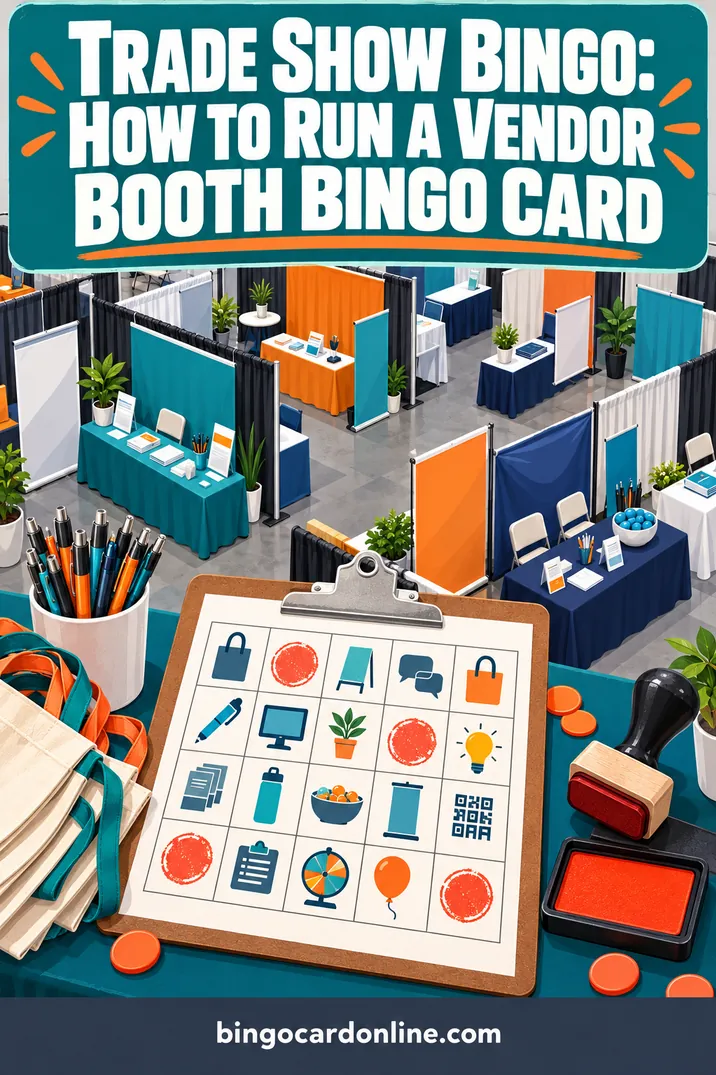
Trade show bingo is a card where every square is a vendor booth: attendees visit each booth, get that square stamped or stickered, and drop the finished card in a box for a prize drawing. It is the simplest way to move people down every aisle of an exhibit hall, including the back corners that usually sit empty.
Some planners call it a passport game, a booth crawl or an expo card. The idea is the same. You give attendees a reason to stop at booths they would have walked past, and you give vendors a reason to start a conversation. This guide covers how to plan the squares, how vendors mark cards, how to run the drawing, and how to print the cards in a few minutes.
How Trade Show Bingo Works
The game is easy to explain in one sentence at registration: "Visit the booths on this card, get a stamp at each one, and turn it in by the end of the day for the drawing."
Here is the full flow:
- Attendees pick up a card at registration or in their welcome bag.
- Each square names a booth. The square shows the vendor's name, logo or booth number.
- At each booth, a vendor marks the square with a stamp, a sticker or initials.
- A completed card goes in a drop box. Most events ask for a full card (blackout), though some accept a single line.
- Names are drawn at a set time, often during the closing session or the last break.
Unlike a classic called game, there is no caller and no ball cage. Players finish at their own pace, which suits a busy expo floor where people come and go all day.
How it differs from other event bingo
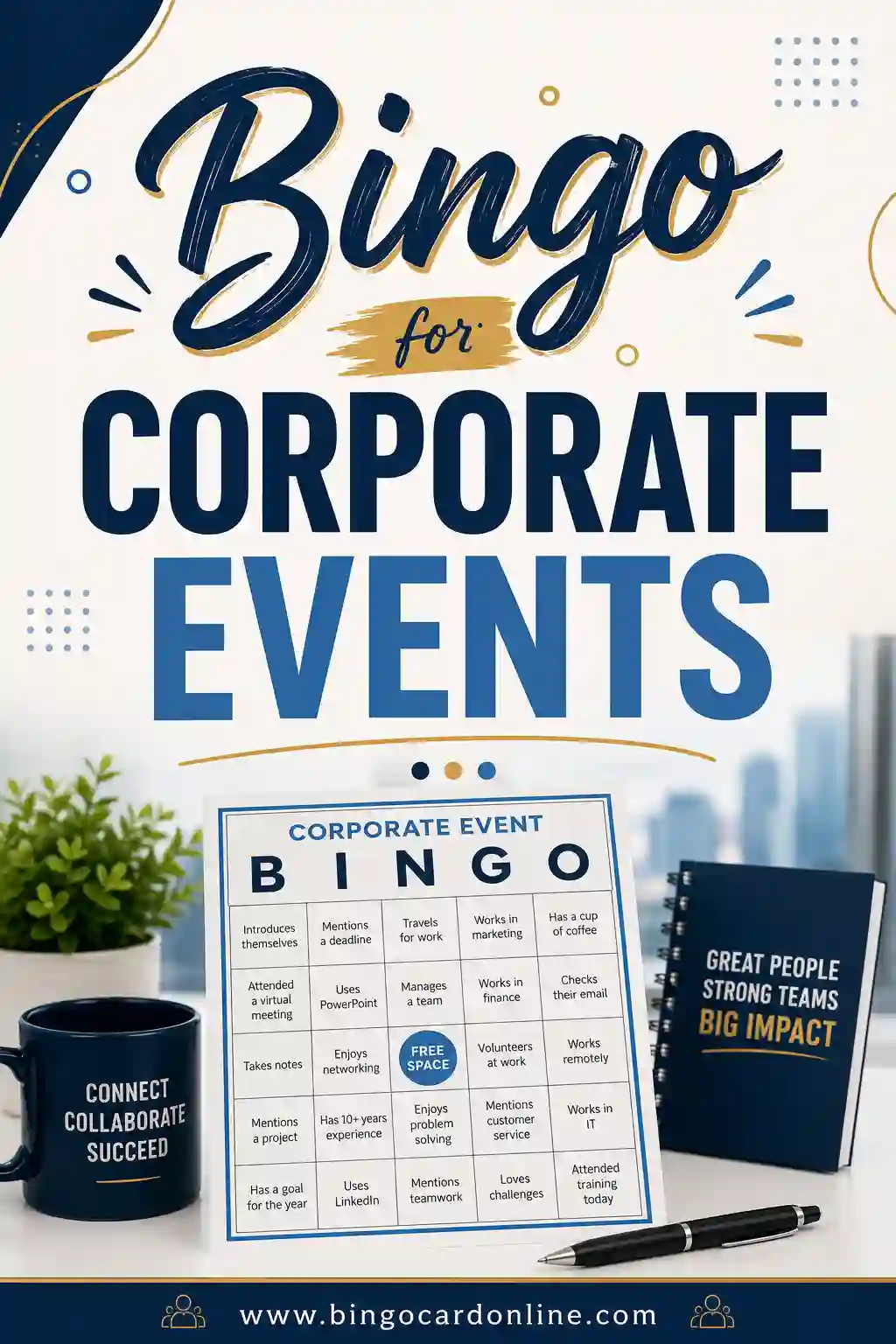
Trade show bingo is not the same as an office icebreaker. Icebreaker cards ask people to find a coworker who has done something; the point is meeting each other. The bingo for corporate events page covers that kind of team game. Trade show bingo has one job: sending attendees to vendor booths. That is why the squares are booths, not people or facts.
It is also different from buzzword bingo, which players mark while listening to a talk. You can run buzzword cards during the keynote and a booth card on the expo floor at the same event. They do different things.
Planning Your Trade Show Bingo Card
Good trade show bingo starts with the floor plan, not the card. Before you design anything, answer these questions.
How many booths will be on the card? A 5x5 card has 24 squares plus a free center. A 4x4 card has 16. A 3x3 card has 9. If you have more vendors than squares, you need to choose which booths go on the card or make more than one version.
Should every card be the same? For a passport-style game where attendees must visit every booth, every card can be identical. For a game where attendees only need a line, shuffled cards spread traffic more evenly, because different players head to different booths first.
How long do attendees have? A full 24-booth card is a lot for a half-day show. A 16-booth card fits a short expo better. Walk the hall yourself and estimate how long a quick stop at each booth would take.
Where is the drop box? Put it somewhere everyone passes, like the registration desk or the exit to the main session room.
Choosing the card size
| Card size | Booth squares | Works best for |
|---|---|---|
| 3x3 | 9 | Small regional shows, tabletop expos |
| 4x4 | 16 | Half-day shows, medium exhibit halls |
| 5x5 | 24 plus free space | Full-day or multi-day shows with many vendors |
| Two cards | Up to 48 | Very large halls; one card per day or per hall |
If you run a multi-day show, a fresh card each day keeps the game going and gives you a drawing every afternoon.
🏷️ Ready to play? Turn these ideas into printable trade show bingo cards with the free generator: every card is unique, ready in seconds, no sign-up.
Make my bingo cards →Setting Up the Vendor Squares
Each square needs to be easy to find on the floor. A vendor name alone is often not enough in a crowded hall.
Include the booth number. "Booth 214" in small text under the name saves attendees from wandering. If the hall has zones or colors, add those too.
Use short names. Squares are small. Trim long company names to a short version that is still clear.
Keep logos optional. Logos look polished, but text prints more clearly and is easier to read in dim exhibit lighting. If you do use logos, make sure each vendor has approved theirs.
Use the free space well. The center square can say "Visit the Info Desk," "Attend a Session" or simply "Free." Many planners use it for the main sponsor's booth or a must-see area like a demo stage.
Group booths by aisle. If you are making identical cards, arranging squares in floor order (row one is aisle one, and so on) makes the card feel like a map. If you are making shuffled cards, skip this and let the generator mix them.
Making the card in a generator
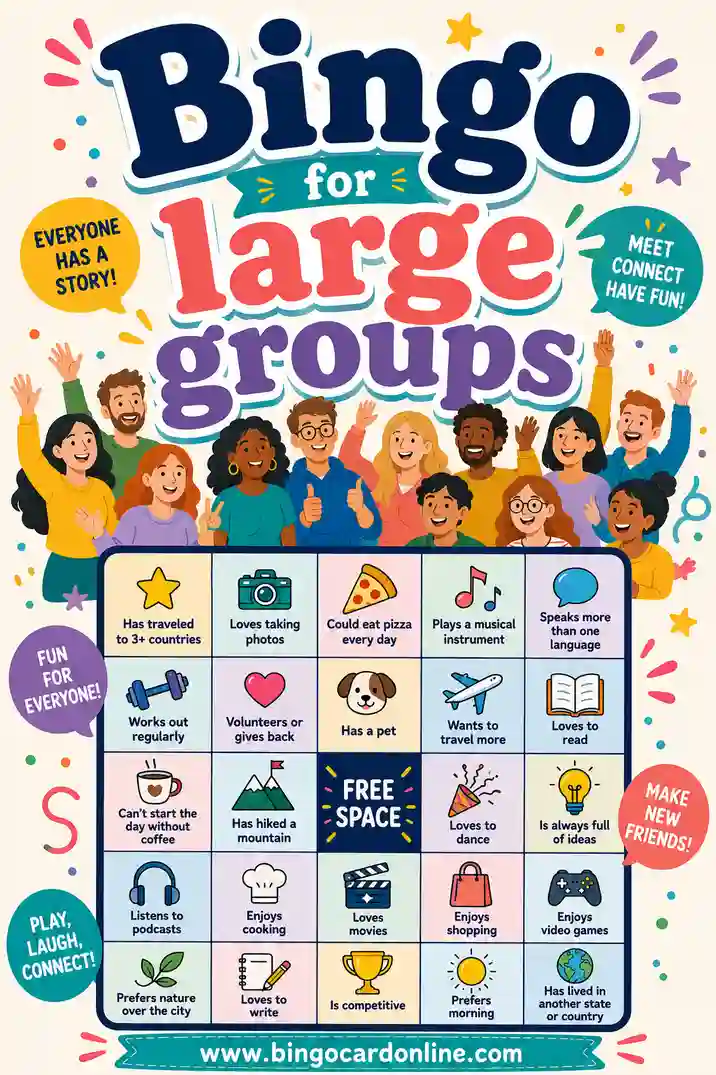
Make a list with one line per booth: "Booth 101 Green Valley Supply," "Booth 102 Northside Tech," and so on. Paste the list into the free bingo card generator, and choose your grid size. The generator shuffles the list into unique cards, up to 100 at a time, and you can run it again for larger crowds. If you want every card identical for a visit-every-booth game, generate one card and print as many copies as you need. The large group bingo page has tips for printing and sorting cards when you need hundreds.
How Vendors Mark the Cards
The marking method matters more than you might expect. It decides how fast each booth stop goes and how hard the card is to fake.
| Marking method | Speed | Hard to fake? | Notes |
|---|---|---|---|
| Rubber stamp with the vendor's mark | Fast | Yes | Each booth needs its own stamp and an ink pad |
| Unique sticker per booth | Fast | Fairly | Easy to hand out; peel-off stickers can be shared, so keep them behind the table |
| Hole punch with a shaped cutter | Fast | Yes | Every booth needs a different shape |
| Vendor initials | Slow | No | Easy to forge; only use for small, friendly events |
| Code word written by the attendee | Medium | Fairly | The vendor tells each visitor a word to write in the square |
Stamps are the classic choice for a reason. They are quick, clear, and nearly impossible to copy. Give each vendor a stamp with a simple, distinct design and ask them to keep it at the front of the table.
What to tell vendors
Send exhibitors a short note before the show:
- Their booth is on the trade show bingo card, and attendees will stop by for a stamp.
- They should keep the stamp or stickers at the front of the table, ready to go.
- They should only mark a card after a short conversation, not just hand the stamp over.
- The drawing time and location, so they can remind visitors.
That third point is the whole reason vendors like this game. A stamp stop is a natural opening line. A short, friendly chat ("What brings you to the show?") turns a stamp into a real conversation.
Running the Prize Drawing
The drawing is the payoff, so plan it like a mini event.
Set a clear deadline. Print it on the card: "Turn in by 3:00 p.m. at the Registration Desk." Cards dropped in after the deadline go into the next day's drawing or are not counted.
Ask for contact details on the back. Name, company and a way to reach them if they are not present. Keep this short and only ask for what you need to deliver the prize.
Check the cards before the draw. Pull a winner, then look at the card. Are all the squares marked? Are the marks real stamps? If not, draw again.
Draw in public. A drawing at the closing session or the last coffee break brings everyone together and makes the game feel fair.
Decide whether winners must be present. Announce the rule in advance and print it on the card. Requiring presence keeps people at the show until the end, but be fair to people with flights to catch.
Plan for more than one prize. A few smaller prizes plus one featured prize gives more people a reason to finish the card.
Line or blackout?
Most trade show bingo games ask for a full card. That is the point: to send people to every booth. If you only require a line, many attendees stop after five booths, and the vendors in the far aisles miss out. A good middle ground on a large card is "any two lines" or a "picture frame" (all outer squares), which still covers a lot of the floor.
Working With Sponsors
Trade show bingo gives you a few natural spots to feature sponsors without cluttering the card.
- The free space. Put your top sponsor in the center square. Every card has it, and every attendee sees it.
- The card header. "Expo Bingo, presented by..." at the top is clean and visible.
- The drop box. Place it at a sponsor's booth so every finished card passes through.
- The prize. A sponsor can provide the featured prize and announce the winner.
- A bonus square. A sponsor demo or talk can count as a special square that earns an extra entry.
Keep sponsor placements simple. A card with too many logos becomes hard to read, and attendees start to skip squares they cannot find.
Printing and Distributing the Cards
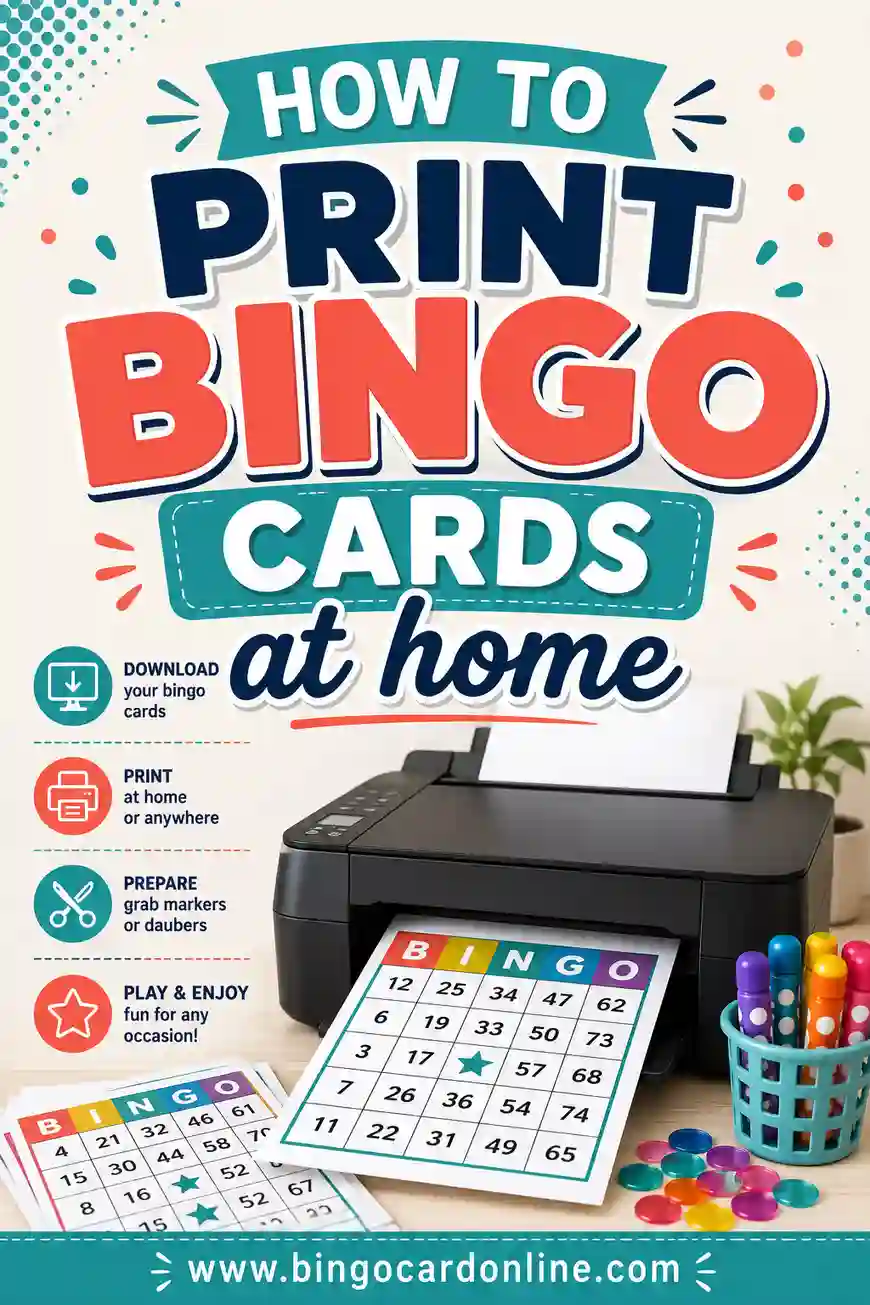
You can print trade show bingo cards on a regular home or office printer. Card stock holds up better than plain paper when people carry the card around all day and press stamps into it. The printing bingo cards at home guide covers paper weight, margins and how many cards fit on a page.
A few distribution tips:
- Put a card in every welcome bag, or hand it out at the registration desk.
- Print extras. People lose cards, spill coffee on them, or decide to play late in the day.
- Add short rules on the back. Three or four lines are enough: how to get a stamp, the deadline, the drop box location, and the drawing time.
- Offer clipboards or lanyard holders if your event allows it. A card that fits in a badge holder gets filled out more often.
Trade Show Bingo Mistakes to Avoid
Too many squares for the time. A 24-booth card on a short show leaves most cards unfinished. Match the card to the hours on the floor.
Squares people cannot find. Without booth numbers, players give up. Always add them.
Vendors who do not know the game. If a vendor looks confused when an attendee asks for a stamp, the game stalls. Brief every exhibitor before doors open.
Stamps left on the table unattended. Players will stamp their own cards. Ask vendors to keep stamps behind the table.
A drawing nobody hears about. Announce the drawing time at the opening session, print it on the card, and remind people at breaks.
Forgetting accessibility. Some attendees use wheelchairs, walkers or mobility aids. Keep aisles clear, avoid booths that are hard to reach for required squares, and consider offering a shorter card on request.
Your trade show bingo game is one click away. Add your own squares, choose a 3x3, 4x4 or 5x5 grid and print up to 100 unique cards free.
Open the free bingo card generator →FAQ
What is trade show bingo?
Trade show bingo is a game where each square on the card is a vendor booth. Attendees visit the booths, get each square stamped or stickered, and turn in the finished card for a prize drawing. It is used at expos, conferences and vendor fairs to spread visitors across the whole exhibit hall.
How many booths should be on a trade show bingo card?
Most shows use 16 or 24 booths, which fits a 4x4 or 5x5 card. Small shows can use a 3x3 card with 9 booths. Pick a size attendees can finish in the time they have on the floor, and use two cards or one per day for very large shows.
Should every attendee get the same card?
If you want people to visit every booth, identical cards work fine because the goal is a full card. If you only require a line or two, unique shuffled cards spread traffic more evenly, since different attendees head to different booths first.
How do vendors mark the cards?
Rubber stamps are the most popular because they are quick and hard to fake. Unique stickers, shaped hole punches and code words also work. Initials are the easiest to forge, so save them for small events.
When should the prize drawing happen?
Hold it near the end of the show, often during the closing session or the last break, so most people have had time to finish. Print the deadline and drawing time on the card and announce it more than once.
Can I print trade show bingo cards for free?
Yes. Type one booth per line into a bingo card generator, pick your grid size, and print on regular paper or card stock. You can print unique shuffled cards, or print copies of a single card if everyone should get the same one.