Bingo for Seniors With Dementia: Free Printable Cards
Bingo for seniors with dementia is a gentle, large-print version of the classic game that uses simple pictures or familiar words, big squares, and a slow, calm pace. It supports memory, social connection, and a sense of accomplishment without causing stress. The easiest way to set it up is a free bingo card generator that turns a short, friendly word list into clear, easy-to-read cards, with bigger squares and fewer of them per card.
Caring for someone with dementia? Open the free generator, paste in a list of familiar items (there's a ready-made one below), pick a small 3x3 grid for large print, and print clean, simple cards. No sign-up, no cost.
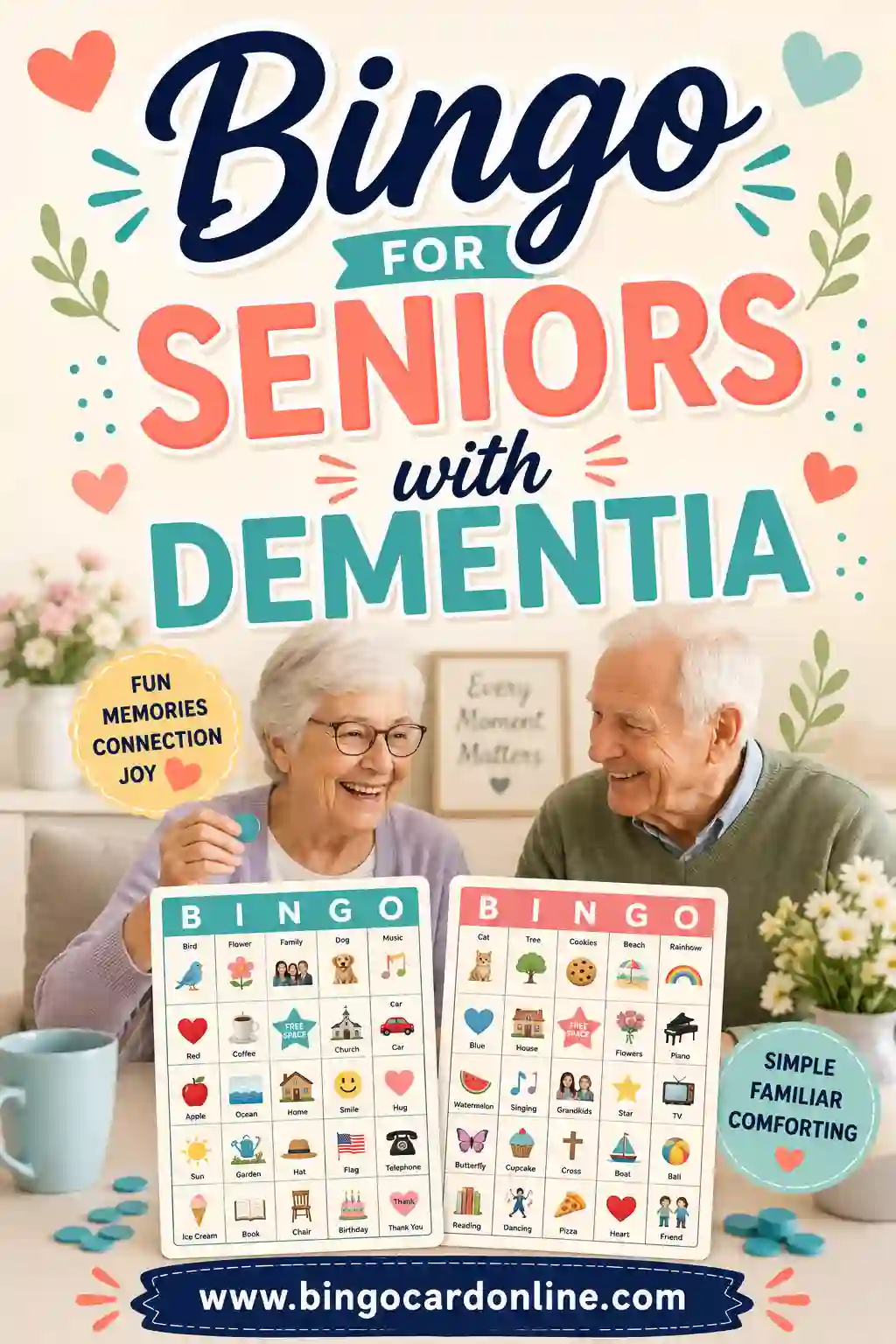
Bingo is one of the most recommended activities in memory care, and for good reason. It's familiar to most older adults, which matters a lot when newer things feel confusing. Many seniors played bingo for decades, so the rhythm of it often stays comforting even as other memories fade.
Done thoughtfully, it offers real benefits:
- Gentle mental engagement. Listening for a word and finding it on a card uses attention and recognition in a low-pressure way.
- Social connection. Playing in a small group reduces isolation and gives everyone a shared moment.
- A sense of success. Marking a square and completing a line brings a small, genuine win. Those wins matter.
- Calm and routine. A regular, predictable game can soothe anxiety and anchor the day.
The key word is gentle. The goal isn't to challenge or test. It's to give a pleasant, no-fail experience where the person feels capable and included.
How to Make Dementia-Friendly Bingo Cards
The standard bingo card is too busy for many people with dementia. A few simple changes make a huge difference.
- Use a small grid. A 3x3 grid means fewer squares, less visual clutter, and bigger boxes. This is the single most important change.
- Make everything large. Big text and big pictures are easier to see for aging eyes and easier to process.
- Keep contrast high. Black text or images on a plain white background reads best. Skip busy patterns and pale colors.
- Choose familiar items. Use things from a person's younger years, like a teapot, a clothesline, or a garden, rather than modern or abstract words.
- Add pictures, not just words. A clear picture is easier to recognize than reading, especially in later stages.
A generator lets you set a 3x3 grid and load a short list of simple items, so you get clean, uncluttered cards in seconds without designing anything by hand.
Free Dementia-Friendly Bingo Word List (Copy & Paste)
Here's a ready-to-use list of 30 simple, familiar squares. Pick any 9 for a large-print 3x3 card. These are concrete, easy-to-picture items that most older adults will recognize.
| Home & Garden | Everyday Objects | Nature & Comfort |
|---|---|---|
| Teapot | Clock | Sun |
| Flower | Hat | Moon |
| Garden | Umbrella | Tree |
| Kettle | Glasses | Rose |
| Cup of tea | Key | Bird |
| Apron | Slippers | Cat |
| Clothesline | Comb | Dog |
| Bread | Spoon | Rain |
| Cake | Book | Star |
| Armchair | Candle | Butterfly |
Choose items that connect to the person's own life if you can, like a favorite flower or a familiar kitchen object. Recognizing something personal often brings a smile and a memory.
Gentle theme ideas
- Things in the kitchen. Teapot, kettle, spoon, bread, cake. Familiar and cozy.
- In the garden. Flowers, birds, sun, watering can, tree. Soothing and visual.
- Old favorites. Items from their era, like a record player, a hat, or a clothesline.
How to Run a Calm, No-Fail Bingo Game
Running bingo for someone with dementia is less about winning and more about a pleasant shared moment. Here's how to keep it gentle.
- Pick a quiet time and place. Choose a calm part of the day with good lighting and little background noise. Mornings often work well.
- Keep the group small. Two to six players is plenty. A small circle feels safe and easy to manage.
- Call slowly and clearly. Say the item, hold up a matching picture, and give plenty of time. Repeat it gently if needed.
- Help without taking over. Point to the square or guide a hand, but let the person mark it themselves when they can. The doing is the reward.
- Praise every step. "Yes, there's the teapot, well done." Warm encouragement keeps it positive and stress-free.
There's no rush and no losing. If someone marks the wrong square, that's fine. Just keep the mood light. The aim is connection and calm, not a correct game.
Make it truly no-fail
- Skip the competition. You can have everyone "win" together when the card is full.
- Don't correct mistakes sharply. Redirect gently or simply move on.
- End while it's still going well. A short, happy game beats a long, tiring one.
- Follow their lead. If they want to talk about the teapot for a while, let them. That memory matters more than the game.
Adapting Bingo for Different Stages
Dementia changes over time, and the game can change with it. Here's a simple guide.
| Stage | Grid size | Tips |
|---|---|---|
| Early stage | 4x4 | Words or word-picture mix. A bit more variety is fine. |
| Middle stage | 3x3 | Large pictures with words. Slow, clear calling. Lots of help. |
| Later stage | 3x3 | Big pictures only. Focus on one square at a time. Hand-over-hand help. |
| Very late stage | 1–4 squares | Skip "winning." Use it as gentle picture-pointing and chatting. |
In later stages, the structure of "bingo" matters less than the warm, one-on-one time. Holding up a picture, naming it together, and sharing a smile is the real activity.
Choosing Markers and Setting Up
The right markers make the game easier and safer.
Good marker choices
- Large, flat buttons or wooden discs (easy to grip, easy to see)
- Bingo daubers with big handles, if grip allows
- Brightly colored chips that contrast with the card
- A simple highlighter to color over the square
Safety notes
- Avoid small markers if there's any risk of them being put in the mouth. Larger items are safer.
- Use lightweight, non-glossy cards so glare doesn't make squares hard to see.
- Keep the table clear of clutter so the focus stays on the card.
- Sit beside the person, at their level, so you can help comfortably.
A little setup goes a long way toward a calm, smooth game that everyone enjoys.
Using Familiar Themes to Spark Gentle Memories
One of the loveliest things about bingo for someone with dementia is how a single picture can open a door. A teapot on a card isn't just a square to cover. It might bring back a kitchen, a routine, a person. Choosing themes from a person's earlier life can turn a quiet game into a warm conversation.
Think about the decades they grew up in and the everyday things that filled them. A few theme ideas that often resonate:
- The kitchen of their youth. A kettle, a rolling pin, a bread tin, a clothesline. These objects were daily life and tend to stay familiar.
- A favorite season or place. Garden flowers for a keen gardener, seaside images for someone who loved the coast.
- Old pastimes. A knitting basket, a deck of cards, a record player, a fishing rod, whatever they once enjoyed.
When a square sparks a story, follow it. If the rose on the card reminds them of a garden they tended, pause the game and listen. That memory and that moment of connection are worth far more than finishing the round. The bingo is really just a friendly excuse for time together.
How a Care Partner Can Get the Most From the Game
Whether you're a family member, a caregiver, or an activities coordinator, a few gentle habits make these sessions easier and more rewarding for everyone.
- Sit at their level, beside them. Being shoulder to shoulder rather than across the table feels supportive, not like a test.
- Keep your voice warm and unhurried. A calm, steady tone reassures more than the words themselves.
- Watch for signs of tiredness. If attention drifts or frustration creeps in, gently wind down. A short, happy game is always the goal.
- Lower your own expectations of "winning." Success here is a smile, a moment of focus, a shared laugh, not a completed line.
- Make it a regular thing. A predictable weekly or daily game can become a comforting anchor that the person looks forward to, even if they can't name why.
It also helps to prepare ahead. Print a few cards in advance, keep the markers and word slips in one small box, and you can start a session in seconds whenever the mood is right. Less fumbling means more of the calm, connected time that makes this activity so valuable.
Frequently Asked Questions
What kind of bingo is best for seniors with dementia?
A simple, large-print version with a small 3x3 grid, big clear pictures, and familiar items works best. Fewer squares and bigger boxes reduce confusion. The generator lets you set a small grid and load easy, recognizable words for clean cards.
What words or pictures should I use?
Use concrete, familiar items from everyday life, like a teapot, a flower, a cat, or the sun. The word list above gives you 30 gentle, recognizable options. Items connected to the person's own past often work best and may spark a happy memory.
How do I keep the game from causing stress?
Go slow, keep the group small, and make it no-fail. Don't rush, don't correct mistakes sharply, and praise every step. You can even have everyone "win" together. The goal is a calm, happy shared moment, not competition.
Can people in later stages of dementia still play?
Often, yes, in an adapted way. Use very large pictures, focus on one square at a time, and offer hand-over-hand help. In the latest stages, simply naming a picture together and sharing a smile is a meaningful activity on its own.
Are these bingo cards free to print?
Yes. You make and print them yourself at no cost, with no sign-up and no watermark. You can print large-print, dementia-friendly cards on a single free word list and reuse them as often as you like.
How big should the squares and text be?
As large as the page allows. A 3x3 grid gives you nine big boxes per card, which leaves plenty of room for large pictures and clear text. High contrast, black on white, with no busy backgrounds, reads best for aging eyes.
How often should we play?
Whatever feels comfortable and welcome. A short game a few times a week, or even daily, can become a soothing part of the routine. The familiarity is part of the comfort, so there's no need to vary it much. Watch how the person responds and let that guide how often you play.
What if they lose interest partway through?
That's completely fine, and it's a good cue to gently wind down. There's no need to finish the card. Praise what they did, set the game aside calmly, and move on to something else. Ending while the mood is still pleasant keeps the activity something they associate with feeling good.
Ready to Print Calm, Easy Bingo Cards?
Grab the gentle word list above, open the free bingo card generator, choose a large-print 3x3 grid, and you'll have simple, dementia-friendly bingo cards in minutes. It's free, there's no sign-up, and the cards are clean and easy to read, so the focus stays on connection and calm. Caring for more group activities? Build the same kind of game with our team building bingo, Sunday school bingo, and baby shower bingo.