British Bingo: How 90-Ball Differs From the American Game
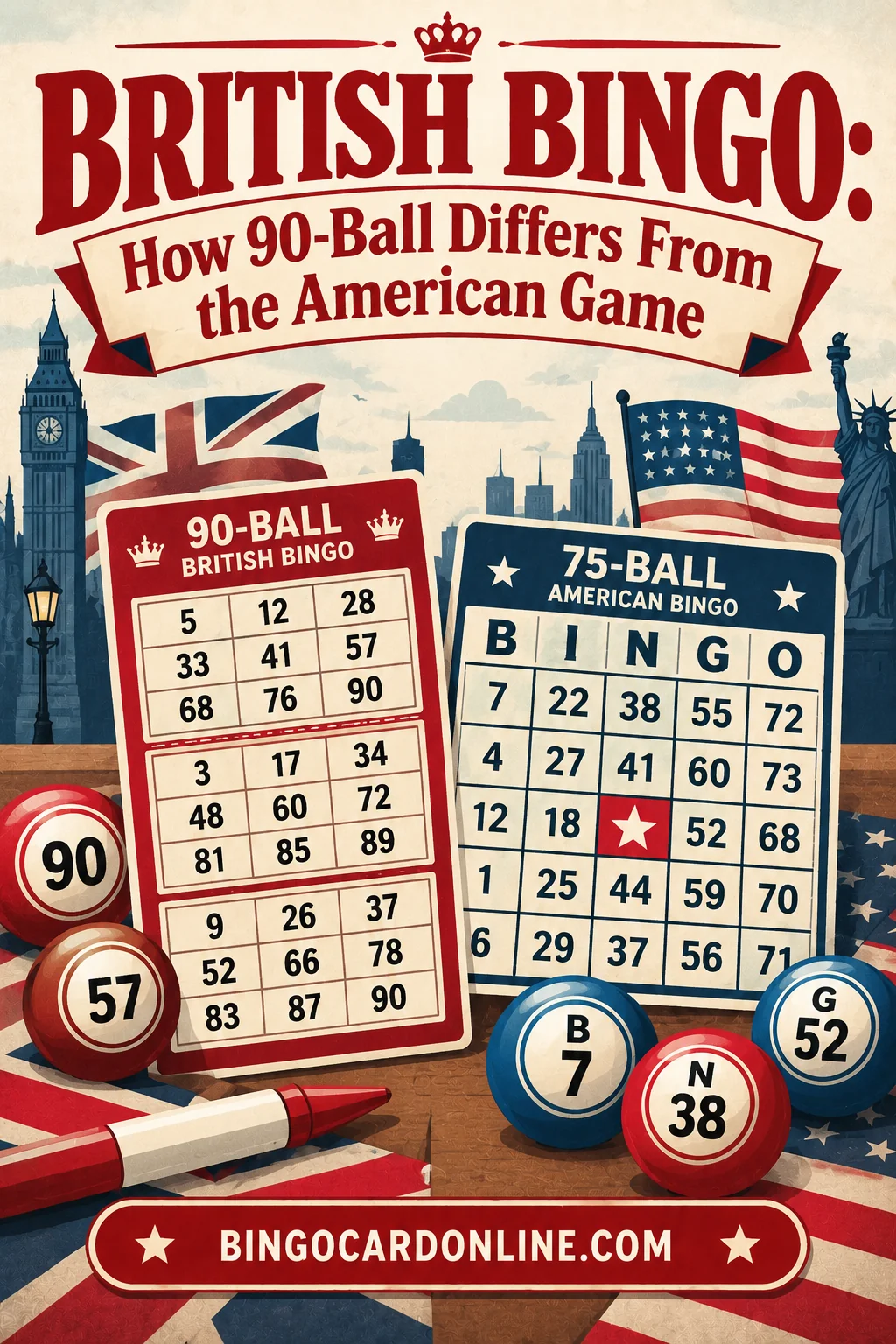
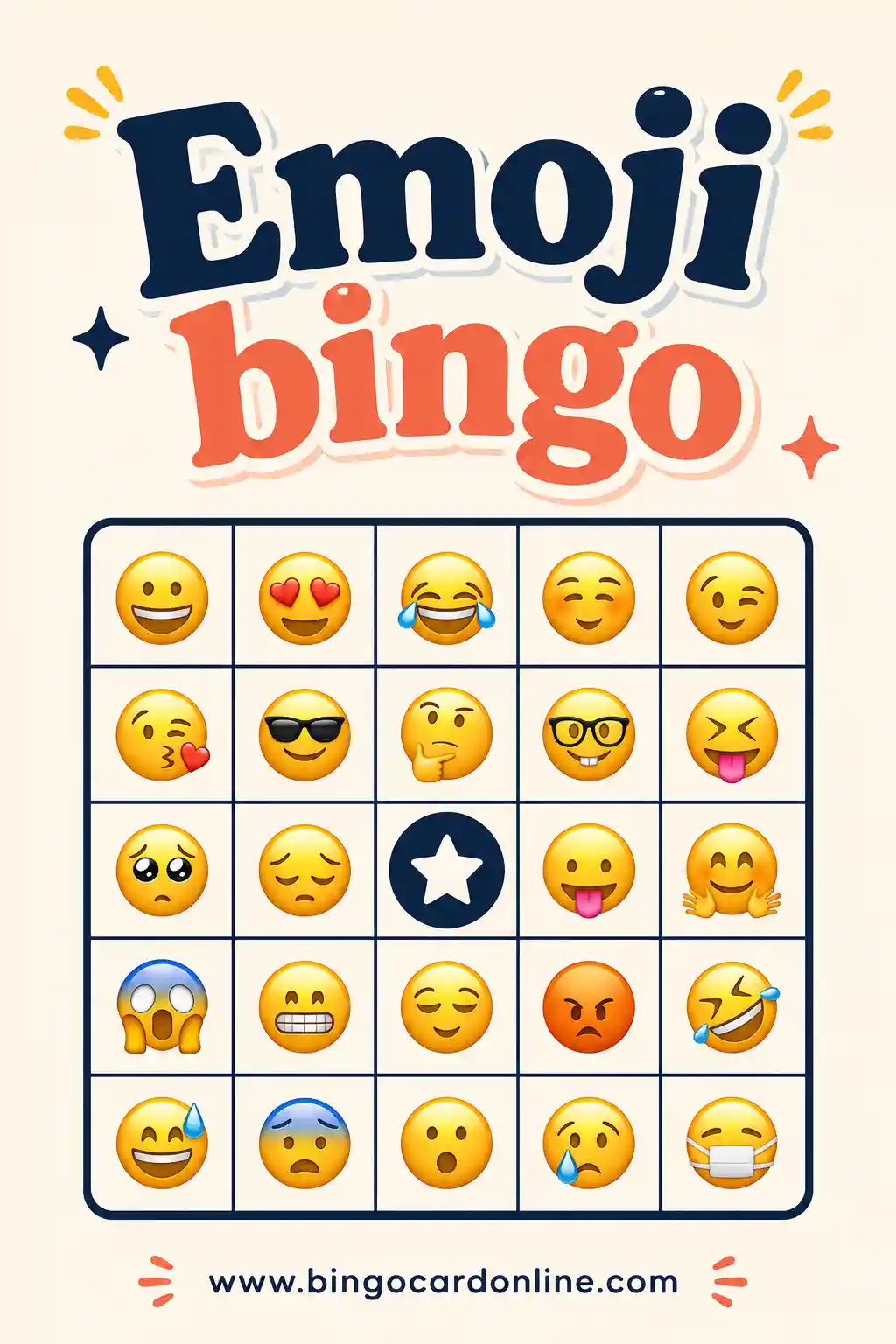
British bingo is played on a 3-row by 9-column ticket with fifteen numbers printed on it, drawn from a pool of 90, and a single game pays out three separate prizes: one line, two lines, and full house. The American game is played on a 5x5 card with twenty-four numbers plus a free center square, drawn from a pool of 75, and the game usually ends the first time somebody completes a shape. Those two sentences contain almost everything that matters, and everything else in this article is the consequence of them.
If you have only ever played the American version, the ticket is the part that will look wrong. It is a rectangle, not a square. Most of it is blank. There is no free space, no B-I-N-G-O header, and no column letters at all. It looks like a form rather than a game board, and then you play one round and understand why it is built that way.
What Is Bingo, and Why the Two Versions Diverged
Strip out the calling and the prizes and what is bingo? It is a race between a random draw and a fixed grid. A caller pulls numbers one at a time, players mark any number printed on their card, and the first player whose marks form the agreed shape wins. Both the British and American games are that, exactly.
They diverged because they came from different parents. The American game descends from a carnival game called beano, standardized in the 1930s around a 5x5 card and a 75-number pool, with columns lettered B, I, N, G and O so a caller can shout a letter and a number together and cut the search area by four fifths. The British game descends from the housey-housey played in the armed forces and at seaside resorts, which used a 90-number tombola pool and printed tickets in strips.
Neither is a variant of the other. They are cousins with a shared ancestor, and the fact that they share a name is close to an accident.
The Ticket: 3x9 Versus 5x5
Here is the structural difference laid out plainly.
| Feature | British 90-ball | American 75-ball |
|---|---|---|
| Grid shape | 3 rows by 9 columns | 5 rows by 5 columns |
| Total cells | 27 | 25 |
| Numbers printed | 15 | 24 |
| Blank cells | 12 | 1 (the free space) |
| Number pool | 1 to 90 | 1 to 75 |
| Column headers | None | B, I, N, G, O |
| Numbers per row | Exactly 5 | 5 |
| Numbers per column | 1, 2 or 3 | 5 |
| Prizes per game | 3 | Usually 1 |
| Typical game length | Longer, three stages | Shorter, one stage |
The British ticket follows one hard rule that makes the whole game work: every row contains exactly five numbers and four blanks. That is why fifteen numbers fit into twenty-seven cells. It also means every player is always exactly five marks away from a line, which keeps the first stage of the game tight and fast.
The columns are banded by tens. The first column holds numbers 1 to 9, the second holds 10 to 19, the third 20 to 29, and so on to the last column, which holds 80 to 90 and is therefore slightly larger than the rest. Each column has at least one number and at most three. A number always sits in its own column, so when 47 is called, you look in the fifth column and nowhere else. That is the British answer to the same problem the American letters solve: narrowing the search so a player can scan a ticket in under a second.
The Strip of Six
This is the part that surprises American players most. British tickets are traditionally sold and played in strips of six, and the six tickets in a strip are not random relative to one another. Between them they contain all 90 numbers, once each.
The consequence is elegant. If you hold a full strip, every single number the caller pulls is on one of your tickets. You mark something every time. There is no dead call, no long stretch of watching other people mark while you sit still. That is why a British bingo hall is so much noisier and more continuous than the American version, where a player can easily go ten calls without touching a card.
It also changes how you think about buying in. In the American game, more cards means more chances at the same prize. In the British game, a strip is a coherent object: six tickets that tile the whole number space, so your attention is spread rather than duplicated.
The Three Prizes: One Line, Two Lines, Full House
A single British game has three winners, and it does not stop after the first.
One line. The first player to complete any one horizontal row of five numbers calls out and wins the smallest of the three prizes. Only horizontal rows count. Columns do not, and diagonals do not, which is the single rule American players get wrong most often.
Two lines. Play continues. The next milestone is any two complete horizontal rows on the same ticket. Note that this is two lines on one ticket, not one line each on two tickets in your strip.
Full house. Play continues again. The full house is all fifteen numbers on a single ticket, and it carries the largest prize. This is the equivalent of a coverall or blackout in the American game, except that in Britain it is not a special round. It is simply how every ordinary game ends.
Because the game does not stop at the first win, a British round has a shape the American game lacks: a long middle. After one line is claimed, roughly half the room is still in contention for two lines, and everyone is still alive for the full house. The tension builds in three steps rather than releasing all at once.
Winning Patterns: Where the Games Really Split
The American 75-ball game is built around patterns. Because the card is a square with a free center, you can define an enormous number of shapes on it, and American halls do exactly that: four corners, the postage stamp, the letter X, the plus sign, the picture frame, the kite, the arrow, the layer cake. A hall will run a different pattern every round and print it on a board at the front so everyone knows what they are chasing.
The British 90-ball game has essentially three patterns and never varies them. A 3x9 rectangle with scattered blanks simply cannot support decorative shapes. There is no center to build around, no diagonal that passes through five printed numbers, no symmetry to exploit. The design forecloses the whole pattern tradition, and in exchange it gives you the three-stage prize structure, which the American card cannot support because a 5x5 card completed row by row would produce five nearly simultaneous winners.
That is the trade, and it is worth stating plainly: the American game buys variety, the British game buys pacing.
The Calling Culture
The calling is the third real difference, and the one people notice fastest.
An American caller says the column letter and the number: "B-7," "O-64," "N-42." The letter is functional. It tells you which fifth of the card to look at. There is very little ornament in a straight American call, though social and themed games have their own traditions.
A British caller says the number twice in a specific rhythm - the tens and units separately, then the whole number: "two and five, twenty-five." That is the actual convention, and it exists for a practical reason. Ninety is a lot of numbers to distinguish by ear in a noisy room, and 25 and 35 sound alike at volume while "two and five" and "three and five" do not. Saying the digits first removes the ambiguity before the full number arrives.
Layered on top of that is the tradition of nicknames for particular numbers, which many halls use and many do not. Some callers use them for every number, some only for a handful, and some skip them entirely because they slow the game down. In modern commercial halls the practice has thinned considerably. It is worth knowing the convention exists, because it is the single most recognizable thing about British bingo to outsiders, but it is decoration rather than structure. If you are running a British-style game yourself, you can skip the nicknames entirely and the game plays identically.
The other calling convention worth knowing: a British player shouts "line" or "house" rather than "bingo." Shouting bingo in a British hall will be understood, but it marks you immediately as a visitor.
Vocabulary Differences
A few words mean different things on either side of the Atlantic, and they cause real confusion.
| Term | In Britain | In the United States |
|---|---|---|
| Card | Rarely used; the object is a ticket | The standard word |
| Ticket | The 3x9 playing slip | Usually means the entry receipt |
| Book | A stapled pad of strips for a session | Same, less common |
| Line | One horizontal row of five | Any five in a row, including diagonals |
| Full house | All fifteen numbers on a ticket | Called a coverall or blackout |
| Dauber | Called a dabber | Called a dauber |
| Eyes down | The call that starts a game | Not used |
"Eyes down" is worth singling out. It is the phrase a British caller uses to signal that play is beginning and chatter should stop, and it has no direct American equivalent beyond a general call for quiet.
Running a British-Style Game at Home
You do not need a hall to play the 90-ball game, and it works well for a family gathering because the three-prize structure keeps more people engaged for longer.
You need three things. First, tickets built to the 3x9 rule: fifteen numbers, five per row, columns banded 1 to 9, 10 to 19, and so on. Second, a way to draw numbers 1 to 90 without repeats. Third, a decision about prizes, since the whole point of the format is that there are three of them.
If you are building your own tickets, a bingo card generator will produce grids you can fill and print, though you will need to lay out the banded columns yourself, since the default American 5x5 layout is a different shape. For a smaller group, a simplified version works fine: hand-number a 3x9 grid per player, ignore the strip-of-six rule, and accept that some calls will be dead for some players.
Two practical notes from running these. Announce before the first call which prizes you are giving for each of the three stages, because the escalation is the format's engine and it falls flat if nobody knows what they are playing for. And keep a written record of called numbers, since verifying a full house against ninety numbers from memory is not realistic.
British Bingo Online, and What the Search Terms Actually Mean
Search phrasing for this is scattered. People type free bingo, free online bingo, bingo online free and bingo free online, and they usually mean the same thing, but there are two completely different products behind those words and it is worth separating them.
The first meaning of bingo online is the commercial gambling industry: licensed operators running wagering games for real money, heavily regulated, and the sector where 90-ball is genuinely the dominant format in the United Kingdom. That industry is a serious, age-restricted thing and it is not what this site does.
The second meaning of online bingo is a browser tool that builds and prints cards for a classroom, a party or a family game. When a teacher searches for free bingo they want a card maker, not a casino. Same words, unrelated products. If you are here to run a 90-ball game at a party, the second one is what you want, and the phrase bingo online free will lead you to both, so read the page before you click through.
Which Version Should You Play?
It depends entirely on the group.
Play the American 75-ball game if you want short rounds, visual variety and a format children pick up instantly. The 5x5 card with a free center is easier for a young player to scan, the patterns can be made simple or elaborate to suit the room, and a round ends quickly enough that a restless group stays with it.
Play British 90-ball if you want a longer, more social game with a built-in escalation. Three prizes means three moments of noise instead of one, the strip of six means everyone marks on every call, and the full house at the end gives a room something to build toward for a good twenty minutes.
For a mixed group who have never played either, 75-ball is the gentler introduction, and 90-ball is the better second game once everyone knows what they are doing.
Frequently Asked Questions
How many numbers are on a British bingo ticket? Fifteen, arranged on a 3-row by 9-column grid with twelve blank cells. Each row holds exactly five numbers, and each column is banded by tens, so the first column carries numbers from 1 to 9 and the last carries 80 to 90.
Do diagonals count in British bingo? No. Only complete horizontal rows count toward a line or two lines, and the full house requires all fifteen numbers on the ticket. Diagonals, columns and decorative shapes belong to the American 75-ball game.
Why do British callers say the number twice? To make it audible. The convention is to say the digits separately and then the whole number, so 25 becomes "two and five, twenty-five." At volume in a busy room, 25 and 35 sound nearly identical, but "two and five" and "three and five" do not.
Can I play 90-ball bingo with a normal American bingo card? Not properly. A 5x5 card has no banded columns and no blanks, so the one-line and two-lines stages produce winners almost simultaneously and the three-prize structure collapses. You need the 3x9 ticket for the format to work as intended.