Picture Bingo for Non-Readers: Free Printable Cards
Picture bingo for non-readers is a version of bingo that uses simple images, like an apple, a dog, or a star, instead of words or numbers. Toddlers and pre-readers can play because they just match the picture the caller shows to the picture on their card. The easiest way to build a set is with a free bingo card generator that shuffles your picture words into unique cards everyone can print at home.
Want to make a set right now? Open the free generator, add a list of easy-to-picture words (there's one below), and print as many unique cards as you need. No sign-up, no fee, no software to install.
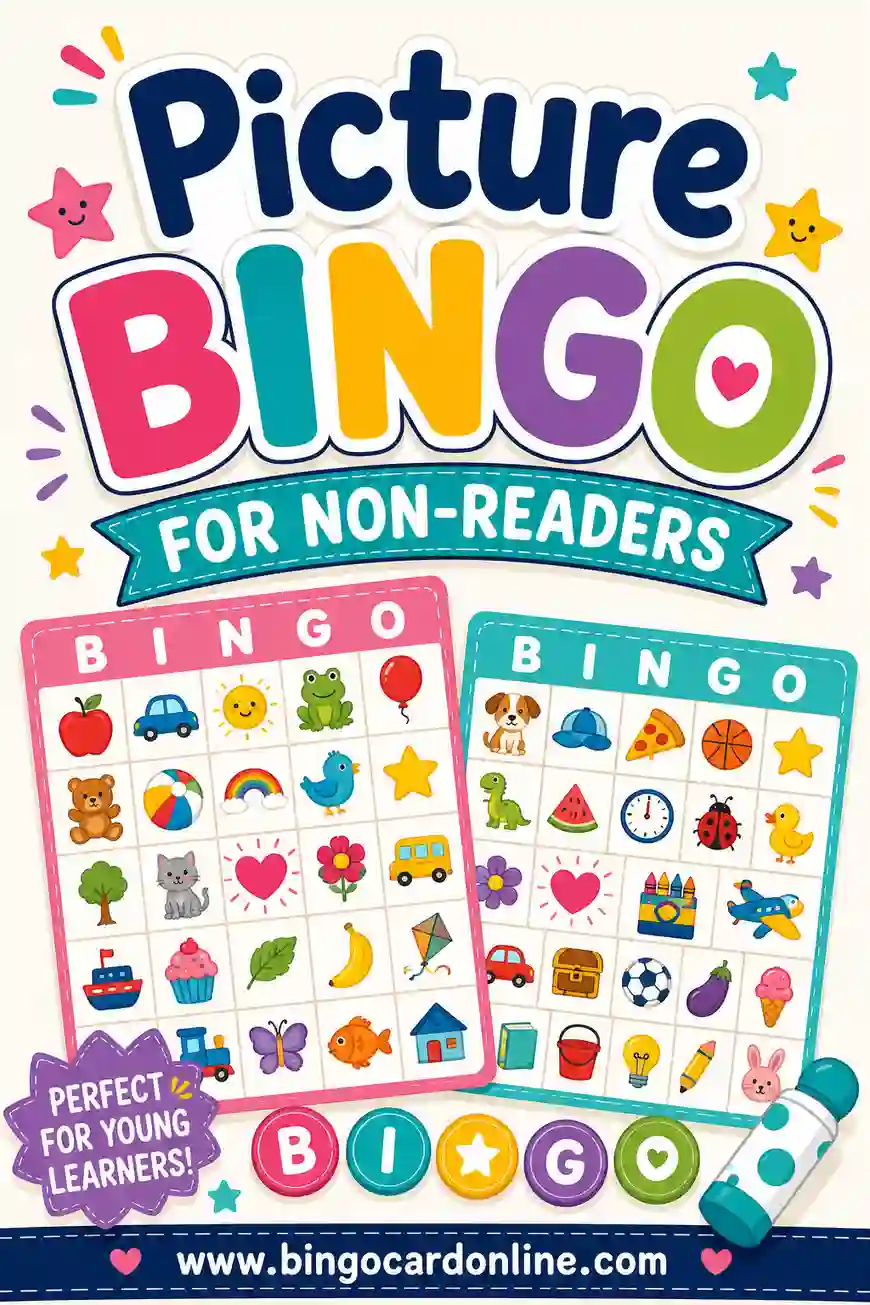
It's bingo without any reading required. Each square holds a clear, simple picture instead of a word or number. When you call out "apple," kids look for the apple picture and cover it. First to fill a line wins.
This small change makes bingo work for a whole group that's usually left out:
- Toddlers and preschoolers who can't read yet
- Early learners building their first vocabulary
- English language learners who know the picture but not the word
- Anyone with reading difficulties who finds word grids frustrating
The game still teaches plenty. Kids practice matching, listening, taking turns, and recognizing everyday objects. They just have fun while doing it, which is the whole point.
You can play with a caller who holds up a matching picture card, or one who simply says the word out loud. For the youngest players, holding up the picture helps them connect the spoken word to the image.
Why Picture Bingo Works for Little Kids
Words on a grid mean nothing to a two-year-old. Pictures, though, are a language every child already speaks. That's why picture bingo lands so well with the youngest crowd.
- No reading barrier. A child who can't read a single word can still win.
- Builds vocabulary. Saying the word while showing the picture links sound to meaning.
- Sharpens focus. Scanning a card for one picture is great listening and attention practice.
- Feels like a real game. Kids get the same "Bingo!" thrill as the big kids, which builds confidence.
Keep it short. A toddler's attention span is brief, so a few quick rounds beat one long game. End while they still want more, and they'll beg to play again.
Free Picture Bingo Word List (Copy & Paste)
Here's a ready-to-use list of 30 easy-to-picture words. Pick any 9 for a toddler-friendly 3x3 card, or 16 for a 4x4. Each word is something a young child can recognize at a glance. Copy a column straight into the generator.
| Animals | Around the Home | Outdoors & Nature |
|---|---|---|
| Dog | Cup | Sun |
| Cat | Spoon | Moon |
| Fish | Ball | Star |
| Duck | Book | Tree |
| Cow | Shoe | Flower |
| Bird | Hat | Cloud |
| Frog | Bed | Apple |
| Bee | Chair | Car |
| Pig | Sock | Boat |
| Bunny | Spoon | Rainbow |
Pair each word with a clear picture when you make your cards. The generator handles the layout; you just match a simple image to each square. Stick to one object per square so there's no confusion.
Theme ideas for picture bingo
- Farm animals. Cow, pig, duck, horse, sheep. Add the animal sounds when you call them.
- Colors and shapes. A red circle, a blue square, a yellow star. Great for the very youngest.
- Food bingo. Apple, banana, milk, bread. Doubles as a snack-time activity.
How to Make Picture Bingo Cards in 4 Steps
No design skills needed. Here's the whole process.
- Pick a small grid. Go with 3x3 for toddlers or 4x4 for preschoolers. Big squares are easier for little hands.
- Choose simple pictures. Use clear, single-object images. A plain apple beats a busy fruit basket.
- Make your cards. Paste at least 9 to 16 picture words into the generator and let it create a unique card for each child.
- Print and prep. Print on cardstock if you can, and grab some easy markers like big buttons or stickers.
That's it. If you want to reuse the cards, slip them in clear sleeves so kids can mark with washable crayons and you wipe them clean after.
Picture Bingo by Age: Grid Sizes and Tips
The same game stretches across the early years if you adjust a few things.
| Age group | Grid size | Tips |
|---|---|---|
| Babies & toddlers (1–2) | 2x2 or 3x3 | Few squares, big bold pictures, play very short rounds |
| Preschool (3–4) | 3x3 | Single objects, call slowly, hold up matching pictures |
| Pre-K & kinder (4–5) | 4x4 | Mix pictures with the first letter of the word |
| Early readers (5–6) | 4x4 | Add the word under each picture to build reading |
The trick is to match the grid to the child. A 5x5 overwhelms a toddler, while a sharp five-year-old might find a 2x2 too easy. When in doubt, start smaller and grow the grid as they get the hang of it.
Best Pictures to Use (and Ones to Skip)
Not every image works for little eyes. The best picture squares share a few traits.
Good picture choices:
- One clear object on a plain background
- Big, simple shapes a child sees every day
- High contrast so the picture pops on paper
- Familiar things: pets, toys, food, weather
Pictures to avoid:
- Busy scenes with lots going on
- Two objects in one square (which apple are we covering?)
- Abstract ideas like "happy" or "fast" that you can't really draw
- Tiny details that disappear when printed small
When in doubt, ask yourself: could a two-year-old name this in one word? If yes, it's a great square. If they'd have to think, swap it for something simpler.
Easy Markers for Little Hands
You don't need fancy supplies. The best markers for non-readers are big, grippable, and hard to swallow-proof for the youngest. A few favorites:
- Big buttons or pom-poms. Easy to grab and fun to handle.
- Stickers. Kids love peeling and placing them, and they stay put.
- Bingo daubers. The satisfying stamp keeps toddlers engaged.
- Crayons. Let kids color the square instead of covering it.
- Snack markers. Crackers or cereal pieces double as a treat at the end.
For very young children, skip anything small enough to be a choking hazard and stick to daubers, stickers, or crayons.
Fun Ways to Play With Non-Readers
Once the basic match-and-cover game clicks, try these gentle twists.
- Sound bingo. Make the animal sound instead of saying the word. "Moo!" sends them hunting for the cow.
- Color round. Call a color, and kids cover any picture that's mostly that color. Great for the youngest.
- Find-it bingo. No caller. Kids cover pictures as they spot the real object around the room.
- Everyone wins. For toddlers, play until every card fills. The goal is fun, not competition.
Keep the mood light and celebrate every cover, not just the win. For little ones, the joy is in playing, not in beating anyone.
Who Picture Bingo Is Great For
This game shines anywhere young children gather.
Preschool and daycare
Teachers use picture bingo for vocabulary, listening, and turn-taking, all in one tidy activity. Print a class set, hand out daubers, and you've got a calm 15-minute group game that runs itself.
Home with toddlers
It's a screen-free activity that holds a little one's attention and sneaks in some learning. Rainy-day gold. Keep a laminated set in the cupboard for whenever you need a quick win.
Speech and special education
Picture bingo supports kids building vocabulary, including English language learners and children with reading challenges. The picture does the heavy lifting, so the focus stays on the spoken word.
Birthday parties for little kids
A few rounds of picture bingo give young guests something fun and fair to do. Use party-themed pictures like a balloon, cake, and gift, and offer small prizes so everyone leaves happy.
Frequently Asked Questions
What age is picture bingo for non-readers good for?
It works from about age one through six. Use a 2x2 or 3x3 grid with big pictures for toddlers, and a 4x4 grid for preschoolers and early readers. Adjust the grid size and picture difficulty to match the child.
How do I make picture bingo cards if I can't draw?
You don't need to draw anything. Use the generator to lay out your cards, then drop in simple clip-art or photo images for each word. Free image sites have clear, single-object pictures for almost every common word.
How many pictures should a non-reader card have?
For toddlers, 9 pictures in a 3x3 grid is plenty. Preschoolers can handle 16 in a 4x4. Keep it small so little ones don't get overwhelmed, and use big squares for easy covering.
Can English language learners use picture bingo?
Yes, it's perfect for them. The picture removes the reading barrier, so learners match the image to the spoken word and pick up new vocabulary naturally. Saying the word clearly as you call it helps the most.
What's the best marker for toddlers playing bingo?
Big buttons, pom-poms, stickers, and bingo daubers all work well because they're easy to grip. For the youngest children, avoid small pieces and use daubers, stickers, or crayons to be safe.
Are these picture bingo cards free to print?
Yes. You make and print them yourself at no cost. There's no sign-up and no watermark, so you can run a whole classroom or playgroup on a single free picture list.
Ready to Print Your Picture Bingo Cards?
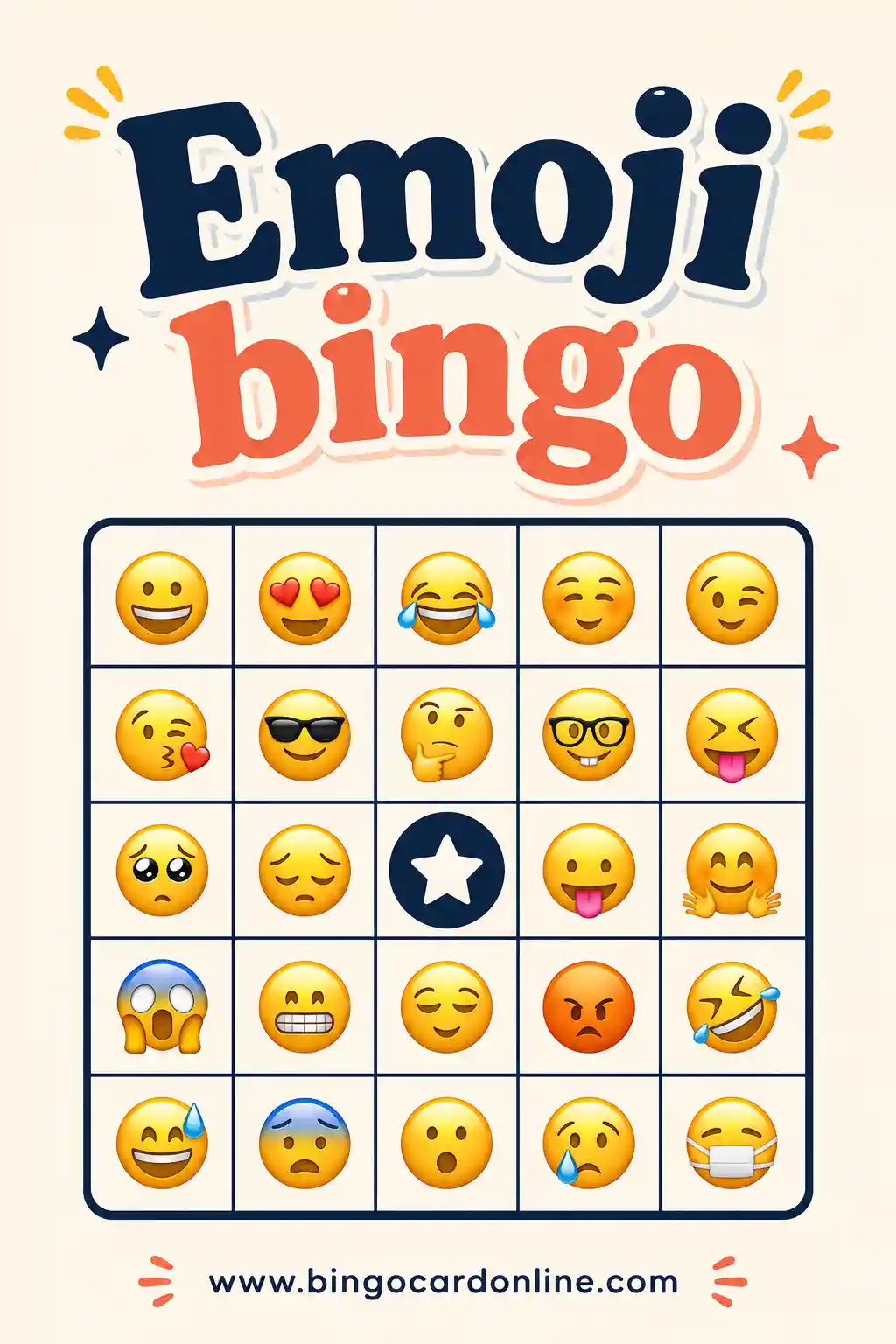
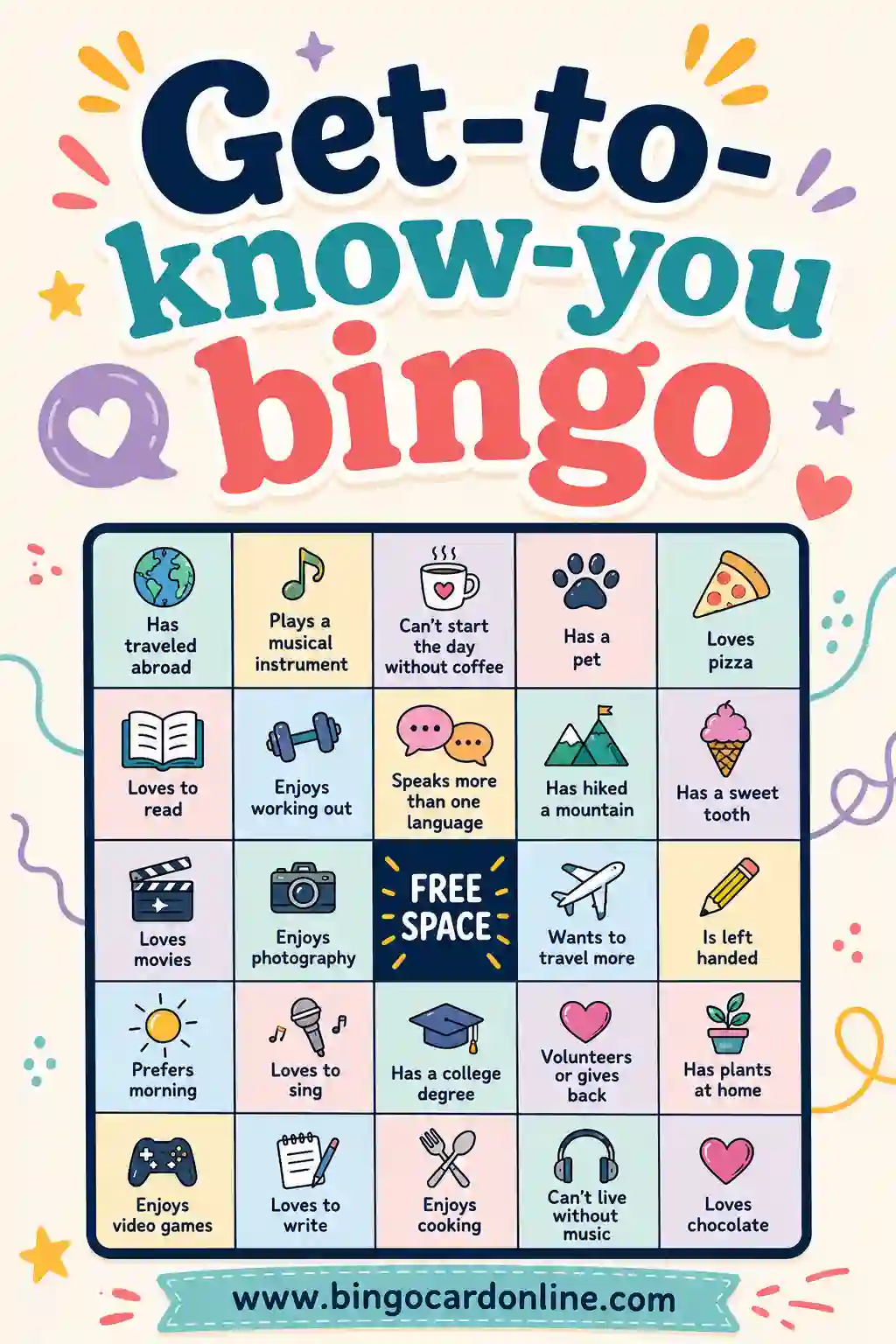
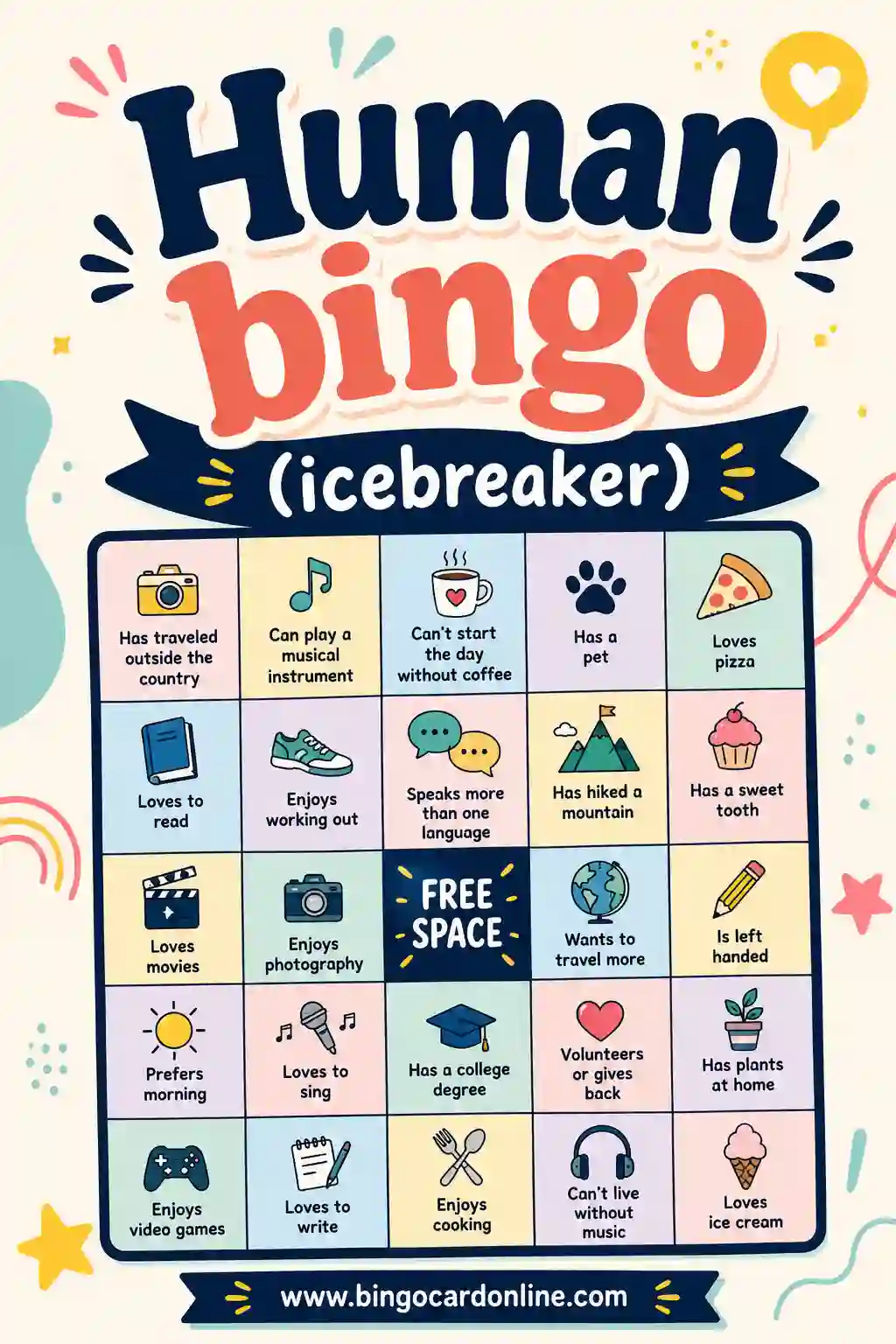
Grab the picture word list above, open the free bingo card generator, and you'll have a stack of unique, printable picture bingo cards in minutes. It's free, there's no sign-up, and every card prints different, so every little player gets a fair shot at "Bingo!" For more group-game ideas, check out our emoji bingo, get-to-know-you bingo, and human bingo icebreaker. Happy playing.