Bingo Card Sizes: 3x3 vs 4x4 vs 5x5
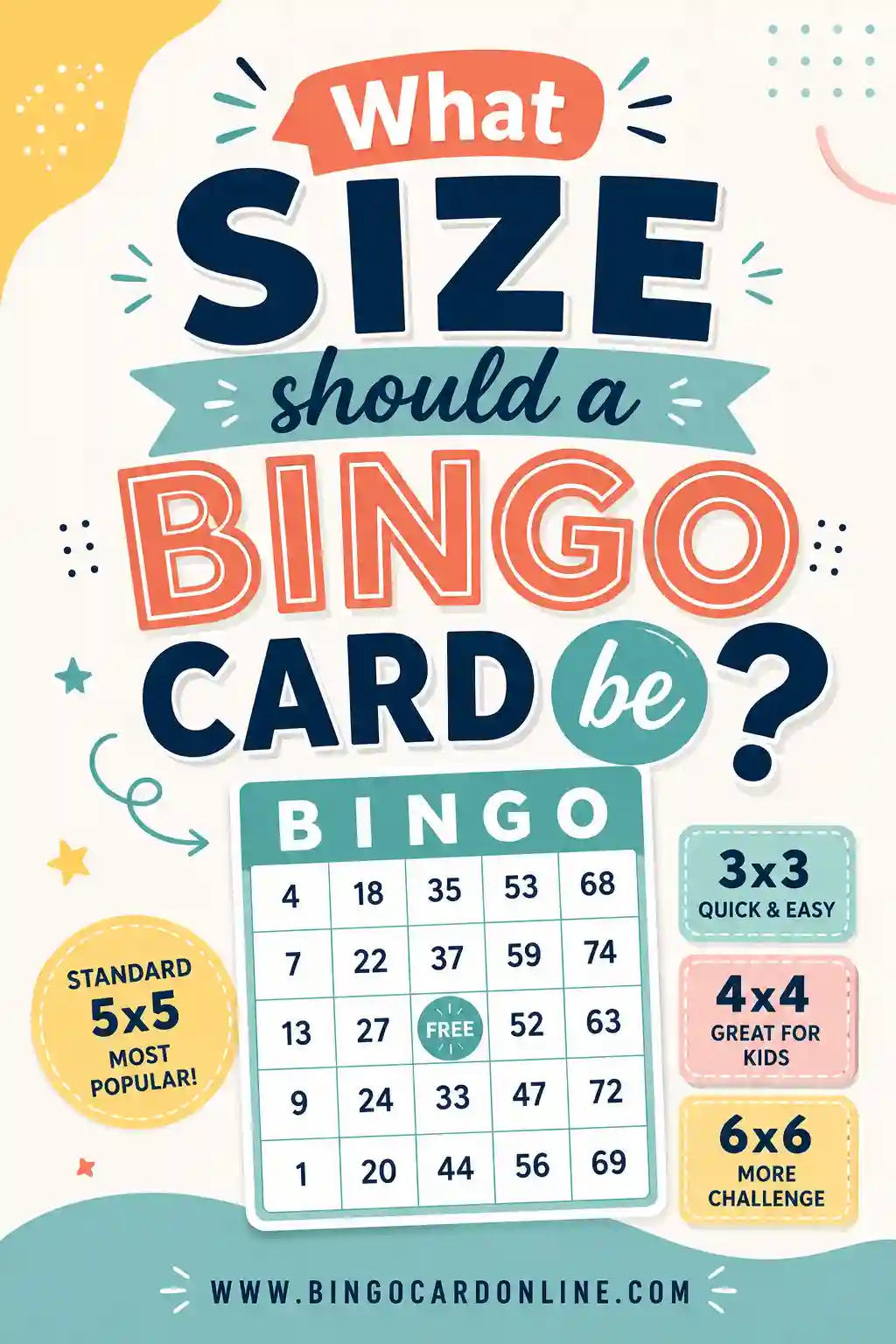
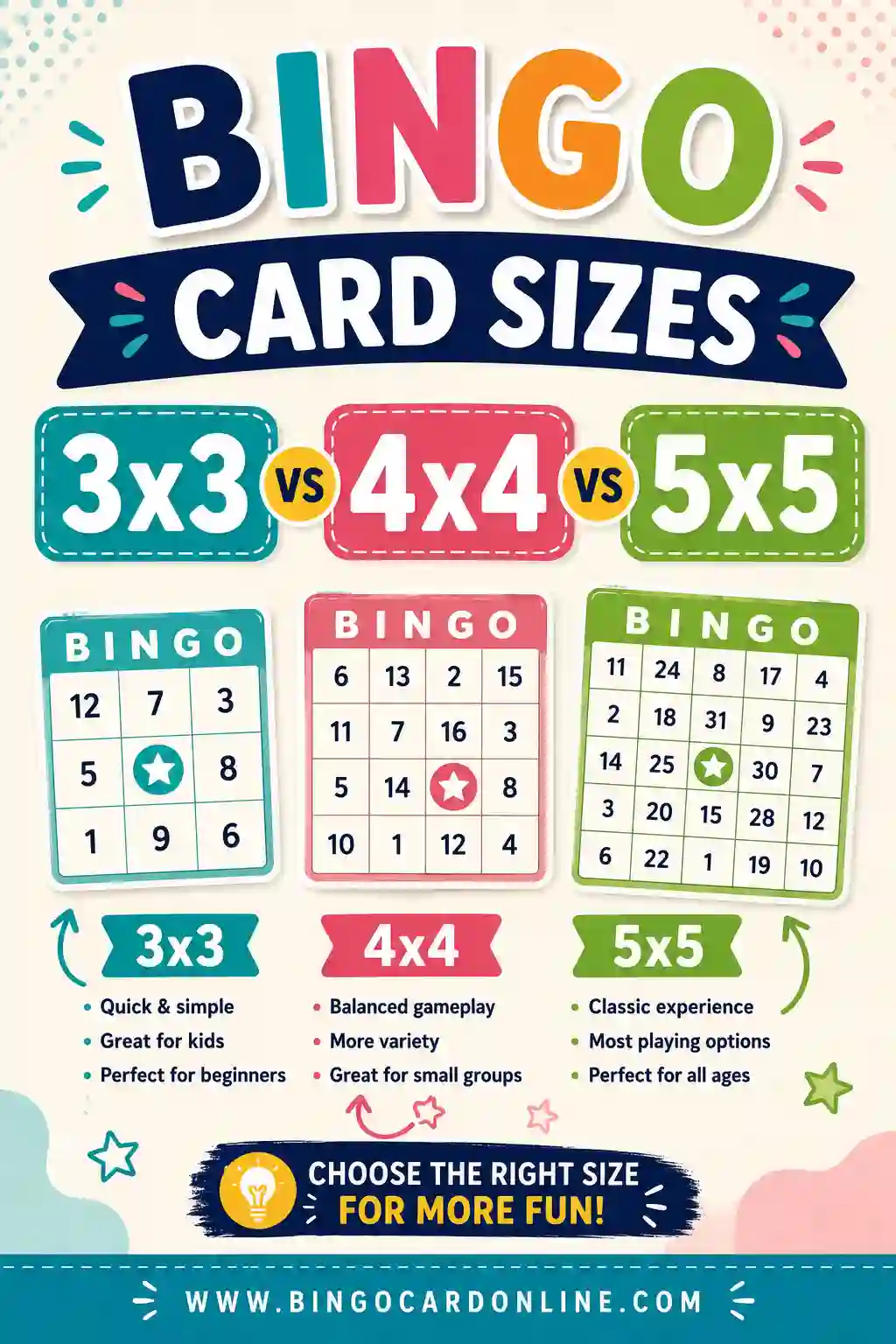
The three main bingo card sizes are 3x3 (nine squares, fastest, best for toddlers), 4x4 (sixteen squares, a quick middle-ground game), and 5x5 (twenty-five squares, the classic with a free center space, best for adults). The bigger the grid, the longer and more strategic the game. The fastest way to try any of them is a free bingo card generator that builds unique cards in any size you want.
Not sure which to pick? Open the free generator, choose 3x3, 4x4, or 5x5, and print a stack in seconds. You can even make two sizes at once for a mixed-age group.
The Quick Comparison
Before we dig in, here's the whole decision in one table. If you only read one thing, read this.
| Size | Squares | Game length | Word count needed | Best for |
|---|---|---|---|---|
| 3x3 | 9 | 1–3 min | 12+ | Toddlers, very quick games |
| 4x4 | 16 | 3–7 min | 20+ | Young kids, fast rounds |
| 5x5 | 25 | 7–15 min | 30+ | Adults, classic play |
Notice the word-count column. The bigger the grid, the more words you need to keep cards different from each other. We'll come back to why that matters.
Bingo Card Size at a Glance (Inches per Grid)
Grid size and paper layout work together: the grid decides how many squares you get, and the layout decides how big each square prints. The table below shows the approximate square size for each grid when the card's grid is about 7.5 inches wide (one card on a letter page with half-inch margins), 5 inches wide (two cards per page), or 3.5 inches wide (four cards per page). It's simple division, so treat it as a planning guide; your printer's margins will shift it slightly.
| Grid | 1 card per page (7.5" grid) | 2 cards per page (5" grid) | 4 cards per page (3.5" grid) |
|---|---|---|---|
| 3x3 | 2.50" (6.3 cm) | 1.67" (4.2 cm) | 1.17" (3.0 cm) |
| 4x4 | 1.88" (4.8 cm) | 1.25" (3.2 cm) | 0.88" (2.2 cm) |
| 5x5 | 1.50" (3.8 cm) | 1" (2.5 cm) | 0.70" (1.8 cm) |
- Small hands and pictures: aim for squares of 1.5 inches or more. That means a 3x3 or 4x4 at any layout, or a 5x5 printed one per page.
- Single words for readers: squares around 1 inch work for short words, so a 5x5 at two per page is usually fine for older kids and adults.
- Long phrases: choose a smaller grid or one card per page so the text doesn't shrink to unreadable sizes.
- Large print for seniors: print one card per page and favor 4x4 or 3x3 for the biggest squares.
Need the full measurements for paper sizes, pixel dimensions for screens, or square sizes for custom layouts? See our separate guide to exact bingo card dimensions. This page focuses on choosing between 3x3, 4x4, and 5x5; that one covers inches, centimeters, and pixels in depth.
The 3x3 Card: Small, Fast, Toddler-Friendly
A 3x3 card has nine squares and no free space (though you can add one in the center if you like). It's the smallest practical bingo grid, and it's built for speed.
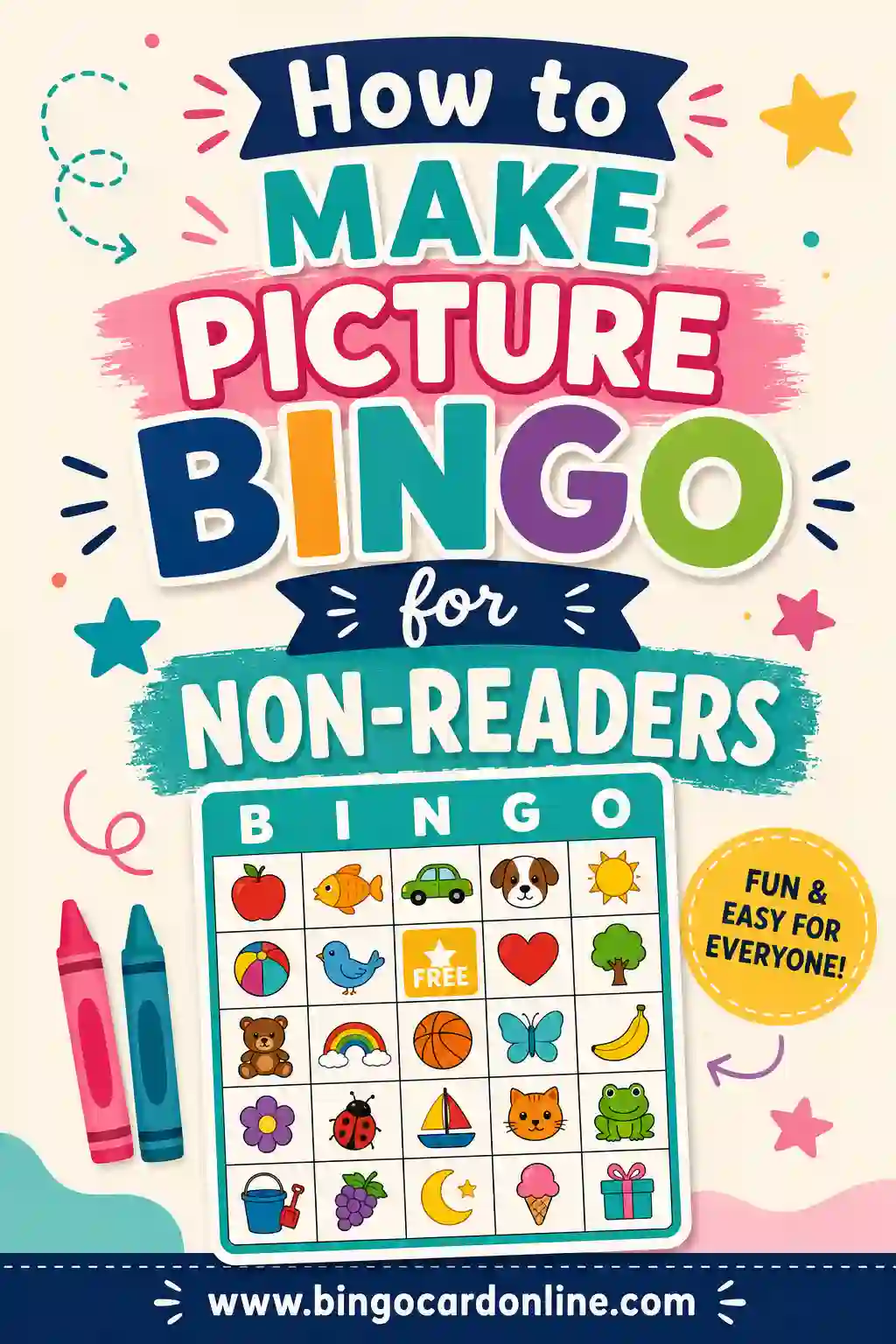
Games end in a minute or two, which is perfect for the attention span of a two- or three-year-old. The squares are huge, so even a wobbly little hand can drop a marker without missing. And because there are only nine items, you can use big, clear pictures instead of words for non-readers.
When to use a 3x3
- Toddlers and preschoolers
- Very short attention spans
- Picture bingo for non-readers
- A quick warm-up round before a longer game
- Anyone who wants lots of fast wins to keep energy high
The trade-off is depth. A 3x3 game is over almost as soon as it starts, and with only nine squares, it's easy for several players to win at once. That's fine for little kids, but it gets dull for adults fast. If you're playing with non-readers, our picture bingo guide pairs perfectly with this size.
The 4x4 Card: The Sweet Middle Ground
Sixteen squares. No free space (the even grid doesn't leave a center). The 4x4 is the unsung hero of bingo sizes. It gives you a real game that doesn't drag.
This size shines for early-elementary kids who've outgrown the 3x3 but aren't ready for the marathon of a 5x5. It's also great when you want several quick rounds in a row, since each game wraps up in five to seven minutes. Classrooms love it for exactly this reason.
When to use a 4x4
- Kids roughly ages 5 to 9
- Fast-paced game nights with multiple rounds
- Classroom activities on a time limit
- Groups that find 5x5 too slow
- Seniors who want larger print but a real game
A 4x4 needs at least 20 different words to keep cards from repeating. Below that, players start getting near-identical grids, and the game loses its tension.
The 5x5 Card: The Classic
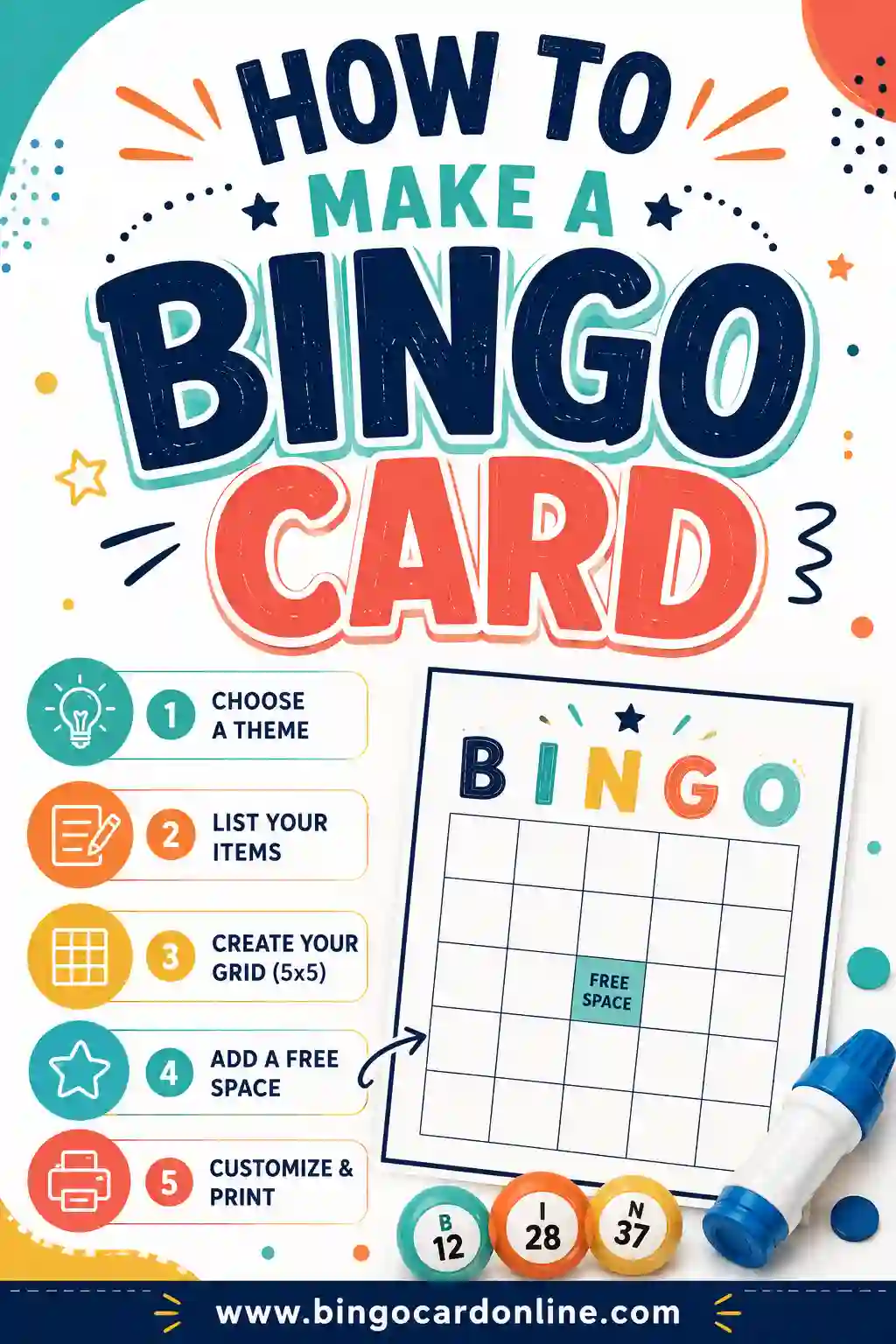
Twenty-five squares with a free space in the middle. This is the bingo everyone pictures. When someone says "bingo card," this is almost always what they mean.
The 5x5 gives the longest, most strategic game. With 24 active squares plus the free center, there's real suspense about who'll complete a line first. It suits teens, adults, and any group that wants a proper game rather than a quick burst.
When to use a 5x5
- Adults and teens
- Classic, traditional bingo
- Longer game sessions
- Party and event bingo
- Anyone who wants a genuine challenge
The catch is word count. To keep 25-square cards meaningfully different, you really want 30 or more words in your list. With only 24, every card is nearly identical, and the game falls flat because everyone wins at once. More words equals more variety, which is the secret to a good 5x5.
How Grid Size Changes the Game
The size you pick changes more than just the square count. It shapes how the whole game feels.
Game length
This is the biggest difference. A 3x3 is over in a flash. A 5x5 can run fifteen minutes or more. Pick based on how much time you've got and how patient your players are.
Difficulty and suspense
Bigger grids mean more squares to fill, so wins take longer and feel more earned. Smaller grids hand out quick wins, which keeps little kids thrilled but bores adults.
Word list size
Here's the rule that ties it all together: more squares need more words. A 5x5 with too few words produces clone cards. Always pad your list above the minimum so the generator has room to make distinct cards.
Readability
Fewer squares mean bigger squares. A 3x3 has huge, easy-to-read boxes; a 5x5 packs them tighter. For sizing specifics on each grid, see our guide on what size a bingo card should be.
Winning Patterns by Grid Size
Grid size also changes how many ways there are to win, which is a big part of why small grids finish faster. Counting every row, column, and both diagonals:
| Grid | Rows | Columns | Diagonals | Total winning lines | Squares to complete a line |
|---|---|---|---|---|---|
| 3x3 | 3 | 3 | 2 | 8 | 3 (2 through a free center) |
| 4x4 | 4 | 4 | 2 | 10 | 4 |
| 5x5 | 5 | 5 | 2 | 12 | 5 (4 through the free center) |
On a 3x3, a player needs only three called squares in a row, so wins come quickly and ties are common. On a 5x5, each line needs four or five marks, which spreads winners out and builds suspense. Four corners works on every size; patterns like an X, a picture frame, or a blackout stretch a 5x5 game further. See bingo patterns explained for pattern ideas and the bingo free space for how the center square changes the odds.
What about other grid sizes?
- 75-ball number bingo uses the 5x5 grid, with the columns headed B-I-N-G-O and numbered 1–15, 16–30, 31–45, 46–60, and 61–75. See number bingo 1–75.
- 90-ball bingo, popular in the UK, uses tickets of 3 rows by 9 columns with 15 numbers on each ticket rather than a square grid. The differences are covered in types of bingo.
- Larger custom grids such as 6x6 or 7x7 exist, but they need very long word lists and long playing sessions. For most groups, 5x5 is the practical maximum. For the full square counts, see how many squares are on a bingo card.
Free Bingo Word List for Any Grid (Copy & Paste)
Here's a flexible list of 30 short, recognizable squares that work at any size. Grab 9 for a 3x3, 16 for a 4x4, or 24 for a 5x5 (the 25th is your free space). Having all 30 in your list keeps even big cards nicely varied.
| Nature | Around Town | Fun Stuff |
|---|---|---|
| Tree | Bus | Kite |
| River | Shop | Drum |
| Mountain | Park | Balloon |
| Cloud | Bridge | Puzzle |
| Flower | School | Bubble |
| Beach | Library | Marble |
| Forest | Market | Whistle |
| Island | Station | Yo-yo |
| Desert | Bakery | Jigsaw |
| Rainbow | Garden | Sticker |
Paste the whole list into the generator and pick your grid. The more words you keep in the pool, the more unique each printed card becomes.
Mixing Sizes for Mixed Groups
Here's a pro move: you don't have to pick just one size. When your group spans toddlers to grandparents, print different grids for different players. The little kids get a 3x3, the adults get a 5x5, and everyone plays the same call.
It works because the caller reads from one shared word list. As long as every card pulls from the same pool of words, any grid size can play together. The toddlers just finish faster, which honestly keeps them happy.
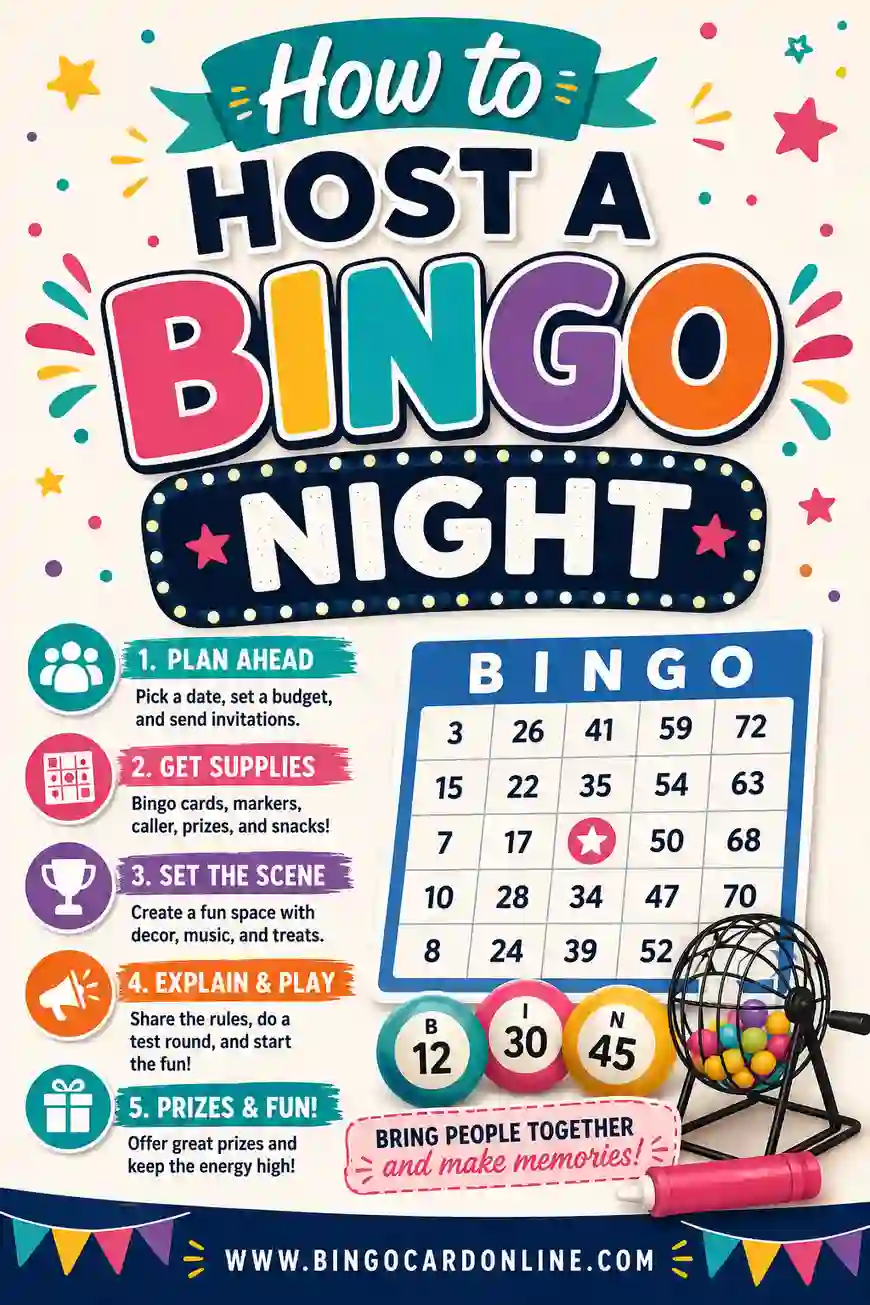
This is the secret to a family game night where nobody's bored and nobody's overwhelmed. Set it up once and run several mixed rounds. Our bingo night hosting guide walks through running a mixed-size game smoothly.
Best Bingo Card Size by Group and Occasion
If you already know your event, this table gives you a starting grid. Adjust up a size for longer games or down a size for faster ones.
| Group or occasion | Recommended grid | Why |
|---|---|---|
| Preschool circle time | 3x3 | Big picture squares and wins before attention fades. See bingo for toddlers and preschoolers. |
| Kindergarten sight words | 3x3 or 4x4 | Few enough words to scan quickly. See sight word bingo. |
| Elementary classroom review | 4x4 | Several quick rounds fit in one lesson. See classroom bingo. |
| ESL or vocabulary practice | 4x4 or 5x5 | More squares means more words practiced per round. See bingo for ESL learners. |
| Family game night with mixed ages | 3x3 and 5x5 together | Everyone plays the same call at their own level. See bingo for family game night. |
| Seniors and memory care | 3x3 or 4x4, one per page | Large print and fewer squares to track. See bingo for seniors with dementia. |
| Baby or bridal shower | 5x5 | Guests expect the classic card, and the game fills the time between activities. See baby shower bingo. |
| Office party or team event | 5x5 | Longer, more suspenseful rounds for adults. See bingo for office holiday parties. |
| Large event or fundraiser | 5x5 | More winning lines and a bigger word pool reduce ties with many players. See bingo for large groups. |
| Road trip or car game | 3x3 or 4x4 | Fewer things to spot keeps it winnable before you arrive. See road trip bingo. |
| Virtual or Zoom game | 4x4 or 5x5 | Cards stay readable on screen or on a home printer. See bingo for virtual Zoom parties. |
Which Size Should You Choose?
Still on the fence? Here's the simple decision tree:
- Playing with toddlers? Go 3x3. Big squares, fast wins, no reading needed.
- Playing with young kids or want quick rounds? Go 4x4. Real game, short runtime.
- Playing with adults or want the classic? Go 5x5. The full, traditional experience.
- Mixed ages at one table? Use both 3x3 and 5x5 from the same word list.
- Short on time? Drop down a size. Smaller grids finish faster.
There's no wrong answer, just the right fit for your group and your clock. And since the generator makes any size for free, you can experiment without wasting anything but a sheet of paper.
Frequently Asked Questions
What's the difference between 3x3, 4x4, and 5x5 bingo cards?
The difference is the number of squares and how long the game lasts. A 3x3 has 9 squares and ends in a minute or two, a 4x4 has 16 squares for a quick game, and a 5x5 has 25 squares (with a free center) for the classic, longer game. Bigger grids mean longer, more strategic play.
Which bingo card size is best for kids?
For toddlers, a 3x3 is best because the squares are big and games end fast. For kids aged 5 to 9, a 4x4 gives a real game without dragging on. Save the 5x5 for tweens, teens, and adults who want a longer, more challenging round.
How many words do I need for each bingo card size?
You need more words as the grid grows: at least 12 for a 3x3, 20 for a 4x4, and 30 or more for a 5x5. Extra words keep the cards different from each other. Too few words and every card looks nearly identical, which ruins the game.
Does a 5x5 bingo card have a free space?
Yes, the classic 5x5 card has a free space in the center square that counts as automatically marked. A 3x3 can include one too if you like, but a 4x4 has no center square, so it usually has no free space.
Can different bingo card sizes play together?
Yes. As long as every card uses words from the same shared list, a 3x3 and a 5x5 can play the same game. The caller reads one word list, and each player marks their own grid. This is the easiest way to include mixed ages at one table.
Which bingo size is fastest to play?
The 3x3 is the fastest, with games often ending in one to three minutes. The 4x4 runs three to seven minutes, and the 5x5 takes seven to fifteen. Pick a smaller grid whenever you're short on time or playing with restless little ones.
What is the standard bingo card size?
The standard bingo grid is 5x5: 25 squares with a free space in the center, used for classic 75-ball bingo and most party games. For physical measurements in inches, centimeters, and pixels, see our guide to exact bingo card dimensions.
How big should each bingo square be?
As a rule of thumb, about 1.5 inches or larger for young kids, pictures, and large print, and about 1 inch or larger for single words read by older kids and adults. A 5x5 grid printed one per page on letter paper gives squares of roughly 1.5 inches; at four per page they shrink to about 0.7 inches, which is too small for most players.
Can I fit a bingo card on regular printer paper?
Yes. Any of the three grid sizes fits on standard US letter or A4 paper. The generator can lay out 1, 2, or 4 cards per page, so you can choose bigger squares or fewer sheets. For printer settings, see how to print bingo cards at home.
Should all bingo squares be the same size?
Yes. Equal squares keep the card easy to scan and fair to every player, and they make it simple to verify a winning line. If one item is much longer than the others, shorten its wording instead of enlarging its square.
Does paper size change how many squares I can use?
No. The grid you choose (3x3, 4x4, or 5x5) sets the number of squares; paper size and cards per page only change how big each square prints. Letter (8.5 x 11 inches) and A4 (210 x 297 mm) are close enough that the same grid works on either.
How many ways can you win on each card size?
Counting rows, columns, and the two diagonals, a 3x3 card has 8 winning lines, a 4x4 has 10, and a 5x5 has 12. Other patterns such as four corners or blackout add more ways to play.
Is 4x4 or 5x5 better for a classroom?
Use 4x4 when you want several quick rounds in one lesson or your students are roughly 5 to 9 years old. Use 5x5 for older students, longer review games, or when your vocabulary list has 30 or more terms.
Ready to Make Bingo Cards in Any Size?
Now that you know the differences, open the free bingo card generator, pick 3x3, 4x4, or 5x5, and print a stack of unique cards in seconds. It's free, there's no sign-up, and you can make any size (or a mix) for your group. Choose your grid, hit print, and let the game begin.