How Many Squares Are on a Bingo Card?
A standard bingo card has 25 squares, arranged in a 5x5 grid. One of those, the center square, is a free space, so you actually fill in 24 squares with numbers, words, or pictures. Smaller cards have fewer: a 4x4 grid has 16 squares and a 3x3 grid has 9.
Need cards in a hurry? Open the free bingo card generator, choose your grid size, and print a unique card for each player. No sign-up, no software, and you can switch between 3x3, 4x4, and 5x5 with one click.
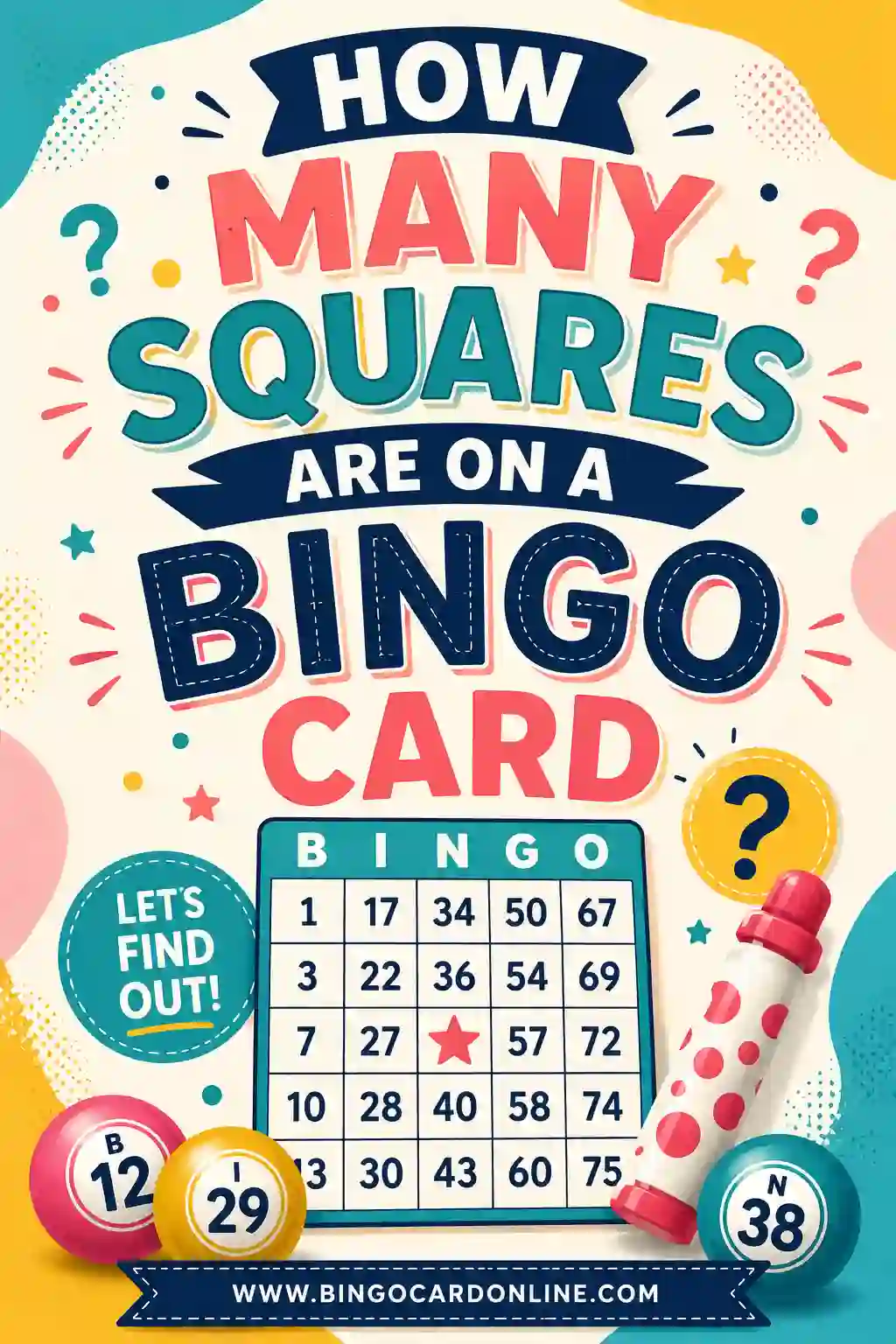
A traditional bingo card is a 5x5 grid, which works out to 25 total squares. The middle square is almost always a "free space" that every player gets marked for free, leaving 24 squares to fill.
So when people ask how many squares are on a bingo card, both answers are right depending on what you mean:
- 25 squares total (the full grid)
- 24 fillable squares (because the center is free)
That's the standard. But bingo cards come in other sizes too, and the square count changes with the grid.
Square Counts by Grid Size
Not every bingo card is 5x5. Smaller grids are popular for kids and quick games. Here's how the numbers shake out for each common size.
| Grid size | Total squares | Free space? | Squares to fill |
|---|---|---|---|
| 3x3 | 9 | Usually yes (center) | 8 |
| 4x4 | 16 | Optional (no true center) | 15 or 16 |
| 5x5 | 25 | Yes (center) | 24 |
| 6x6 | 36 | No center square | 36 |
A couple of things to notice:
- Odd-sized grids (3x3, 5x5) have a true center square, which is why they get a free space.
- Even-sized grids (4x4, 6x6) have no single middle square, so they often skip the free space or designate one corner instead.
For most games, the 5x5 is the sweet spot. It's long enough to build suspense without dragging.
Why 5x5 Is the Standard
The 5x5 grid isn't an accident. It's tied to the classic 75-ball bingo format, where the five columns are labeled B-I-N-G-O.
Each letter covers a range of numbers:
| Column | Letter | Number range |
|---|---|---|
| 1 | B | 1–15 |
| 2 | I | 16–30 |
| 3 | N | 31–45 (center free) |
| 4 | G | 46–60 |
| 5 | O | 61–75 |
Five columns of five squares gives you 25, with the N column's center left free. That structure has been the gold standard for decades, which is why "bingo card" almost always means a 5x5 grid by default.
Themed bingo (holiday, party, classroom) borrows the same 5x5 shape but swaps the numbers for words or pictures. The square count stays 25 either way.
What's the Free Space For?
The center square on a 5x5 card is a free space, marked for every player from the start. It exists for a few practical reasons.
- It speeds up the game. Everyone begins with one square already covered.
- It balances the grid. An odd number of columns leaves a natural center.
- It helps beginners. New players get an easy head start, which keeps things friendly.
You don't have to use it. For a tougher game, drop the free space and make players earn all 25 squares. But for casual play, especially with kids, keep it.
How Many Words You Need to Fill a Card
The square count tells you exactly how many items to gather for your word or number list. Here's the quick math.
- 3x3 card: 8 items (center is free)
- 4x4 card: 15 or 16 items
- 5x5 card: 24 items
But here's a pro tip: don't stop at the minimum. If you only have exactly 24 words for a 5x5, every card in your stack ends up nearly identical, because there's no room to shuffle. Aim for 30 or more so each card comes out distinct.
Here's a ready-to-use list of 30 general squares you can copy straight into the generator.
| Set A | Set B | Set C |
|---|---|---|
| Anchor | Balloon | Cactus |
| Acorn | Bridge | Candle |
| Apple | Button | Camera |
| Arrow | Basket | Clock |
| Bell | Beetle | Cloud |
| Bone | Brush | Crown |
| Boot | Berry | Cup |
| Bird | Broom | Comb |
| Book | Bead | Coin |
| Box | Bow | Cone |
Spread your picks across all three sets for variety. The more words you feed the generator, the more unique your cards will be.
Picking the Right Size for Your Group
Square count isn't just trivia. It decides how long your game runs and who can keep up.
3x3 (9 squares)
Best for toddlers and very short games. With only 8 squares to fill, rounds finish fast and little kids can track every square without getting lost.
4x4 (16 squares)
A nice middle ground. Good for young kids and anyone who wants a quicker game than the full 5x5. Decide up front whether to include a free corner space.
5x5 (25 squares)
The classic. Long enough to build suspense, short enough to stay fun. This is your default for most groups, from family game night to a classroom party.
6x6 and bigger
Rare, but used for marathon games or large prizes. With 36 squares, a blackout round can take a while, so save these for when you want a long game.
Does the Square Count Change How You Win?
Yes, in a small way. The winning pattern relies on the grid, so the square count shapes your options.
- A line on a 5x5 is five in a row; on a 3x3 it's only three. Smaller grids mean faster line wins.
- Four corners works on any grid with corners (4x4, 5x5, 6x6).
- Blackout scales with size: covering 9 squares is quick, covering 25 takes longer, and 36 takes a while.
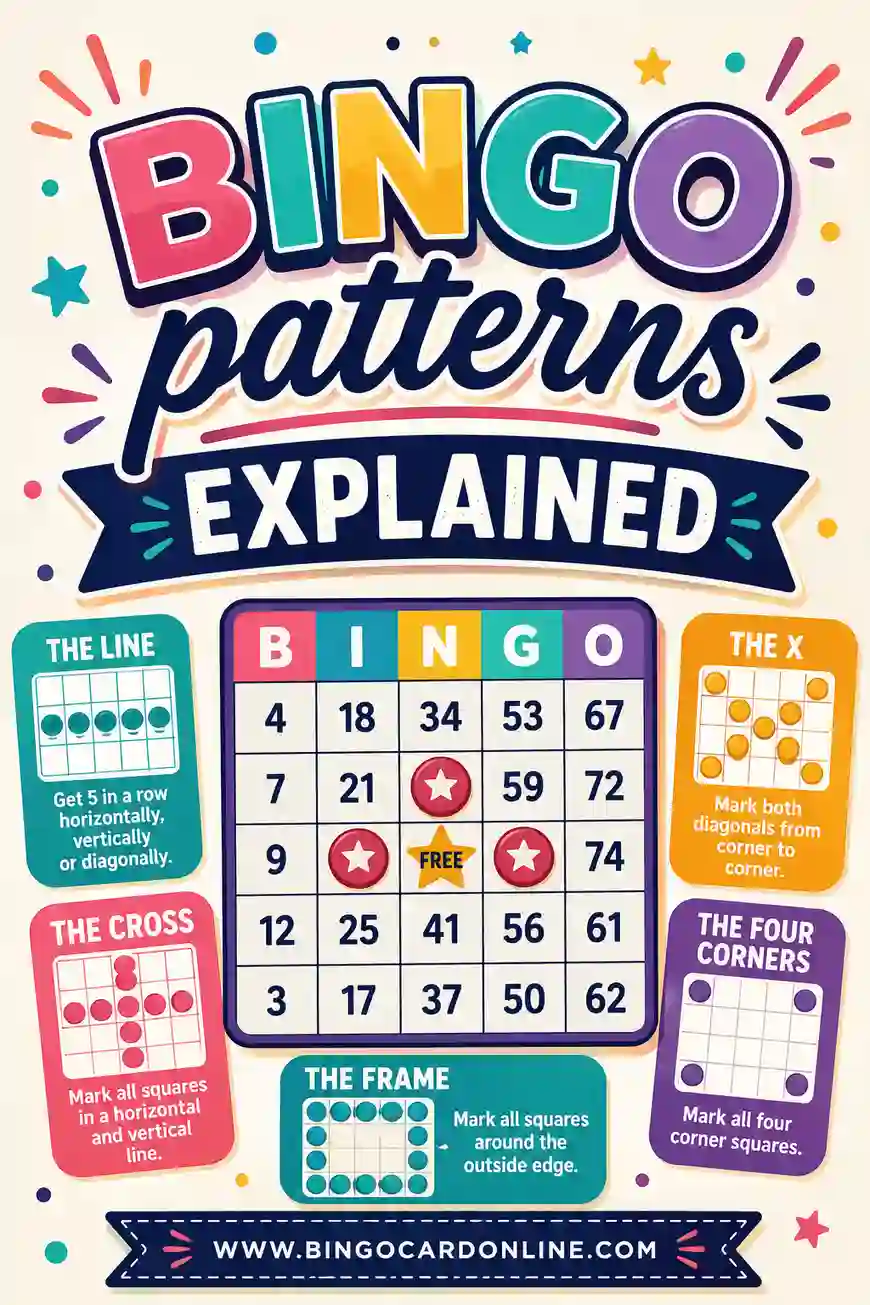
If you want a snappy game, a smaller grid with fewer squares gets you there. For more suspense, go bigger. Curious about all the shapes you can play for? See bingo patterns explained.
The History Behind the 25-Square Grid
The 5x5 layout didn't appear out of thin air. Modern bingo grew out of an Italian lottery game in the 1500s, then traveled through France and Germany before landing in the United States in the 1920s. Back then it was called "beano," because players marked their cards with dried beans.
The man who turned it into the bingo we know, a toy salesman named Edwin Lowe, settled on the 5x5 grid because it hit a sweet spot. A smaller card was over too fast. A bigger one dragged. Twenty-five squares gave just enough room to build tension without losing the room's attention. He hired a math professor to design thousands of unique card combinations, all on that same 25-square frame, and the format stuck.
So when you print a 5x5 card today, you're using a grid that's been refined for nearly a hundred years. The square count isn't arbitrary. It's the result of a lot of game nights figuring out what keeps people on the edge of their seats.
Counting Squares for Themed and Custom Cards
Number bingo isn't the only kind, and that changes how you think about the count. Themed cards, holiday, classroom, party, baby shower, use the very same grid sizes, but you fill the squares with words or pictures instead of numbers.
The math doesn't change. A themed 5x5 still has 25 squares and 24 to fill. What does change is your source list. With numbers, the range is fixed (1 to 75 for classic bingo). With words, you choose the pool, and that pool needs to be bigger than the square count.
Here's why that matters. If you have exactly 24 holiday words for a 5x5, every card uses all 24 words, just rearranged. That's fine, but the cards end up similar. Gather 40 words instead, and each card pulls a random 24 from the larger pool. Now the cards differ in which words appear, not just where they sit. More variety, more fun, fewer ties.
A quick rule of thumb for themed cards:
- Minimum: as many words as squares to fill (24 for a 5x5).
- Comfortable: about 1.5 times the squares (35 or so for a 5x5).
- Best variety: double the squares (around 48 for a 5x5).
You don't need to count exactly. Just lean generous with your list and the generator handles the rest.
Quick Reference: Squares at a Glance
Here's the whole thing boiled down, so you can grab the number you need.
- Standard bingo card: 25 squares (5x5), 24 to fill
- 4x4 card: 16 squares
- 3x3 card: 9 squares
- Free space: the center square on odd-sized grids (3x3, 5x5)
- Minimum word list for 5x5: 24, but aim for 30+
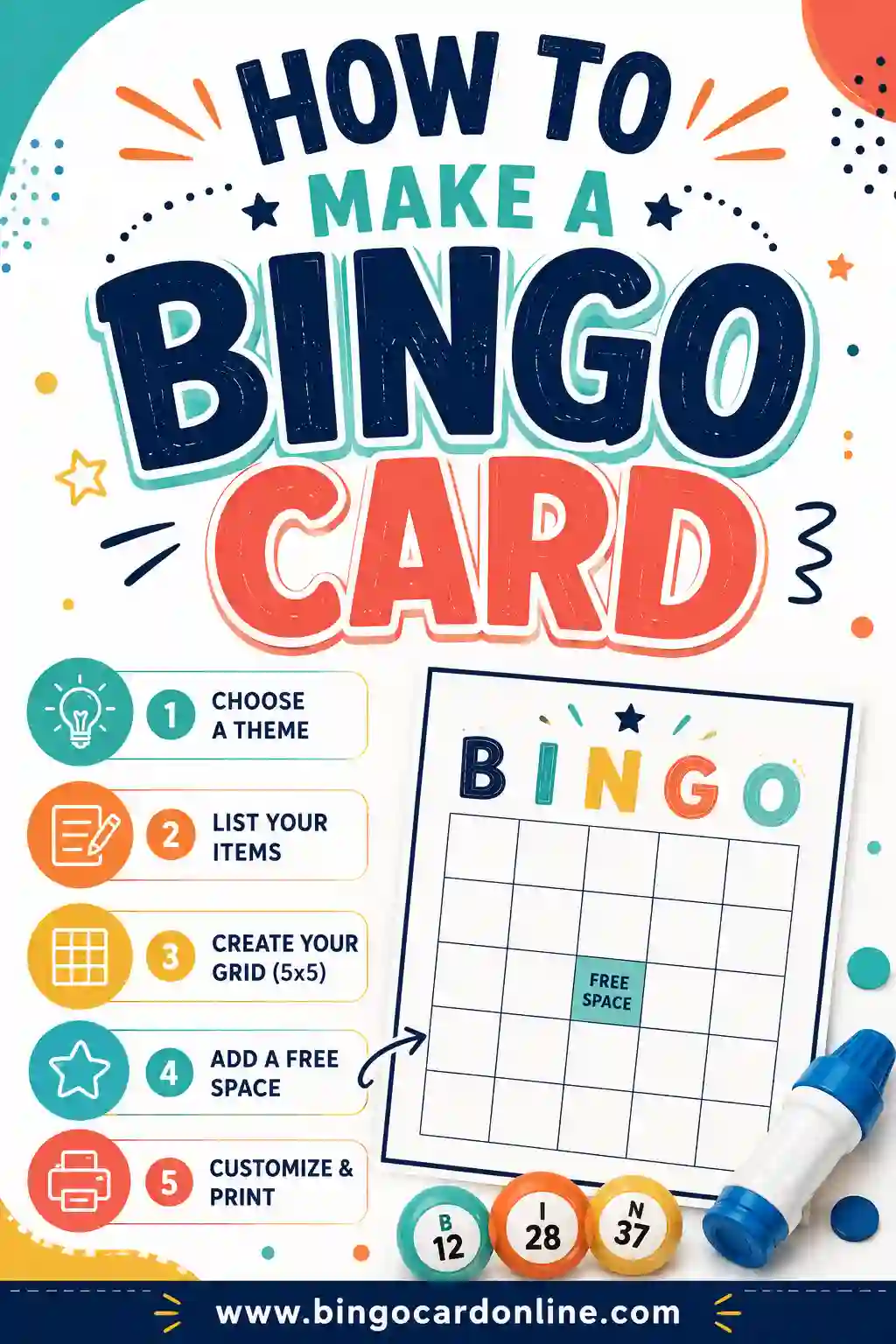
Keep that in your back pocket and you'll never have to wonder again. Ready to build one? Start with how to make a bingo card.
Frequently Asked Questions
How many squares are on a standard bingo card?
A standard bingo card has 25 squares in a 5x5 grid. The center square is a free space, so you fill in 24 of them with numbers, words, or pictures.
How many numbers are on a bingo card?
On a traditional 75-ball bingo card, there are 24 numbers (the center is a free space). The numbers are spread across five columns labeled B-I-N-G-O, with each column covering a set range from 1 to 75.
Is the free space counted as a square?
Yes. The free space is one of the 25 squares on a 5x5 card. It's just marked for free at the start, so you don't have to fill it with a number or word. That leaves 24 squares to fill.
How many squares are on a 4x4 bingo card?
A 4x4 bingo card has 16 squares. Because there's no single center square, the free space is optional, you can include one in a corner or skip it entirely.
How many words do I need for a 5x5 bingo card?
You need at least 24 words for a 5x5 card (the center is free). For more variety between cards, gather 30 or more so the generator can shuffle them into distinct layouts.
Can I make a bingo card with a different number of squares?
Yes. A bingo card generator lets you choose 3x3 (9 squares), 4x4 (16 squares), or 5x5 (25 squares) with one click. Pick the size that fits your group and how long you want the game to run.
Why is the center square the free space?
It comes down to geometry. A 5x5 grid has an exact middle square, so it's the natural spot for a free space that's the same for every player. Even-sized grids like 4x4 don't have a true center, which is why they usually skip the free space or move it to a corner instead.
Do all 25 squares need to be different on one card?
Yes. Within a single card, every square should hold a different number, word, or picture, otherwise a player could mark two squares from one call. Across your stack, the squares repeat (they're the same pool), but each card arranges them in a unique order.
How many squares are on a 90-ball bingo card?
That's a different format, common in the UK. A 90-ball card is a 9-column by 3-row grid, so it has 27 squares, but only 15 hold numbers and the other 12 are blank. It's a separate system from the 75-ball 5x5 card most people picture when they say "bingo card."
Why do bigger grids take longer to play?
Because there are more squares to cover before anyone wins. A blackout on a 3x3 needs just 8 marks, while a 5x5 blackout needs 24 and a 6x6 needs 36. More squares means more calls, which is exactly why you'd pick a bigger grid when you want a longer, more suspenseful game.
Ready to Build Your Bingo Cards?
Now you know exactly how many squares to expect and how many words to gather. Open the free bingo card generator, pick your grid size, and print a unique card for every player in minutes. It's free, there's no sign-up, and you can switch sizes anytime. New to all this? Check out how to make a bingo card and how to play bingo: rules for beginners to get rolling.