How to Play Bingo: Rules for Beginners
To play bingo, each player gets a card filled with numbers or words, a caller reads out items one at a time, and players mark any square that matches. The first person to complete the agreed pattern, usually a full line, shouts "Bingo!" and wins. That's the whole game in one breath, and you can be playing within five minutes.
Want to set up a game right now? Open the free bingo card generator, print a unique card for each player, and you're ready. No sign-up, no software, and every card comes out different so the game stays fair.

Bingo is a matching game. Everyone has a grid of squares, and a caller announces items one by one. You scan your card, and if you have what was called, you mark it. Keep marking until your marked squares form the winning shape, then call it out.
The classic shape is a straight line: five in a row across, down, or diagonally. But you can play for other patterns too, like four corners or a full blackout. The group agrees on the winning pattern before the game starts, and that's it.
Here's what you need to play:
- One card per player (printed or digital)
- A caller with a list of items to read from
- Markers to cover squares (beans, pen, daubers, anything)
- A small prize if you want one, though plenty of people play just for fun
What a Bingo Card Looks Like
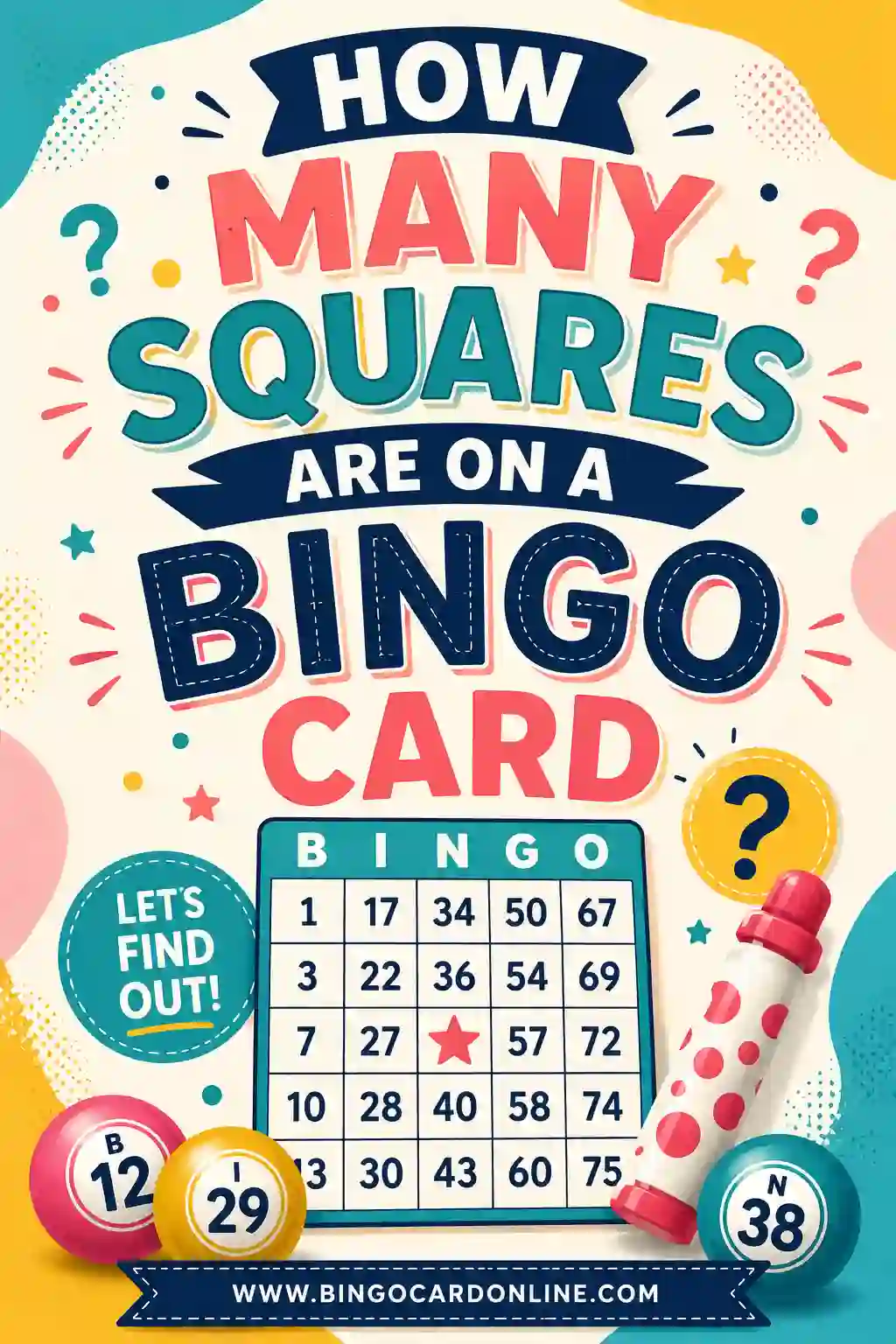
A standard bingo card is a 5x5 grid. The center square is a free space that everyone gets marked for free. That leaves 24 squares to fill with numbers, words, or pictures.
In traditional number bingo, the columns are labeled B-I-N-G-O, and each letter covers a range of numbers:
| Column | Number range |
|---|---|
| B | 1–15 |
| I | 16–30 |
| N | 31–45 (center is free) |
| G | 46–60 |
| O | 61–75 |
When the caller says "B-7," you check your B column for a 7. Themed bingo (holiday, party, classroom) works the same way, just with words or pictures instead of numbers.
If you're playing with young kids, a smaller 3x3 or 4x4 grid keeps things manageable. You can build any size in seconds with the generator.
The Basic Rules, Step by Step
Here's a clean game from start to finish, written for someone who's never played.
- Hand out cards and markers. One card per player, a pile of markers in reach.
- Agree on the winning pattern. A single line is the usual beginner choice. Say it out loud so nobody's confused later.
- The caller reads an item. They pull a number or word and announce it clearly, then pause.
- Players mark matches. If the called item is on your card, cover that square.
- Watch for a win. When your marked squares form the agreed pattern, shout "Bingo!"
- Verify the card. The caller checks the winner's marked squares against the called items. If it checks out, that player wins.
If the call doesn't check out, the game simply continues. No harm done, no hard feelings.
How to Win: Common Patterns
The "winning pattern" is just the shape you're racing to complete. Beginners usually start with a single line, then branch out as they get comfortable.
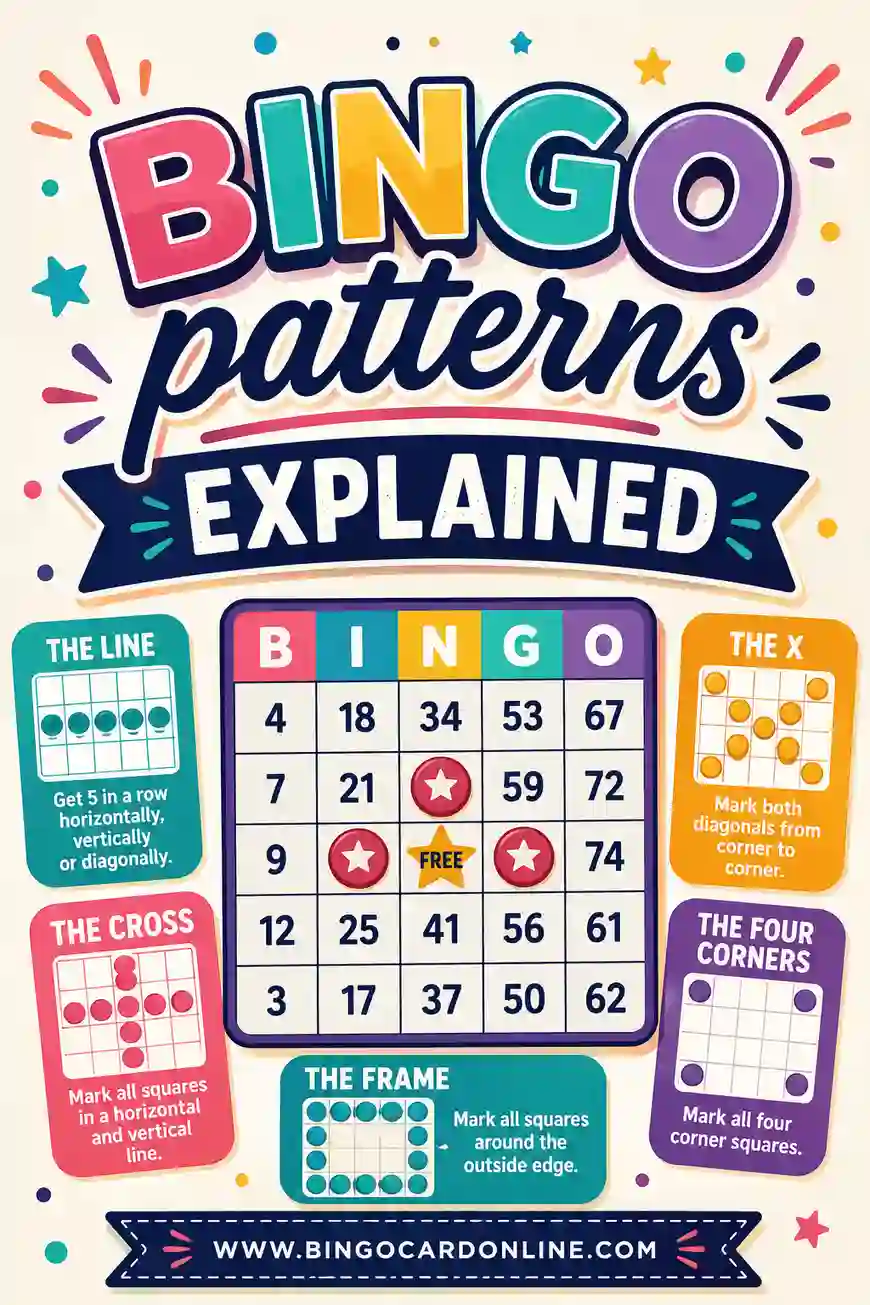
- One line. Five in a row, across, down, or diagonal. The fastest, simplest win.
- Four corners. Mark all four corner squares. Quick and great for short attention spans.
- Blackout (full card). Cover every square. The longest game and the biggest payoff.
- Picture frame. Mark every square around the outside edge.
- Letter X. Both diagonals, forming an X across the card.
Decide on one pattern before you start. For a first game, stick with a single line so everyone understands the goal. Want the full rundown? See our guide to bingo patterns explained.
How to Be the Caller
Somebody has to read the items, and it's an easy job. If it's your first time, here's how to do it well.
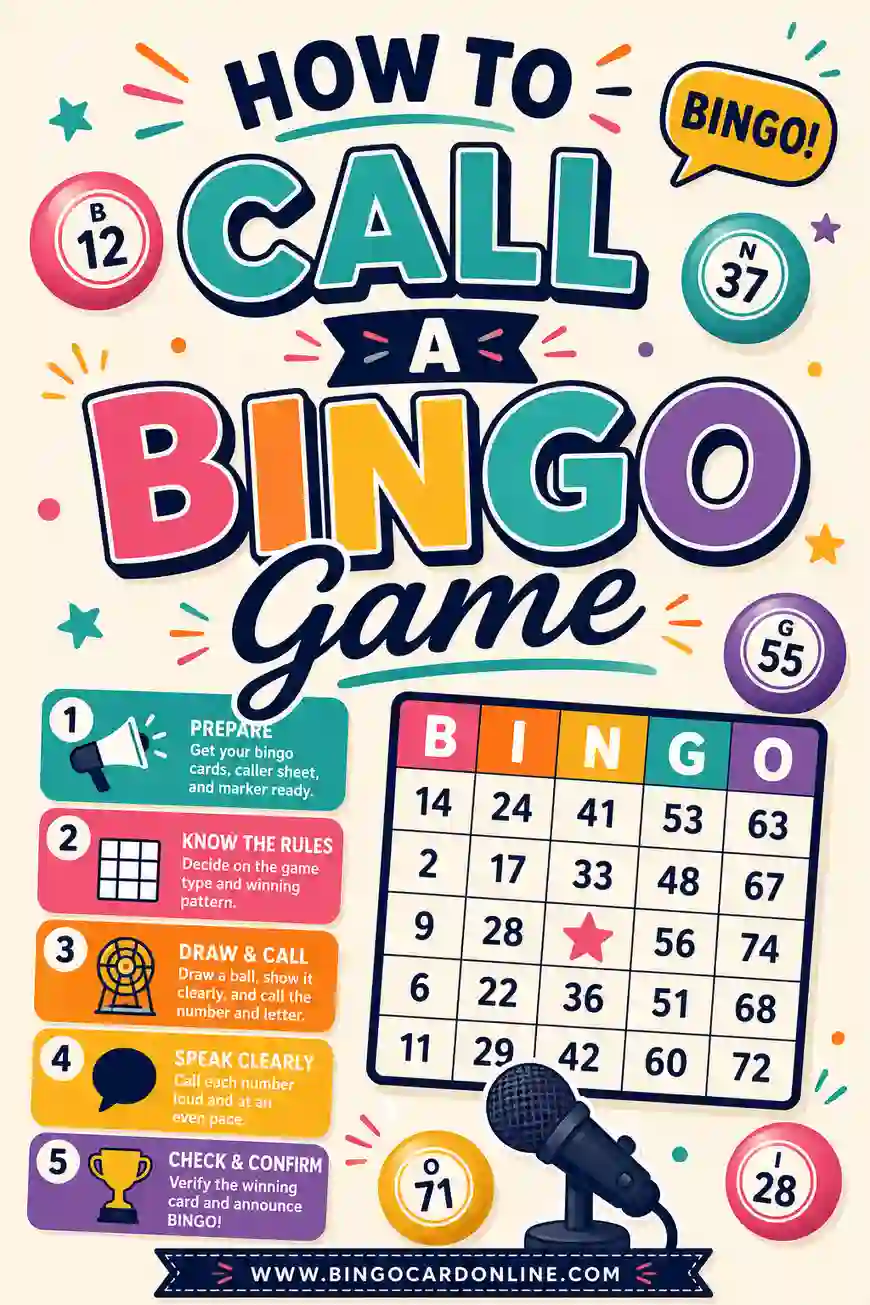
- Prepare your list. Write the items on slips and drop them in a bowl, or use a printed master list.
- Call clearly and slowly. Say each item once, then pause a beat so players can scan their cards.
- Track what you've called. Cross off each item or set the slips aside. You'll need this to verify the winner.
- Set a steady pace. Roughly one call every 10 to 15 seconds for adults, slower for kids.
- Verify wins. When someone calls "Bingo!", read their marked squares back against your called list.
That's all there is to it. If you'd like more detail, our guide on how to call a bingo game walks through pacing and tips.
Setting Up Your First Game
A little prep makes the game run smoothly. Here's a quick checklist before you start.
- Print enough cards. One per player, plus two or three spares for late arrivals.
- Gather markers. Dried beans, buttons, coins, candy, or pens all work.
- Pick a caller. One person reads; everyone else plays.
- Choose the pattern. Single line is the friendliest for beginners.
- Decide on prizes. Optional, but a small reward adds a little fun.
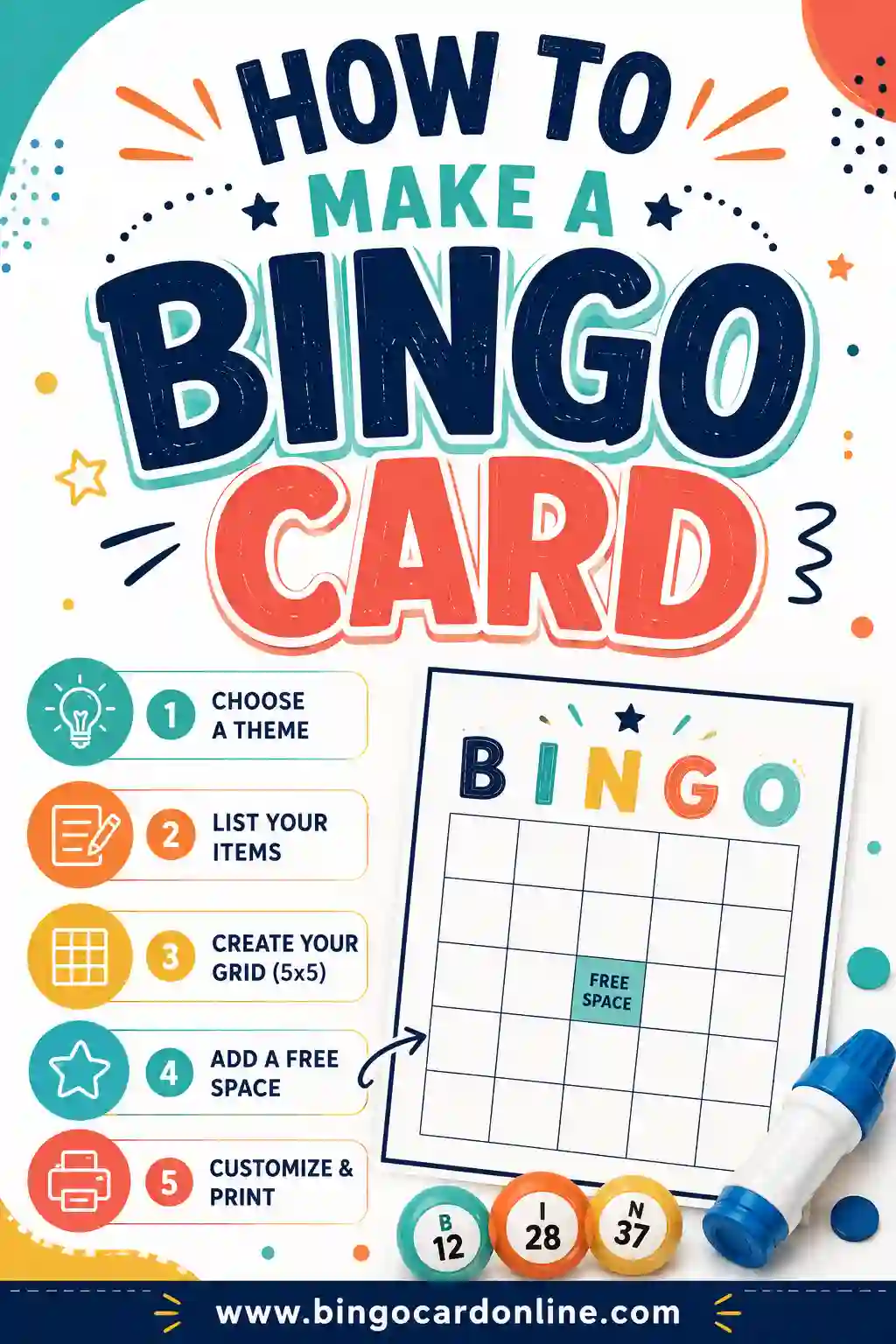
Need cards fast? The free generator makes a full set of unique cards in seconds, so you don't have to draw anything by hand. Learn the full process in how to make a bingo card.
Bingo by Age Group
The same game stretches from toddlers to grandparents if you adjust a couple of things.
| Age group | Grid size | Tips |
|---|---|---|
| Toddlers (2–4) | 3x3 | Use pictures, not words. Keep rounds short. |
| Kids (5–9) | 4x4 | Mix simple words and pictures. Offer small prizes. |
| Tweens & teens | 5x5 | Add themed or pop-culture squares for interest. |
| Adults | 5x5 | Try blackout rounds or party-themed words. |
| Seniors | 4x4 | Larger print, fewer squares, a slower pace. |
Adjusting the grid and the pace keeps everyone in the game, whether they're four years old or ninety-four.
A Quick Glossary for Beginners
A few words you'll hear at the table. Now you'll know what they mean.
- Caller. The person who reads out the items.
- Free space. The center square, marked for everyone at the start.
- Daub / mark. To cover a square that matches a call.
- Blackout. Covering every square on the card.
- Line. Five in a row, the classic winning pattern.
- Coverall. Another name for blackout.
You don't need to memorize these. They'll stick after a game or two.
Tips to Keep the Game Fun
Bingo is simple, which is exactly why it's easy to keep enjoyable. A few small touches go a long way.
- Keep rounds short. Several quick games beat one long, slow one.
- Vary the pattern. Switch from a line to four corners to blackout to keep things fresh.
- Use small prizes. Candy, a movie pick, or "skip a chore" works great.
- Slow down for kids. Give younger players time to find each square.
- Play "spot it" style. Skip the caller and let players mark items they spot in real life, in a movie, or at a party.
The goal is laughter and a little friendly competition, not strict rules. Bend them to fit your group.
Common Beginner Mistakes (and Easy Fixes)
Bingo is forgiving, but a few first-timer slip-ups can cause confusion or a disputed win. Here's what trips up new players and how to head it off.
- Not agreeing on the pattern first. If you don't say "we're playing a single line" out loud before the first call, someone will shout "Bingo!" for the wrong shape. Settle the pattern, say it clearly, and you'll avoid awkward arguments.
- The caller doesn't track calls. Without a record of what's been called, you can't verify a win. Always cross items off a master list or set the slips aside as you go.
- Calling too fast. New callers race ahead and players fall behind, then miss squares. Slow down. One call every 10 to 15 seconds, with a pause to scan, keeps everyone in the game.
- Marking the wrong square. Beginners sometimes mark a number that just looks similar. A quick "B-7, that's B-7" repeat helps, especially with kids and seniors.
- Forgetting the free space. The center square is marked for everyone from the start. New players often leave it blank and wonder why their line won't complete.
None of these are a big deal on their own, but they're the little things that turn a smooth game into a stop-and-start one. Sort them before you begin and the whole round flows.
A Few Quick Variations to Try
Once you've played a straight game or two, these easy twists keep things interesting without adding any real complexity. They're perfect for a second or third round when the group's warmed up.
- Speed bingo. Call faster and play for a single line only. Rounds last a couple of minutes, so you can fit in lots of quick games. Great for kids who want to win again right away.
- Double bingo. Players keep going after the first line and race for a second one. It stretches a round out and gives slower players a chance to catch up.
- Lucky free-for-all. No fixed pattern. The first to mark any line, corner, or shape you've named at the start wins. Keeps everyone scanning the whole card.
- Pick-your-prize. Each winner picks from a small pile of prizes instead of getting a set one. The choosing is half the fun, especially for younger players.
The beauty of bingo is how little you need to change to keep it fresh. Swap the pattern, tweak the pace, or change up the prizes, and the same simple game feels new each round.
Frequently Asked Questions
How do you play bingo for beginners?
Give each player a card, pick one person to be the caller, and agree on a winning pattern (a single line is easiest). The caller reads items one at a time, players mark matches, and the first to complete the pattern shouts "Bingo!" The caller checks the card, and if it's correct, that player wins.
What is the winning pattern in bingo?
The most common winning pattern is a straight line of five squares, across, down, or diagonally. Other popular patterns are four corners, a full blackout (covering every square), and a picture frame around the edge. The group agrees on the pattern before the game starts.
How many players do you need for bingo?
You can play bingo with as few as two people, though it's most fun with a larger group. You need at least one caller and one player. For big groups, just print more unique cards so everyone has their own.
What do you use to mark bingo squares?
Anything that covers a square works: dried beans, buttons, coins, candy, a pen or crayon, or bingo daubers. For reusable cards, slip them in clear sleeves and mark with dry-erase markers so you can wipe them clean.
How long does a game of bingo take?
A single-line game usually takes 5 to 10 minutes. A full blackout can run 15 to 20 minutes since players must cover every square. You can speed things up with a smaller grid or a faster calling pace.
Do I need to buy bingo cards to play?
No. You can make and print your own bingo cards for free with a generator. Enter a word or number list, pick a grid size, choose how many cards you need, and print. There's no cost and no sign-up.
What's the most common beginner mistake in bingo?
Not agreeing on the winning pattern before the first call. If players aren't clear on whether you're racing for a single line, four corners, or a blackout, someone will call "Bingo!" for the wrong shape. Say the pattern out loud before you start, and don't forget the center free space counts as already marked.
Can you play bingo without a caller?
Yes. In "spot-it" bingo, there's no caller at all. Players mark squares as they spot the item in real life, in a movie, or at an event. It's a relaxed way to play during a party or a long activity, and it works especially well with picture-based cards for kids.
Ready to Play Your First Bingo Game?
Now you know the rules, the patterns, and how to call a game. The only thing left is the cards. Open the free bingo card generator, print a unique card for each player, and start your first game in minutes. While you're at it, brush up with how to make a bingo card, bingo patterns explained, and how to call a bingo game. Have fun, and may your first "Bingo!" come quick.