Bingo Terminology & Lingo Glossary
Bingo lingo is the collection of fun nicknames and terms players and callers use, like "two little ducks" for the number 22 or "blackout" for filling your whole card. Knowing a few of these makes you sound like a seasoned caller and makes the game more fun for everyone. This glossary covers the key terms, classic number calls, and caller phrases you'll actually hear. When you're ready to play, a free bingo card generator gets you a full set of cards in minutes.
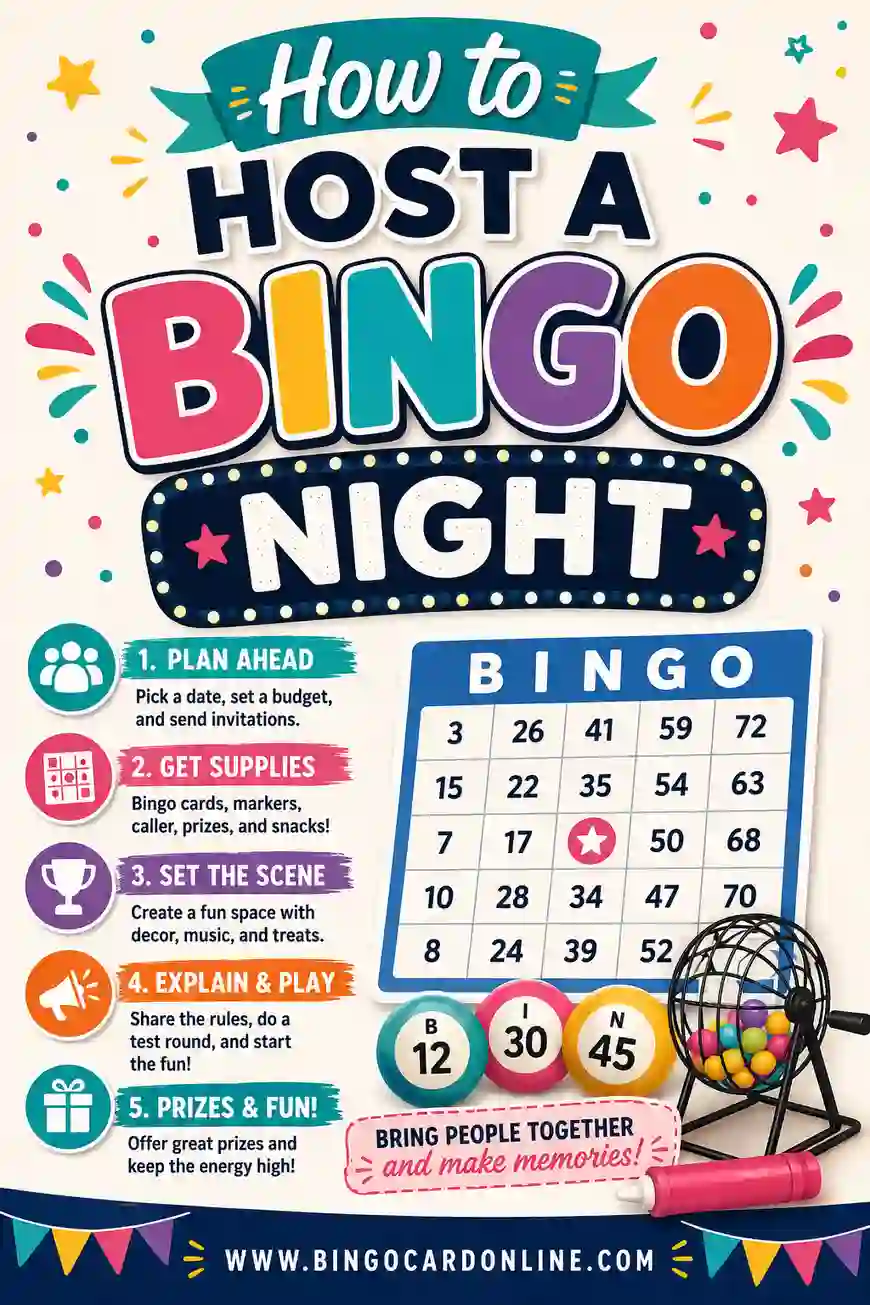
Hosting your own game and want to sound the part? Open the free generator, print your cards, and use the calls below to run a game with real flair.
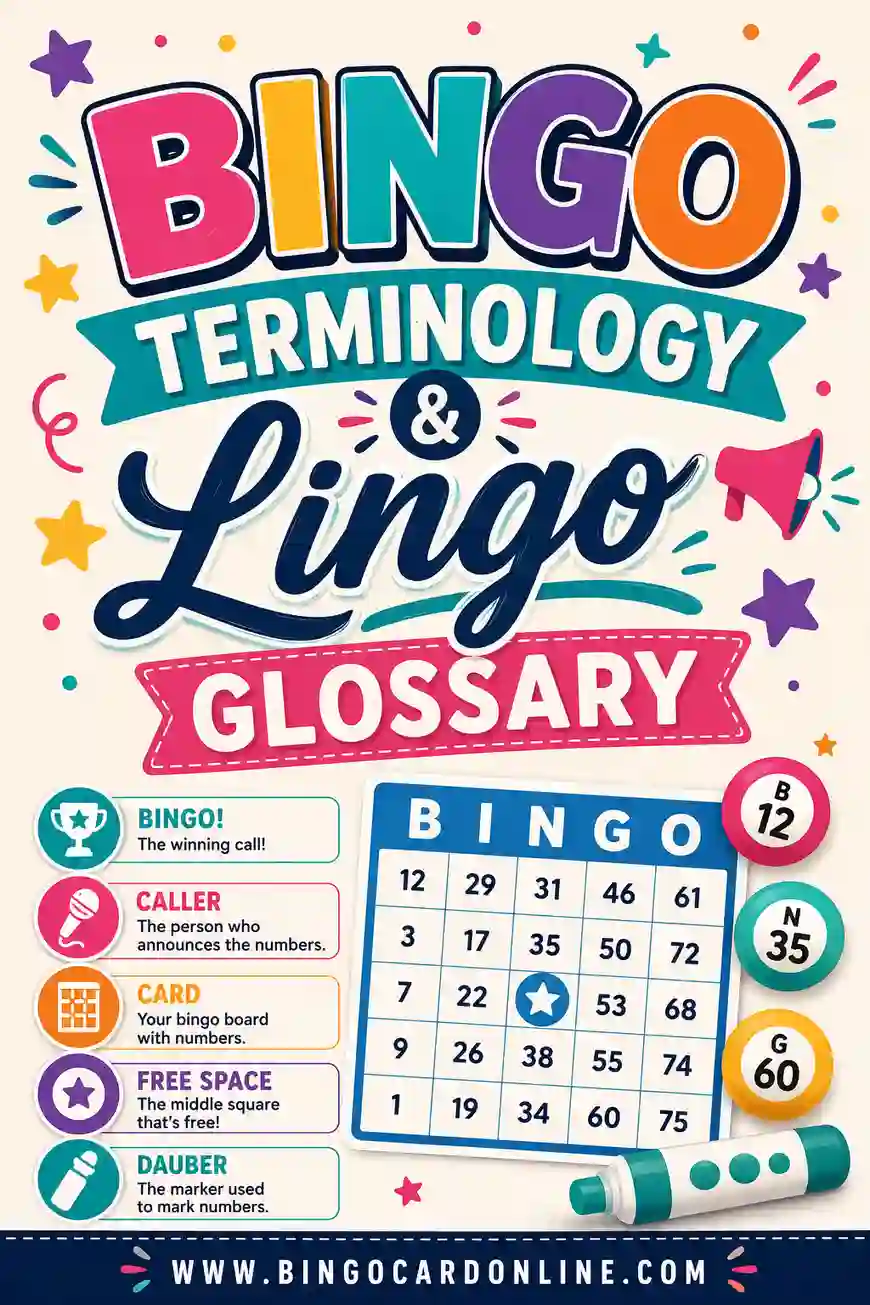
Bingo's been around for nearly a century, and like any old game, it picked up a vocabulary along the way. Some terms are practical (you need a word for "I won"), and some are pure fun, like the rhyming number calls British callers made famous.
You don't need to memorize all of it. But knowing the basics helps in two ways. First, you'll understand what's happening in any bingo hall or party. Second, if you're the caller, a few clever calls turn a plain game into a lively one. Players love it when "legs eleven" gets a laugh.
This glossary splits into three parts: core game terms everyone should know, classic number nicknames for callers, and a few extra phrases you'll hear around the table.
Core Bingo Terms Everyone Should Know
Start here. These are the words that come up in every single game, no matter where you play.
Bingo
The winning shout. When you complete the required pattern (a line, four corners, or the whole card), you yell "Bingo!" to claim the win. The caller then checks your card against the called items.
Card (or ticket)
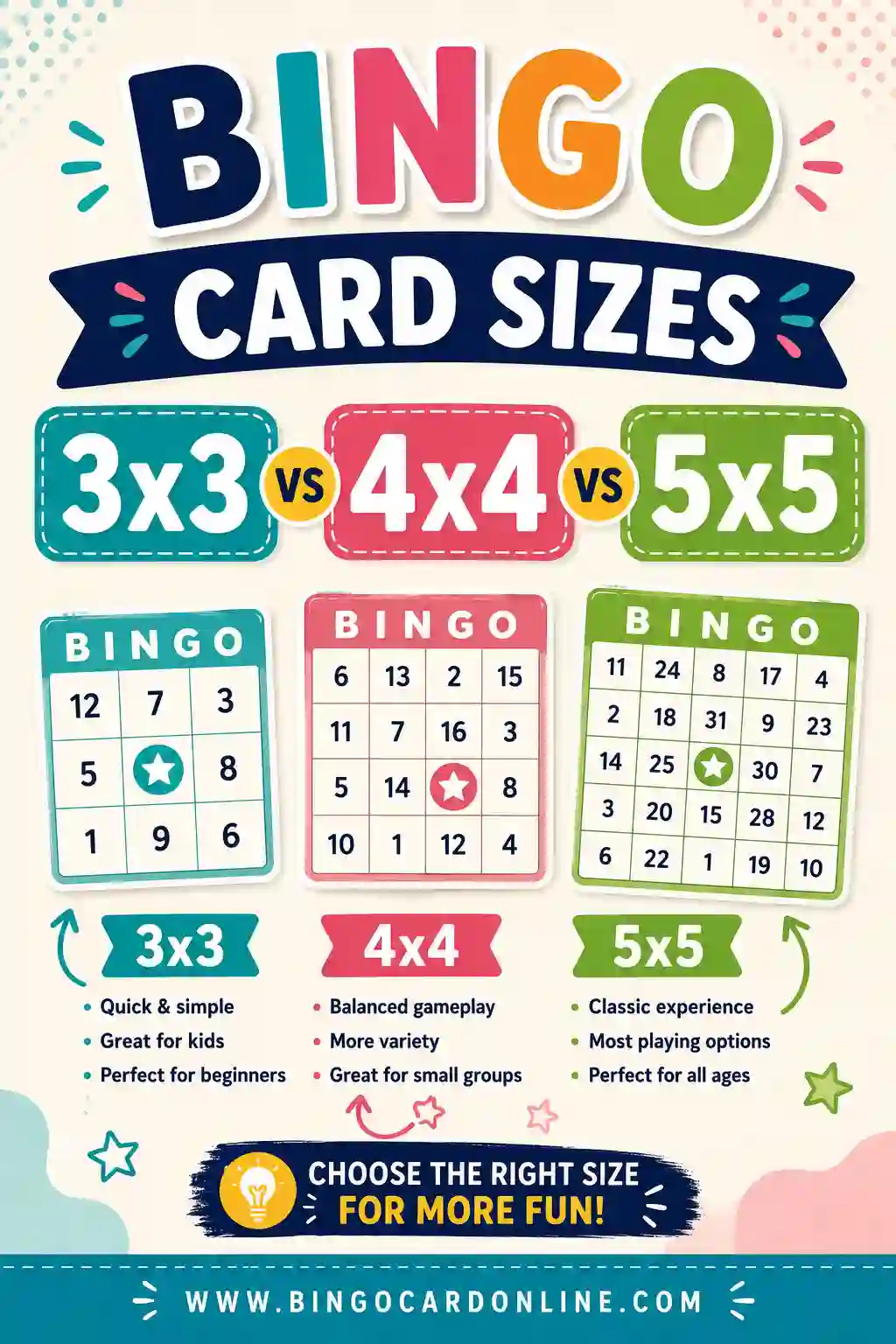
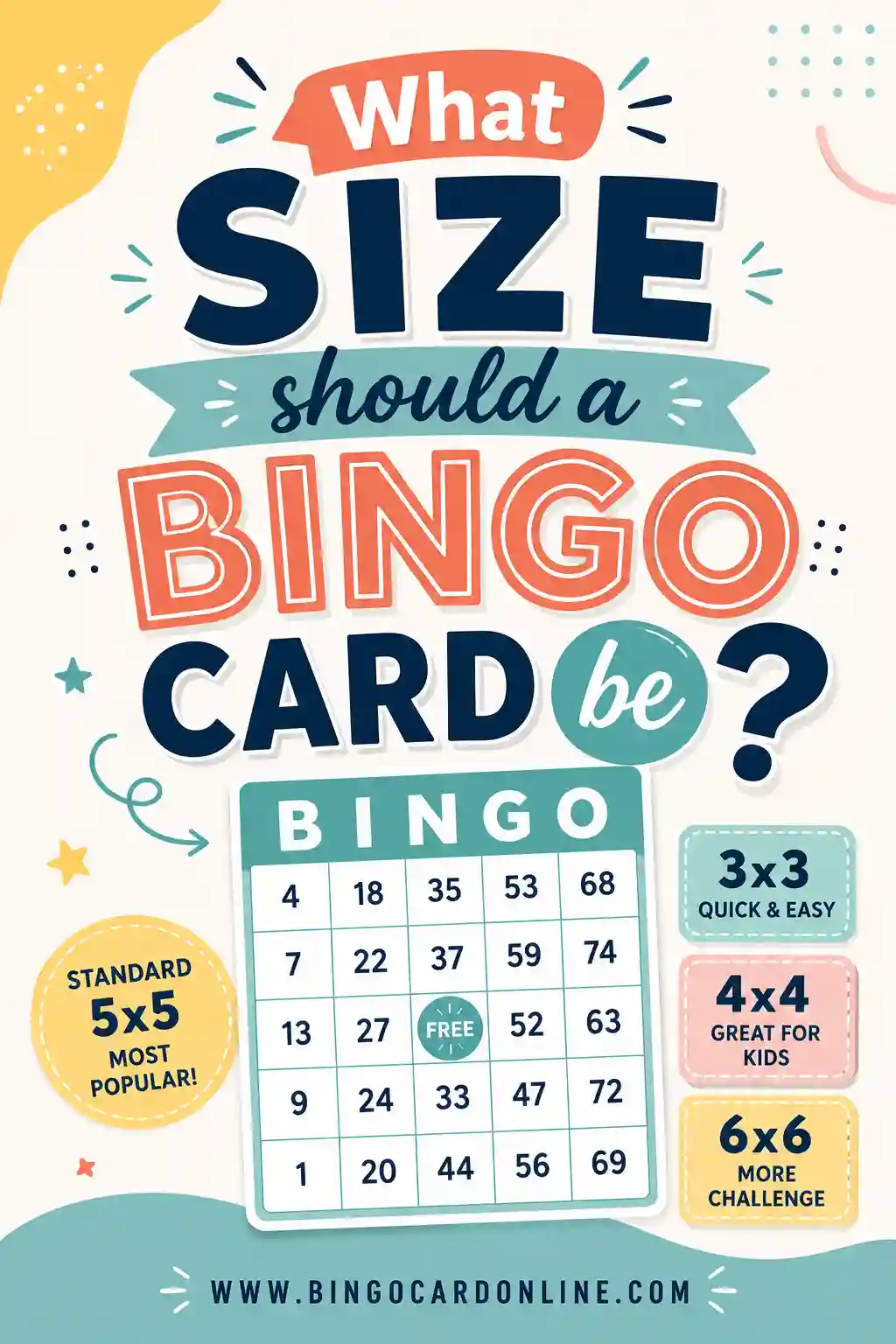
The grid you play on. A standard card is a 5x5 grid, though 3x3 and 4x4 cards are common too. Each card should be unique so no two players win at the same moment.
Free space
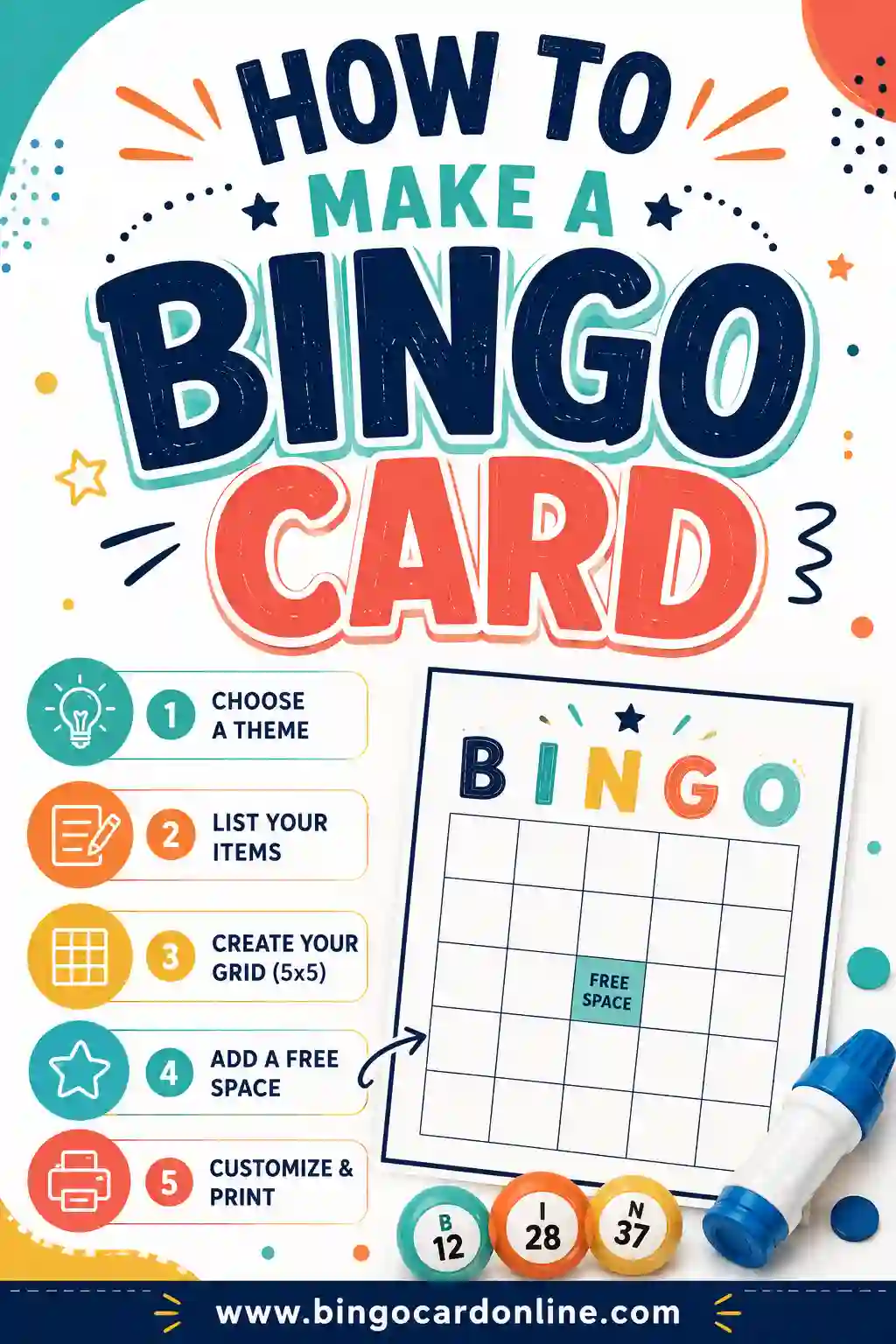
The center square on a 5x5 card, marked "FREE." It counts as automatically covered, giving every player a head start toward the lines that run through the middle.
Caller
The person who draws and announces each number or word. The caller also verifies the winning card. A good caller keeps a steady pace and a clear voice.
Daub
To mark a square, named after the ink daubers players use. "Daub your card" just means cover the matching squares as they're called.
Line
A complete row, column, or diagonal of marked squares. Completing a line is the most common way to win a quick game.
Blackout (or coverall)
Filling every single square on your card. It's the longest, most challenging win condition and usually carries the biggest prize.
Classic Number Bingo Calls
This is the fun stuff. In traditional 75- and 90-ball bingo, callers give each number a nickname, often a rhyme or a visual joke. Here's a table of the most beloved ones to use at your next game.
| Number | Classic call | Why |
|---|---|---|
| 1 | Kelly's eye | Old rhyming slang |
| 2 | One little duck | The "2" looks like a duck |
| 5 | Man alive | It rhymes |
| 7 | Lucky seven | Seven's a lucky number |
| 8 | Garden gate | Rhymes with eight |
| 9 | Doctor's orders | A wartime joke |
| 11 | Legs eleven | The two 1s look like legs |
| 13 | Unlucky for some | The unlucky number |
| 21 | Key of the door | The old age of majority |
| 22 | Two little ducks | Both 2s look like ducks |
| 25 | Duck and dive | Rhymes with 25 |
| 30 | Dirty thirty | Just a fun rhyme |
| 44 | Droopy drawers | A cheeky classic |
| 50 | Half a century | Halfway to 100 |
| 55 | Snakes alive | The 5s look like snakes |
| 66 | Clickety click | The rhythm of the words |
| 76 | Trombones | From the song |
| 77 | Sunset strip | An old TV show |
| 88 | Two fat ladies | The 8s look like figures |
| 90 | Top of the shop | The highest number |
Use a handful of these and watch your players light up. You don't need them all, just enough to add some personality. Pair them with the steps in our bingo night hosting guide for a game with real character.
Game and Pattern Terms
Beyond the basics, these terms describe how a game is set up and won. Knowing them helps you explain the rules clearly before you start.
Pattern
The shape players need to complete to win. Common patterns include a single line, four corners, a picture frame (the outer edge), an X (both diagonals), or a full blackout. Always announce the pattern before the round.
Four corners
A win condition where you mark all four corner squares. It's quick and great for short rounds with restless players.
Picture frame (or postage stamp)
Marking the outer ring of squares, or in some versions a small 2x2 block in a corner. A nice middle-ground difficulty between a line and a blackout.
Wild number
In some games, the first number called becomes "wild," and every number ending in the same digit counts as marked. It speeds up the game dramatically.
False call (or false alarm)
When a player shouts "Bingo!" but their card doesn't actually have the winning pattern. No harm done. The game just continues from where it stopped.
Jackpot
The top prize, often awarded for a blackout within a set number of calls. Casual home games rarely use one, but it's classic in bingo halls.
Caller Phrases and Etiquette
A few stock phrases keep a game running smoothly. These are the little things a smooth caller says without thinking.
- "Eyes down." The signal that the game is starting and players should focus on their cards.
- "On its own." Said before calling a single-digit number, like "on its own, number five."
- "All the sixes." How a caller says 66, grouping the repeated digit.
- "Two and three, twenty-three." Callers often say the individual digits, then the full number, so nobody mishears.
- "Check your card." A prompt after a "Bingo!" call while the caller verifies the win.
Good etiquette is simple: call clearly, pause between numbers, repeat when asked, and verify every win before handing out a prize. A steady, friendly caller is the heart of a good game.
Free Bingo Caller Word List (Copy & Paste)
Want to run a word-based game instead of numbers? Here's a fun, ready-to-use list of 30 squares themed around bingo itself and game nights. Pick 24 for a 5x5 (plus the free space) or fewer for smaller grids.
| Game Terms | Around the Table | Prizes & Fun |
|---|---|---|
| Bingo | Caller | Jackpot |
| Daub | Marker | Trophy |
| Blackout | Card | Candy |
| Free space | Bowl | Sticker |
| Four corners | Slip | High five |
| Lucky seven | Chair | Applause |
| Full house | Table | Cheers |
| Wild number | Pencil | Winner |
| Pattern | Bean | Crown |
| Line | Chip | Treat |
Drop the whole list into the generator for a meta bingo game about bingo itself. The more words you include, the more unique each card comes out.
Number Bingo vs Word Bingo Terms
A quick note on how the lingo shifts depending on the game you play. Classic number bingo (75-ball in the US, 90-ball in the UK) uses the number nicknames above. Word and themed bingo (holidays, parties, classrooms) borrows the same game terms (bingo, daub, blackout, free space) but skips the number calls, since there are no numbers to nickname.
If you're using a generator to build word cards, you'll lean on the pattern and game terms, not the number rhymes. Either way, the core vocabulary stays the same. Here's a quick map of which terms apply where.
| Term | Number bingo | Word bingo |
|---|---|---|
| Bingo | Yes | Yes |
| Daub / mark | Yes | Yes |
| Blackout | Yes | Yes |
| Free space | Yes | Yes (5x5) |
| Number nicknames | Yes | No |
| Pattern calls | Yes | Yes |
For help choosing the right card for your game, see our guides on card sizes and what size a bingo card should be.
More Number Calls Worth Knowing
The table above covers the crowd-pleasers, but bingo lore runs deep. If you want a fuller toolkit for a 90-ball game, here are more classics that earn a smile when you drop them in. You don't need to learn the whole set, just the ones that suit your room.
| Number | Classic call | Why |
|---|---|---|
| 3 | Cup of tea | A simple rhyme |
| 4 | Knock at the door | Rhymes with four |
| 10 | Boris's den | Number 10, the PM's address |
| 16 | Sweet sixteen | The birthday phrase |
| 17 | Dancing queen | From the song |
| 23 | Thee and me | An old rhyme |
| 26 | Half a crown | Old coin slang |
| 33 | All the threes | The repeated digit |
| 40 | Life begins | "Life begins at forty" |
| 45 | Halfway there | Halfway to 90 |
| 57 | Heinz varieties | The famous "57" |
| 65 | Retirement age | The classic pension age |
| 68 | Saving grace | A gentle rhyme |
| 80 | Gandhi's breakfast | "Ate nothing," a visual pun |
| 89 | Nearly there | One off the top |
Notice the patterns. Many calls rhyme with the number, some describe what the digits look like, and a few are inside jokes from history or pop culture. Once you spot the logic, the calls are easy to remember, and you can even invent your own for a house game.
Reading a Bingo Card Aloud
Knowing the terms is half the job. The other half is delivery, and a few habits separate a smooth caller from a stumbling one.
- Say the number twice, two ways. "On its own, number five, number five." The repetition gives players a second chance to hear it over the chatter.
- Split the digits first. For 23, say "two and three, twenty-three." Hearing the parts before the whole stops people from mishearing 23 as 33.
- Pause for the daub. A beat of silence after each call lets players scan and mark. Rushing is the most common rookie mistake.
- Repeat on request, every time. Someone will always miss one. A friendly "twenty-three, two and three" keeps the room happy.
- Keep your energy up. A flat caller drains a game. A little warmth and the odd classic nickname keep people leaning in.
These small touches are exactly what the lingo is for. The number nicknames aren't just trivia, they're tools that make the calling clearer, livelier, and more fun to listen to.
Where Bingo Lingo Came From
A quick bit of background makes the words stick. Bingo grew out of an Italian lottery game in the 1500s, traveled through France and Britain, and landed in America in the 1920s, where it got its modern name. The story goes that a player got so excited she shouted "Bingo!" instead of "Beano," and the name stuck.
The colorful number calls are mostly a British invention. In packed, noisy bingo halls, callers needed a way to make numbers easy to hear and hard to mishear, so they leaned on rhymes and visual jokes. "Legs eleven" and "two little ducks" weren't just for laughs, they helped a roomful of players catch the call the first time. That blend of practical and playful is the heart of bingo's whole vocabulary, and it's why the lingo has lasted nearly a century.
Frequently Asked Questions
What does "bingo" actually mean?
"Bingo!" is the word a player shouts when they complete the winning pattern on their card, whether that's a line, four corners, or a full blackout. The caller then checks the card against the called items to confirm the win before awarding a prize.
Why do bingo numbers have funny names?
The nicknames started in British bingo halls as rhymes and visual jokes to make calling more entertaining and easier to hear in a noisy room. "Two little ducks" for 22 plays on the shape of the digits, while "legs eleven" jokes that the two 1s look like legs.
What is a blackout in bingo?
A blackout (also called a coverall) is when a player marks every single square on their card. It's the hardest and longest win condition, so it usually carries the biggest prize. A single line is the quicker, more common way to win a casual game.
What does the free space do?
The free space is the center square on a 5x5 card, marked "FREE." It counts as automatically covered for every player, giving everyone a head start on any line that passes through the middle. Smaller 3x3 and 4x4 cards may or may not include one.
What is a bingo caller?
The caller is the person who draws and announces each number or word, then verifies the winning card. A good caller keeps a steady pace, speaks clearly, and often uses classic number nicknames to add fun. It's the most important role in running a smooth game.
Do I need to know bingo lingo to play?
No, you can play perfectly well knowing just "bingo," "card," and "mark your squares." But learning a few terms and number calls makes the game more fun and helps if you ever want to be the caller. This glossary covers everything you'll realistically need.
Ready to Run Your Own Bingo Game?
Now that you speak the language, put it to use. Open the free bingo card generator, print a stack of unique cards, and call your game like a pro with the lingo above. It's free, there's no sign-up, and every card comes out different. Print your cards, grab your caller's list, and let the "eyes down" begin.