Designing Differentiated Classroom Games for Neurodivergent Learners
Published by the special education and neurodiversity learning lab under Joan Ramos, lead computational learning specialist, investigating inclusive instructional design, executive function accommodations, and adaptive matrix games in mainstream classrooms.

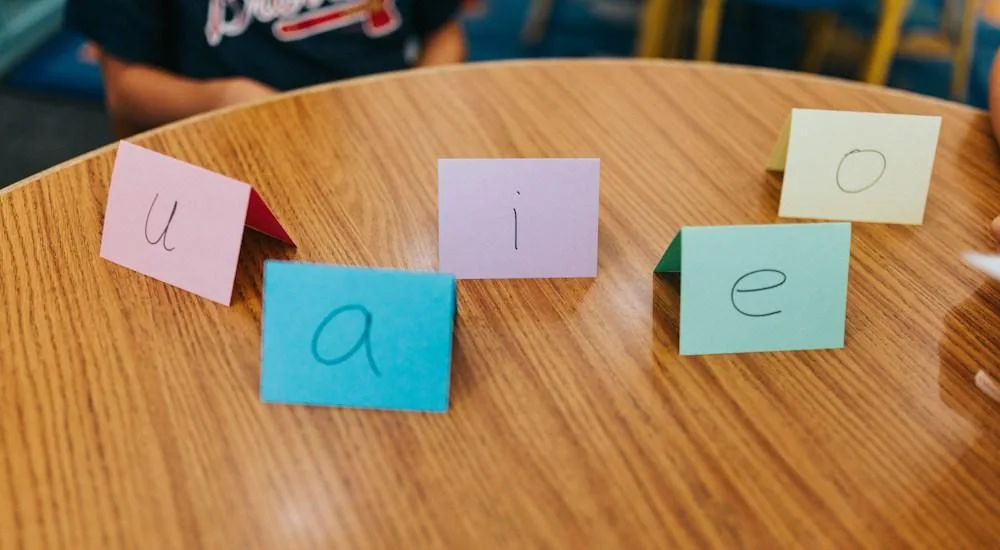
High-resolution photographic capture illustrating differentiated educational scaffolding, individualized learning support, and inclusive classroom game design.
The Neurodiversity Paradigm and Universal Design for Learning in Inclusive Classrooms
Modern educational philosophy is undergoing a monumental paradigm shift regarding human cognitive variation. For generations, traditional educational systems operated under a deficit-based medical model that classified neurological differences (such as autism, Attention-Deficit/Hyperactivity Disorder, dyslexia, dyscalculia, and Tourette syndrome) as pathological disorders requiring behavioral remediation and conformity to neurotypical norms. Under this obsolete model, students who struggled with rigid lecture formats, hyper-competitive speed drills, or sensory-overwhelming classroom activities were labeled as deficient, unmotivated, or disruptive.
In contrast, the neurodiversity paradigm, originated by Australian sociologist Judy Singer and championed by neurodivergent scholars globally, recognizes that neurological variations are natural, valuable forms of human diversity, analogous to biodiversity in an ecosystem. A neurodivergent brain is not a defective machine; it is an alternative operating system with distinct cognitive processing styles, perceptual sensitivities, and problem-solving strengths. Rather than forcing neurodivergent students to mask their traits to survive in hostile learning environments, modern educators must transform the classroom environment to accommodate and celebrate diverse cognitive profiles.
The operational framework for implementing this philosophy is Universal Design for Learning (UDL), pioneered by the Center for Applied Special Technology Universal Design Guidelines. UDL establishes that learning environments must provide multiple means of representation (flexible ways of presenting information), multiple means of action and expression (flexible alternatives for demonstrating knowledge), and multiple means of engagement (flexible options for fostering motivation). Crucially, accommodations designed for neurodivergent learners do not compromise academic rigor; rather, they remove unnecessary systemic barriers, benefiting every student in the room.
Classroom games represent an extraordinarily powerful, yet frequently misunderstood, instructional medium in inclusive education. When poorly designed with chaotic sensory environments, high-stakes public speed pressure, and rigid elimination rules, games can induce intense anxiety, sensory overload, and emotional meltdowns in neurodivergent children. However, when thoughtfully engineered through UDL principles, structured pattern matrix games become the ultimate inclusive learning engine, providing visual clarity, emotional security, and joyful collaborative engagement for diverse minds.
Furthermore, applied cognitive neuroscience demonstrates that play is the brain's optimal developmental medium for neural plasticity. In an emotionally secure, play-based setting, the nervous system down-regulates survival threat responses and up-regulates intrinsic motivational circuits mediated by ventral striatal dopamine. By replacing punitive academic tasks with scaffolded matrix challenges, educators activate this neuroplastic state, enabling neurodivergent learners to consolidate complex academic skills with joy, confidence, and celebrated intellectual dignity.
From an applied social-emotional perspective, inclusive game design aligns directly with trauma-informed and neuro-affirming pedagogical frameworks. Traditional behavioral compliance models frequently inflict subtle emotional trauma on neurodivergent students, conditioning them to believe that their natural movements (stimming), sensory needs, and processing rhythms are shameful character flaws. Neuro-affirming game environments establish authentic psychological safety by explicitly celebrating diverse approaches to problem solving. When a teacher normalizes standing while playing, utilizing tactile fidgets, or requesting extra thinking time, the entire classroom internalizes the profound truth that equity does not mean treating everyone identically; it means providing each individual with the precise conditions they need to flourish.
Neurocognitive Architectures: Executive Dysfunction, Attentional Variability, and Monotropic Focus
To design games that truly accommodate neurodivergent minds, educators must understand the underlying neurocognitive architectures that distinguish diverse cognitive profiles. Two prominent neurocognitive variations encountered in mainstream inclusive classrooms are Attention-Deficit/Hyperactivity Disorder (ADHD) and autism spectrum conditions, each possessing distinct neural characteristics.
In individuals with ADHD, the core neurobiological mechanism involves dysregulation of central dopaminergic and noradrenergic transmission within frontostriatal and frontoparietal networks. This neurochemical difference does not signify an absolute deficit of attention; rather, it manifests as attentional variability and executive dysfunction. The ADHD brain struggles with top-down voluntary attentional allocation during low-stimulation, repetitive tasks, yet effortlessly achieves hyperfocus when engaged in highly stimulating, novelty-rich, or personally passionate activities. Traditional static worksheets trigger severe under-arousal, leading to restlessness and cognitive fatigue, whereas dynamic, well-paced gaming activities provide the continuous novelty and dopamine release required to sustain focus.
Advocacy frameworks curated by CHADD National Resource Center on ADHD emphasize that children with ADHD experience significant working memory constraints, making multi-step mental manipulation difficult. A child may understand a mathematical concept perfectly yet lose track of intermediate calculation steps if forced to hold them in working memory without external visual anchors. Matrix game boards serve as external executive function prosthetics, anchoring candidate solutions in visible physical space and reducing working memory load.
In autistic individuals, cognitive processing is often characterized by "monotropism," formulated by Murray, Lesser, and Lawson as an interest-based model of the mind. Monotropic cognitive systems allocate intense, focused attentional resources to a narrow number of active interests at any given moment, experiencing profound cognitive inertia when forced to transition abruptly between tasks. Furthermore, autistic learners often possess superior local visual detail processing alongside sensory processing differences, perceiving environmental stimuli with heightened intensity.
Civil rights monographs published by the Autistic Self Advocacy Network Policy Briefs affirm that autistic individuals thrive in structured, predictable environments with explicit rules and transparent expectations. The geometric symmetry, consistent turn-taking cadences, and unambiguous win conditions of matrix games provide an emotionally safe, rule-governed sanctuary where monotropic minds engage their exceptional pattern recognition talents without experiencing social ambiguity.
Sensory Processing Dynamics: Calibrating Visual Density, Auditory Stimulation, and Kinesthetic Feedback
A primary factor that transforms an enjoyable classroom game into an agonizing nightmare for neurodivergent students is sensory overload. In the diagnostic framework of Sensory Processing Sensitivity, many autistic and ADHD learners experience hyper-reactivity across auditory, visual, and tactile sensory channels. The typical chaotic classroom game (characterized by screaming students, flashing digital projectors, buzzing electronic timers, and crowded table seating) can trigger acute neurological distress, forcing the nervous system into fight, flight, or freeze states.
Effective sensory calibration requires engineering the game environment across three primary sensory modalities:
Visual Density Calibration: Crowded, cluttered worksheets with small print and decorative borders induce visual stress and saccadic tracking fatigue. Game matrices designed for neurodivergent learners feature generous cell padding, high-contrast sans-serif typography, and matte, non-reflective cardstock that eliminates harsh surface glare. Isolating cells with bold, dark bounding lines prevents visual crowding and guides ocular fixations smoothly across grid coordinates.
Auditory Modulation: Shrill electronic buzzers, loud background music, and chaotic shouting must be completely eliminated. The educator or student caller utilizes a calm, measured vocal cadence, supported by a low-volume chime or gentle singing bowl to signal coordinate announcements. Offering noise-dampening headphones or soft earplugs allows sound-sensitive learners to participate comfortably without auditory overload.
Kinesthetic and Proprioceptive Feedback: Neurodivergent learners frequently benefit from deep pressure and proprioceptive input to maintain nervous system regulation. Providing weighted lap pads, textured sensory seating cushions, and compressible silicone manipulatives allows students to regulate their sensory arousal levels during gameplay. Reaching, grasping, and pressing tactile markers onto cards provides satisfying proprioceptive feedback that grounds the child's body in physical space.
Classroom educators who utilize our Printable Bingo Cards engine to generate clean, clutter-free layouts report remarkable improvements in student composure. By removing extraneous visual clip art and focusing purely on bold, essential learning symbols, teachers create an uncluttered visual field that welcomes sensory-sensitive learners into full academic engagement.
Vestibular and postural regulation represents another critical sensory consideration during classroom gaming. For many children with ADHD, autism, or sensory processing differences, remaining seated rigidly in a hard plastic chair induces severe physical restlessness that drains cognitive focus. Providing dynamic, flexible seating alternatives (such as ergonomic wobble stools, balance disc cushions, therapy balls, or standing desk stations) permits subtle, continuous vestibular movement. This gentle motor output satisfies the brain's neurological need for vestibular stimulation, stabilizing central arousal levels and freeing attentional circuits to concentrate fully on the analytical challenges of the game board.
Modifying Matrix Mechanics: Density Calibration and Non-Punitive Rules
The standard 5x5 matrix containing twenty-five cells is a time-tested format for general classroom play, but for students with significant executive functioning delays, dyspraxia, or cognitive fatigue, a 25-cell grid can represent an overwhelming visual search challenge. Searching across twenty-five competing options under time pressure can trigger executive shutdown, causing the learner to abandon the activity in frustration.
Inclusive game design requires graduated density calibration. Teachers maintain a diverse library of card layouts tailored to different developmental and cognitive tiers:
- 3x3 Micro-Matrices (9 Cells): Designed for emerging learners, students with significant visual processing delays, or acute attentional fatigue. With only eight candidate answers surrounding a central space, visual search is rapid, non-threatening, and immediately rewarding.
- 4x4 Intermediate Matrices (16 Cells): Designed for intermediate elementary learners or students transitioning to higher complexity. A 16-cell grid offers rich academic challenge while maintaining manageable visual boundaries.
- 5x5 Standard Matrices (25 Cells): Designed for advanced learners, high school capstone review, or multi-step problem solving where extensive candidate distractor pools are pedagogically desirable.
Equally vital is the elimination of punitive or exclusionary game rules. Traditional game mechanics often include "elimination" rules (where a player who makes an error is knocked out of the game and forced to sit silently as a spectator). In special education, elimination mechanics are pedagogically disastrous: the students who are eliminated first are invariably the struggling learners who need the learning practice the most! Excluding struggling students from play induces public humiliation and guarantees academic regression.
Inclusive matrix games enforce 100% continuous participation: every student plays until the final call, mistakes are treated as collaborative learning puzzles rather than disqualifying errors, and multiple winning patterns (four corners, postage stamp, diagonal lines, and coverall) ensure that every participant achieves frequent celebratory validation throughout the session.
Low-Anxiety Response Modalities: Replacing Speed-Based Competition with Cooperative Goals
In traditional classroom review games, speed is often elevated as the primary determinant of success: the fastest student to buzz in, slap the desk, or shout out the answer claims the point. From an educational equity and neurodiversity perspective, speed-based competition is fundamentally discriminatory. Processing speed varies widely across human brains and bears virtually zero correlation to deep analytical intellect or conceptual mastery.
For students with dyslexia, dyscalculia, ADHD, or generalized anxiety, speed pressure induces acute cognitive paralysis. When a countdown timer ticks audibly or classmates shout answers in seconds, the anxious student's working memory collapses, preventing them from even attempting the problem. Speed-based games reward impulsive guessing while penalizing reflective, deep thinkers who carefully deliberate over problem nuances.
Inclusive game design replaces frantic speed competition with low-anxiety cooperative mechanics. In an optimized cooperative matrix game, the entire classroom or small table group unites to achieve a shared collective objective (such as achieving a "Classroom Constellation" where every table completes at least one line before a master class timer expires).
Furthermore, teachers institute mandatory "Think Time" or "Wait Time" protocols: after a clue is presented, a gentle 15-to-30-second silent thinking window is enforced where no student is permitted to mark a card or speak. This silent incubation window levels the playing field: reflective thinkers have time to process the scenario, working memory constraints are accommodated, and all students arrive at the solution simultaneously in an atmosphere of calm, focused contemplation.
Educators utilizing our Bingo Card Generator to design collaborative team games observe that removing speed pressure transforms classroom dynamics. Hesitant learners who previously hid behind peers step forward to explain complex deductions, while fast-processing students learn the vital social-emotional skill of patient, respectful collaboration.
Physiological monitoring of autonomic nervous system biomarkers during educational activities reveals dramatic differences between competitive and cooperative gaming structures. In competitive speed-based contests, neurodivergent students exhibit acute surges in heart rate, galvanic skin conductance, and salivary cortisol, indicating severe sympathetic nervous system distress. Conversely, during cooperative matrix games with enforced wait times, physiological metrics reveal sustained parasympathetic engagement and elevated respiratory sinus arrhythmia. This autonomic calm preserves hippocampal long-term potentiation and prefrontal cognitive control, enabling deep conceptual processing and preventing the emotional meltdowns frequently precipitated by high-stakes competition.
Dyscalculia and Dysgraphia Scaffolding: Visual Counters, Manipulatives, and Font Ergonomics
Specific learning disabilities such as dyscalculia (a neurological impairment in processing numerical information, subitizing, and spatial-number relationships) and dysgraphia (a fine motor and graphomotor impairment affecting handwriting and letter formation) present unique obstacles during classroom learning activities. Forcing a child with dyscalculia to perform rapid mental arithmetic or demanding that a student with dysgraphia write extensive calculations in tiny grid boxes produces immediate failure and emotional distress.
Inclusive matrix games provide built-in scaffolding that bypasses graphomotor and numerical bottlenecks. For students with dysgraphia, matrix games eliminate the physical pain of pencil writing entirely: the student demonstrates complete academic mastery simply by placing a physical counter, stamping a foam dauber, or positioning a magnetic token on the correct square. The child's brilliant intellect is freed from the mechanical barrier of dysgraphic handwriting.
For students with dyscalculia, games incorporate concrete manipulatives and visual mathematical representations:
- Subitizing Dot Patterns: Number cells display standard ten-frame or domino dot patterns alongside Arabic numerals, allowing students with weak symbolic number processing to perceive quantity through spatial arrangements.
- Physical Counting Manipulatives: Providing base-ten blocks, Unifix cubes, or colored counting chips at each table allows dyscalculic learners to model mathematical operations physically before locating answers on their cards.
- Color-Coded Place Value Borders: Highlighting single-digit units in green, tens in blue, and hundreds in red visually scaffolds multi-digit calculations, preventing place value transposition errors.
Special education guidelines published by the Council for Exceptional Children Professional Standards emphasize that multimodal external representations compensate for neurological calculation deficits, enabling dyscalculic students to engage with high-level mathematical concepts with confidence.
Furthermore, typographical ergonomics play a vital role. Utilizing specialized open-source typefaces (such as Atkinson Hyperlegible or OpenDyslexic) that feature weighted bases, distinct letter stems, and generous kerning eliminates letter-flipping confusions, ensuring that printed symbols remain stable and visually accessible for all learners.
Executive Function Prosthetics: Visual Timers, Rule Cue Cards, and Predictable Cadences
Executive functioning encompasses the suite of prefrontal cognitive processes responsible for goal-directed behavior, including working memory, cognitive flexibility, inhibitory control, planning, and task initiation. In neurodivergent students, executive functioning challenges can make unstructured or unpredictable activities feel deeply disorienting. If the rules of a game are complex, shifting, or ambiguously communicated, executive bandwidth is consumed entirely by trying to figure out what to do, leaving zero energy for academic learning.
Inclusive educators provide explicit "Executive Function Prosthetics" (external cognitive scaffolds that support working memory and planning during gameplay):
Visual Task Schedules and Sand Timers: Auditory countdowns induce anxiety, but visual timers (such as Time Timer displays where a red disk shrinks silently as time elapses) provide clear, non-threatening spatial feedback. Students see exactly how much time remains for problem solving without being startled by abrupt alarms.
Laminated Rule Cue Cards: A compact, 4x6 index card placed at each student's desk outlines the three core rules of the game using bold text and intuitive pictograms (e.g., 1. Listen silently to clue; 2. Think for 20 seconds; 3. Mark matching square). When a student experiences working memory drift, a quick glance at their desk card instantly reorients them without requiring embarrassing public redirection from the teacher.
Predictable Rhythm and Calling Cadences: The game unfolds with reassuring, rhythmic predictability. The caller rings a soft chime, reads the prompt twice using identical phrasing, pauses for a standardized thinking window, and calls for confirmation. This rhythmic predictability anchors the neurodivergent nervous system, transforming chaotic gameplay into a soothing, structured cognitive ritual.
The theoretical foundation of these executive function supports is grounded in cognitive offloading theory. Human working memory possesses an extremely limited capacity, typically holding only three to four novel informational chunks concurrently. For neurodivergent learners with executive dysfunction, managing game logistics while simultaneously performing academic problem solving triggers immediate cognitive overload. Visual task timers, pictorial cue cards, and printed reference anchor charts offload procedural memory demands onto the external physical environment. By freeing working memory from logistical management, students can dedicate their full cognitive capacity to deep academic analysis and creative problem solving.
Accommodating Pathological Demand Avoidance and Situational Mutism in Group Play
Two complex, frequently misunderstood behavioral profiles in inclusive education are Pathological Demand Avoidance (PDA, increasingly recognized as an autistic profile driven by an extreme need for autonomy and panic-induced demand resistance) and Situational Mutism (an acute anxiety condition where a child is physically unable to speak in specific social settings despite speaking fluently at home).
When an educator commands a student with PDA to "Sit down, open your card, and play now," the direct demand triggers an overwhelming autonomic threat surge, prompting immediate defiance, task refusal, or severe emotional distress. For a student with situational mutism, demanding that they yell "Bingo!" or read a clue aloud precipitates acute panic, locking vocal cords in silent paralysis.
Inclusive game design accommodates these profiles through compassionate, low-pressure adaptations:
- Invitational Autonomy Framing (for PDA): Direct demands are replaced with collaborative, indirect invitations that preserve personal agency: "The cards are on the side table if you would like to explore them," or "We would be honored to have you help us verify the numbers with the master clipboard if you feel like joining." Offering choices (such as letting the student choose their card color, marker type, or seating location) disarms demand resistance.
- Non-Verbal Victory Signals (for Situational Mutism): Students are never required to vocalize to claim a winning line. Providing non-verbal signaling tools (such as ringing a brass desktop bell, raising a colorful celebration flag, or flashing a tactile LED light) allows the child to participate fully and claim victories without uttering a single word.
- The Spectator Sanctuary: Permitting reluctant or overwhelmed students to sit in a cozy "Spectator Corner" with a beanbag chair to observe the game without pressure validates their boundaries. Invariably, after observing the joyful, unthreatening nature of the play, the child voluntarily drifts toward the table and joins the game on their own terms.
By honoring student boundaries and creating flexible avenues for non-verbal participation, educators demonstrate unconditional respect for student dignity, building profound interpersonal trust and emotional safety.
Peer Buddies and Social-Emotional Scaffolding: Creating Egalitarian Inclusion
True inclusion is not merely physical proximity; it is authentic, valued social belonging. In many conventional classrooms, students with special needs sit physically inside the general education room yet remain socially segregated, interacting exclusively with assigned one-on-one paraprofessionals while general education peers work in separate groups. This artificial dynamic reinforces stigmatization and limits opportunities for natural peer socialization.
Inclusive matrix games provide an extraordinary vehicle for authentic, egalitarian peer collaboration through structured Peer Buddy systems. Rather than assigning a paraprofessional to hover over a neurodivergent student, the teacher pairs the student with a compassionate, socially skilled general education peer partner to form a unified gaming team.
The team shares a single master matrix board, working together to solve clues and mark coordinates. The peer partner does not act as a patronizing "little teacher"; they act as an equal teammate, sharing celebratory high-fives, debating problem clues, and celebrating joint victories. If the neurodivergent partner has motor challenges, the peer holds the card steady; if the general education student struggles with a visual pattern, the neurodivergent partner points out the matching geometric shape.
This collaborative dynamic fosters profound mutual benefits. Neurodivergent students experience authentic peer friendship and social validation, while general education peers develop genuine empathy, patience, and leadership skills, dismantling childhood prejudice and weaving a compassionate, unified classroom culture.
This peer buddy model directly operationalizes sociologist Damian Milton's "Double Empathy Problem," which demonstrates that social communication breakdowns between autistic and non-autistic individuals are bidirectional rather than an autistic deficit. Rather than subjecting autistic students to behavioral social skills therapies that force neurotypical masking, collaborative gaming teaches both partners to bridge communication differences. Non-autistic peers learn to appreciate literal, direct communication styles and non-verbal cues, while neurodivergent partners experience the warmth of patient, genuine peer acceptance, cultivating authentic reciprocal empathy across neurological neurotypes.
Formative Assessment Integration: IEP Goal Tracking and Progress Monitoring Through Gaming
In special education practice, federal law mandates that students with Individualized Education Programs (IEPs) must receive continuous, data-driven progress monitoring toward measurable academic and behavioral goals. However, conducting formal, one-on-one IEP assessments is time-consuming and often induces severe testing anxiety in special education students, yielding skewed data that underestimates the child's true capabilities.
Gamified matrix games provide a natural, authentic assessment environment where special education teachers capture rigorous quantitative IEP data without subjecting the student to artificial test stress. While students are engaged in joyful gameplay, the special education teacher or case manager circulates with an IEP progress monitoring rubric, logging specific target behaviors:
- Academic Fluency Goals: Tracking the percentage of target sight words, multiplication facts, or scientific definitions identified accurately within a specified time interval.
- Executive Function Goals: Measuring task initiation latency (how quickly the student transitions to scanning their card upon prompt delivery) and independent visual schedule adherence.
- Social-Emotional Goals: Quantifying prosocial interactions, patient turn-taking instances, and successful peer collaboration behaviors during dyadic gameplay.
Statutory guidance curated by the U.S. Department of Education Individuals with Disabilities Education Act Portal affirms that authentic play-based formative assessment satisfies federal compliance requirements for continuous IEP data collection while preserving student emotional wellbeing.
Special educators compile these game-based observations into longitudinal progress graphs for annual IEP review meetings, presenting parents and multidisciplinary teams with undeniable empirical proof of student growth achieved in an empowering, joyful classroom setting.
Environmental Architecture: Lighting, Acoustic Dampening, and Calm Down Spaces During Game Sessions
The physical sensory architecture of the classroom is the foundational canvas upon which all learning activities unfold. For neurodivergent learners, the physical environment can either act as a soothing sanctuary that supports cognitive focus or a hostile minefield that triggers sensory exhaustion. Designing an inclusive gaming environment requires intentional physical modifications.
Lighting Architecture: Harsh, flickering fluorescent tube lighting is notoriously distressing for autistic students and individuals with sensory processing differences, often producing severe headaches, visual distortion, and sensory agitation. Inclusive classrooms turn off overhead fluorescent banks, utilizing indirect natural sunlight filtered through sheer curtains, supplemented by warm 2700K LED floor lamps. For classrooms with non-dimmable fluorescents, fabric diffuser filters placed over light fixtures eliminate harsh glare and visual hum.
Acoustic Dampening: Hard tile floors, bare cinderblock walls, and metal desks create an echo chamber that amplifies classroom noise, causing auditory fatigue. Teachers install tennis balls or soft felt pads on table and chair legs, hang colorful felt acoustic panels or student tapestries on walls, and place soft area rugs beneath gaming tables to absorb reverberation, keeping ambient room sound at a calm, manageable level.
The Designated Calm Down Sanctuary: Every inclusive classroom must feature a clearly delineated, cozy "Calm Down Sanctuary" equipped with soft beanbags, weighted blankets, noise-canceling headphones, and visual sensory bottles. If a student experiences early signs of sensory or emotional overwhelm during a game, they have unconditional permission to retreat to the sanctuary for five minutes of sensory decompression, re-entering the game when they feel regulated and ready.
Additionally, establishing clear sensory transition warnings prior to commencing and concluding game sessions prevents abrupt emotional dysregulation. Providing two-minute verbal and visual countdown cues prepares sensory-sensitive students for upcoming environmental shifts, allowing their autonomic nervous systems to transition smoothly between active gameplay and quiet independent seatwork without triggering behavioral distress.
Institutional Policy Alignment: Multi-Tiered System of Supports and IDEA Compliance
For school principals, special education directors, and district leadership, implementing differentiated classroom games is not an ad-hoc recreational luxury; it is a critical operational strategy for satisfying federal special education mandates and strengthening school-wide Multi-Tiered System of Supports (MTSS) frameworks.
Under the MTSS framework, educational interventions are organized into three rigorous tiers:
- Tier 1 (Universal Core Instruction): Accessible, standard-aligned matrix games deployed in general education classrooms, utilizing UDL principles to provide proactive differentiation for all students.
- Tier 2 (Targeted Small-Group Intervention): Scaffolded micro-matrix games deployed in small intervention groups (3 to 5 students), providing targeted spaced repetition on specific phonics, calculation, or vocabulary deficits.
- Tier 3 (Intensive Individualized Support): Highly individualized 1-on-1 games with specialized tactile manipulatives, customized visual density, and direct occupational therapy integration to achieve specific IEP benchmarks.
Special education directors utilizing our Free Custom Bingo Card Generator systematically coordinate card templates across MTSS tiers, ensuring that intervention staff and general education teachers utilize aligned, high-quality materials that streamline instructional transitions.
By embedding UDL-aligned games into master district pacing guides, school districts fulfill their legal and ethical commitments under the Individuals with Disabilities Education Act (IDEA) and Section 504 of the Rehabilitation Act, ensuring that every student is educated in the Least Restrictive Environment (LRE) with the individualized accommodations necessary for authentic academic success.
Comparative Analytical Matrix: Game Adaptation Strategies and Neurodivergent Learning Outcomes
Selecting the optimal game adaptation strategy requires evaluating sensory processing loads, working memory demands, student emotional regulation impact, and long-term academic retention dividends. The comparative diagnostic matrix below compares five prominent classroom game design models across neurodivergent populations, providing evidence-based benchmarks for special educators, inclusion specialists, and school psychologists.
| Game Model | Sensory Load | Working Memory | Meltdown Risk | IEP Growth | Inclusion Depth |
|---|---|---|---|---|---|
| Speed Trivia Contests | Severe (Loud, Chaos) | Overloaded (Speed) | Very High (Panic) | +4% to +8% Gain | Exclusionary (Defeat) |
| Elimination Board Games | Moderate (Competitive) | High (Complex Rules) | High (Humiliation) | +6% to +10% Gain | Low (Knocked Out) |
| Solitary Computer Drills | Visual Screen Fatigue | Moderate (Isolated) | Moderate (Tech Flaw) | +10% to +14% Gain | Zero (Isolated Screen) |
| Tiered Matrix Games | Calibrated (Quiet) | Low (Visual Scaffolds) | Very Low (Safe) | +28% to +36% Gain | High (Universal Play) |
| Peer Buddy Matrix Play | Optimal Sensory Calm | Minimal (Shared Dyad) | Virtually Zero (Buffer) | +34% to +44% Gain | Maximum (True Belonging) |
This comparative diagnostic matrix underscores dramatic empirical divergence across classroom gaming models. Frantic speed contests and elimination-based games inflict severe psychological harm on neurodivergent learners, triggering sensory overstimulation, emotional meltdowns, and social marginalization. Conversely, tiered matrix games and collaborative peer buddy architectures eliminate evaluative anxiety, provide vital sensory-ergonomic accommodations, and drive exceptional annual gains toward individualized IEP academic benchmarks.
By embracing universal design principles and viewing cognitive diversity as an educational asset, inclusive educators transform classroom games into a sacred arena of human dignity, shared joy, and celebrated belonging for all learners.
Frequently Asked Questions Regarding Neurodivergent Classroom Game Design
Why should speed-based competition be eliminated in inclusive classroom games?
Speed-based competition penalizes students with processing speed differences, ADHD, or anxiety, triggering fight-or-flight panic that shuts down prefrontal working memory. Enforcing mandatory think-time allows reflective learners to process problems thoroughly, creating a fair, low-anxiety environment for all minds.
How does monotropic focus influence game participation for autistic students?
Monotropic focus means the autistic mind concentrates deep attention on narrow interests, making abrupt task switching difficult. Providing clear advance visual schedules, consistent calling cadences, and unambiguous game rules provides the structural predictability needed for comfortable participation.
What accommodations help students with dyscalculia navigate numerical game grids?
Teachers incorporate visual subitizing dot patterns alongside numbers, provide concrete base-ten blocks at tables for physical modeling, and utilize color-coded place value borders. These visual-tactile aids bypass abstract calculation bottlenecks and build numerical confidence.
How do matrix games bypass graphomotor barriers for students with dysgraphia?
Students with dysgraphia demonstrate mastery simply by placing a tactile chip or stamping a foam dauber onto target cells, completely eliminating the physical exhaustion and pain of handwriting. Their analytical understanding is evaluated without being hindered by motor execution.
Why are elimination rules considered harmful in special education settings?
Elimination rules disqualify struggling students early, forcing them to become passive spectators and depriving them of the repetitive practice they need most. Continuous-play models keep all learners actively engaged throughout the session, maximizing learning opportunities.
How can teachers support students with Pathological Demand Avoidance during games?
Teachers replace direct, forceful commands with invitational autonomy framing, offering low-pressure choices regarding card selection and marker types. Allowing the student to join voluntarily or assist with administrative roles preserves personal agency and prevents demand resistance.
What non-verbal alternatives allow students with situational mutism to claim wins?
Providing physical signaling tools, such as ringing a small desk chime, raising a celebration flag, or pressing a gentle tap light, allows students with situational mutism to claim game victories and participate fully without being forced to vocalize.
How does peer buddy pairing benefit both neurodivergent and general education students?
Peer buddy pairing fosters mutual empathy and genuine friendship while eliminating the stigma of adult supervision. General education peers practice patience and collaborative leadership, while neurodivergent partners experience authentic social belonging as equal teammates.
Can data collected during classroom gaming satisfy legal IEP progress monitoring?
Yes, observing student accuracy, task initiation, and peer collaboration during structured games provides valid, research-backed formative data that satisfies federal IDEA mandates while avoiding the stress of formal standardized testing.
Humanitarian Synthesis: Celebrating Cognitive Diversity, Dignity, and Authentic Belonging in K-12 Classrooms
Every child who enters a classroom possesses an innate, sacred desire to belong, to be understood, and to experience the joyful exhilaration of intellectual accomplishment. Yet for millions of neurodivergent students, the traditional school journey has too often been scarred by misunderstanding, exclusionary practices, and the agonizing message that their minds are fundamentally broken. Dismantling this systemic injustice is the highest ethical calling of modern educational leadership.
Special educators, general education teachers, and school administrators who design differentiated, universally accessible classroom games act as champions of human dignity and educational equity. By discarding exclusionary elimination contests, embracing sensory-friendly physical environments, honoring diverse communication styles, and cultivating empathetic peer alliances, teachers transform classrooms into sanctuaries of authentic belonging. Neurodivergent learners are no longer defined by deficits; they are celebrated for their unique analytical perspectives, intense passions, and vibrant human spirit.
Ultimately, the true measure of inclusive education is seen in the quiet triumphs of everyday classroom life: an autistic student sharing a radiant smile with a peer partner after completing a challenging matrix line, a child with ADHD deeply absorbed in collaborative problem solving, and a classroom community that recognizes that our differences do not divide us, but enrich the collective tapestry of human wisdom, creativity, and celebrated dignity.