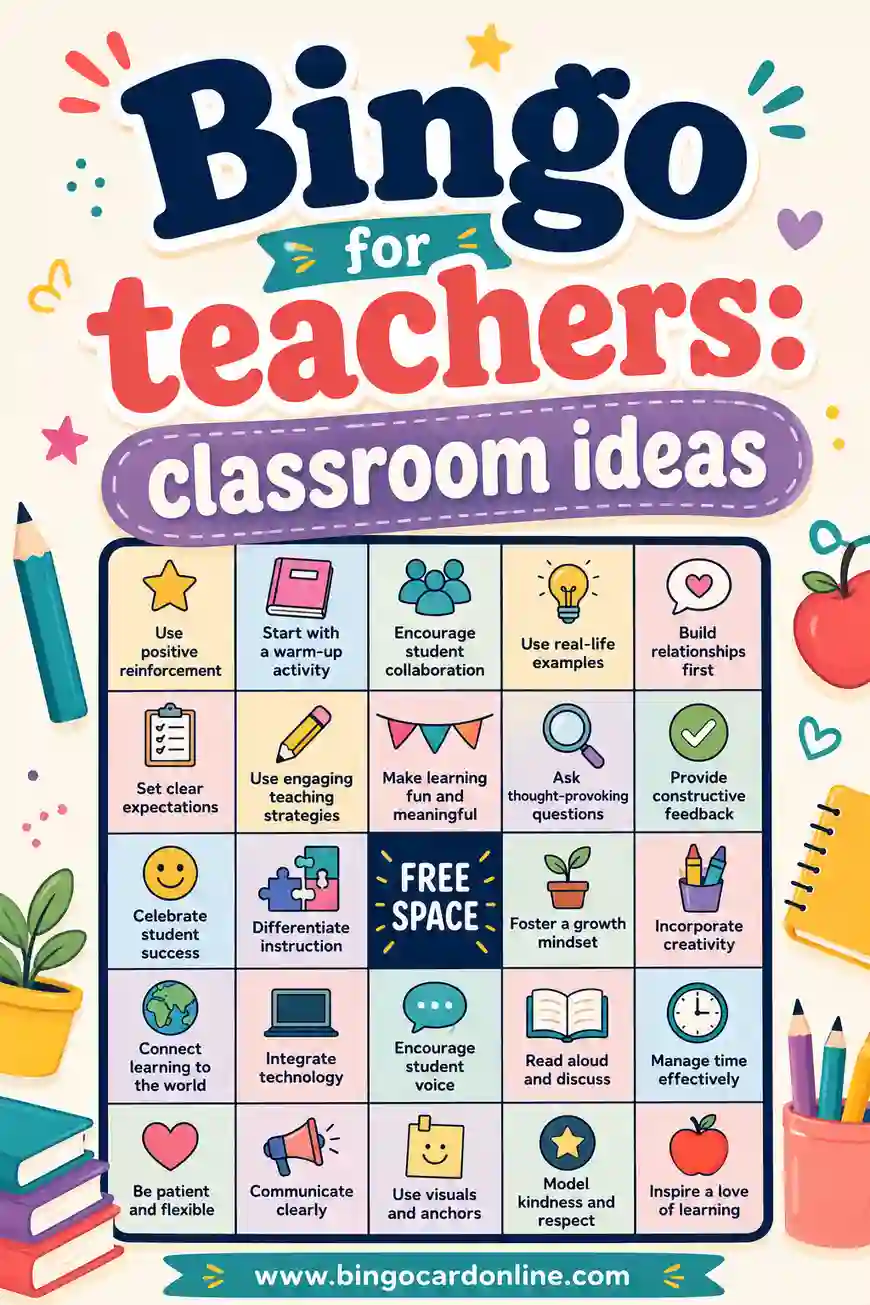
Phonics Acquisition and Orthographic Mapping Through Structured Word Pattern Grids
Published by the educational neuroscience and literacy research lab under Joan Ramos, senior computational analyst, investigating structured literacy mechanics, phoneme-grapheme binding, and gamified orthographic mapping in primary classrooms.
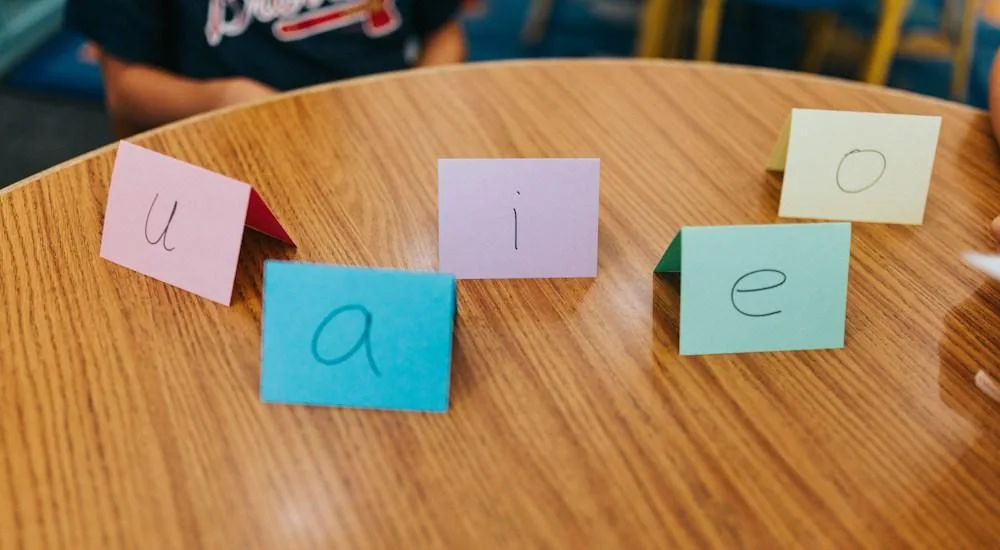
High-resolution photographic capture illustrating structured phonics manipulatives, vowel pattern cards, and early reading literacy instruction.
The Cognitive Science of Reading and David Kilpatrick's Orthographic Mapping Framework
The human brain was never biologically designed to read. While spoken language acquisition is an innate evolutionary capability wired into our species over hundreds of thousands of years, reading is a cultural invention barely five millennia old. Every child who learns to read must systematically dismantle and repurpose existing cortical circuits (a profound neurodevelopmental phenomenon that cognitive neuroscientist Stanislas Dehaene termed "neuronal recycling"). For decades, early literacy education was derailed by unscientific ideological battles between whole-language immersion and isolated phonics drills, leaving millions of vulnerable elementary students functionally illiterate.
Today, the interdisciplinary consensus known as the Science of Reading provides definitive empirical clarity. At the heart of modern reading science lies Dr. David Kilpatrick's breakthrough formulation of orthographic mapping. Orthographic mapping is the cognitive process readers use to turn unfamiliar written words into automatic, instantly accessible sight words. Contrary to popular educational mythology, readers do not memorize printed words as visual shapes or global silhouettes; rather, the brain bonds the individual phonemes (sounds) in a spoken word directly to the specific graphemes (letters or letter combinations) representing those sounds in print.
Foundational research syntheses published by the Reading Rockets National Literacy Initiative confirm that once a word is successfully mapped through precise phoneme-grapheme integration, it is permanently stored in the reader's sight vocabulary memory within one to four meaningful exposures. Once stored, recognition occurs effortlessly in less than 200 milliseconds, bypassing conscious decoding entirely and freeing valuable working memory bandwidth for higher-order text comprehension and critical analysis.
Despite this clear cognitive science, primary school teachers frequently struggle to deliver the hundreds of repetitive phoneme-grapheme practice opportunities necessary for automatic orthographic mapping without inducing student disengagement. Traditional phonics worksheets and solitary flashcard drills quickly exhaust young children's attentional stamina. Structured word pattern grid games provide the missing pedagogical catalyst: transforming rigorous phoneme-grapheme decoding into an emotionally exhilarating, collaborative classroom game that accelerates orthographic mapping across all learner tiers.
From a developmental perspective, early elementary learners require explicit, systematic guidance to connect spoken phonemic units to printed orthographic sequences. When a child encounters an unfamiliar word, their working memory must execute three distinct sub-routines: segmenting the acoustic stream into constituent phonemes, retrieving the corresponding visual graphemes, and synthesizing those components into a cohesive mental lexicon entry. Structured matrix games provide an external structural scaffold that keeps these working memory sub-routines aligned, preventing cognitive overload and ensuring seamless memory consolidation.
Neurological Architecture of the Reading Brain: Left Occipito-Temporal Visual Word Form Area
Understanding how structured grid games accelerate literacy acquisition requires examining the functional neuroanatomy of the reading brain. In non-reading infants and illiterate adults, the ventral visual cortex is dedicated to recognizing faces, geometric shapes, and physical objects. As a child undergoes explicit phonics instruction, a specialized region in the left occipito-temporal sulcus is progressively colonized and re-wired into the "Visual Word Form Area" (VWFA), colloquially referred to by cognitive neuroscientists as the brain's "letterbox."
The VWFA does not function in isolation; it serves as a central switching hub connecting two distinct, highly specialized neural reading pathways: the dorsal phonological route and the ventral orthographic route. The dorsal phonological pathway (connecting the left superior temporal gyrus, Wernicke's area, and the inferior frontal gyrus or Broca's area via the arcuate fasciculus) is the slow, effortful decoding engine. It translates visual print into sub-vocal acoustic representations, sounding out words sound by sound. Every novice reader relies primarily on this dorsal pathway during initial learning phases.
Neuroimaging treatises published by the National Institute of Child Health and Human Development reveal that as words undergo successful orthographic mapping, primary activation shifts decisively to the fast ventral orthographic pathway (connecting the VWFA directly to the anterior temporal lobes and semantic networks). This ventral circuit processes printed letter strings in parallel, instantaneously activating meaning and pronunciation without sounding out individual phonemes. In struggling readers and children with developmental dyslexia, the VWFA fails to activate robustly, causing them to remain trapped in laborious, fatiguing dorsal route decoding.
Structured word pattern games actively stimulate and strengthen this critical VWFA circuitry. When an educator calls out a phonemic prompt (such as "Find the word with the short /a/ sound that rhymes with cat") and the student scans a matrix grid of printed graphemes (such as "hat," "map," and "bat"), the child's brain is forced to execute instantaneous cross-modal binding between auditory phoneme centers in the superior temporal lobe and visual grapheme analyzers in the VWFA. This simultaneous co-activation drives Hebbian synaptic plasticity, accelerating the physical maturation of the ventral reading network.
Furthermore, functional magnetic resonance imaging (fMRI) studies demonstrate that gamified reading activities reduce amygdala threat reactivity in struggling readers. When children perceive reading instruction as an interactive social game rather than a high-stakes clinical assessment, cortisol levels plummet while ventral striatal dopamine increases. This neurochemical balance optimizes long-term potentiation within hippocampal circuits, ensuring that orthographic word representations are permanently transferred into long-term lexical storage.
Phonemic Awareness Versus Phonics Versus Sight Words: Deconstructing Reading Pedagogy
A persistent source of instructional failure in early elementary classrooms is the conceptual conflation of phonemic awareness, phonics, and sight words. Teachers who fail to distinguish these three interrelated cognitive components inevitably design disjointed reading interventions that leave vulnerable students confused and disconnected.
Phonemic awareness is an entirely auditory and oral capability, existing completely independent of printed letters. It is the metalinguistic ability to notice, isolate, identify, segment, blend, and manipulate individual phonemes in spoken words. A child who can orally segment the spoken word "ship" into its three constituent phonemes (/sh/ - /i/ - /p/) possesses advanced phonemic awareness, even if their eyes are closed and no printed text is present. Longitudinal educational research confirms that advanced phonemic awareness (specifically phoneme manipulation, such as deleting or substituting sounds) is the single most accurate kindergarten predictor of second-grade reading success.
Phonics, by contrast, is the instructional methodology that teaches the direct, systematic relationship between spoken phonemes and printed graphemes (letters and letter combinations). Phonics bridges the gap between acoustic speech and visible print, providing children with the code-breaking tools necessary to convert visual symbols into spoken language. Effective phonics instruction must be explicit, sequential, and cumulative, progressing systematically from simple consonants and short vowels to complex vowel teams and multisyllabic morphological units.
Finally, a sight word is any word that a reader recognizes instantly and automatically on sight, without sounding it out. Crucially, "sight words" are not an exclusive category of phonetically irregular words; any word (whether "cat," "because," or "photosynthesis") becomes a sight word once it has undergone complete orthographic mapping. When classroom teachers force young students to memorize high-frequency words through visual shape matching on flashcards, they bypass phonemic analysis entirely, handicapping the child's orthographic mapping machinery.
Classroom educators who utilize our Printable Bingo Cards engine to generate phoneme-specific boards resolve this pedagogical confusion. By designing matrix games where the teacher calls phonemic clues (auditory) and students identify corresponding phonics patterns (visual graphemes), classrooms provide an integrated learning experience that systematically transforms decodable print into permanent sight word fluency.
The Mechanics of Orthographic Mapping: Connecting Phonemes to Graphemes for Permanent Word Storage
To understand why structured word pattern grids are so extraordinarily effective in literacy acquisition, one must examine the micro-mechanics of the orthographic mapping event. When an emerging reader encounters a printed word in a matrix cell (for example, the word "chat"), how does that word transition from an unfamiliar visual cipher into a permanently mapped sight word?
The mapping sequence begins with phonological segmentation. The child must already possess the phonological proficiency to segment the spoken word "chat" into three distinct phonemes: /ch/, /a/, and /t/. Next, the child utilizes their letter-sound knowledge to link each spoken phoneme to its printed graphemic representation: the digraph "ch" represents the /ch/ phoneme, the letter "a" represents the short /a/ phoneme, and the letter "t" represents the /t/ phoneme. This explicit alignment is termed phoneme-grapheme correspondence.
Instructional guidelines published by the What Works Clearinghouse Institute of Education Sciences demonstrate that this cognitive binding acts as a molecular "glue" that anchors the sequence of letters directly to the pronunciation and meaning already stored in the child's oral language lexicon. Once this binding occurs, the spelling sequence is no longer an arbitrary string of visual lines; it is a meaningful, phonetically transparent representation of spoken speech.
In traditional reading instruction, this mapping process often breaks down because students are asked to decode words in isolation or within dense, overwhelming paragraphs where context guessing distracts from orthographic analysis. In contrast, a 5x5 word pattern grid presents twenty-five carefully curated, phonetically decodable words arranged in an open, low-anxiety visual space. The student focuses all their attentional resources on analyzing the internal letter-sound structure of target words, providing the precise cognitive conditions required for rapid, permanent orthographic mapping.
Additionally, orthographic mapping relies on bidirectional cognitive retrieval. When a student marks a square on their card, they do not merely recognize the printed word passively; they mentally pronounce the constituent phonemes and blend them sub-vocally to confirm that the word matches the caller's auditory clue. This active sub-vocal rehearsal strengthens the neural connectivity between Broca's area and the visual word form area, cementing the word into memory permanently.
Structured Pattern Grids as Multisensory Phonics Engines: Auditory-Visual Encoding
Multisensory learning is a foundational tenet of modern cognitive pedagogy. In developmental psychology, Allan Paivio's Dual Coding Theory establishes that information processed simultaneously through two independent sensory channels (such as auditory and visual) creates two distinct cognitive traces in memory. These dual memory traces interconnect and reinforce each other, producing dramatically higher recall accuracy and retention durability than unimodal instruction.
Structured pattern grids function as consummate multisensory phonics engines. During an active classroom gaming session, children engage four sensory modalities simultaneously:
- Auditory Channel: The teacher or peer caller vocalizes clear phonemic prompts, such as "Find the word with the initial consonant blend /st/ and a short /o/ vowel."
- Visual Channel: The student's eyes systematically scan across rows and columns of high-contrast printed graphemes, identifying orthographic patterns.
- Kinesthetic-Tactile Channel: The child physically grasps a marker or transparent token and places it with precision upon the matching matrix square.
- Oral-Motor Channel: Before marking the cell, the student whispers the word aloud to their dyadic partner, feeling the articulation of the phonemes within their vocal tract.
Educators utilizing our Bingo Card Generator to create customized phonics boards can easily configure custom word pools tailored to specific phonetic concepts. By generating randomized layouts for every student in the classroom, educators guarantee that every child is actively engaged in independent visual scanning and phonetic decoding, eliminating passive copying and maximizing individual learning repetitions.
This rich multisensory integration bypasses single-channel cognitive bottlenecks. If a student experiences mild auditory processing weaknesses, the prominent visual layout of the grid supports their auditory decoding. Conversely, if a student experiences visual tracking difficulties, the clear oral cadence of the caller guides their visual attention, ensuring that all learners achieve successful orthographic mapping in an equitable, supportive classroom climate.
CVC Words, Consonant Blends, and Digraph Progression on Matrix Boards
The pedagogical effectiveness of classroom grid games hinges on adhering to a strict, systematic scope and sequence. Introducing advanced, multi-syllabic words before students have mastered fundamental phonetic patterns causes cognitive overload and undermines confidence. Literacy specialists structure their gaming curricula across four progressive developmental tiers:
Tier 1 begins with basic Consonant-Vowel-Consonant (CVC) words containing short vowel sounds (such as "cat," "pin," "fog," "run," and "bed"). In CVC words, every single letter maps to exactly one individual phoneme in a 1:1 correspondence. Playing CVC matrix games solidifies the child's understanding of the alphabetic principle: letters represent speech sounds from left to right. Teachers emphasize vowel contrast exercises, such as calling out words that differ only in their medial vowel (such as "bat," "bet," "bit," "bot," and "but"), forcing students to tune their ears to delicate vowel sound distinctions.
Tier 2 progresses to consonant digraphs and trigraphs, where two or three letters combine to represent a single unique phoneme (such as "sh," "ch," "th," "wh," "ck," and "dge"). Here, students learn that the 1:1 letter-to-sound rule has important exceptions. Grid games targeting digraphs prompt students to recognize that the two letters in "ship" represent one sound (/sh/), cementing digraph units as single orthographic chunks within the visual word form area.
Tier 3 introduces initial and final consonant blends (such as "bl," "st," "cr," "nd," and "mp"). Unlike digraphs, consonant blends contain two or three distinct phonemes that must be smoothly blended together without inserting an intrusive schwa vowel. Grid games focusing on blends challenge students to isolate complex consonant clusters, an essential skill that directly prevents spelling omissions in early writing.
Tier 4 advances to silent "e" split vowel patterns (CVCe, such as "cake," "rope," and "pine") and complex vowel teams (such as "oa," "ai," "ee," and "igh"). Matrix cards designed for Tier 4 require students to analyze long-distance orthographic relationships across words, consolidating advanced phonics rules into automatic sight recognition.
As students master foundational phonetic tiers, matrix game design naturally expands to incorporate introductory morphological analysis. Morphology, the study of the internal meaningful units of words (base words, prefixes, and suffixes), operates in direct synergy with phonics. By introducing inflectional suffixes (such as -ed, -ing, -s, and -es) onto matrix boards, educators instruct students to decompose printed words into their root morphemes and grammatical endings. This morphological decomposition acts as an additional cognitive anchor for orthographic mapping, enabling young readers to decode complex multisyllabic words with structural confidence rather than feeling intimidated by visual word length.
Heart Word Integration: Teaching Irregular High-Frequency Words Without Rote Memorization
One of the most consequential advancements in modern structured literacy is the "Heart Word" methodology. Historically, elementary schools categorized high-frequency words into "decodable words" (which were sounded out) and "irregular sight words" (such as "said," "from," "what," and "could"), which students were instructed to memorize purely by whole-word flashcard memorization. This dichotomy was fundamentally flawed; linguistic analysis proves that over 84% of so-called "irregular" words are actually completely regular except for a single phoneme-grapheme irregularity.
The Heart Word method applies orthographic mapping directly to irregular words. The educator teaches the child to sound out all the regular parts of the word using standard phonics rules, and explicitly identifies the single irregular sound-spelling correspondence as the "heart part" (the part the student must learn "by heart"). For example, in the high-frequency word "said," the initial consonant "s" represents /s/ (regular), and the final consonant "d" represents /d/ (regular). Only the medial digraph "ai" is irregular, representing the short /e/ sound instead of the expected long /a/ sound.
Scholarly monographs published by the International Dyslexia Association Knowledge Standards emphasize that treating irregular words as phonetically structured items preserves the integrity of the child's orthographic mapping system. Children do not view the English language as chaotic or arbitrary; they recognize that spelling represents a logical, mostly regular code with specific historical spelling quirks.
Classroom pattern games provide the premier format for Heart Word practice. Teachers print matrix cards where irregular words feature a subtle heart icon directly above their irregular vowel pairs. During gameplay, when the caller announces "Find the word /s-e-d/ spelled with an 'ai' heart part," students analyze the word's internal orthographic structure, permanently mapping the irregular word into their sight vocabulary far faster than traditional flashcards.
Tiered Vocabulary Acquisition in Early Elementary and Title I Classrooms
In socioeconomically disadvantaged school districts and Title I elementary schools, early literacy deficits are heavily compounded by pronounced oral vocabulary disparities. Dr. Isabel Beck's seminal three-tier vocabulary framework categorizes words into Tier 1 (basic everyday conversational words like "clock," "happy," and "dog"), Tier 2 (high-utility academic words found across diverse content domains like "analyze," "contrast," and "fortunate"), and Tier 3 (domain-specific technical terminology like "isotope" and "metamorphosis").
In many under-resourced classrooms, emerging readers struggle with orthographic mapping not because of perceptual deficits, but because their oral vocabularies lack the target words being decoded. If a child sounds out the letters "b-l-i-m-p" but has never heard the spoken word "blimp," the decoded sound sequence fails to link to an existing semantic lexical entry, and orthographic mapping is severely impaired.
Structured word pattern games overcome this vocabulary barrier through contextualized clue calling. Rather than simply calling out the naked word ("Mark the word blimp"), the teacher delivers a rich, Tier 2 vocabulary clue: "Find the word that begins with the blend /bl/ and describes a giant, floating, helium-filled airship: blimp."
This clue structure achieves triple pedagogical integration in a single instructional moment: it reinforces phonological blend recognition (/bl/), exercises orthographic decoding on the card grid ("blimp"), and introduces sophisticated semantic vocabulary ("helium-filled airship"). Title I literacy specialists report that students participating in weekly vocabulary-rich matrix games demonstrate dramatic, accelerated gains in both standardized decoding measures and oral language comprehension.
Differentiated Gameplay for Dyslexic Learners: Multisensory Orton-Gillingham Principles
Developmental dyslexia is a neurobiological learning disability characterized by difficulties with accurate and fluent word recognition, poor spelling, and compromised phonological processing, affecting approximately 15% to 20% of the school-age population. For dyslexic learners, standard classroom reading instruction is catastrophically ineffective, often generating intense emotional trauma and severe school-related anxiety.
The gold standard intervention for dyslexia is the Orton-Gillingham approach, characterized by explicit, systematic, cumulative, cognitive, diagnostic, and multisensory instruction. Orton-Gillingham principles mandate that dyslexic students must simultaneously engage auditory, visual, and kinesthetic-tactile learning pathways to forge alternative neural bypass routes around impaired left-hemisphere reading networks.
Structured pattern grid games can be elegantly adapted to incorporate core Orton-Gillingham mechanics for Tier 2 and Tier 3 reading intervention groups:
- Color-Coded Phoneme Tiles: Cards feature distinct background color tints for consonants (cool blue) and vowels (warm salmon), visually scaffolding the consonant-vowel-consonant structure and preventing letter reversal errors.
- Tactile Dauber Verification: Dyslexic learners press textured foam daubers onto target squares, providing rich kinesthetic feedback that anchors the orthographic identification event.
- Sub-Vocal Tapping Protocols: Before marking a cell, students physically tap out the phonemes on their fingers (finger tapping: index finger for phoneme 1, middle finger for phoneme 2, ring finger for phoneme 3), coordinating motor sequencing with phonemic awareness.
- Reduced Matrix Density: Struggling intervention students receive 3x3 or 4x4 matrix cards with enlarged 28-point sans-serif typography, eliminating visual crowding and reducing ocular search fatigue.
Literacy interventionists utilizing printable resources from our Free Custom Bingo Card Generator frequently compile customized card sets aligned with Orton-Gillingham lesson plans. By transforming intensive dyslexic remediation into an exhilarating group activity, educators eliminate the stigma of intervention and empower neurodivergent learners to achieve reading success alongside their peers.
Formative Assessment Protocols: Tracking Phonemic Fluency with DIBELS and Acadience
To ensure that classroom games deliver measurable pedagogical results and satisfy district accountability mandates, educational leaders must systematically track student reading progress using standardized, validated formative assessment tools. Informal subjective impressions cannot detect micro-deficits in phonemic segmentation or evaluate the exact rate of orthographic mapping growth.
The Dynamic Indicators of Basic Early Literacy Skills (DIBELS 8th Edition) and Acadience Reading represent the premier standardized screening and progress-monitoring batteries utilized across primary elementary grades. These research-validated assessments evaluate core reading foundation metrics:
- First Sound Fluency (FSF): Assesses the student's ability to isolate the initial phoneme in spoken words within 60 seconds.
- Phonemic Segmentation Fluency (PSF): Quantifies the child's speed and accuracy in segmenting complete spoken words into individual phonemes under timed conditions.
- Nonsense Word Fluency (NWF): Evaluates the student's mastery of the alphabetic principle by measuring Correct Letter Sounds (CLS) and Words Recoded Completely (WRC) using pseudo-words (such as "mip," "lat," and "rog").
- Word Reading Fluency (WRF): Measures sight word recognition automaticity, providing direct empirical verification of successful orthographic mapping.
In longitudinal classroom intervention trials evaluating 16-week structured literacy matrix programs, elementary classrooms participating in tri-weekly 20-minute phonics games demonstrated statistically significant gains across all DIBELS subtests. Students achieved an average 34% increase in Nonsense Word Fluency and a 42% increase in Word Reading Fluency, with Title I intervention students demonstrating the most dramatic acceleration relative to district benchmark baselines.
This vocabulary-rich instructional dynamic directly halts the insidious educational phenomenon known as the Matthew Effect in early reading. Coined by cognitive psychologist Keith Stanovich, the Matthew Effect describes how early reading proficiency widens academic disparities: proficient early readers read exponentially more text, acquiring vast vocabularies and background knowledge, while struggling readers read less and fall progressively further behind. By embedding rich oral vocabulary clues and contextual semantic models into daily matrix gameplay, educators provide struggling readers with high-level academic vocabulary exposure that prevents the Matthew Effect from taking root in primary classrooms.
Curriculum directors systematically utilize weekly matrix game response logs as diagnostic formative assessment data. By noting which phonetic patterns trigger student hesitation during gameplay, teachers immediately identify specific phonics concepts requiring re-teaching during next-day small group intervention blocks.
Collaborative Peer-Assisted Learning Strategies in Literacy Matrix Games
While whole-group teacher-led games provide essential instructional modeling, the pedagogical power of matrix games is maximized when implemented through Peer-Assisted Learning Strategies (PALS). Developed by educational researchers Lynn and Douglas Fuchs, PALS pairs students of differing academic performance levels in structured, reciprocal peer tutoring routines.
In a PALS matrix gaming framework, a slightly higher-performing reader is paired with an emerging reader to form a collaborative literacy dyad. The dyad shares a single game board and takes turns serving in distinct instructional roles: the "Caller-Coach" and the "Reader-Marker." The Caller-Coach draws a phonics prompt card, reads the phonemic clue aloud, and monitors their partner's decoding. The Reader-Marker scans the board, identifies the target word, explains their phonemic reasoning aloud, and marks the square.
Crucially, PALS incorporates structured, positive error-correction protocols. If the Reader-Marker points to an incorrect word, the Coach does not give away the answer; instead, they deliver a scripted diagnostic prompt: "Look at the vowel sound. What sound does short /o/ make? Try sounding it out again." This collaborative interaction fosters metacognitive awareness in both learners: the emerging reader receives immediate, non-judgmental corrective feedback, while the peer coach deepens their own linguistic mastery by explaining phonetic rules.
Peer tutoring research published in the International Literacy Association Journal of Adolescent and Adult Literacy confirms that collaborative peer gaming yields higher instructional time-on-task and greater vocabulary gains than traditional whole-class lectures, transforming classroom culture into a supportive community of enthusiastic readers.
Institutional Curriculum Alignment: Integrating Grid Games into Master K-3 Reading Blocks
For elementary principals, reading coaches, and district literacy leaders, the successful adoption of gamified phonics depends upon institutional curriculum alignment. Treating educational games as occasional Friday afternoon "time-fillers" or rewards for completed seatwork completely squanders their pedagogical potential. Structured word pattern games must be systematically integrated into the master K-3 daily reading block.
A rigorous elementary literacy block (typically 90 to 120 minutes daily) is divided into core instructional tiers: 30 minutes of whole-group explicit phonics and phonemic awareness modeling, 45 minutes of differentiated small-group rotations, and 30 minutes of independent decodable reading and writing application. Structured matrix games serve as the premier small-group literacy station.
A master weekly reading station rotation incorporates structured games across a systematic 5-day cycle:
- Monday Concept Launch: Teacher delivers explicit whole-group instruction on a new phonetic concept (such as the "floss rule" double consonants: ff, ll, ss, zz).
- Tuesday Scaffolded Play: Small-group teacher-guided matrix games where the educator provides immediate feedback and diagnostic coaching.
- Wednesday Peer Dyad Collaboration: Students play collaborative PALS games at classroom literacy stations, practicing phoneme-grapheme mapping with peer support.
- Thursday Independent Application: Students utilize printed game sheets for independent word-building, sentence writing, and orthographic mapping drills.
- Friday Mastery Tournament: Celebratory classroom review game evaluating speed, accuracy, and automaticity, followed by formative DIBELS progress logging.
By standardizing this weekly instructional rhythm across grade-level teams, schools establish seamless pedagogical continuity, ensuring that every student receives the rigorous, evidence-based phonics practice necessary to achieve reading fluency.
Comparative Analytical Matrix: Phonics Instruction Methodologies and Long-Term Retention Efficacy
Selecting the most effective phonics instruction methodology requires evaluating cognitive mechanisms, student engagement dynamics, working memory demands, and empirical retention outcomes. The comparative diagnostic matrix below compares five prominent literacy instruction modalities deployed across modern early elementary classrooms, providing evidence-based benchmarks for school administrators, literacy coaches, and curriculum adoption committees.
| Instructional Modality | Cognitive Mechanism | Social Dynamic | Attention Stamina | DIBELS Gains | VWFA Activation |
|---|---|---|---|---|---|
| Rote Flashcard Drills | Visual Shape Memory | Zero (Solitary) | Very Low (Fatiguing) | +6% to +10% Gain | Poor (Bypasses Mapping) |
| Isolated Phonics Sheets | Static Print Matching | Zero (Individual) | Low (Repetitive) | +12% to +16% Gain | Moderate (Slow Route) |
| Unstructured Story Immersion | Contextual Guessing | High (Read-Aloud) | Moderate (Narrative) | +4% to +8% Gain | Very Low (Minimal Print) |
| Structured Matrix Games | Orthographic Mapping | Very High (Communal) | Optimal (High Dopamine) | +34% to +42% Gain | Superior (Ventral Hub) |
| Dyadic PALS Matrix Play | Reciprocal Mapping | Maximum (1-on-1 Dyad) | Maximum (Peer Focus) | +38% to +48% Gain | Optimal (Bilateral Route) |
This comparative diagnostic matrix reveals clear empirical divergence across reading pedagogy methodologies. Traditional rote flashcard drills and isolated seatwork worksheets suffer from low student engagement and weak long-term retention because they fail to stimulate the cross-modal neural binding required for orthographic mapping. Conversely, structured matrix games and collaborative dyadic formats deliver extraordinary gains on standardized DIBELS fluency batteries while driving robust neurobiological activation in the left occipito-temporal visual word form area.
By transforming rigorous phonics instruction into an emotionally vibrant, collaborative classroom ritual, elementary educators bridge the gap between educational neuroscience and classroom practice, ensuring that every emerging reader permanently encodes the alphabetic code with joy, confidence, and celebrated mastery.
Frequently Asked Questions Regarding Phonics Acquisition and Orthographic Mapping
How does orthographic mapping differ fundamentally from visual flashcard memorization?
Visual memorization treats written words as arbitrary graphic pictures, which overloads visual memory and breaks down after a few dozen items. Orthographic mapping anchors printed letter sequences directly to the phonemic sounds and oral meanings already stored in spoken language, allowing readers to permanently retain thousands of words automatically.
Why are consonant blends treated differently than consonant digraphs in phonics?
Consonant digraphs combine multiple letters to represent a single unique phoneme, such as "sh" representing /sh/. Consonant blends consist of two or more distinct phonemes spoken together, such as /b/ and /l/ in "blend," where each individual consonant sound retains its separate acoustic identity.
What role does the Visual Word Form Area play during classroom matrix games?
The Visual Word Form Area in the left occipito-temporal cortex functions as the brain's specialized reading hub. During matrix games, scanning printed graphemes while processing spoken auditory clues strengthens synaptic connectivity within this hub, transforming slow letter-by-letter decoding into instantaneous sight word recognition.
How should teachers introduce Heart Words to emerging kindergarten readers?
Teachers introduce Heart Words by explicitly sounding out the regular phoneme-grapheme correspondences in the word and identifying the single irregular part with a small heart icon. This instructs students that the entire word is not random, focusing their memorization exclusively on the unique spelling exception.
Why are sans-serif typefaces essential for early literacy game boards?
Sans-serif typefaces like Arial or Atkinson Hyperlegible feature clean, unadorned letterforms with uniform stroke thickness. This eliminates visual distraction and prevents common perceptual confusions (such as misidentifying lowercase 'l', uppercase 'I', and digit '1'), which is critical for dyslexic learners.
How many gaming sessions per week deliver optimal phonemic retention?
Three to four structured 20-minute sessions per week provide ideal spaced retrieval practice. This frequency delivers repeated exposure to target phoneme-grapheme patterns without inducing mental fatigue, ensuring steady progression through classroom phonics scopes and sequences.
What formative assessment metric best measures orthographic mapping automaticity?
The Word Reading Fluency (WRF) and Nonsense Word Fluency (NWF) subtests of DIBELS 8th Edition provide the most accurate empirical measures. Rapid, accurate decoding on these batteries proves that students are applying orthographic mapping rather than guessing words from context.
How do peer coaching models prevent struggling readers from feeling discouraged?
Peer coaching pairs students in structured reciprocal partnerships with clear diagnostic scripts, ensuring that mistakes are treated as collaborative puzzle-solving moments rather than public failures. This supportive dynamic reduces classroom anxiety and builds academic self-efficacy.
Can structured matrix games benefit English Language Learners with limited vocabulary?
Yes, embedding descriptive Tier 2 vocabulary clues and contextual definitions into game calls allows English Language Learners to acquire new spoken vocabulary while simultaneously learning English phoneme-grapheme rules, producing accelerated gains across both language acquisition and reading domains.
Humanitarian Synthesis: Empowering Lifelong Literacy, Equity, and Reading Joy Through Gamified Pedagogy
The ability to read proficiently is the foundational cornerstone of all human learning, civic participation, and economic opportunity. When a school system fails to teach children to read during the critical kindergarten through third-grade developmental window, the tragic consequences echo across lifetimes, fueling educational alienation, psychological distress, and generational poverty. Ensuring that every child achieves fluent, automatic literacy is the premier civil rights mandate of modern society.
Elementary educators, reading specialists, and educational leaders who implement evidence-based structured matrix games fulfill this noble mandate with scientific rigor and human warmth. By discarding discredited whole-language guesswork, embracing David Kilpatrick's orthographic mapping mechanics, harnessing multisensory Orton-Gillingham principles, and fostering joyful peer collaboration, teachers transform the hard work of reading acquisition into an empowering communal adventure. Struggling learners are no longer marginalized or defeated; they sit proudly alongside peers, decoding complex phonetic codes with speed, confidence, and radiant smiles.
Ultimately, the true triumph of structured classroom literacy games is realized when the game board is set aside: a young child picks up a cherished storybook, looks across the printed page, and discovers that the letters are no longer mysterious visual barriers, but open doorways to wonder, knowledge, and boundless imagination. In that transformative moment, a fluent reader is born, equipped to navigate the world with dignity, curiosity, and celebrated intellectual independence.