Visual Literacy and Pre-Reading Symbol Recognition in Early Childhood Education
Published by the developmental neuroscience and early childhood literacy center under Joan Ramos, computational learning researcher, analyzing visual semiotics, perceptual discrimination mechanics, and gamified symbol mapping in emergent early readers.

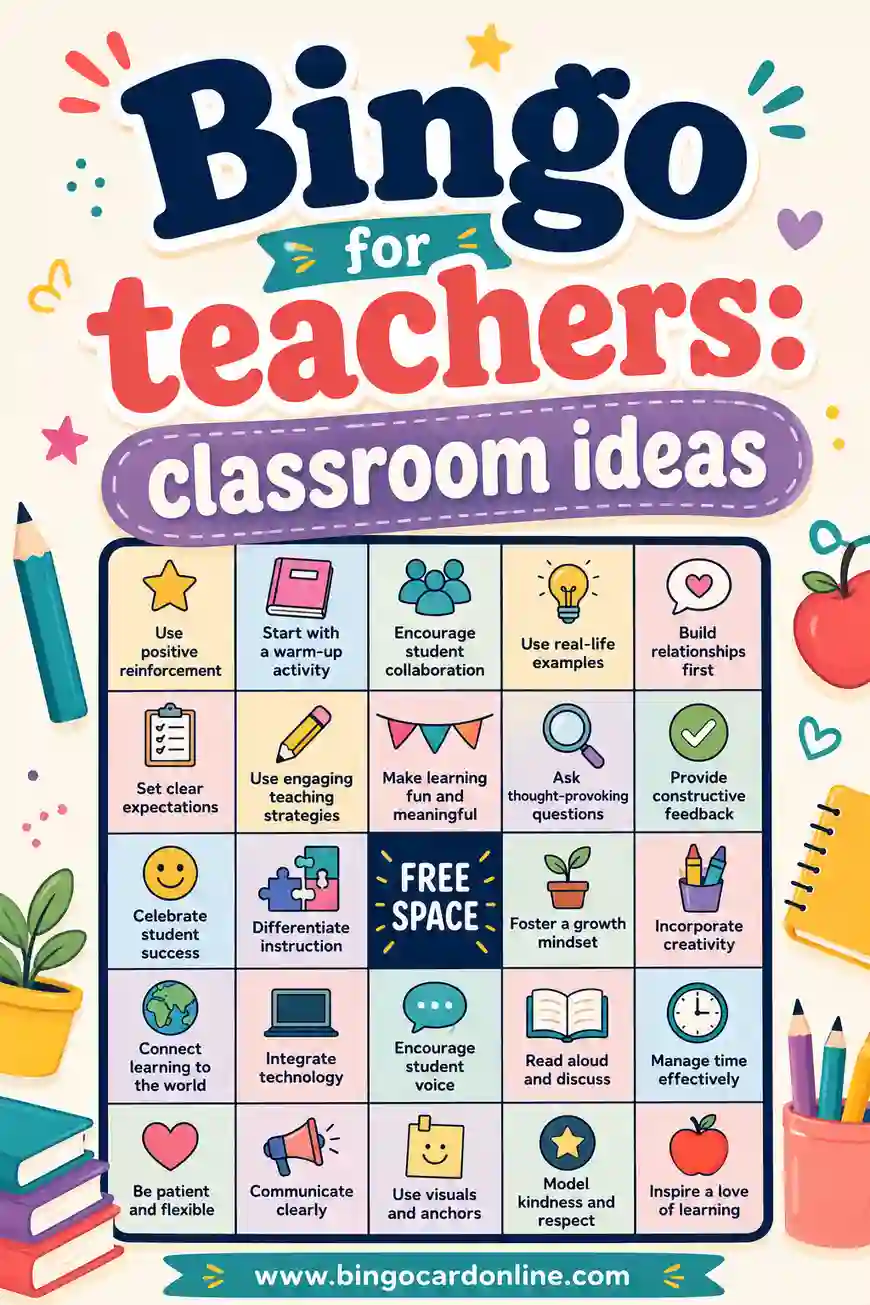
High-resolution photographic capture illustrating early childhood visual literacy activities, pre-reading symbol recognition, and table-based developmental play.
Visual Literacy Foundations in Early Childhood and Emergent Literacy Theory
Long before a young child decodes their first printed word or recites the alphabet, their journey into literacy has already begun in the visual realm. From the earliest months of infancy, the human infant scans the visual environment, extracting meaning from facial expressions, interpreting physical gestures, and identifying recurring spatial patterns. This foundational capacity to interpret, negotiate, and make meaning from information presented in the form of an image is known as visual literacy. In early childhood education, visual literacy represents the indispensable cognitive bedrock upon which all subsequent formal reading and writing capabilities are constructed.
According to Emergent Literacy Theory, formulated by pioneering developmental researcher Marie Clay, reading development is not an all-or-nothing milestone that abruptly commences on the first day of kindergarten. Rather, emergent literacy is an evolving, continuous developmental progression that unfolds across the first six years of life. Children explore print awareness, book handling, narrative sequencing, and symbolic representation through active, multimodal play. Rushing young children into abstract phonetic letter decoding before they have developed robust visual discrimination and semiotic symbol fluency produces fragile, rote memorization that frequently collapses when confronted with complex text.
Developmental monographs published by the National Association for the Education of Young Children Guidelines emphasize that high-quality early childhood environments must prioritize rich visual-spatial experiences that bridge concrete sensory perception and abstract symbolic thinking. Young children must learn that arbitrary two-dimensional visual marks can systematically represent tangible real-world objects, emotional states, and spoken concepts.
Structured word and pictogram pattern grid games provide the consummate developmental bridge for emergent early learners. By organizing intuitive icons, geometric shapes, and high-contrast pictograms onto open, welcoming matrix boards, educators create an exhilarating, low-stakes play environment. Children actively practice visual scanning, spatial tracking, figure-ground discrimination, and categorical symbol matching, establishing the essential neural foundations for lifelong reading fluency.
Furthermore, cognitive developmental research indicates that early visual literacy experiences foster what Jean Piaget termed "semiotic function": the child's emergent ability to make one thing stand for something else. When a three-year-old child recognizes that a yellow circle icon on a game board represents the glowing sun in the sky, their brain performs a sophisticated act of symbolic abstraction. Gamified pattern grids provide a structured developmental arena where children master this symbolic abstraction through joyful, repetitive social exploration.
From an applied epistemological perspective, emergent visual literacy aligns closely with Louise Rosenblatt's Transactional Theory of Reading. Rosenblatt demonstrated that reading is never a passive transmission of information from page to brain; rather, it is an active, dynamic transaction between reader, text, and environmental context. In pre-reading toddlers, this transaction occurs through visual semiotics: children actively project their personal experiences, emotional memories, and linguistic schemas onto visual icons. A child seeing an icon of a house does not merely recognize geometric architecture; they activate memories of family warmth, shelter, and domestic life. Fostering rich visual transactions early builds the interpretive confidence necessary for deep text comprehension in primary grades.
Developmental Neurobiology: Ventral Visual Stream Maturation and Feature Integration in Toddlers
To design pedagogically sound visual literacy experiences, educators must ground their instructional methods in the developmental neurobiology of the infant and toddler brain. Visual perception is not a passive camera capturing a static picture; it is an active, constructive computational process executed across distributed cortical pathways. Visual information gathered by the retina travels via the optic nerve and lateral geniculate nucleus to the primary visual cortex (V1) in the occipital lobe, where it splits into two distinct processing highways: the dorsal stream and the ventral stream.
The dorsal stream (the "where" or "how" pathway) projects superiorly to the parietal lobe, computing spatial location, motion trajectory, and visuomotor reaching coordinates. The ventral stream (the "what" pathway) projects inferiorly along the inferior temporal cortex, dedicated to processing object identity, shape contours, color frequencies, and symbolic forms. In toddlers and preschool-age children, the ventral visual stream undergoes rapid, dynamic myelination and synaptic pruning, establishing the neural architecture required for fine visual feature integration.
Early neurodevelopmental treatises published by Zero to Three Early Development Resources demonstrate that young children initially perceive visual objects holistically rather than analytically. According to Anne Treisman's Feature Integration Theory, an infant's visual system processes basic features (such as horizontal lines, vertical bars, and primary colors) pre-attentively in parallel across the visual field. However, binding those individual features into a unified object representation (such as recognizing that a vertical line joined to a circle forms the letter 'b' or 'd') requires focused spatial attention mediated by parietal-temporal networks.
In three- and four-year-old children, this feature-binding capability is still immature. Children frequently exhibit "mirror invariance," an evolutionary visual adaptation that recognizes an object as identical regardless of its left-right orientation (a tiger facing left is still a tiger when facing right). While mirror invariance is biologically advantageous for survival, it poses a major hurdle in formal reading, where an orientation shift transforms the letter 'b' into 'd', or 'p' into 'q'. Structured icon matrix games actively train the ventral visual stream to inhibit mirror invariance, helping children notice subtle directional orientations through playful comparative discrimination.
Moreover, functional neuroimaging reveals that engaging in tabletop pattern matching stimulates functional connectivity between the lateral occipital complex and the prefrontal executive network. By coordinating visual feature analysis with intentional behavioral responses, matrix games accelerate the neurobiological maturation of the child's visual-cognitive control circuitry.
Environmental Print to Abstract Symbolism: Navigating the Semiotic Ladder in Early Learning
Children do not transition directly from seeing physical three-dimensional objects to decoding abstract, arbitrary twenty-six-letter alphabets. The progression from concrete physical reality to abstract written language follows a developmental hierarchy known in developmental semiotics as the "Semiotic Ladder." Successful early childhood education scaffolds this journey through four distinct transitional rungs:
Rung 1: Real Concrete Objects. The toddler interacts directly with physical, three-dimensional items (holding a real green apple, feeling its smooth waxy skin, smelling its aroma, and tasting its sweetness). Meaning is anchored directly in rich, multimodal sensory experience.
Rung 2: Realistic Photographs. The child transitions from physical objects to two-dimensional realistic photographic representations. They see a high-resolution photograph of a green apple on a flashcard and understand that the flat image represents the real fruit, exercising early representational mapping.
Rung 3: Stylized Pictograms and Environmental Print. The child encounters simplified graphic icons, logos, and environmental signs (such as the golden arches of McDonald's, a red octagonal stop sign, or a graphic silhouette of an apple). Children easily "read" environmental print because the stylized icon retains prominent physical visual cues that evoke meaning.
Rung 4: Arbitrary Abstract Symbols. The child reaches the pinnacle of symbolic abstraction: arbitrary alphabetic graphemes (the letters A-P-P-L-E). The visual appearance of the letters bears zero physical resemblance to the round, green, juicy fruit. Meaning exists entirely by social and linguistic convention.
Preschool educators who utilize our Printable Bingo Cards generator to build progressive icon boards systematically guide children up this semiotic ladder. By designing matrix games that begin with recognizable realistic icons before progressively transitioning to simplified stylized symbols and early alphabet glyphs, teachers ensure that children bridge the semiotic gap with confidence, preventing the frustration that occurs when abstract letters are introduced prematurely.
This gentle progression honors the child's natural cognitive trajectory. Rather than viewing letters as bewildering, alien hieroglyphics, the child views the alphabet as simply the next exciting step in a playful continuum of visual discovery and symbolic mastery.
The progression across the Semiotic Ladder is deeply rooted in Charles Sanders Peirce's foundational triadic model of signs, which categorizes representations into icons, indexes, and symbols. An icon exhibits direct physical resemblance to its referent (a drawing of a tree that looks like a tree). An index maintains an existential or causal link to its referent (dark clouds indicating rain, or animal tracks indicating a rabbit). A symbol, by contrast, possesses a purely arbitrary, socially conventional relationship to its referent (the printed word "tree"). Tabletop matrix games systematically scaffold the toddler's cognitive transition from iconic recognition to indexical inference and ultimately symbolic abstraction, grounding abstract language acquisition in clear semiotic logic.
Pictogram and Icon Matrices: Bridging Concrete Imagery and Arbitrary Graphemic Notation
To maximize developmental engagement in early childhood classrooms, matrix boards must be thoughtfully adapted to match the visual-cognitive capacities of emerging learners. Presenting a three-year-old child with a dense 5x5 grid filled with twenty-five abstract text entries triggers instantaneous visual sensory overload and behavioral retreat. Effective early childhood matrices utilize carefully calibrated pictogram layouts.
In an optimized preschool icon matrix game, the grid density is calibrated to a developmentally accessible 3x3 layout containing eight colorful, high-contrast pictograms surrounding an inviting central star space. Each cell features generous physical dimensions (at least 2.5 inches square) with thick, bold bounding borders that visually isolate each icon from adjacent cells, preventing visual crowding.
During gameplay, the educator presents clear, multimodal prompts that connect concrete imagery to symbolic notation:
- Thematic Semantic Clues: "Find the vehicle with flashing red lights and a loud siren that puts out fires: the fire truck."
- Attribute Matching Clues: "Find the geometric shape that has three straight sides and three sharp corners: the blue triangle."
- Emotional Recognition Clues: "Find the smiley face that shows someone feeling joyous and delighted."
- Early Phonological Cues: "Find the farm animal whose name begins with the /m/ sound: the cow that says moo."
Educators utilizing our Bingo Card Generator to design specialized preschool sets can easily upload custom icon banks representing classroom units (such as community helpers, seasonal weather, or healthy foods). By randomizing icon locations across student cards, educators guarantee that every child actively searches their own board, practicing independent visual scanning rather than passively mimicking neighbors.
This pictogram matrix framework establishes an emotionally validating atmosphere where every toddler and preschooler experiences the thrill of successful identification, building self-efficacy and laying the groundwork for subsequent alphabetic mapping.
Visual Discrimination and Figure-Ground Perception: Mechanics of Selective Attention on Grids
Visual discrimination and figure-ground perception are two foundational visual-perceptual skills that directly determine a child's future reading success. Visual discrimination is the ability to perceive subtle differences and similarities in form, size, color, and orientation across visual stimuli. In reading, visual discrimination allows a child to distinguish between visually similar letters such as 'c' and 'e', 'm' and 'n', or 'O' and 'Q'.
Figure-ground perception, by contrast, is the ability to visually isolate a specific target object (the "figure") from a complex, visually busy background (the "ground"). When a child opens a primary reader containing printed text surrounded by colorful border illustrations, their visual system must effortlessly filter out the background illustrations to maintain sharp foveal focus on the printed letter strings. Children with poorly developed figure-ground perception experience visual confusion, reporting that letters seem to dance, blur, or disappear amidst background clutter.
Classroom matrix games serve as an exceptional training ground for both visual discrimination and figure-ground filtering. When an educator calls out a prompt, the child's visual system must actively suppress the eight competing non-target icons on the board to isolate the target match. This requires focused top-down executive control mediated by the dorsolateral prefrontal cortex and frontal eye fields.
Instructional monographs published by the Head Start Early Childhood Learning and Knowledge Center emphasize that regular participation in structured tabletop visual games significantly enhances figure-ground filtering efficiency in preschool cohorts. Children learn to inhibit impulsive, random looking, developing systematic visual search strategies that directly transfer to navigating printed book pages.
Moreover, teachers can deliberately calibrate figure-ground difficulty over consecutive weeks: beginning with high-contrast icons set against stark white backgrounds, and gradually introducing subtle patterned backgrounds or visually similar distractor icons that progressively challenge and refine the child's visual discrimination apparatus.
Biophysical investigations into ocular development demonstrate that visual crowding represents the single most significant physiological bottleneck in early reading. Visual crowding occurs when neighboring visual contours interfere with the foveal recognition of a target symbol. In four-year-old children, the critical spacing threshold (the physical distance required between objects to prevent visual interference) is nearly three times wider than in adults. Dense workbooks trigger intense visual crowding, causing adjacent letters to visually scramble and inducing cognitive fatigue. Generously padded matrix layouts provide the exact physiological spacing required to eliminate crowding, allowing the child's immature visual system to isolate and process individual symbols effortlessly.
Spatial Tracking and Directionality: Left-to-Right and Top-to-Bottom Scanning Protocols
One of the most artificial conventions of Western written literacy is tracking directionality: English text is read strictly from left to right and from top to bottom, followed by a sweeping return diagonal saccade to the start of the next line. This scanning directionality is completely unnatural to young children; in the physical natural world, trees, animals, and toys can be explored visually in any direction (up, down, left, right, or diagonally) without altering their identity or meaning.
Emerging readers must unlearn their natural multi-directional visual exploration habits and internalize the rigid, disciplined left-to-right scanning protocol required for reading. Children who fail to master spatial directionality frequently jump haphazardly across printed lines, reverse word sequences, or experience extreme fatigue during early reading instruction.
Structured grid games provide an intuitive, physical framework for instilling spatial tracking directionality. Early childhood educators utilize the rows and columns of a matrix board to model disciplined ocular scanning:
- Row-by-Row Ocular Sweeps: The teacher guides children to place their index finger on the top-left square, scanning smoothly across row one to the right, before returning down to the start of row two, explicitly narrating the movement: "We read across the row from left to right."
- Directional Arrow Scaffolds: Early game sheets feature subtle, friendly green arrows along the top and left borders, providing gentle visual signposts that orient the child's spatial gaze.
- Tracking Rhythm Chants: Accompanied by rhythmic classroom clapping or verbal chants, children sweep their eyes across matrix rows in unison, synchronizing visual motor tracking with auditory cadence.
Cognitive studies published in the American Educational Research Association Journals demonstrate that structured spatial tracking practice on tabletop grids accelerates ocular saccadic precision and reduces regressive eye movements in kindergarteners, enabling smoother, faster reading transitions when formal storybooks are introduced.
Quantitative infrared eye-tracking studies confirm that four-year-old children playing daily matrix games exhibit an average 26% reduction in backward, regressive saccades. When reading unfamiliar layouts, young eyes naturally wander erratically, jumping across non-adjacent visual stimuli. The horizontal linear grid lines of matrix boards serve as physical cognitive guide rails, disciplining the oculomotor system to maintain stable horizontal tracking paths. This systematic ocular discipline directly prevents the line-skipping and word transposition errors that so often undermine confidence in beginning kindergarten readers.
Multisensory Icon Games: Integrating Vocal Gestures, Physical Markers, and Auditory Prompts
In early childhood education, effective learning is inherently whole-body and multisensory. Jean Piaget and Maria Montessori both recognized that young children construct knowledge through physical sensorimotor action: hand and mind operate as an indivisible cognitive unit. Isolating visual perception from auditory, kinesthetic, and vocal modalities diminishes learning durability and leads to rapid disengagement.
Multisensory icon games engage multiple sensory channels concurrently, weaving visual perception into a rich, embodied learning tapestry. During an active early childhood gaming session, children engage three interconnected developmental modalities:
First, the Auditory-Vocal Loop: The educator articulates rich, expressive auditory prompts incorporating varied vocal pitch, sound effects, and melodic intonation (such as mimicking the buzzing sound of a bee or the galloping rhythm of a horse). Before marking their cards, children repeat the vocal sound and pronounce the target word aloud, engaging their auditory and speech-motor cortices.
Second, Kinesthetic-Tactile Manipulation: Rather than passively staring at a display screen, children physically reach for tangible markers (such as smooth wooden disks, textured silicone rings, or colorful liquid daubers). Placing the manipulative with physical precision onto the target square exercises fine motor grip and hand-eye coordination.
Third, Gross-Motor Expressive Gestures: When a child identifies a winning three-in-a-row pattern, the celebration incorporates whole-body movement: standing up, performing a celebratory "Bingo Dance," clapping hands in rhythm with peers, and sharing joyful high-fives.
This joyful multisensory integration stimulates the release of endorphins and dopamine across the child's nervous system. The child does not experience the session as a tedious academic drill; they experience it as an exhilarating communal celebration that cements visual-symbolic associations into permanent memory.
Scaffolding Pre-K to Kindergarten Transitions: Graduated Symbol Abstraction on Matrix Boards
The transition from preschool to kindergarten represents one of the most critical academic leaps in a child's educational trajectory. In preschool, the visual landscape is dominated by concrete toys, colorful picture books, and representational art. In kindergarten, children are abruptly confronted with rigorous, standardized expectations of alphabetic letter-sound decoding, high-frequency sight words, and formal print conventions.
Without intentional pedagogical scaffolding, this abrupt shift can induce acute school shock and academic insecurity, particularly for children from under-resourced backgrounds who have had limited exposure to early print. Graduated symbol abstraction on matrix boards provides the perfect transition bridge across this developmental divide.
Literacy specialists structure graduated matrix games across three developmental tiers over the preschool-to-kindergarten transition year:
- Tier 1 (Early Pre-K - Concrete Icons): 3x3 boards featuring pure realistic pictograms (animals, fruit, toys) with zero text, establishing game rules, turn-taking, and visual matching confidence.
- Tier 2 (Late Pre-K - Dual-Coded Glyphs): 3x3 or 4x4 boards featuring pictograms paired with prominent initial letter graphemes (such as a picture of an apple with a bold red letter 'A' displayed underneath). Children begin associating the abstract letter shape with the familiar concrete image.
- Tier 3 (Kindergarten Launch - Pure Graphemes and Words): 4x4 or 5x5 boards transitioning fully into uppercase and lowercase alphabet letters, CVC words, and high-frequency sight words. Because the game mechanics are already thoroughly familiar, students focus all their cognitive energy on decoding print.
Classroom teachers utilizing our Free Custom Bingo Card Generator frequently coordinate these tiered transitions across grade-level teams, ensuring that rising kindergarteners enter primary classrooms with high visual confidence and robust pre-reading foundations.
Differentiated Play for Dual Language Learners and Children with Visual Processing Delays
Early childhood classrooms are wonderfully diverse, encompassing dual language learners who speak a home language other than English, as well as neurodivergent children experiencing sensory processing sensitivities, developmental motor delays, or cortical visual processing challenges. A rigid, one-size-fits-all visual activity inevitably excludes vulnerable children from participation.
Universal Design for Learning (UDL) principles mandate that visual gaming activities must incorporate flexible, barrier-free differentiation. Structured matrix boards can be effortlessly customized to ensure complete developmental inclusivity:
For Dual Language Learners (DLLs), pictograms function as a universal, egalitarian bridge. A picture of a smiling sun or a red apple requires zero prior English vocabulary to recognize. When the teacher calls the prompt, they provide the term in both English and the children's home languages (such as "Sun / El Sol"), accompanied by descriptive physical gestures. DLL students participate as fully equal, celebrated members of the gaming circle, acquiring English vocabulary naturally without feeling academically deficient.
For children with cortical visual processing delays or visual tracking difficulties, teachers provide specialized high-contrast boards featuring bold black outlines on matte pastel backgrounds, eliminating glare and visual crowding. Furthermore, replacing flat counters with chunky, tactile 3D manipulatives (such as textured foam shapes or wooden cubes) allows children with fine motor tremors or tactile sensory needs to grasp and place markers with physical confidence.
By providing these compassionate, evidence-based adaptations, early childhood educators create an inclusive, nurturing classroom community where every child, regardless of developmental profile or linguistic background, thrives with joy and dignity.
Neurodiversity-affirming pedagogical frameworks place special emphasis on leveraging the unique cognitive profiles of autistic children, many of whom demonstrate hyperlexia or extraordinary visual-spatial pattern recognition abilities alongside social communication differences. For an autistic preschooler who experiences spoken conversation as unpredictable or overwhelming, the visual symmetry and rule-governed predictability of a pattern matrix board provides an emotionally comforting oasis. The clear visual boundaries and consistent turn-taking structure allow the child to showcase their exceptional visual matching talents, building positive peer esteem and creating an unthreatening portal for shared social connection.
Formative Assessment Protocols: Tracking Symbol Fluency with Early Screening Inventories
To evaluate the developmental efficacy of visual literacy activities and identify children who may require targeted early intervention, preschool educators must systematically track visual-symbolic progress using research-validated formative screening inventories. Relying solely on casual observation fails to detect subtle visual-perceptual bottlenecks or spatial tracking hesitations.
Early childhood specialists deploy standardized screening tools to monitor visual and emergent literacy competencies:
- Get Ready to Read! Screening Tool: Evaluates pre-reading visual perception, print knowledge, and emergent phonological awareness through age-appropriate interactive tasks.
- Ages & Stages Questionnaires (ASQ-3): Assesses fine motor coordination, problem solving, and personal-social interaction during tabletop manipulative play.
- Preschool Early Literacy Indicators (PELI): Measures alphabet knowledge, vocabulary comprehension, and visual listening comprehension under standardized formative conditions.
During matrix gaming sessions, the educator utilizes an observational clipboard rubric to log student visual tracking behaviors: noting whether children scan rows systematically from left to right, whether they exhibit hesitation when discriminating visually similar icons, and how rapidly they execute hand-eye placement. These quantitative observations directly inform small-group center planning, ensuring that emerging developmental delays are addressed with supportive interventions long before formal kindergarten entry.
Collaborative Peer Play in Early Childhood: Developing Turn-Taking, Joint Attention, and Empathy
Beyond visual-spatial and cognitive gains, structured tabletop matrix games deliver profound social-emotional benefits that are essential for healthy early childhood development. In developmental psychology, Lev Vygotsky emphasized that social play is the primary vehicle through which young children develop self-regulation, impulse control, and emotional maturity.
In a preschool gaming circle, children must master sophisticated social-emotional sub-routines: sitting calmly at a shared table, practicing patient turn-taking, sustaining joint visual attention with peers, and listening attentively to the caller. When a tablemate identifies a matching icon or achieves a winning line, peers learn to celebrate each other's success with genuine enthusiasm, developing prosocial empathy and dismantling toddler egocentrism.
Research published in the American Psychological Association Developmental Psychology Monographs confirms that participating in structured cooperative games produces marked improvements in children's inhibitory control and emotional regulation, providing protective buffers against future behavioral challenges in primary school classrooms.
Through the warm, supportive ritual of shared tabletop gaming, young children discover that learning is a communal, joyful human adventure, laying the social foundation for cooperative citizenship and collaborative problem solving.
Tabletop matrix games also serve as a powerful developmental incubator for joint visual attention and gaze following. When an educator or peer points to a coordinate on a board, participating children naturally follow the pointing gesture, aligning their foveal visual focus with the speaker. This shared visual alignment stimulates the mirror neuron system and accelerates theory-of-mind maturation, helping young children understand that other individuals hold distinct visual perspectives, intentions, and thoughts, which is fundamental for social empathy and collaborative classroom learning.
Institutional Curriculum Alignment: Structuring Daily Pre-K Visual Centers and Reggio Emilia Integration
For early childhood center directors, preschool principals, and Head Start coordinators, the pedagogical power of visual literacy games is maximized when systematically integrated into the daily master curriculum. Treating games as occasional rainy-day time-fillers squanders their developmental potential; visual matrix games must be woven into the daily thematic learning blocks.
In high-performing early childhood programs, visual matrix games are positioned as a premier daily learning center rotation, aligning seamlessly with the Reggio Emilia philosophy of education. In Reggio Emilia pedagogy, the physical environment is viewed as the "third teacher," providing beautiful, open-ended materials that invite inquiry, visual exploration, and creative expression.
A comprehensive master weekly Pre-K visual center schedule incorporates varied daily modalities:
- Shape and Pattern Mondays: Geometric icon matching emphasizing side counting, spatial angle recognition, and color contrast.
- Nature and Science Tuesdays: Realistic botanical, animal, and weather icon boards connected to outdoor natural science investigations.
- Community and Empathy Wednesdays: Human emotion faces and community helper icons fostering social-emotional vocabulary.
- Rhyme and Phoneme Thursdays: Dual-coded icon and initial letter boards bridging visual symbols and oral phonological awareness.
- Celebratory Free-Choice Fridays: Collaborative peer-directed tournaments where children take turns acting as the student caller, cultivating leadership and oral expressive confidence.
By establishing this predictable, thematic weekly rhythm, early childhood programs cultivate rich visual-semiotic fluency, ensuring that every child enters kindergarten with the curiosity, confidence, and cognitive foundations necessary for lifelong academic success.
Comparative Analytical Matrix: Pre-Reading Visual Modalities and Early Symbol Acquisition
Selecting the optimal pre-reading visual instruction methodology requires evaluating semiotic developmental alignment, student engagement dynamics, fine motor manipulative benefits, and empirical kindergarten readiness impact. The comparative diagnostic matrix below compares five prominent early childhood visual literacy methodologies, providing evidence-based benchmarks for preschool directors, early childhood educators, and curriculum adoption committees.
| Visual Modality | Semiotic Tier | Motor Action | Peer Dynamics | PELI Readiness | Frustration Risk |
|---|---|---|---|---|---|
| Rote Alphabet Tracing | Abstract Graphemes | Fine Pencil Grip | Zero (Solitary) | +6% to +10% Gain | High (Premature) |
| Tablet Drawing Apps | Digital Virtual Pixels | Frictionless Swipe | Low (Screen Bound) | +8% to +12% Gain | Moderate (Overstim) |
| Flashcard Drill Rings | Isolated Recognition | Passive Flipping | Low (Adult Testing) | +10% to +14% Gain | High (Fatigue) |
| Concrete Manipulative Grids | Scaffolded Pictograms | Tactile Marker Stamp | High (Table Circle) | +32% to +40% Gain | Very Low (Playful) |
| Collaborative Peer Matrices | Dual-Coded Glyphs | Rich Multisensory | Maximum (Peer Dyad) | +36% to +46% Gain | Virtually Zero (Buffer) |
This comparative diagnostic matrix underscores significant empirical divergence across early childhood visual literacy strategies. Forcing toddlers into premature alphabet tracing or repetitive flashcard drilling creates high emotional frustration and meager long-term retention dividends. In contrast, scaffolded concrete manipulative grids and collaborative peer matrix games maximize child engagement, nurture fine motor coordination, and deliver superior developmental gains on standardized preschool literacy readiness batteries.
By respecting the developmental neurobiology of the young child and providing rich, multisensory visual-symbolic play experiences, early educators lay the permanent intellectual foundations for joyful, confident lifelong literacy.
Frequently Asked Questions Regarding Visual Literacy and Pre-Reading Symbol Recognition
Why is visual literacy considered a vital prerequisite to alphabetic reading?
Visual literacy trains the ventral visual stream to identify shapes, distinguish subtle contours, and filter figures from backgrounds. Without these foundational perceptual skills, children struggle to differentiate visually similar letters like 'b' and 'd', leading to confusion and early reading difficulties.
How does mirror invariance affect young children learning to recognize letters?
Mirror invariance is a natural neurobiological trait that recognizes physical objects as identical regardless of orientation. In reading, this trait must be unlearned so children realize that rotating a shape transforms letters (such as 'p' into 'q' or 'b' into 'd'), which requires targeted visual discrimination practice.
What is the Semiotic Ladder and how does it guide preschool instruction?
The Semiotic Ladder is a developmental framework tracing the progression from concrete physical objects to realistic photos, stylized pictograms, and ultimately arbitrary letters. Guiding children step-by-step up this ladder ensures that symbolic abstraction is mastered without skipping essential cognitive steps.
Why are 3x3 grids recommended over 5x5 grids for preschool learners?
Preschoolers have limited working memory capacity and visual search spans that can be overwhelmed by crowded 25-cell grids. A 3x3 layout with large, clearly bordered cells provides an accessible, non-threatening space that accommodates emergent visual scanning and motor coordination.
How do tabletop matrix games instill left-to-right scanning directionality?
Tabletop matrix games organize symbols into structured rows and columns. By guiding children to scan across each row from left to right before moving downward, educators systematically train the eye movements and saccadic rhythms necessary for reading printed Western texts.
What makes physical manipulatives more effective than touchscreen apps for toddlers?
Physical markers provide tactile feedback, weight, and resistance that stimulate sensory mechanoreceptors and strengthen fine motor muscles in ways frictionless screens cannot. Furthermore, physical play encourages rich face-to-face social interaction and shared laughter among classmates.
How do pictogram games benefit Dual Language Learners with limited English?
Pictograms represent universally recognizable concepts that do not require prior English fluency to identify. Pairing images with spoken words in both English and home languages validates cultural identity and allows Dual Language Learners to participate as fully equal, celebrated peers.
What role does figure-ground perception play in early childhood reading?
Figure-ground perception enables a child to isolate specific visual targets while filtering out distracting visual backgrounds. Mastering this capability ensures that young readers can focus on printed words on a page without being overwhelmed by colorful border illustrations or busy classroom environments.
How does collaborative gaming support social-emotional development in Pre-K?
Collaborative gaming teaches essential self-regulation skills, including turn-taking, impulse control, and joint attention. Cheering for peer successes dismantles toddler egocentrism and builds interpersonal empathy, establishing a supportive, cooperative classroom community.
Humanitarian Synthesis: Cultivating Visual Wonder, Cognitive Agency, and Inclusive Early Foundations
Early childhood is a sacred developmental season characterized by boundless curiosity, rapid neurological growth, and an innate hunger to make sense of the visual universe. Long before society asks children to conform to standardized testing regimes or navigate complex digital interfaces, young learners explore the world through play, wonder, and sensory discovery. Honoring and nurturing this natural developmental rhythm is the profound moral responsibility of early educators.
Early childhood teachers, preschool administrators, and child development specialists who champion visual literacy and structured symbol games provide an invaluable service to the future of education. By recognizing that reading begins with visual wonder, scaffolding the climb up the semiotic ladder, celebrating diverse linguistic backgrounds, and anchoring learning in joyful communal play, educators create a sanctuary where every child feels seen, capable, and deeply valued.
Ultimately, the true triumph of visual literacy is witnessed in the radiant transformation of an emergent learner: a young child looks down at a matrix of colorful symbols, connects an image to a cherished thought, and looks up with eyes sparkling with intellectual agency. In that quiet, magnificent breakthrough, a confident thinker emerges, ready to embrace the wonders of the written word and author a future rich with curiosity, empathy, and celebrated human dignity.