Kwanzaa Bingo: Free Printable Cards for Families and Classrooms
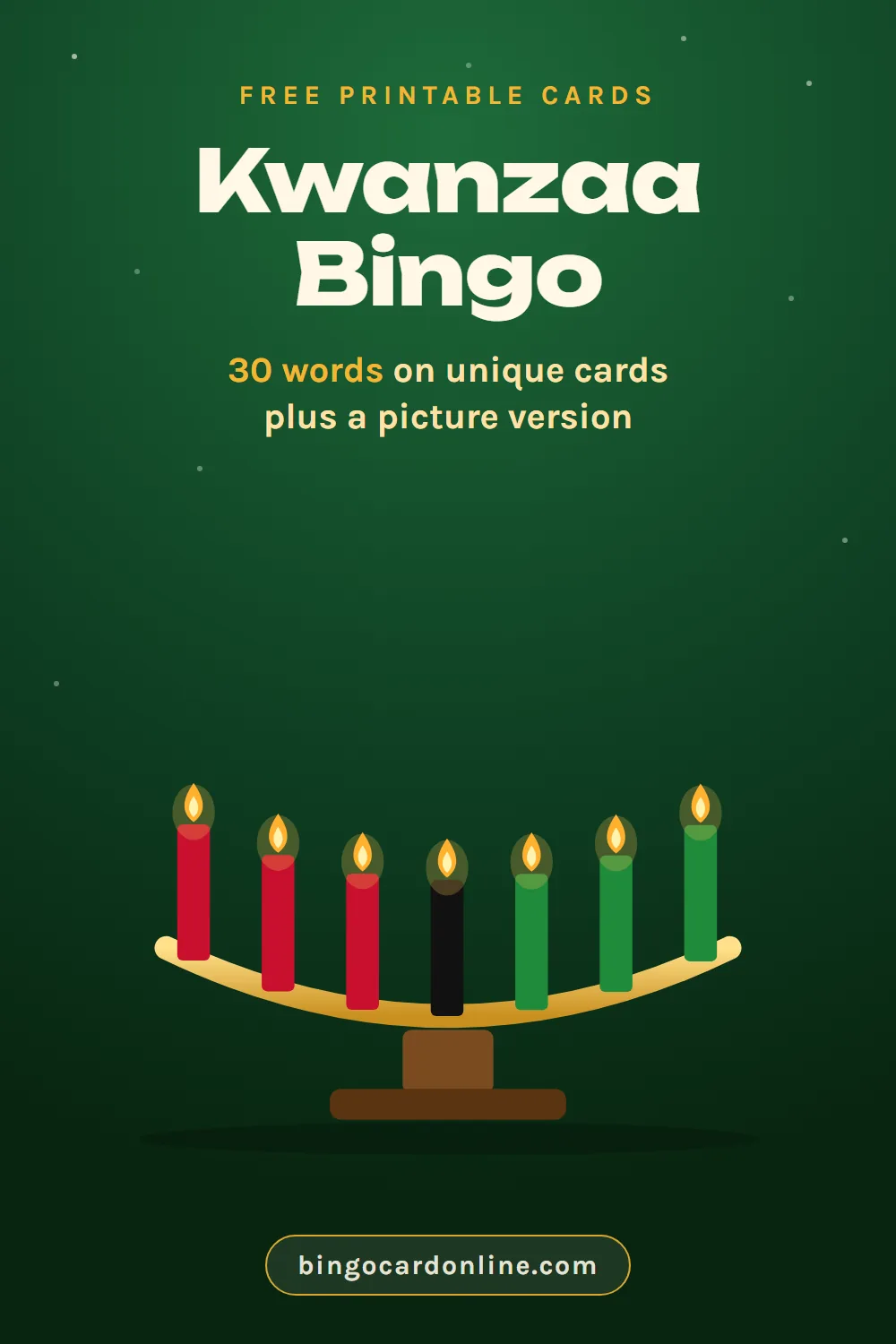
Kwanzaa bingo is a fun way for families and classrooms to learn the seven principles and the symbols of the holiday, with squares like kinara, mkeka, kikombe cha umoja, Umoja, Kujichagulia and harvest. Below is a 30-word list that prints as unique 5x5 cards with a free center, plus a picture version for little kids. In 2026, Kwanzaa runs from Saturday, December 26, to Friday, January 1, 2027, so you have seven nights to play.
The button opens the generator with all 30 words loaded. Pick the Red & Green theme (Kwanzaa's colors are red, black and green), set the number of players and print.
▶ Make these exact Kwanzaa bingo cards
30 Kwanzaa bingo words
The list is grouped so you can teach as you play. Read the word, add a one-line explanation, and everybody learns while they hunt for the square.
| The seven principles | The seven symbols | Candles and colors | Celebrating |
|---|---|---|---|
| Umoja | Mazao | Kinara | Karamu |
| Kujichagulia | Mkeka | Mishumaa Saba | Habari gani? |
| Ujima | Muhindi | Black candle | Harvest |
| Ujamaa | Kikombe cha Umoja | Red candles | First fruits |
| Nia | Zawadi | Green candles | Swahili |
| Kuumba | Bendera | Family | |
| Imani | Red, black and green | Community | |
| Seven principles | Candle lighting | Heritage | |
| Storytelling |
The seven principles of Kwanzaa (Nguzo Saba)
Kwanzaa was created in 1966 by Dr. Maulana Karenga as a celebration of African American family, community and culture. Each of the seven days focuses on one principle, called the Nguzo Saba in Swahili. Here they are with the 2026 dates, so you can match tonight's principle to tonight's game.
| Day | Date | Principle | What it means |
|---|---|---|---|
| 1 | Sat, Dec 26 | Umoja | Unity |
| 2 | Sun, Dec 27 | Kujichagulia | Self-determination |
| 3 | Mon, Dec 28 | Ujima | Collective work and responsibility |
| 4 | Tue, Dec 29 | Ujamaa | Cooperative economics |
| 5 | Wed, Dec 30 | Nia | Purpose |
| 6 | Thu, Dec 31 | Kuumba | Creativity |
| 7 | Fri, Jan 1 | Imani | Faith |
Quick facts to read with the calls
- Kwanzaa: the name comes from the Swahili phrase "matunda ya kwanza," meaning "first fruits" of the harvest.
- Kinara: the candle holder that holds the seven candles.
- Mishumaa Saba: the seven candles. There's one black candle in the center, three red candles on one side and three green on the other.
- Black candle: it stands for the people and is lit first, on the night of Umoja. Families light one more candle each night.
- Red and green candles: red is often explained as the struggle, and green as the future and hope.
- Mkeka: a woven mat that the other symbols sit on. It stands for tradition and history.
- Mazao: crops, like fruits and vegetables, that honor the harvest and the work that grew it.
- Muhindi: ears of corn. Many families set out one ear for each child in the family.
- Kikombe cha Umoja: the unity cup, shared to honor ancestors and the family's togetherness.
- Zawadi: gifts. They're often handmade or educational, like books, and are often given near the end of the week.
- Bendera: the red, black and green flag often displayed during Kwanzaa.
- Karamu: the big shared feast, usually held on December 31.
- Habari gani?: Swahili for "What's the news?" During Kwanzaa, the answer is the principle of the day, like "Umoja!"
Families celebrate in their own ways, so think of these as common customs rather than strict rules.
Kwanzaa picture bingo for little kids
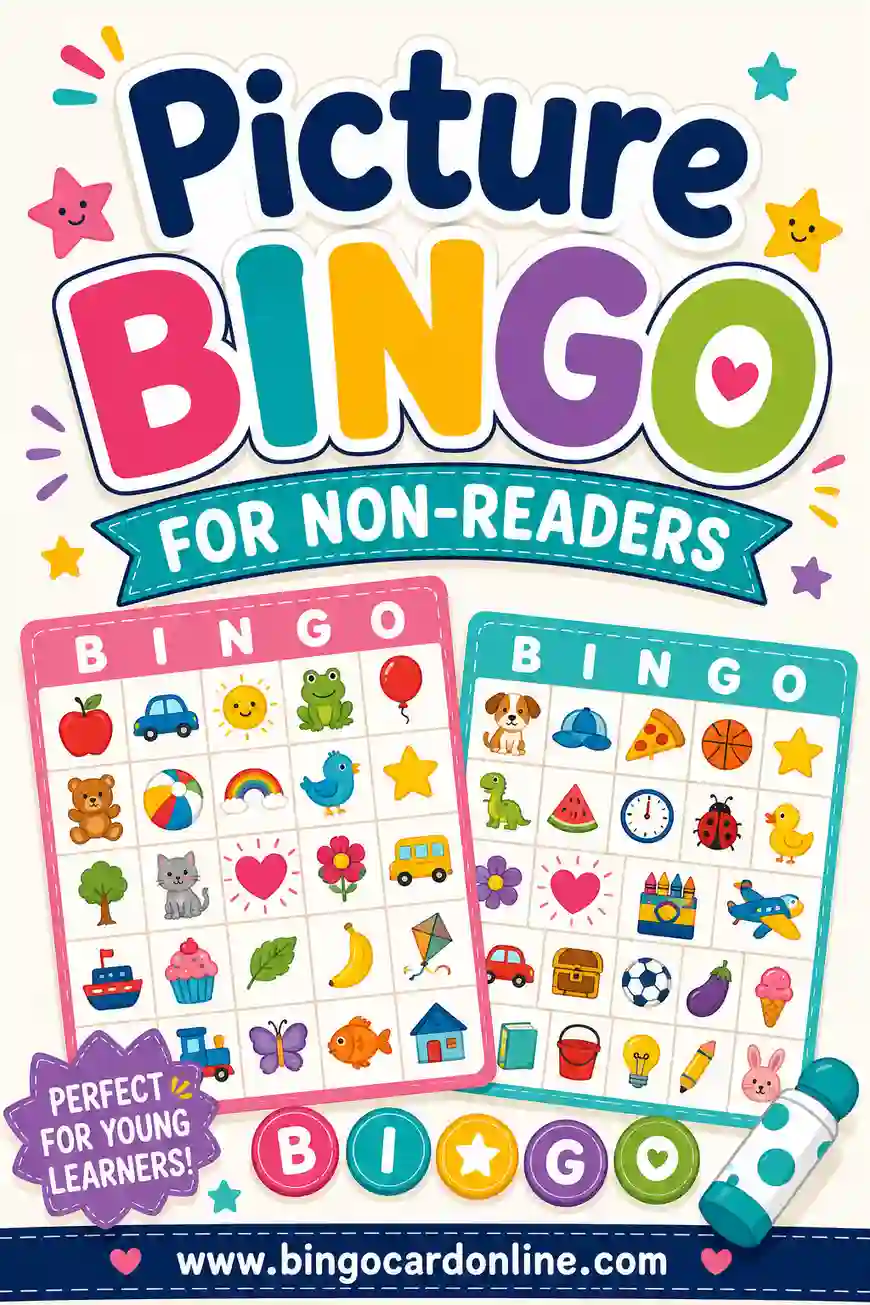
Pre-readers can play too. The picture version uses a 4x4 card with simple pictures like a candle, corn, fruit, a gift and a book, and no free space. Use the second button under the word list to make it. Say the word out loud as you call each picture, and you're teaching the vocabulary without any reading. Our guide to picture bingo for non-readers has more tips for young players.
How to play Kwanzaa bingo
- Make the cards. Use the button above and print one card per player. Each card is unique.
- Make a calling list. Print the word list or cut the words into slips and put them in a bowl.
- Call a word and explain it. One sentence is plenty, like "Kuumba means creativity. What's something you made this year?"
- Mark the square. Use crayons, beans, buttons or little paper circles in red, black and green.
- Call "Bingo!" for five in a row. Across, down or diagonal. The center is free.
Kwanzaa bingo ideas for the classroom
Kwanzaa falls over winter break for most schools, so many teachers play in mid-December as part of a winter holidays unit. Pair it with Hanukkah bingo and winter bingo cards for a week of games. A few ideas:
- One principle a day. Play a short round, then talk about one principle. Ujima (working together) pairs well with a class clean-up challenge.
- Kuumba art round. Whoever gets bingo picks the color for the class art project.
- Vocabulary check. Before the winner gets their prize, they explain what the words in their winning line mean.
- Word wall. Post the seven principles on the wall during the game so kids can look up meanings.
Our bingo ideas for teachers cover more ways to keep a whole class engaged.
Family Kwanzaa bingo night
- Play after candle lighting. Light the kinara, answer "Habari gani?", then play a round.
- Let the elders call. A grandparent calling the words can add a short story or memory for each one.
- Play at the Karamu. A round of bingo is an easy way to bring all ages together on December 31.
- Handmade prizes. In the spirit of zawadi, the winner gets a small handmade gift or picks a book to read together.
The bingo for family game night page has more ways to keep mixed ages having fun.
Common mistakes
- Mixing up similar words. Ujima and Ujamaa sound alike. Ujima is working together; Ujamaa is building and supporting businesses together.
- Too few words. If your list is only as long as the card, everyone wins at once. Use all 30 words for a 5x5 card.
- Calling without context. A one-line explanation turns the game into a lesson kids actually remember.
- Treating every custom as a rule. Families celebrate differently. Keep the explanations gentle and open.
▶ Make these exact Kwanzaa bingo cards
Frequently Asked Questions
What words go on Kwanzaa bingo cards?
Good Kwanzaa bingo words include the seven principles (Umoja, Kujichagulia, Ujima, Ujamaa, Nia, Kuumba, Imani), the symbols (kinara, mkeka, mazao, muhindi, kikombe cha umoja, zawadi, mishumaa saba) and words like karamu, harvest, family and Habari gani?
When is Kwanzaa in 2026?
Kwanzaa runs from Saturday, December 26, 2026, to Friday, January 1, 2027. Each of the seven days focuses on one of the seven principles.
What are the seven principles of Kwanzaa?
Umoja (unity), Kujichagulia (self-determination), Ujima (collective work and responsibility), Ujamaa (cooperative economics), Nia (purpose), Kuumba (creativity) and Imani (faith). Together they're called the Nguzo Saba.
Is Kwanzaa bingo good for kids?
Yes. Older kids can play the 5x5 word cards and learn the Swahili terms, and younger kids can play the 4x4 picture version with candles, corn, fruit and gifts.
How do you teach Kwanzaa with bingo?
Call each word with a one-line explanation, like 'Kuumba means creativity.' Before a winner gets a prize, ask them to explain the words in their winning line.
What colors are used for Kwanzaa?
Red, black and green. The kinara holds one black candle in the center, three red candles and three green candles.