Bingo Tiebreaker Rules: What to Do When Two People Win
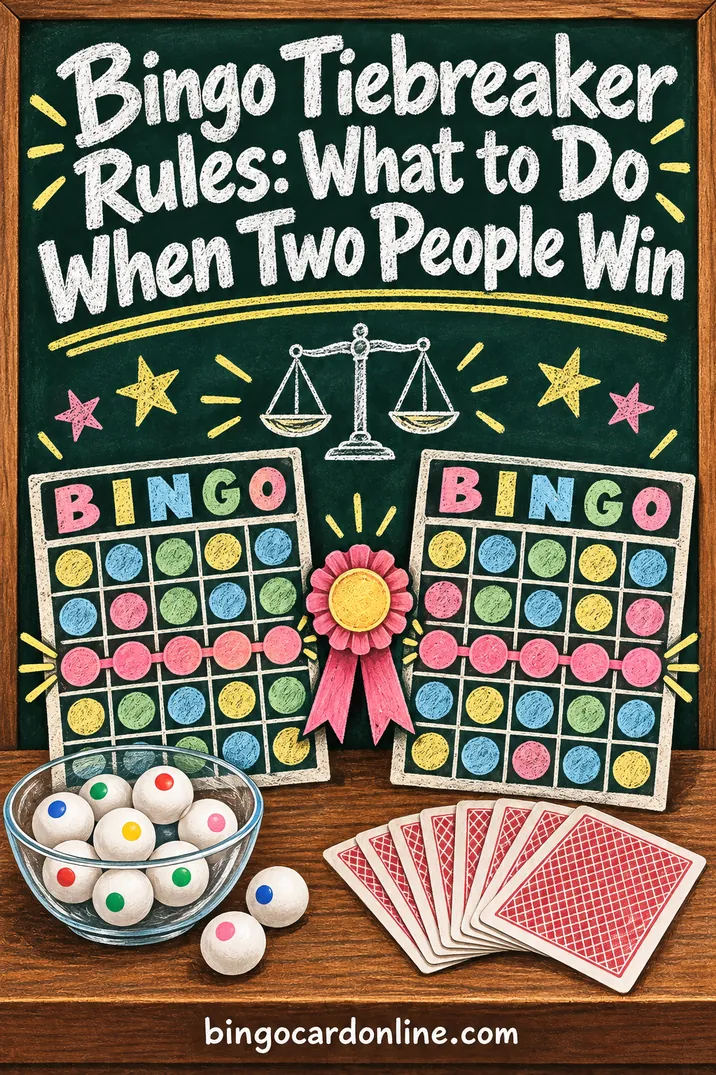
The standard bingo tiebreaker rules say that everyone who wins on the same called number is a winner, and the host then either splits the prize, gives each winner a prize, or settles it with a quick draw such as high ball, high card or a one-round playoff. The most important rule is to pick your method before the first ball is drawn and announce it, so nobody feels the decision was made up on the spot.
Below are the six tiebreakers that work best, a table to help you choose, and house-rule wording you can read aloud at the start of your game. Ties are not rare, either. In a big room they happen often enough that every host should have a plan.
What Counts as a Tie in Bingo
Before any tiebreaker, you need a clear definition of a tie. The common rule in most halls and home games is:
A tie happens when two or more players have a valid bingo on the same called number, and each calls "Bingo" before the next number is drawn.
That rule does three things:
- It ties the win to a number, not a voice. It does not matter who shouted first or loudest. If both cards were completed by the same ball, both players won.
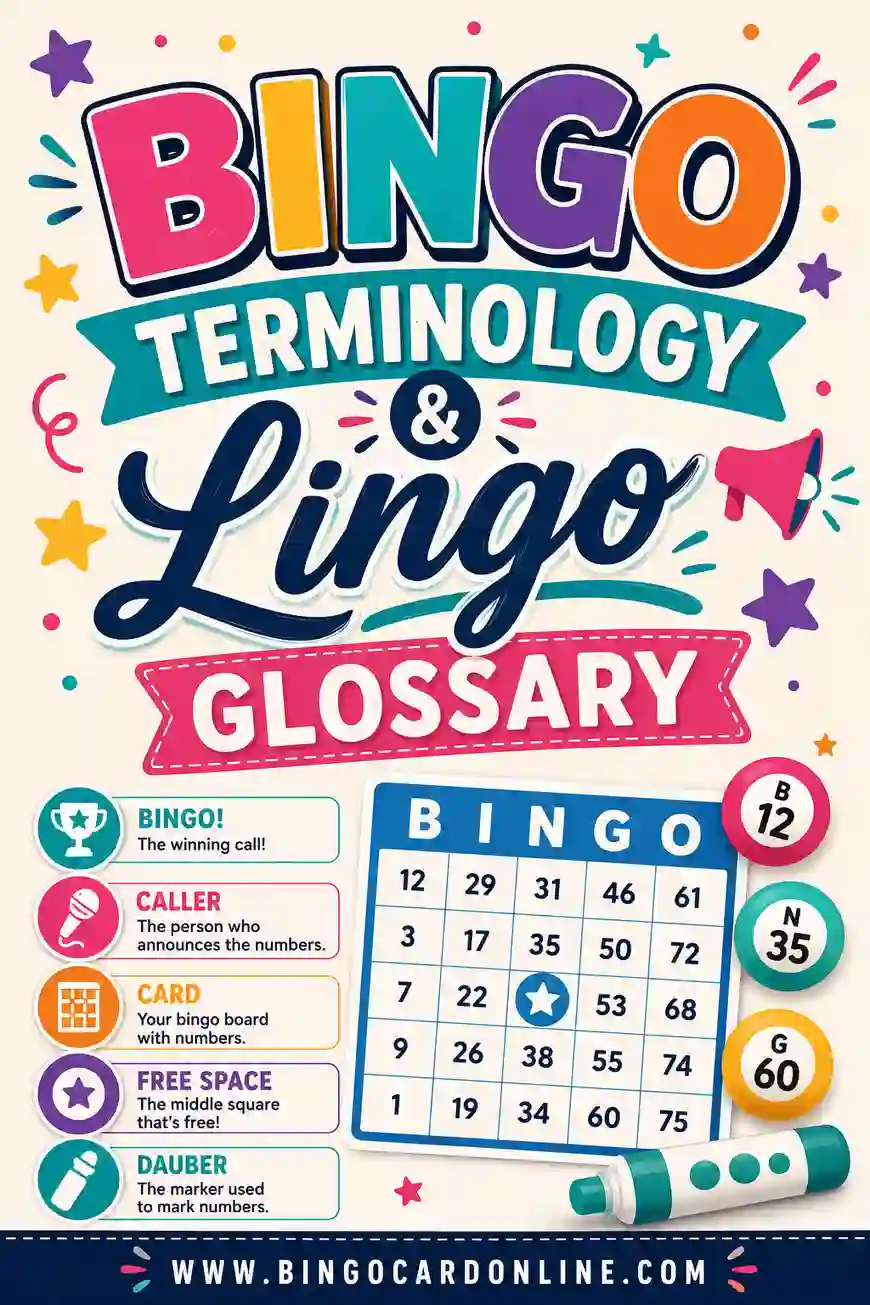
- It sets a deadline. Once the caller draws the next number, anyone who has not called bingo has missed their chance on the earlier number. A bingo that goes unnoticed and is only called later is often called a "sleeper," and many house rules do not count it. The bingo terminology and lingo glossary covers sleepers and other terms you may hear.
- It requires a valid card. Each tied winner's card is checked against the called numbers like any other bingo.
If you have never written down a basic set of rules for your game, start with how to play bingo for beginners and add the tie rules below to it.
How Often Ties Happen
Ties are more common than most new hosts expect, and they get more common as your crowd grows. Every extra card is another chance for someone to finish on the same number as the first winner.
We ran a short computer count of 20,000 random 75-ball games for each setup to see how often the first winning number produced more than one winner. With one card per player:
| Cards in play | Single line | Four corners | Blackout |
|---|---|---|---|
| 10 | about 8% of games | about 11% | about 18% |
| 25 | about 11% | about 14% | about 20% |
| 50 | about 13% | about 17% | about 20% |
| 100 | about 16% | about 19% | about 20% |
So in a room with 25 cards, roughly one single-line game in ten and one blackout game in five ends with two or more winners. If you run eight rounds in an evening, you should expect at least one tie. Those percentages come from random cards with no duplicates. If your cards come from a short word list, ties can happen even more often.
⚖️ Ready to play? Turn these ideas into printable game night bingo cards with the free generator: every card is unique, ready in seconds, no sign-up.
Make my bingo cards →The Six Best Bingo Tiebreaker Rules
Here are the bingo tiebreaker rules that work best, from simplest to most dramatic. Pick one as your main rule and, if you like, a second as a backup.
1. Share the prize
Every tied winner shares the prize. This is the simplest rule and the most common one in many halls.
Works best when: the prize can be divided, such as a basket of snacks, a box of treats, a set of items, or points in a running score.
How to do it: Announce, "We have two winners, so you will share this prize." Split it evenly in front of the room, or let the winners divide it between themselves.
2. Both winners get a prize
Each tied winner gets their own prize. Keep a few spare prizes in a bin for this purpose.
Works best when: you have small prizes, a friendly crowd, or a group where you want nobody to leave disappointed, such as a senior center, a family night or a classroom game run by a teacher.
How to do it: Hand the main prize to the winner of a quick draw (see below) and give the other winner a prize from the spare bin. Or, if all prizes are similar, let each winner choose.
3. High ball
Each tied winner draws one ball from the cage or bag. The highest number wins.
Works best when: you have a ball cage or a bag of numbered balls already at the front. It is fast, fair, and fits the feel of the game.
How to do it: Put all 75 balls back in the cage. Let each winner draw one ball, and keep each drawn ball out of the cage until everyone has drawn, so no two players can get the same number. Highest number wins. Some hosts use "low ball wins" instead. Either works, as long as you say which before the draw.
4. High card
Each tied winner draws one card from a shuffled deck of playing cards. The highest card wins.
Works best when: you do not have a ball cage, such as a word or picture bingo game at a party.
How to do it: Shuffle a standard deck. Each winner draws one card. Decide the order before you begin: aces are usually high, so the order runs ace, king, queen, jack, then 10 down to 2. If two players draw the same rank, either draw again or use suit order as a final tiebreaker. A common suit order, from high to low, is spades, hearts, diamonds, clubs. Say it out loud before the draw.
5. Playoff round
The tied winners play one quick extra round, and the first to finish wins.
Works best when: the prize is special, such as the grand prize at the end of the night, and the crowd enjoys a little extra drama.
How to do it: Each tied winner keeps their card, or gets a fresh card. Play a short pattern, such as four corners, a postage stamp, or a single line. Call numbers until one of them wins. The rest of the room can watch and cheer.
A faster version is a next-number playoff: the caller keeps drawing balls, and the first tied winner whose card has a newly drawn number on it wins. This often ends in two or three calls.
6. Closest number
Draw one ball. The tied winner whose card has a number closest to the drawn number wins.
Works best when: you want a quick, visual tiebreaker with number cards.
How to do it: Draw a single ball and read it out. Each tied winner checks their card for the nearest number. If two numbers are equally close, draw again. This works only for number cards, not word or picture cards.
Choosing Your Tiebreaker
| Method | Speed | Best prize type | Needs | Feels fair to the room |
|---|---|---|---|---|
| Share the prize | Instant | Divisible items | Nothing | Very |
| Both get a prize | Instant | Small or similar prizes | Spare prize bin | Very |
| High ball | Fast | Single item | Ball cage or bag | Very |
| High card | Fast | Single item | Deck of cards | Very |
| Playoff round | Slow, a few minutes | Grand prize | Extra cards | Very, and exciting |
| Closest number | Fast | Single item | Number cards | Fair, a little confusing |
A simple way to pick: share when you can, draw when you cannot, and save the playoff for the final game.
House-Rule Wording to Read Aloud
Reading your bingo tiebreaker rules at the start of the session avoids arguments later. Here are ready-to-read versions. Change the details to match your game.
For a casual game night:
"If two people get bingo on the same number, you both win. We will share the prize, and if it cannot be shared, you will each draw a card from this deck. High card takes the main prize, and the other winner picks from the spare bin."
For a hall or community event:
"A tie happens when two or more players have a valid bingo on the same called number and call it before the next number is drawn. Tied winners will share the prize. If the prize cannot be divided, each winner will draw one ball from the cage, and the highest number wins. A bingo called after the next number has been drawn will not count."
For the final game of the night:
"For this last game, if we have more than one winner on the same number, the tied winners will play one quick four-corners playoff round right here at the front. First to four corners takes the grand prize."
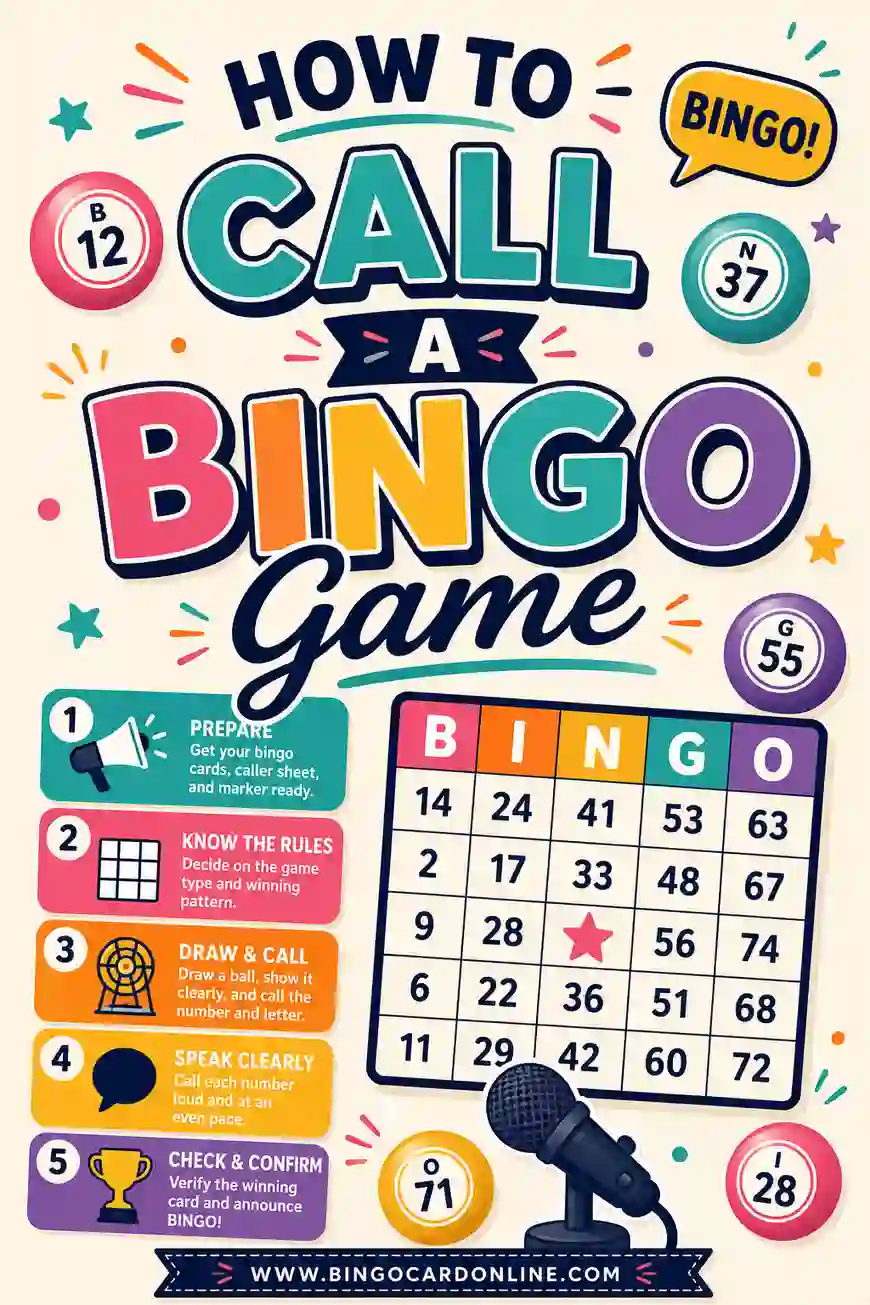
Print your chosen wording on the back of the call sheet, so whoever is calling can read it the same way every time. The how to call a bingo game guide has more advice on announcements and keeping a steady rhythm.
How to Handle a Tie Step by Step
When two players call bingo at once, follow the same order every time.
- Stop the draw. Do not pull the next ball until every bingo on the current number has been checked.
- Ask, "Any other bingos on this number?" Give the room a few seconds. This is the moment that stops arguments later.
- Check each card. Read back the numbers on the winning pattern and compare them to your master sheet of called numbers.
- Confirm the tie. Announce, "We have two winners on [number]."
- Apply your announced tiebreaker. Use the method you stated at the start of the game.
- Award the prizes and reset. Clear the cards and start the next game.
Tiebreaker Mistakes to Avoid
Deciding the rule after the tie. This is the number one cause of hurt feelings, and the reason bingo tiebreaker rules exist at all. Even if your choice is fair, it looks unfair when it is made in the moment. Announce your rule up front.
Rewarding the fastest shout. Giving the win to whoever yelled first punishes quiet players, people with hearing loss, and anyone who needed an extra second to check their card. The tie should be based on the called number, not on speed.
Drawing the next ball too soon. If you pull a new number while players are still checking, you create confusion about who won on which ball. Pause and ask for other bingos first.
Not keeping a master sheet. Without a record of every called number, you cannot check tied cards. Mark each number as you call it.
Running out of spare prizes. If your rule is that both winners get something, bring a few extras. In a big room you may need them more than once.
Forgetting house or event rules. If your game is part of a larger organization, a fundraiser or a licensed event, follow the rules that already apply to it. When you are not sure, ask the organizer before the game starts.
Preventing Some Ties in the First Place
You cannot stop ties completely, because they are part of the math of a shared draw. But you can make them less frequent:
- Use unique cards. Duplicate cards guarantee ties whenever one of them wins. The free bingo card generator makes every card a different shuffle.
- Use longer word lists. For word or picture bingo, a list of 35 to 50 items on a 5x5 card spreads the wins out more than a list of 24.
- Mix patterns. Some patterns finish with more ties than others. Changing patterns between rounds keeps things varied.
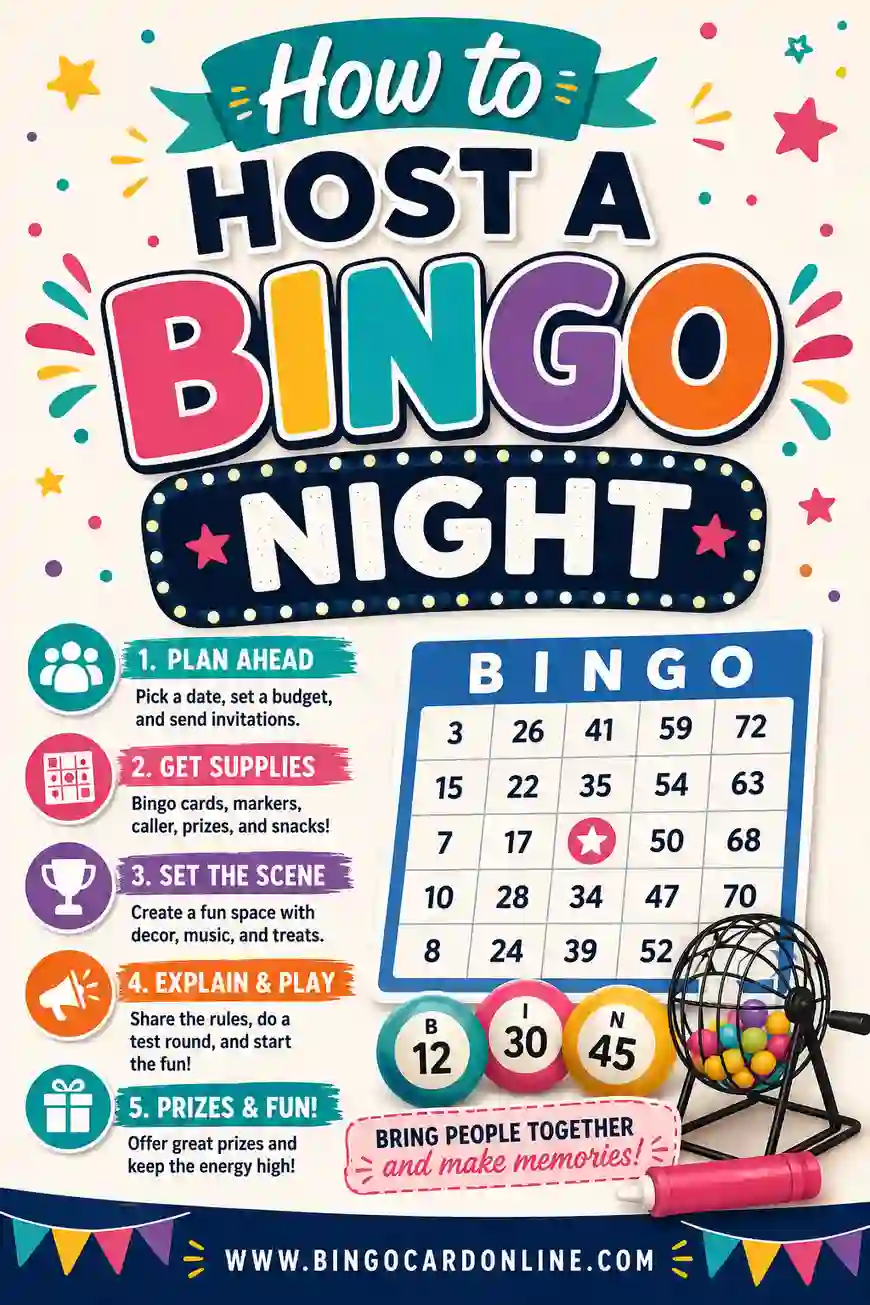
For overall evening planning, including prizes and how many rounds to run, see the bingo night hosting guide.
Your game night bingo game is one click away. Add your own squares, choose a 3x3, 4x4 or 5x5 grid and print up to 100 unique cards free.
Open the free bingo card generator →FAQ
What happens if two people get bingo at the same time?
If both players have a valid bingo on the same called number, both are winners. The host then applies the tie rule announced at the start of the game, such as sharing the prize, giving each winner a prize, or using a quick draw like high ball or high card.
Does the person who shouts bingo first win?
In most house rules, no. The win is based on the called number, not on who shouted first. Anyone with a valid bingo on that number who calls it before the next number is drawn shares the win.
What is the fairest bingo tiebreaker?
Sharing the prize, or giving each winner a prize, is usually seen as the fairest because nobody loses. When the prize cannot be shared, a high ball or high card draw is fair and fast because it is pure chance and easy for everyone to see.
What if a player calls bingo after the next number is drawn?
Most house rules say that a bingo must be called before the next number is drawn. A late call, sometimes called a sleeper, usually does not count for the earlier number. Announce your rule at the start so players know to watch their cards.
How do you break a tie with a deck of cards?
Each tied winner draws one card from a shuffled deck, and the highest card wins. Aces are usually high. If two players draw the same rank, draw again or use a suit order, such as spades, hearts, diamonds, then clubs.
Can there be more than two winners in a tie?
Yes. In a large room, three or more players can finish on the same number. Every tiebreaker in this guide works for any number of winners. Each winner draws a ball or card, or every winner shares the prize.
Should I tell players the tie rule before the game?
Yes, always. Read your bingo tiebreaker rules out loud before the first game and repeat them before the final game. Players accept almost any fair rule if they hear it ahead of time.