Christmas Around the World Bingo: 30 Traditions With Caller Clues
Christmas around the world bingo is a clue game for your holiday traditions unit. Each square is a tradition, like Las Posadas, St. Lucia Day, a parol lantern or Sinterklaas shoes. The caller reads a clue ("In the Philippines, families hang this star-shaped lantern"), and players find the matching tradition on their card. Below are 30 traditions with a ready clue for each, and they print as unique 5x5 cards with a free center.
The button loads all 30 traditions into the generator. Pick the Red & Green holiday theme, set one card per student plus a few spares, and print the master call sheet for yourself.
▶ Make these exact bingo cards
30 Christmas traditions with caller clues
Read the clue, not the square. Older kids can work it out from the country and the description. For younger kids, read the clue and then the name, so they're matching words while they learn the story behind them.
| Square | Where | Clue to read |
|---|---|---|
| Las Posadas | Mexico | For nine nights, from December 16 to 24, families walk from house to house acting out Mary and Joseph's search for a place to stay. |
| Piñata | Mexico | At Posadas parties, kids take turns breaking this. A traditional one is a star with seven points. |
| Poinsettia | Mexico | This red plant is called the flor de Nochebuena, which means "Christmas Eve flower." |
| Parol lantern | Philippines | Families hang this star-shaped lantern in their windows, often made of bamboo and paper or shells. |
| Simbang Gabi | Philippines | A series of nine early-morning church services from December 16 to 24. |
| St. Lucia Day | Sweden | On December 13, a girl in a white gown and a crown of candles leads a procession of singers. |
| Saffron buns | Sweden | Golden, S-shaped sweet rolls eaten on St. Lucia Day. |
| Sinterklaas shoes | Netherlands | Children set out their shoes, sometimes with a carrot for a horse, hoping for small treats. The big gift night is December 5. |
| Advent wreath | Germany | A ring of evergreen with four candles. One more is lit on each Sunday before Christmas. It started in Germany in the 1800s. |
| Christmas market | Germany | Rows of little wooden stalls in a town square selling gingerbread, ornaments and roasted nuts. |
| Advent calendar | Germany | Little doors you open one a day, counting down from December 1 to December 24. |
| La Befana | Italy | A kind old woman on a broom who brings sweets to children on the night of January 5. |
| Panettone | Italy | A tall, dome-shaped sweet bread with raisins and candied fruit that comes from Milan. |
| Nativity scene | Italy | Saint Francis of Assisi is said to have set up a living one in a village called Greccio in 1223. |
| Wigilia supper | Poland | A Christmas Eve meal that starts when the first star appears. Many families set an extra place for an unexpected guest. |
| Christmas wafer | Poland | Before supper, family members break off pieces of this thin wafer, called opłatek, and share good wishes. |
| Bûche de Noël | France | A rolled cake frosted and decorated to look like a log. |
| Santons | France | Small clay figures from Provence for the nativity scene, including villagers like the baker and the shepherd. |
| Christmas crackers | United Kingdom | Two people pull this paper tube until it snaps. Inside: a paper crown, a tiny toy and a joke. |
| Carols by Candlelight | Australia | Christmas is in summer here, so crowds gather outdoors on warm evenings to sing carols holding candles. |
| Yule Lads | Iceland | Thirteen playful visitors arrive one by one in the nights before Christmas. Kids leave a shoe on the windowsill. |
| Book flood | Iceland | People give each other books on Christmas Eve and spend the night reading. |
| Peace apples | China | Friends give apples wrapped in pretty paper on Christmas Eve, because the word for apple sounds like the word for peace. |
| Christmas cake | Japan | A sponge cake with whipped cream and strawberries, often shared on Christmas Eve. |
| Little Candles Day | Colombia | On the night of December 7, families line windows and sidewalks with candles and paper lanterns. |
| Grandfather Frost | Russia | Called Ded Moroz, he brings gifts at New Year with his granddaughter, the Snow Maiden. |
| Three Kings Day | Spain and Latin America | On January 6, many children get gifts, and families share a ring-shaped cake. |
| Spider web ornament | Ukraine | A folk tale tells of a spider whose webs on a poor family's tree shimmered in the morning light. |
| Silent Night | Austria | This carol was first sung on Christmas Eve 1818 in a village church in Oberndorf, with a guitar. |
| Rice pudding almond | Denmark | One whole almond is hidden in the Christmas rice pudding. Whoever finds it wins a small prize. |
Traditions vary a lot from family to family, even inside one country. When you introduce the game, it helps to say "many families in Sweden" rather than "everyone in Sweden." Kids from those places often light up and say "We do that!" or "We do it differently!", and both are great.
How to run the game in your classroom
- Teach first, play second. Spend a day or two on the traditions with a map, pictures or short videos. Bingo works best as a review.
- Print unique cards. One per student plus spares. The generator makes sure no two cards match.
- Read the clue, pause, then reveal. Give kids 10 to 15 seconds to think. Then say the answer and point to the country on a map.
- Ask the winner to explain. When someone gets bingo, they read back their squares and say one fact about each.
- Play a "passport" blackout at the end. Kids keep marking until the whole card is full, as if they've traveled the world.
Make it a passport activity
Lots of teachers run this unit as a pretend trip around the world. Bingo fits right in:
- Give each student a paper "passport" and stamp it for every country you study.
- Pin a world map on the wall and add a sticker each time a tradition is called.
- Let the bingo winner pick the next country to "fly" to.
- End the unit with a taste of something simple and allergy-safe, if your school allows it, like a slice of sweet bread or clementines.
Adjusting for younger kids and English learners
- Grades K to 1: Use about 20 of the easiest squares (such as Piñata, Poinsettia, Advent calendar, Christmas market, Christmas cake, Book flood, Peace apples) on a 4x4 card, and show a picture with each clue.
- Grades 2 to 3: Use the full list on a 5x5 card, and read the clue plus the country.
- Grades 4 to 5: Read the clue without the country. They'll love working it out.
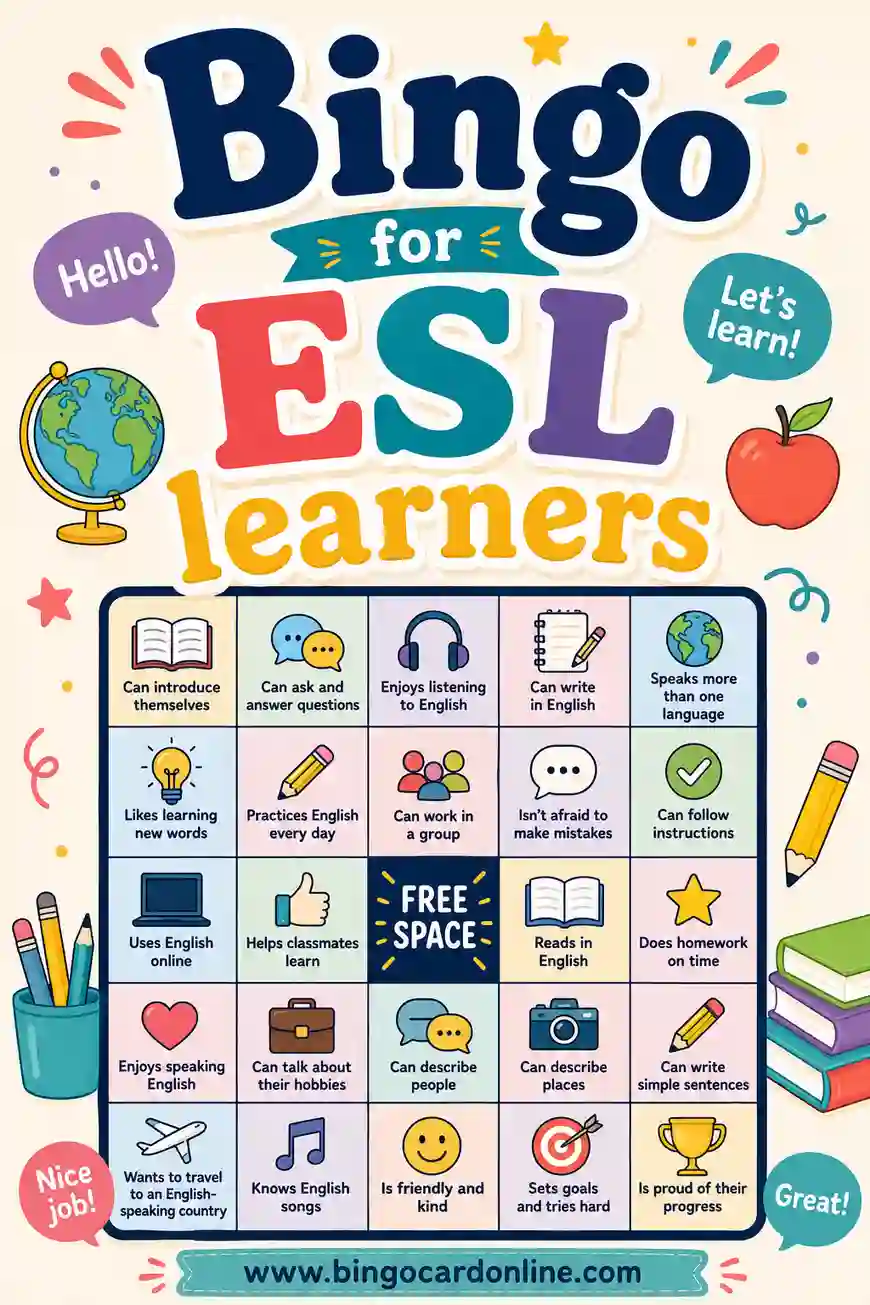
- English learners: Read slowly, repeat the key word, and point to a picture. The bingo for ESL learners page has more tips on adapting calls.
Mixing in more Christmas fun
If this is part of a December party rather than a unit, mix a round of traditions with a round of familiar words. Christmas bingo for kids has an easy word list, and classroom Christmas party bingo is a calm, no-candy game made for the last day before break. If your class also celebrates Hanukkah, Hanukkah bingo makes a lovely companion lesson.
Common mistakes with this game
- Playing before teaching. If the names are brand new, the game turns into guessing. Teach first.
- Presenting traditions as rules. Say "many families" and "often." Not everyone in a country does the same thing.
- Too many squares for young kids. A 5x5 card of unfamiliar names is a lot for a kindergartner. Trim the list and use a 4x4 card.
- No map. The game sticks better when kids can see where each place is.
▶ Make these exact bingo cards
Frequently Asked Questions
How do you play Christmas around the world bingo?
Each square is a holiday tradition. The caller reads a clue, like "In Sweden, a girl wears a crown of candles on December 13," and players find the matching tradition (St. Lucia Day) on their card.
What grade is Christmas around the world bingo for?
It works from about kindergarten to fifth grade. Younger kids use a shorter list on a 4x4 card with pictures, and older kids play the full 30 traditions on a 5x5 card with clues only.
What are good Christmas around the world activities to pair with bingo?
Paper passports stamped for each country, a world map with stickers for every tradition, picture books, and a simple taste of something like sweet bread if your school allows it.
Which holiday traditions around the world are on the cards?
Las Posadas and poinsettias from Mexico, parol lanterns from the Philippines, St. Lucia Day from Sweden, Sinterklaas shoes from the Netherlands, the Advent wreath from Germany, La Befana from Italy and more.
Is this game okay for English learners?
Yes. Read slowly, repeat the key word, and show a picture for each tradition. Pairing students on one card also helps.