Cookie Exchange Bingo: A Mingling Game for the Swap Table
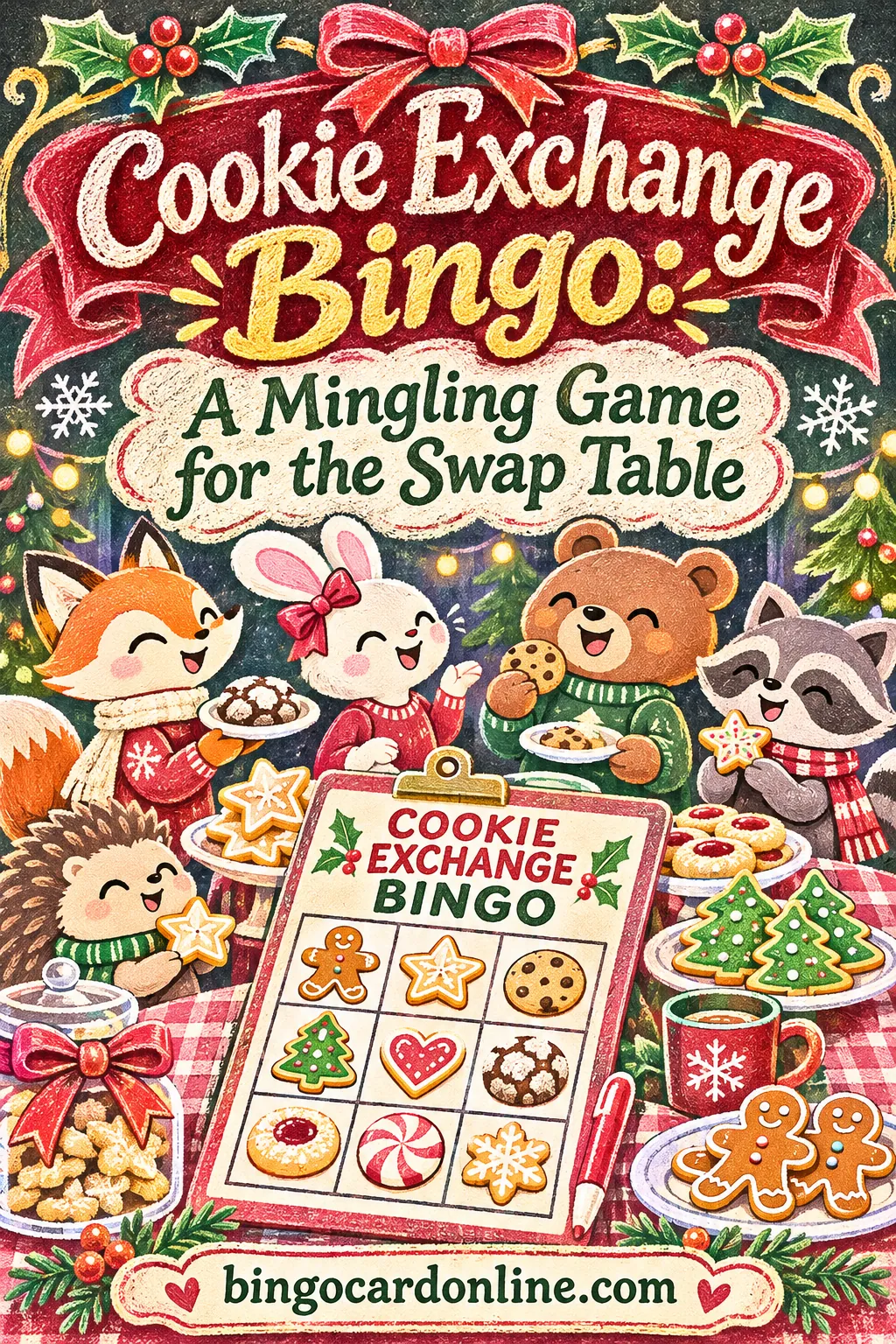
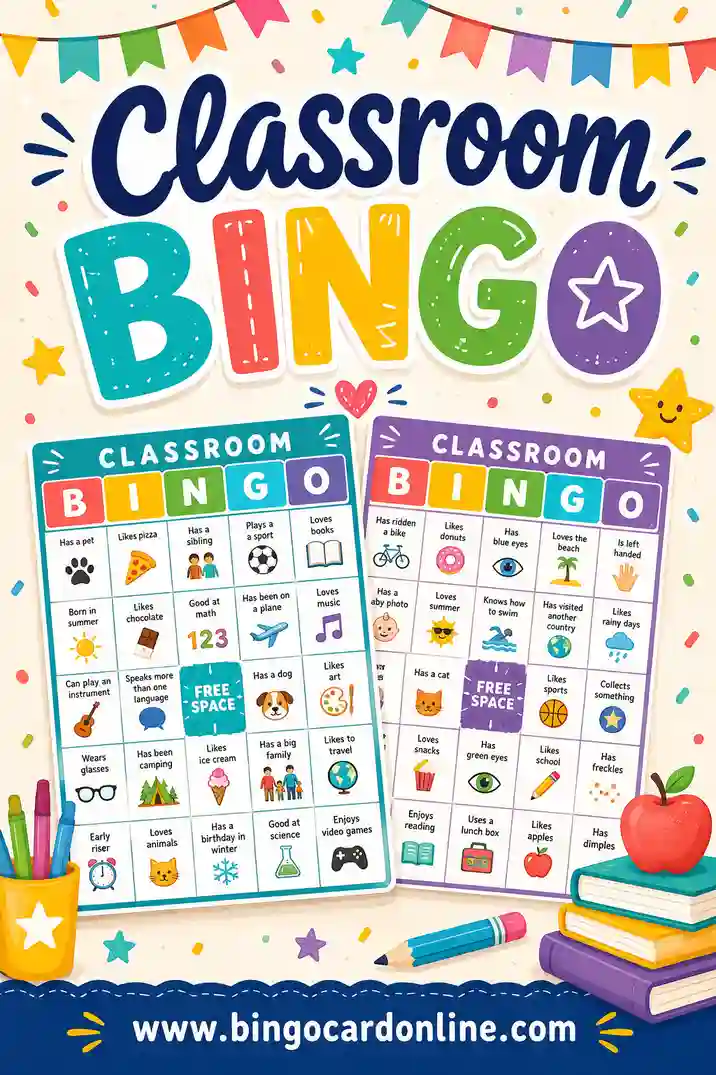
Cookie exchange bingo gets guests away from the swap table and talking to each other by giving everyone a card with squares they can only fill by chatting, tasting and trading, like "asked for a recipe," "met someone new," or "found a nut-free cookie." Hand out one unique card per guest at the door, and the first person to fill a line wins first pick at the swap. You can make the whole set in a few minutes with the free bingo card generator.
Below you'll find a ready list of squares, the exact tool settings, simple rules that keep it relaxed, a run-of-show for the party, and ways to adjust the game for six friends or a 40-person church hall.
▶ Make these exact bingo cards
Why Guests Hover Around the Cookie Table
Cookie swaps are lovely in theory. Everyone bakes, everyone brings a tin, and everyone goes home with a mix of treats. But hosts often notice the same pattern: guests arrive, set down their cookies, and then cluster around the table in little groups of people they already know.
There are a few reasons this happens.
- The table is the only "job" in the room. Standing by the cookies gives people something to do with their hands and eyes.
- Guests don't know each other. A swap often mixes neighbors, coworkers, church friends and family. Without a reason to talk, people stick with who they came with.
- Nobody knows when the swap starts. Guests hover so they don't miss their turn.
- Small talk runs out. After "these look amazing," there isn't an easy next line.
A bingo card gives guests a reason to cross the room. It turns "I don't know anyone here" into "I need someone who baked with a kid," which is a much easier opener.
What cookie exchange bingo looks like
Each guest gets a card with a mix of two kinds of squares:
- Find-someone-who squares. The guest finds another person who fits, like "someone who brought a family recipe" or "someone at their first cookie swap," and that person signs or initials the square.
- Do-it squares. The guest does the thing, like "tried a gingerbread" or "took a photo of a cookie," and marks the square themselves.
There's no caller. Everyone plays at their own pace while they mingle, nibble and look over the swap table. When someone fills a line, they bring their card to the host.
How to Make the Cards With the Free Tool
The bingo card maker shuffles your list of squares into a different card for every guest. When your list is longer than the card, each card gets its own random set of squares, so guests aren't all hunting for the same people at the same time.
Exact settings
| Setting | What to choose | Why |
|---|---|---|
| Card type | Words | Prompts like "asked for a recipe" need words, not pictures |
| Your words or items | 24 to 30 squares, one per line | More squares than the card needs means every card is a different mix |
| Card title | Cookie Exchange Bingo, or your party name | Shows at the top of every card |
| Card colors | Red & Green — holidays, or Pastel | Red & Green feels like Christmas; Pastel looks soft and wintry |
| Grid size | 4 × 4 for under 15 guests, 5 × 5 for 15 or more | Larger groups can fill more signature squares |
| Free center space | On, for 5 × 5 cards | Gives everyone one square to start (only available on 5 × 5) |
| Free-space label | Cookie! or a star | Fun, and it fits the theme |
| Number of unique cards | Guest count plus three spares | Covers last-minute guests and spilled cocoa |
| Cards per page | 2, or 1 for clipboards | Bigger cards are easier to sign while standing |
Step by step
- Choose Words as the card type. It's usually selected already.
- Clear the starter text. Select everything in the "Your words or items" box and delete it.
- Paste your list. One square per line. Keep each square short, two to five words, so it fits neatly when printed. Long prompts shrink the text on the card.
- Add your card title. "Cookie Exchange Bingo" works, or try something personal like "Maple Lane Cookie Swap Bingo."
- Pick your colors. Red & Green — holidays is the easy choice.
- Pick the grid size. Check the small line above the live preview. It shows how many squares the card needs and how many you've entered, so you'll know right away if you're short.
- Turn on Free center space if you chose 5 × 5, then type a label like "Cookie!" in the free-space box.
- Set the number of unique cards. For 12 guests, type 15.
- Open Print & sharing options and choose cards per page. Turn on Ink-saver / black & white print if your color ink is low.
- Click Generate cards, then Print / Save as PDF.
If you'd like to start from a ready list, the "Make these exact bingo cards" button on this page opens the generator with 20 cookie swap squares already filled in. Add a few of your own to reach 24 or more, then generate.
Why the list should be longer than the card
At a cookie swap, guests are all looking for people in the same room. If every card has the same 16 squares, everyone chases the same few people. The one guest who brought a family recipe gets swarmed while others stand alone.
With a longer list, each card gets a different set of squares, so guests spread out across the room.
| Squares in your list | 4×4 card uses | 5×5 card with free center uses | How it plays |
|---|---|---|---|
| 16 | 16 (every square, every card) | Not enough | Everyone hunts the same people |
| 20 | 16 | Not enough | Some variety, a few crowded squares |
| 24 | 16 | 24 (every square) | Good variety on 4×4; 5×5 cards share all squares |
| 30 | 16 | 24 | Great variety on both sizes |
For 5×5 cards, aim for at least 30 squares. For 4×4 cards, 24 is plenty.
Square Ideas for Your Cookie Swap
A good card mixes easy squares with a few that take some asking around. Roughly two-thirds easy and one-third harder keeps it fun without being frustrating.
Find-someone-who squares (a guest signs)
- Someone who brought a family recipe
- Someone at their first cookie swap
- Someone who baked with a kid
- Someone who baked the same kind of cookie as you
- Someone who used a cookie cutter
- Someone who started baking last night
- Someone who has a cookie story
- Someone who has made gingerbread houses
- Someone who bakes every December
- Someone who doesn't like chocolate
- Someone who traveled more than an hour to be here
- Someone who brought a gluten-free cookie
- Someone with the same birthday month as you
- Someone who's left-handed
- Someone who brought a no-bake cookie
- Someone who decorated with icing
Do-it squares (mark it yourself)
- Tried a gingerbread
- Tried a sprinkle cookie
- Found a nut-free cookie
- Took a photo of a cookie
- Asked for a recipe
- Swapped a favorite
- Traded a tin
- Met someone new
- Tried a cookie you've never had before
- Complimented a baker
- Found a cookie shaped like a tree
- Learned a new baking tip
- Wrote down a recipe to try
- Shared your own recipe
Cookie-spotting squares (find it on the table)
These are great for kids, or for guests who want an easy start.
- Chocolate chip
- Thumbprint
- Peppermint
- Shortbread
- Sugar cookie
- Snickerdoodle
- Crinkle cookie
- Pinwheel
- Spritz
- Oatmeal
- Molasses
- Linzer cookie
A balanced 24-square list to copy
If you want one list that just works, here's a 24-square mix for a 4×4 card. Paste it straight into the tool.
| Signatures (8) | Do-it (8) | Spotting (8) |
|---|---|---|
| Family recipe | Tried a gingerbread | Chocolate chip |
| First cookie swap | Met someone new | Thumbprint |
| Baked with a kid | Asked for a recipe | Peppermint |
| Same cookie as you | Found a nut-free cookie | Shortbread |
| Has a cookie story | Photo of a cookie | Sugar cookie |
| Bakes every December | Swapped a favorite | Tree-shaped cookie |
| Gluten-free cookie | Traded a tin | Crinkle cookie |
| Used a cookie cutter | Complimented a baker | Pinwheel |
Because each card picks 16 of these 24 at random, one guest's card might be heavy on signatures while another's leans toward tasting. That's part of the fun, and it means guests are rarely chasing the same square.
Squares to skip
Keep the card kind and comfortable. Avoid squares that:
- Single out how someone looks, their age or their weight
- Push anyone to eat a certain amount ("ate five cookies")
- Rank bakers ("found the worst cookie")
- Pressure people about allergies or diets
- Need private information to answer
If a square could make a guest feel awkward, swap it for something about baking, the party or the holidays.
Simple Rules That Keep It Friendly
Mingling games work best with a few light rules. Too many, and guests feel like they're doing homework. Too few, and one chatty guest signs everybody's whole card.
The basic rules
- One signature per person per card. A guest can sign only one square on your card. This is the rule that makes people move around the room.
- Mark your own do-it squares. If you tried the gingerbread, mark it. Nobody checks.
- First line wins round one. Any row, column or diagonal. Bring your card to the host.
- Keep playing after a win. The next prizes go to a second line, four corners, or the first full card.
- Be honest and be kind. Only sign squares that really fit you, and don't press anyone who'd rather not answer.
- Game ends when the swap starts. Put cards down and pick up your tins.
How many signatures can a guest actually get?
The one-signature rule has a catch: a guest can only collect as many signatures as there are other people at the party. In a small group, that limits how many signature squares a card can have.
| Guests | Most signatures one guest can collect | Grid that works best | Signature rule |
|---|---|---|---|
| 6 to 8 | 5 to 7 | 4 × 4 with mostly do-it and spotting squares | Two signatures per person allowed |
| 9 to 14 | 8 to 13 | 4 × 4 with a third signature squares | One signature per person |
| 15 to 25 | 14 to 24 | 5 × 5 with free center | One signature per person |
| 26 to 40 | 25 to 39 | 5 × 5 with free center | One per person, and play for a line plus four corners |
For a small group, it's fine to let each person sign two squares. For a big one, stick with one. The goal is to make guests talk to new people, not to make the card impossible.
What the host says
A short welcome makes the game feel like part of the party, not a chore. Here's a script you can read as guests settle in:
"Welcome, and thank you for the beautiful cookies! Everyone has a bingo card. Some squares you mark yourself, like trying the gingerbread. Some need a signature from someone who fits, like someone who brought a family recipe. Each person can sign only one square on your card, so go meet people. First line wins first pick at the swap table. We'll start the swap in about 45 minutes."
Mentioning the swap time is important. Once guests know when the swap starts, they stop hovering by the table to save their spot.
Easy openers for shy guests
Some guests freeze when they have to approach a stranger. Give them a line to borrow. You can even print a few of these on the back of the card or say them in your welcome.
- "Hi, I'm hunting for someone who baked with a kid. Is that you?"
- "Can I ask which cookies you brought?"
- "I need a signature for 'first cookie swap.' Is this your first one?"
- "Do you have a cookie story? I've got a square for that."
- "Which cookie should I try first?"
These work because they're about the game, not the person. That takes the pressure off.
Run-of-Show for the Party
Here's a simple timeline for a two-hour cookie swap with bingo built in.
Before the party
| When | What to do |
|---|---|
| Two to three weeks before | Send invites with the swap rules: how many cookies to bring, how to package them, and a note to list main ingredients |
| One week before | Build your square list, generate cards, and print them |
| A few days before | Ask guests to mention if they're bringing a nut-free or gluten-free batch, so you can add matching squares |
| The day before | Gather pens, clipboards, labels and prizes, and set up a sign-in table near the door |
| Party day, one hour before | Set out the swap table, the ingredient labels and a tray of sample cookies for tasting |
During the party
| Time from start | What happens |
|---|---|
| 0 to 15 minutes | Guests arrive, drop off cookies, fill out ingredient labels and get a bingo card and pen |
| 15 minutes | Host welcome and rules (about two minutes) |
| 15 to 60 minutes | Mingling, tasting and signing; host checks bingo calls as they come |
| 60 minutes | Bingo ends; first-line winner picks first at the swap |
| 60 to 90 minutes | The swap: guests fill their containers, in winner order first, then everyone else |
| 90 to 120 minutes | Recipe sharing, extra prizes for four corners or a full card, and goodbyes |
Hand out cards at the door, not at the table. If guests get their card first, they start reading it and looking around the room instead of heading straight for the cookies.
Set up the room for mingling
The space shapes how people move. A few tweaks help bingo do its job.
- Put the swap table against a wall, not in the center of the room. That opens up a big space to mingle.
- Set a separate tasting tray away from the swap table, with a few broken cookies and samples. Guests can try things without touching the swap tins.
- Spread out the cocoa and water. Put drinks on the other side of the room from the cookies, so guests have a reason to cross it.
- Offer clipboards or hard cards. Signing a floppy sheet in the air is awkward. Card stock helps too.
- Have pens everywhere. Put a cup of pens on every surface. Lost pens stall the game fast.
Make It Work for Your Group
Cookie swaps come in all sizes, from a few friends around a kitchen island to a big church hall. The cards change a little for each.
Six to eight close friends
When everyone already knows each other, "met someone new" won't work. Change the squares to things friends don't know about each other yet:
- Someone who's tried a recipe from another country
- Someone who learned to bake from a grandparent
- Someone who's had a baking disaster this year
- Someone who still has a childhood cookie cutter
- Someone who's planning to give cookies as gifts
Use a 4×4 grid, let each person sign two squares, and lean on do-it and spotting squares. A small group might finish in 20 minutes, which is fine. Play a second round for four corners.
Neighbors or a mixed group of 10 to 20
This is the sweet spot for cookie exchange bingo. People know a few others but not everyone, so signature squares really get them talking. Use a 4×4 card with 24 squares for up to about 14 guests, or a 5×5 card with 30 squares beyond that.
Office cookie swaps
Work swaps tend to be short, often a lunch hour. Keep things quick:
- Use a 4×4 card so someone wins within 20 to 30 minutes.
- Skip squares that touch personal life if your team prefers to keep things light.
- Add work-friendly squares like "someone from another department" or "someone who started this year."
- End bingo 15 minutes before the swap so everyone gets back to their desk on time.
For more ideas that fit the workplace, see bingo for office holiday parties.
Church, school or community hall swaps of 25 to 40
Big swaps need a little more structure.
- Use 5×5 cards with the free center turned on and a list of 30 or more squares.
- Recruit a helper to check winning cards, so the host can keep the swap running.
- Play for a first line, then four corners, then a full card, with a small prize for each.
- Number the tables or areas, and add squares like "someone from the far table" to keep people moving.
Kids at the swap
Kids love bingo, but signature squares can be hard for little ones. Make a separate kids' batch:
- A 3×3 or 4×4 card with cookie-spotting squares like "star cookie," "sprinkles," "candy cane shape," and "green icing."
- Picture-friendly words for non-readers, with a grown-up helping.
- Crayons instead of pens.
They'll stay busy and out from under the swap table, which every host will appreciate.
Allergy-Aware Squares and Labels
A square like "found a nut-free cookie" is helpful, but only if guests can actually tell which cookies are nut-free. Bingo can nudge everyone toward better labeling.
Ask for ingredient labels
In your invite, ask each baker to bring a small card listing the cookie's name and main ingredients, especially common allergens like nuts, peanuts, eggs, milk, wheat and soy. Set out blank cards and a pen at the swap table for anyone who forgets.
Then build the labels into the game:
- "Read a cookie label" as a do-it square
- "Found a nut-free cookie" (marked only if the label says so)
- "Someone who brought a gluten-free cookie" as a signature square
- "Asked a baker what's in their cookie" as a do-it square
These squares turn label-checking into part of the fun instead of an awkward question.
Keep allergy squares low-pressure
A few simple guidelines keep these squares kind:
- Don't add squares that ask guests to share their own allergies or diet.
- Make "found a nut-free cookie" about reading labels, not about tasting. Guests who don't want to eat something should never feel they need to for a square.
- Remind guests that home kitchens aren't allergen-free, so anyone with a serious allergy should follow their own usual precautions. Labels list ingredients; they can't promise there was no cross-contact.
- If a guest has a severe allergy, it's worth a quiet chat before the party about what would help them feel comfortable.
Squares for guests who aren't eating sweets
Some guests come for the company and the swap, not the tasting. Make sure every card has plenty of squares they can mark without eating anything: signature squares, "complimented a baker," "took a photo of a cookie," "wrote down a recipe to try," and spotting squares. With 24 or more squares in your list, no card should depend on tasting.
Prizes That Fit a Cookie Swap
The best prizes at a cookie swap are about the swap itself. They feel special and cost the host almost nothing.
Swap-based prizes
- First pick at the swap table. This is the big one. Guests take it seriously.
- An extra half-dozen. The winner takes six bonus cookies of their choice once the swap is done.
- Skip the line for cocoa.
- Name a cookie. The winner names the host's batch, and the label gets changed on the spot.
- Take home the decorated platter display, if you've got one extra.
Small keepsake prizes
- A spare cookie tin or container
- A handwritten recipe card from the host
- A cookie cutter from your drawer
- A small bag of sprinkles or colored sugar
- A roll of baking ribbon or twine for packaging
For a longer list of ideas, from silly to sweet, see our bingo prize ideas.
A prize for everyone
At a friendly swap, it's nice if nobody leaves empty-handed. Once the official winners are done, let anyone with at least one line pick a recipe card from a basket. Kids especially love going home with something.
Troubleshooting the Game
Most cookie swap bingo games run themselves. When something goes wrong, it's usually one of these.
| Problem | Likely cause | Fix |
|---|---|---|
| Nobody's moving around | Rules weren't explained, or cards were handed out at the table | Do the two-minute welcome, and walk a shy guest over to someone new |
| One guest is mobbed | Several cards share the same rare signature square | Use a longer list so cards differ, and let that guest sign a sticky note "pass" for the rest |
| Cards fill too fast | Small group with mostly do-it squares | Switch to four corners or full card for round two |
| Nobody can get a line | Too many signature squares for a small group | Allow two signatures per person, or add spotting squares |
| Text on the card is tiny | Some squares are very long | Shorten squares to two to five words; one long square shrinks the text on the whole card |
| Guests stop playing at the swap | Normal; the swap is the main event | End bingo right before the swap and give prizes then |
| Late guests feel behind | They missed 20 minutes of mingling | Give them a 3×3 card or two free marks so they can catch up |
| Someone's left out | Shy guest, or nobody fits their squares | Host signs a square for them and introduces them to someone |
Quick checks before you print
- Read every square once out loud. If one feels awkward, swap it.
- Check the preview line above the card: does your list have more squares than the card needs?
- Print one test card on plain paper to make sure the text is easy to read.
- Make three spares.
Make your cards now
Getting set up takes about five minutes. Open the free bingo card maker, paste a list of 24 to 30 squares, pick 4 × 4 or 5 × 5, set the number of cards to your guest count plus three, and print. Want a shortcut? The "Make these exact bingo cards" button on this page opens the tool with cookie swap squares ready to go. For more ways to get people talking, see find someone who bingo and our guide to the human bingo icebreaker. If you're hosting more holiday gatherings, you'll find seasonal word lists on our Christmas bingo cards page, and you can always come back to the bingo card generator to build a fresh set.
▶ Make these exact bingo cards
Frequently Asked Questions
What is cookie exchange bingo?
Cookie exchange bingo is a mingling game for cookie swap parties. Each guest gets a card with squares like "met someone new," "asked for a recipe," or "someone who brought a family recipe." Guests mark squares by doing things, spotting cookies, or collecting signatures, and the first to fill a line wins a prize such as first pick at the swap.
How many squares should a cookie swap bingo card have?
For groups under 15, a 4×4 card with 16 squares works well. For 15 or more guests, use a 5×5 card with the free center turned on, so each card has 24 squares to fill. Either way, put more squares in your list than the card needs, so every card is a different mix.
How long does the game take?
Most groups get a first line within 20 to 40 minutes, depending on size and how many signature squares are on each card. Plan to run bingo for about 45 minutes before the swap starts. You can keep playing for four corners or a full card if guests are having fun.
Do I need a caller?
No. Cookie exchange bingo plays like a find-someone-who game, so guests mark squares on their own as they mingle. The host just explains the rules, checks winning cards, and hands out prizes. You can skip the caller and the call sheet entirely.
What if my guests already know each other?
Swap out "met someone new" for squares about things friends may not know, like "learned to bake from a grandparent" or "had a baking disaster this year." Let each person sign two squares in a small group. Spotting and do-it squares also work well, since they don't depend on meeting new people.
Can kids play cookie exchange bingo?
Yes. Make a separate batch of 3×3 or 4×4 cards with simple cookie-spotting squares like "sprinkles," "star cookie," and "green icing." Hand out crayons instead of pens. A grown-up can read squares to non-readers, and the kids will stay busy while the adults swap.
What's a good prize for cookie exchange bingo?
First pick at the swap table is the favorite, because it fits the party perfectly. Other easy prizes include an extra half-dozen cookies, a spare tin, a cookie cutter, or the right to name the host's batch. Small, swap-based prizes keep the mood friendly.
How do I handle food allergies with bingo squares?
Ask every baker to bring an ingredient label, and build squares around reading labels rather than eating. Never add squares that ask guests to share their own allergies. Make sure every card has plenty of squares that don't involve tasting, so nobody feels pushed to eat something.
Can I print the cards in black and white?
Yes. Open Print & sharing options and turn on Ink-saver / black & white print before you print. The squares stay clear and easy to read. You can also choose 1, 2 or 4 cards per page, and save the set as a PDF if you'd rather print it somewhere else.