Christmas Eve Bingo for Kids Who Can't Sit Still Waiting for Santa
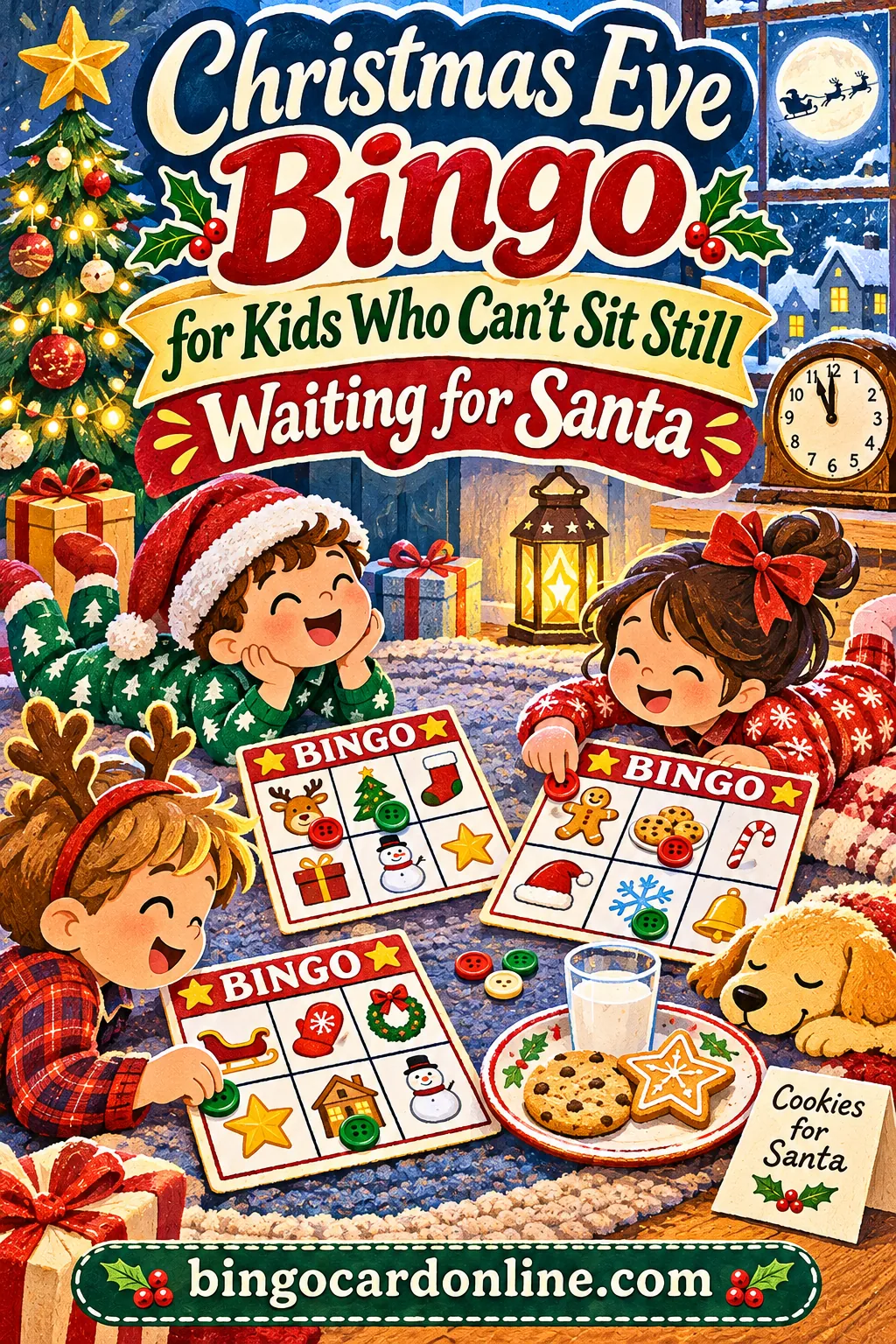
The calmest game for the last hour of Christmas Eve is a small 3×3 bingo card of Christmas Eve things (cookies for Santa, stockings, reindeer carrots, pajamas, a bedtime story) that each child plays on the rug with a pencil or a handful of buttons while you call the squares in a slow, quiet voice. Nine squares, soft voices and no running around. It takes about ten minutes to make and print a card for every child with the free bingo card maker, and nobody needs to sign up or download anything.
Below you'll find the exact settings, word and picture lists by age, a "whisper calling" script, a wind-down plan for the last 60 to 90 minutes before bed, and fixes for the things that usually go sideways on the most exciting night of the year.
▶ Make these exact bingo cards
Why Bingo Calms Kids Down on Christmas Eve
Christmas Eve is a strange evening for kids. They've had a big day, maybe a big dinner, maybe cousins and noise, and now you're asking them to go to sleep early on the one night they least want to. Telling a wound-up six-year-old to "settle down" rarely works. Giving them something quiet to do with their hands and eyes works much better.
Bingo fits that job unusually well:
- It happens sitting down. Kids play on the floor or at the kitchen table. Nobody's chasing anybody.
- It makes them listen. You can't mark a square if you didn't hear the word, so the whole room gets quieter on its own. The caller sets the volume, and you can set it low.
- It's slow by design. Each call is a little pause. Find it, mark it, wait. That rhythm is the opposite of tearing around the house.
- Little kids can play. A 3×3 picture card works for children who can't read yet. They match the picture you hold up or describe.
- It has a clear ending. "Two more rounds, then teeth" is easy for kids to understand, and bingo rounds really are short.
- It's about tonight. The squares are all things that happen on Christmas Eve: hanging stockings, leaving cookies, putting on pajamas. The game builds the excitement into a calm routine instead of fighting it.
Why "quiet bingo" and not regular bingo
Regular party bingo is loud on purpose. People shout "Bingo!" and jump up. That's the last thing you want at 7:30 on Christmas Eve. So this version changes a few rules:
- Whisper calling. You call in a soft, slow voice, like reading a bedtime story.
- Silent bingo. When a child gets three in a row, they put a hand on their head instead of shouting.
- No race to win. Everyone keeps playing until every child has a line. The "winner" picks the next thing, like which book gets read.
- Lights go down each round. Round one with the big lights on, round two with a lamp, round three by tree lights only.
Kids still get the fun of matching and filling a line. They just don't get revved up doing it.
How to Make Christmas Eve Bingo Cards With the Free Tool
Open the bingo card maker on a phone, tablet or computer. It all runs in your browser, so you can make the cards while dinner's in the oven. Here are the exact settings for a family with two to five kids.
Step-by-step settings
- Card type: Choose Words if your kids read, or if you want a little picture next to each word (more on that below). Choose Emoji for a picture-only card for toddlers and preschoolers.
- Your words or items: Type your list, one item per line. For a 3×3 card, aim for 12 to 14 items. The list later in this article is ready to copy.
- Card title: Something cozy, like "Christmas Eve Bingo" or "The Night Before Christmas at Grandma's." Kids like seeing their family's name on the card.
- Card colors: Pick Red & Green — holidays. If your printer is low on color ink, turn on Ink-saver / black & white print instead.
- Grid size: 3 × 3. Nine squares is plenty for the end of a long day. Older kids can use 4 × 4 (see the age table).
- Number of unique cards: The number of kids plus two spares. Three kids? Type 5. The spares cover a torn card or a cousin who shows up in pajamas at the last minute.
- Cards per page: Choose 1 for little kids so the squares are big, or 2 for older kids. With 3×3 cards, one per page gives you squares large enough for a button or a toy car to sit on.
- Click Generate cards. The note under the button tells you how many unique cards it made.
- Click Print / Save as PDF. If you don't have a printer, see the no-printer section below.
- Click Print master call sheet. This one-page list is your calling list. You'll read from it like a bedtime book.
That's it. If you'd rather not type, the button on this page opens the generator with a ready Christmas Eve list already filled in. You can delete or add items before you generate.
Settings by age at a glance
| Age | Card type | Grid size | Items in your list | Cards per page | Markers |
|---|---|---|---|---|---|
| 2 to 3 | Emoji (pictures only) | 3 × 3 | 10 to 12 | 1 | Big stickers or large buttons |
| 4 to 5 | Emoji, or picture plus word | 3 × 3 | 12 to 14 | 1 | Buttons, cereal-sized pom-poms, crayon |
| 6 to 8 | Words, or picture plus word | 3 × 3 or 4 × 4 | 13 to 20 | 1 or 2 | Pencil or crayon |
| 9 to 12 | Words | 4 × 4 | 18 to 22 | 2 | Pencil, or they call for the little ones |
| Mixed ages | Picture plus word | 3 × 3 | 13 to 14 | 1 | Whatever each child likes |
For a mixed group, give everyone the same 3×3 card style. Older kids can be the caller's helper, which keeps them from getting bored with an "easy" card.
Why 13 items and not 9
A 3×3 card has nine squares. If your list has exactly nine items, every child's card holds the same nine things in a different order. That sounds fine until you play a full-card round and everyone finishes on the very same call. The tool even warns you when this happens: it says every card has the same items, just shuffled.
With 12 to 14 items, each card leaves out a few different things. One child has the fireplace but not the candy cane. Another has the candy cane but not the star. Now rounds end at different times, kids notice "Hey, I don't have that one," and the game feels fair.
Here's how it works out on a 3×3 card:
| Items in your list | Squares per card | Items left off each card | What happens |
|---|---|---|---|
| 9 | 9 | 0 | Every full-card round ends in a tie |
| 12 | 9 | 3 | Cards differ a little, quick rounds |
| 13 | 9 | 4 | Good balance for two to five kids |
| 16 | 9 | 7 | Cards look very different, rounds take longer |
Thirteen is a nice middle. It's also short enough that you can call every single item in about four minutes, even at a slow, sleepy pace.
Putting a picture and a word in every square
For kids aged four to seven, the favorite setup is a little picture next to each word. Stay in Words mode and start each line with an emoji, then the word:
- 🍪 Cookies for Santa
- 🧦 Stockings
- 🥕 Reindeer carrots
- 🎄 Lit tree
- 👕 Pajamas
- 📖 Bedtime story
- ☕ Hot cocoa
- ❄️ Snowflake
- 🔔 Jingle bell
- 🍬 Candy cane
- 🎁 Wrapped gift
- 🔥 Fireplace
- ⭐ Star
Each square then shows both. Readers read the word. Non-readers match the picture. Emoji look a little different on different phones and computers, so look at the Live preview before you print and swap any picture that doesn't look right on your screen.
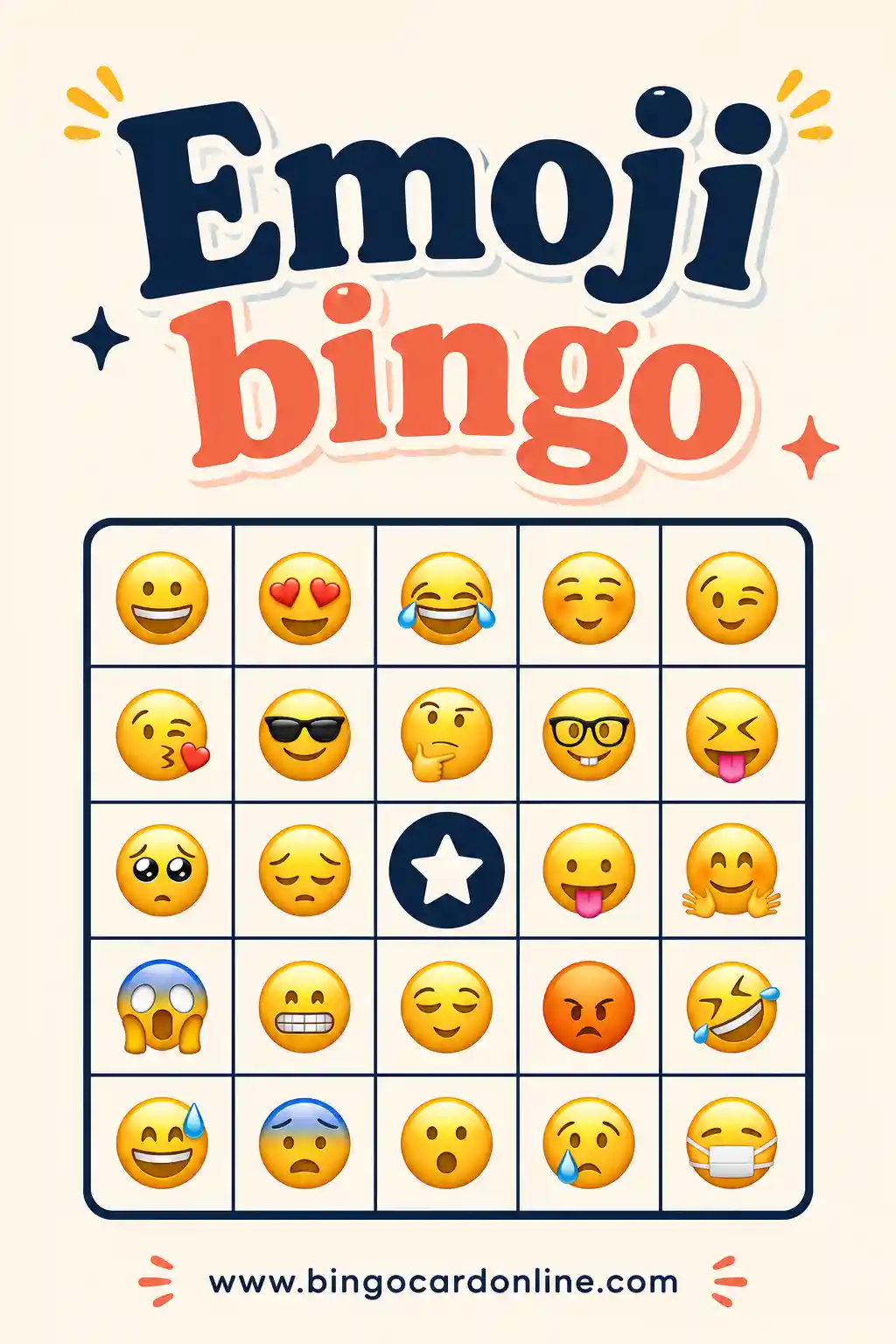
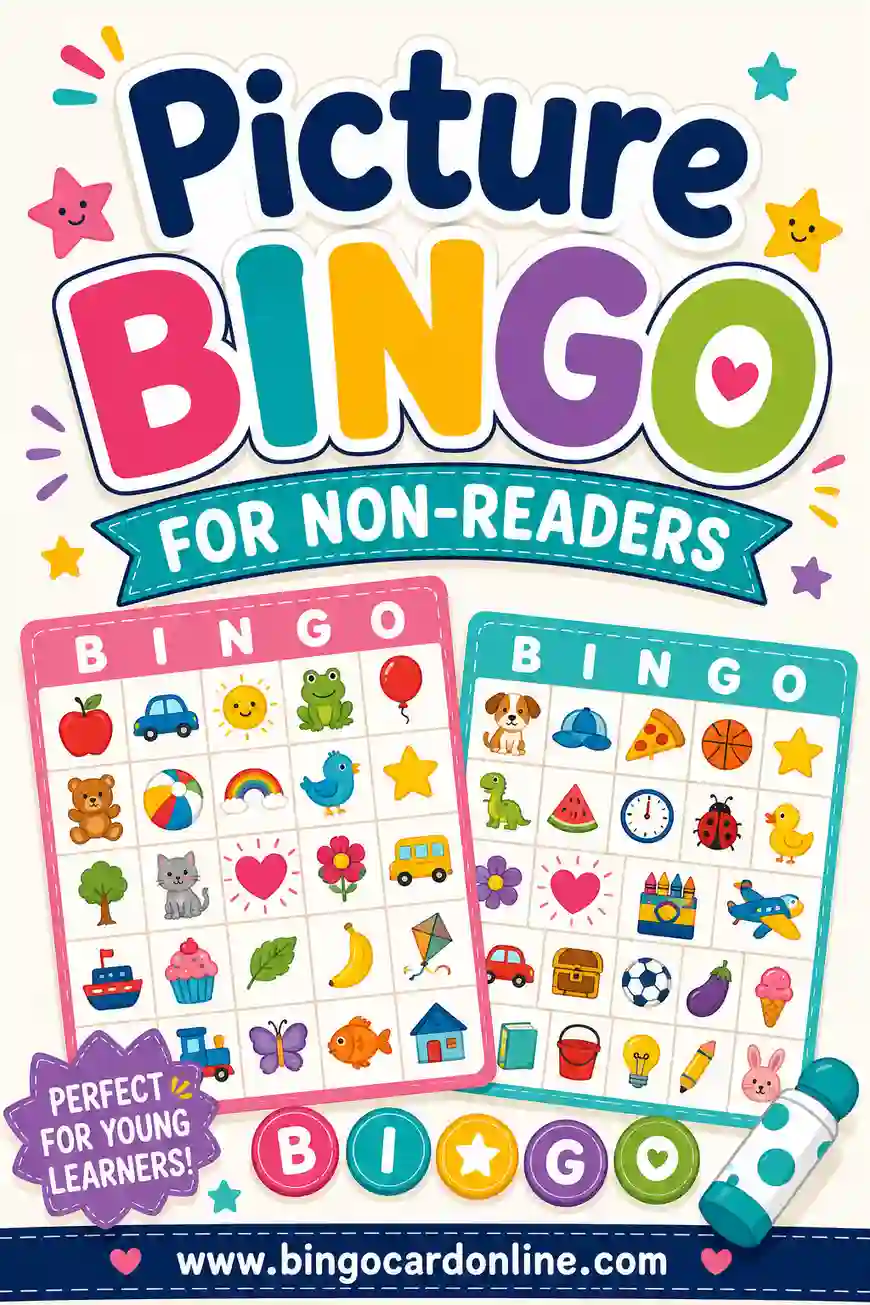
If you'd rather use only pictures, switch Card type to Emoji and pick the Christmas picture pack from the theme menu. Read through the pictures it fills in and delete any you don't want. For more on picture-only cards, see how to make picture bingo for non-readers.
Using your own photos
Here's a sweet option if you have a few minutes earlier in the day. Switch Card type to Photos and add up to 30 pictures from your phone: your own tree, the stockings on your mantel, the plate you'll leave out tonight, the dog in a bow, Grandpa's slippers. Each card places the photos in a random order. The photos are processed right in your browser and aren't uploaded or saved, so they're gone once you close the page. Print right away.
Kids love finding their own house on a bingo card. And when you call "our stockings," they get to look up at the real ones.
Christmas Eve Word and Picture Lists by Age
The best Christmas Eve squares are things kids can see, touch or do tonight. That's what makes the game feel special: it's not generic holiday bingo, it's this evening. Copy a list into the box, one item per line, then trim or add to fit your house.
| List | Items (12 to 20) | Best for |
|---|---|---|
| Toddler pictures | Tree, star, gift, bell, sock, cookie, moon, snowflake, candle, bear, blanket, book | Ages 2 to 3, Emoji mode |
| Classic Christmas Eve | Cookies for Santa, stockings, reindeer carrots, lit tree, pajamas, bedtime story, hot cocoa, snowflake, jingle bell, candy cane, wrapped gift, fireplace, star | Ages 4 to 8 |
| Getting ready for bed | Pajamas, toothbrush, slippers, blanket, pillow, bath, night-light, bedtime story, glass of milk, teddy bear, brushing hair, goodnight hug, yawn | Kids who need the bedtime routine spelled out |
| Out the window | Moon, stars, snow, frost on the glass, neighbor's lights, a wreath on a door, a car's headlights, a cat, the porch light, an airplane's blinking light, a cloud, a streetlight | A quiet looking game at a big window |
| Older kids (4×4) | Stocking hung, cookie plate set out, carrots by the door, note written, tree lights on, carol hummed, gift wrapped, cocoa poured, pajamas on, story read, teeth brushed, slippers by the bed, curtains closed, a sleigh bell, a pinecone, a candle, a snow globe, a wish whispered, lights out | Ages 9 to 12 |
Turning the routine into the card
Here's a little trick that does a lot of the bedtime work for you. Put real bedtime steps on the card: "pajamas," "teeth brushed," "story read," "lights out." Then, instead of calling them from a list, you call each one when it actually happens.
It goes like this. You call a few cozy squares (star, snowflake, hot cocoa). Then you say, "The next square is pajamas. And the only way to mark it is to have them on." Kids go (slowly) to change, come back, and mark the square. Same with teeth. Same with the story.
By the time someone fills a line, the routine is half done, and nobody had to be nagged. A lot of parents find this the most useful version on Christmas Eve, because it turns the hardest part of the night into a game.
One rule to keep it calm: no running to change. Anyone who runs has to walk back and do it again. Kids think that's funny, and it works.
Squares to leave off tonight
- Anything that winds them up. "Snowball fight," "sledding" and "dance party" are fun squares in daylight. On Christmas Eve, they put the idea in a child's head.
- Anything about presents they'll get. "New bike" or "big box" squares lead to guessing and questions you don't want to answer. "Wrapped gift" is fine; it's just a picture.
- Brand, show or character names. They date fast, and they pull kids toward screens.
- Look-alike words for early readers. "Star," "stars" and "starry sky" on one card is confusing. Keep one.
- Anything scary. A "dark night" or "noise on the roof" square can go the wrong way for a nervous four-year-old.
The Whisper Calling Script
How you call matters more than the card. A bright, fast, game-show voice will undo the whole point. Use your bedtime-story voice. Here's a script you can borrow word for word.
Before the first round
"Okay, everybody find a spot on the rug and put your card in front of you. This is quiet bingo. I'm going to whisper the squares, so you'll have to listen really carefully. When you hear something on your card, put a button on it. If you get three in a row, don't shout. Just put your hand on your head and wait for me to see you."
Hold up a card and show what three in a row looks like: across, down, and corner to corner.
Calling each square
Slow is the whole point. Say each item, pause, then add one short, gentle line about it. For example:
- "Stockings... Stockings. Ours are hanging by the window, all empty and waiting."
- "Cookies for Santa... Cookies. We'll put three on the plate in a little while."
- "Snowflake... Snowflake. Every single one is different, like your cards."
- "Jingle bell... Jingle bell. Can anybody hear one? Listen..."
That last one is a nice trick. Ask kids to stop and listen for a few seconds. Real silence on Christmas Eve feels a little magical, and it settles the room.
Wait until every child has looked and marked before you say the next one. If a little one is still hunting, help them find it. There's no rush.
When someone gets a line
Notice the hand on the head, then say quietly: "I see a hand on a head. Let's check." Read the three squares back and check them against what you've called. If they're all called, say, "That's a line. Well done," and give them a small job, like choosing the next pattern or calling the next round.
Then keep going until every child has a line. That's the rule tonight: nobody goes to bed without one.
Using the screen caller instead
If you'd rather not read from paper, click Play caller after you generate. A full-screen caller opens and draws one item at a time, with no repeats, and keeps a history of what's been called. There's an Undo button if you tap twice by mistake, a Voice option that reads each word out loud, and Auto-call every 5, 10 or 15 seconds.
For Christmas Eve, here's what works best:
- Leave Auto-call off. You want to set the pace by watching the kids, not a timer. Tap Next yourself.
- Turn the screen brightness down. A bright screen right before bed is the opposite of what you want. Keep the tablet low and dim.
- Try Voice for one round only. Kids think it's fun to hear the device call, but your own voice is calmer. Voice can't read emoji aloud, so say picture squares yourself.
- Put the screen away for the last round. Finish by reading from the call sheet by tree light.
A Wind-Down Plan for the Last 60 to 90 Minutes
Many families find it helps to start lowering the energy about an hour to an hour and a half before you want kids asleep. Bingo can sit right in the middle of that stretch. Here's a plan you can shift to fit your evening. Say lights out is 8:30.
| Time | What happens | Lights and sound |
|---|---|---|
| 7:00 | Dinner wraps up, last loud play is over | Normal |
| 7:10 | Bath or wash-up, then pajamas | Normal |
| 7:25 | Hand out bingo cards and markers on the rug | Turn off the TV and any music with a beat |
| 7:30 | Round 1: any line (cozy squares) | Big lights on |
| 7:40 | Set out the cookie plate and reindeer carrots together | Kitchen light only |
| 7:50 | Round 2: four corners or a "T" shape | Lamp only |
| 8:00 | Hang stockings or check them one last time | Tree lights and a lamp |
| 8:05 | Round 3: everyone's round (play until every child has a line) | Tree lights only |
| 8:15 | Teeth, last drink of water, bathroom | Hall light |
| 8:20 | Bedtime story in bed | Night-light |
| 8:30 | Lights out | Dark and quiet |
How long each round really takes
Rounds on a small card are short, and that's a good thing. Here's what the numbers look like for a 3×3 card, a 13-item list and three kids:
- Any line: Nobody can win before the third call, and the first line usually shows up around the fifth call. Even with your gentle little comments, that's about two minutes of calling.
- Full card: Each child needs all nine of their squares. With 13 items in the list, the first full card usually comes around the 12th call, so the round runs through almost the whole list. Plan on four or five minutes at a slow pace.
- Everyone's round: Keep calling until each child has a line. You'll get through most of the list, which takes four to five minutes.
So three rounds take 15 to 20 minutes with marking, checking and moving the lamp. That's long enough to settle kids down and short enough that they don't get bored.
If you're using the routine version (pajamas, teeth, story), the game naturally stretches across the whole hour, which is the idea.
If you have less time
Running late after a family dinner? Cut to one round of "everyone's round" with the lights low, and go straight to teeth and story. Ten minutes of quiet bingo is still a lot calmer than ten minutes of "Go brush your teeth!"
Markers That Won't Wind Anyone Up
On a normal game night you might use candy as markers. Tonight, with cookies already on the agenda and bedtime coming, skip anything edible. Sugar at 8 p.m. doesn't help anybody sleep, and kids who eat their markers mid-round lose their squares.
| Marker | Best for | Why it works tonight | Watch out for |
|---|---|---|---|
| Buttons from the sewing box | Ages 4 and up | Quiet, reusable, nice to hold | Not for kids who still put things in their mouths |
| Crayon or pencil "X" | Ages 5 and up | Nothing to spill or roll under the couch | Card can't be reused, so use a new color each round |
| Big stickers | Ages 2 to 5 | Satisfying, and the card becomes a keepsake | Peel a strip ready before you start |
| Paper chips | All ages | Click Print bingo markers / chips and cut them out earlier in the day | Small pieces scatter; keep them in a bowl |
| Pom-poms | Ages 3 and up | Soft and silent | Same choking warning as buttons for toddlers |
| Small toys (cars, animals, blocks) | Ages 3 to 6 | Kids love parking a car on "fireplace" | Needs a 1-per-page card with big squares |
Parent tip: For toddlers, skip small markers entirely. Use big stickers or let them press a finger on the square while you say, "Yes! You found the star." The bingo markers guide has more ideas.
Prizes that end the night well
Kids care much more about winning than about what they win. On Christmas Eve, the best prizes are little jobs and privileges that lead toward bed:
- Put the cookies on the plate
- Carry the reindeer carrots to the door
- Choose the bedtime story
- Turn off the big light for the next round
- Be the caller for the next round
- Pick which stocking gets checked first in the morning
- Sleep with the special Christmas blanket
- Whisper "goodnight" to the tree
Every one of those prizes moves the night forward. That's on purpose.
Variations for Every Kind of Christmas Eve Crowd
Every house looks different on Christmas Eve. Here's how to adjust the game for the kids you actually have in the room.
One child
Bingo still works with one player, and it can be extra cozy. Make two cards, one for your child and one for you. Play side by side on the couch under a blanket. Let your child win the tie-breaks. Or skip winning entirely and play "fill the whole card together," where you take turns finding squares on each other's cards.
Siblings with a big age gap
A three-year-old and a nine-year-old on the same card rarely goes well. Give each the right card instead:
- The little one gets a 3×3 Emoji card, one per page, with big stickers.
- The older one gets a 4×4 word card, or better, the job of caller. Big kids love running the screen caller and doing the whisper voice. Being in charge keeps them from rolling their eyes at a "baby game."
Generate the two card sets separately with different settings, then print both.
Visiting cousins and a full house
If you have six to ten kids in pajamas tonight, a few tweaks keep it calm:
- Use a 13- to 16-item list so cards differ and you don't get five hands on heads at once.
- Seat kids in a circle on the floor, not around a table where they can kick each other.
- Have one adult call and one adult wander, checking cards and helping little ones.
- Play "everyone's round" last so every cousin goes to bed a winner.
Generate all the cards in one batch. The tool checks the whole batch so no two cards in it are the same.
Toddlers who can't really play yet
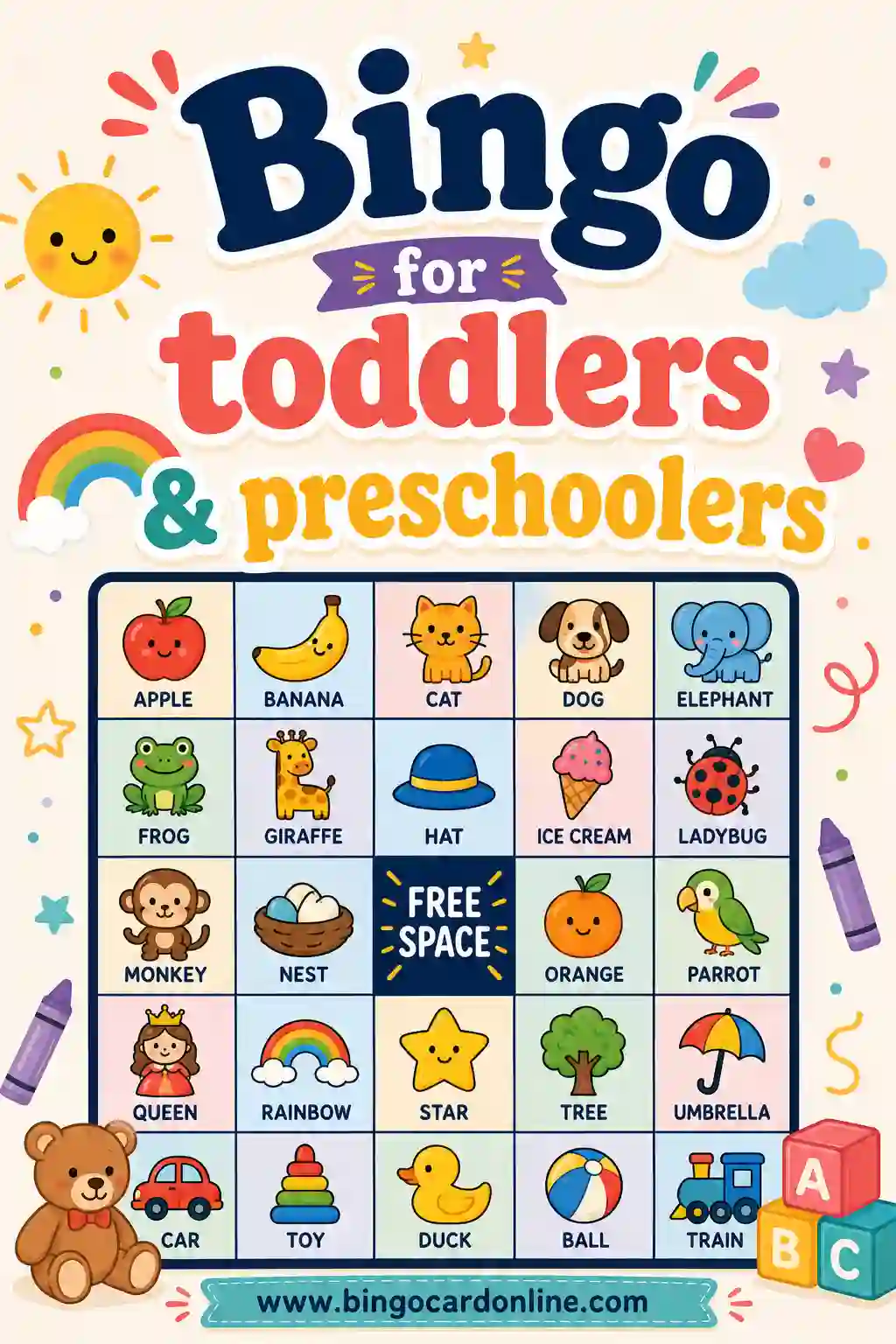
For two- and three-year-olds, the "game" is mostly finding pictures and putting stickers on them. That's fine. Hold up a real object when you call it: the actual stocking, a real candy cane, a jingle bell from the tree. Let them point to the picture. Cheer every match. For more ideas at this age, see bingo for toddlers and preschoolers.
Kids who don't settle easily
Some kids find Christmas Eve hard: the noise, the change in routine, the waiting. A few adjustments help:
- A smaller card. Nine squares is easier to scan than sixteen.
- A heads-up about the end. "Three more squares, then we stop" helps kids who struggle with stopping.
- A weighted blanket or a lap. Some kids mark their card better sitting in a grown-up's lap.
- A choice to stop. If a child is done after one round, let them color their card instead.
No printer? Three ways to play anyway
It's 6 p.m. on Christmas Eve and the printer is out of ink. Don't worry.
- Play from a phone or tablet. Click Download PNG to save a card image. Open it in any drawing or markup app and let your child tap or draw on the squares. Turn the brightness all the way down.
- Copy the card by hand. Generate the cards, look at the Live preview, and draw a 3×3 grid on paper for each child. Copy their words in. Kids enjoy drawing the little pictures themselves, and that's a calm activity all on its own.
- Play out loud. For two kids, you can even skip cards. Each child chooses three Christmas Eve things from your list and says them out loud. You call from the list; first one to hear all three of theirs whispers "bingo."
If you do want printed cards, make them the morning of Christmas Eve or a day or two before, while there's still time to fix a printer problem.
Troubleshooting Christmas Eve Bingo
| Problem | Likely cause | Fix |
|---|---|---|
| The game is getting louder, not quieter | Shouting "bingo," fast calling, competition | Switch to hand-on-head bingo, slow down, play "everyone's round" |
| Everyone finishes at the same time | Your list has only 9 items for a 3×3 card | Add 4 or 5 more items and generate again |
| The tool says you need more items | Your list is shorter than the number of squares, or has repeats | Add items, or drop from 4×4 to 3×3 |
| A little one is crying about losing | Long rounds with one winner | Play until everyone has a line, and give the winner a "job" prize |
| Kids are arguing over who saw what first | Racing to be first | Everyone who has the square marks it; nobody wins by speed |
| Squares are too small for buttons | Two or four cards per page | Print one card per page |
| Pictures look odd on the printout | Emoji look different on different devices | Check the Live preview, swap any that look wrong |
| The voice skips some squares | Voice can't read emoji | Say picture squares yourself |
| Bedtime is slipping | Too many rounds | Stop after the round in progress and switch to the routine version |
| A child asks about tomorrow's presents | "Gift" squares spark guessing | Drop gift squares, use stars, stockings and snowflakes instead |
Christmas Eve Bingo Prep Checklist
The beauty of this game is how little setup it needs. Still, a few minutes earlier in the day saves stress later.
A day or two before
- Make the cards in the free bingo card maker, with your number of kids plus two spares
- Print the cards and the master call sheet
- Click Print bingo markers / chips if you want paper markers, and cut them out
- Test the printer while there's still time to fix it
Christmas Eve afternoon
- Put markers in a small bowl for each child
- Gather a few real objects to hold up when you call (a jingle bell, a stocking, a candy cane)
- Decide your lights-out time and count back about an hour for the first round
- Set out the cookie plate and carrots in the kitchen so they're ready to be a prize
Right before the first round
- Turn off the TV and loud music
- Spread a blanket on the rug
- Put the call sheet on your lap, or open the caller with the brightness down
- Explain quiet bingo and hand-on-head bingo
Supplies for three kids
| Item | How many | Notes |
|---|---|---|
| Bingo cards | 5 | 3 kids plus 2 spares, 1 card per page |
| Sheets of paper | 5 | Or 3 if you print 2 per page for older kids |
| Markers | 1 bowl per child | Buttons, pom-poms, stickers or a crayon |
| Master call sheet | 1 | Your calling list |
| Real objects to hold up | 4 to 6 | Bell, stocking, candy cane, star ornament |
| Prizes | 3 to 4 little jobs | Plate the cookies, choose the story |
Ready to make tonight's cards?
You can have every card printed in the time it takes to warm up the cocoa. Open the bingo card maker, use the button on this page to start with the Christmas Eve list, choose 3 × 3, set the count to your number of kids plus two, and click Generate cards. For more holiday word lists to mix in, take a look at the Christmas bingo cards page.
▶ Make these exact bingo cards
Frequently Asked Questions
What's a good quiet game for kids on Christmas Eve?
A small bingo card of Christmas Eve things, played on the rug with soft voices, works well. Use a 3×3 card so rounds are short, call each square slowly, and have kids put a hand on their head instead of shouting "bingo." Lower the lights a little each round.
How many squares should a Christmas Eve bingo card have?
For kids under eight, a 3×3 card with nine squares is best at the end of a long day. Older kids can handle 4×4 with 16 squares. Put 12 to 14 items in your list for a 3×3 card so each child's card is a little different.
Can toddlers play Christmas Eve bingo?
Yes. Use picture cards from Emoji mode, print one card per page, and use big stickers instead of small markers. Hold up a real object, like a bell or a stocking, when you call it. For two-year-olds, the fun is in finding the picture, so cheer every match.
How long should Christmas Eve bingo last before bed?
About 15 to 20 minutes for three short rounds is plenty. Start roughly an hour before lights out, so there's time for teeth, a story and settling down afterward. If you're running late, one "everyone's round" takes about ten minutes.
What can kids use as bingo markers on Christmas Eve?
Buttons, pom-poms, big stickers, crayons or printed paper chips all work. Skip candy, since sugar right before bed doesn't help kids sleep. Keep small markers away from toddlers who still put things in their mouths.
How do I stop kids from getting upset if they don't win?
Play until every child has a line, and give the first winner a "job" prize like plating the cookies instead of a big reward. Make sure everyone who has a called square gets to mark it, so nobody loses by being slow. Short rounds help too.
Can I make Christmas Eve bingo without a printer?
Yes. Click Download PNG to save a card image and let your child mark it on a tablet with the brightness turned low. Or look at the live preview and copy each card onto paper by hand. Kids often enjoy drawing their own little pictures in the squares.