Feelings Bingo for Kids: Free Printable for Counselors and Classrooms
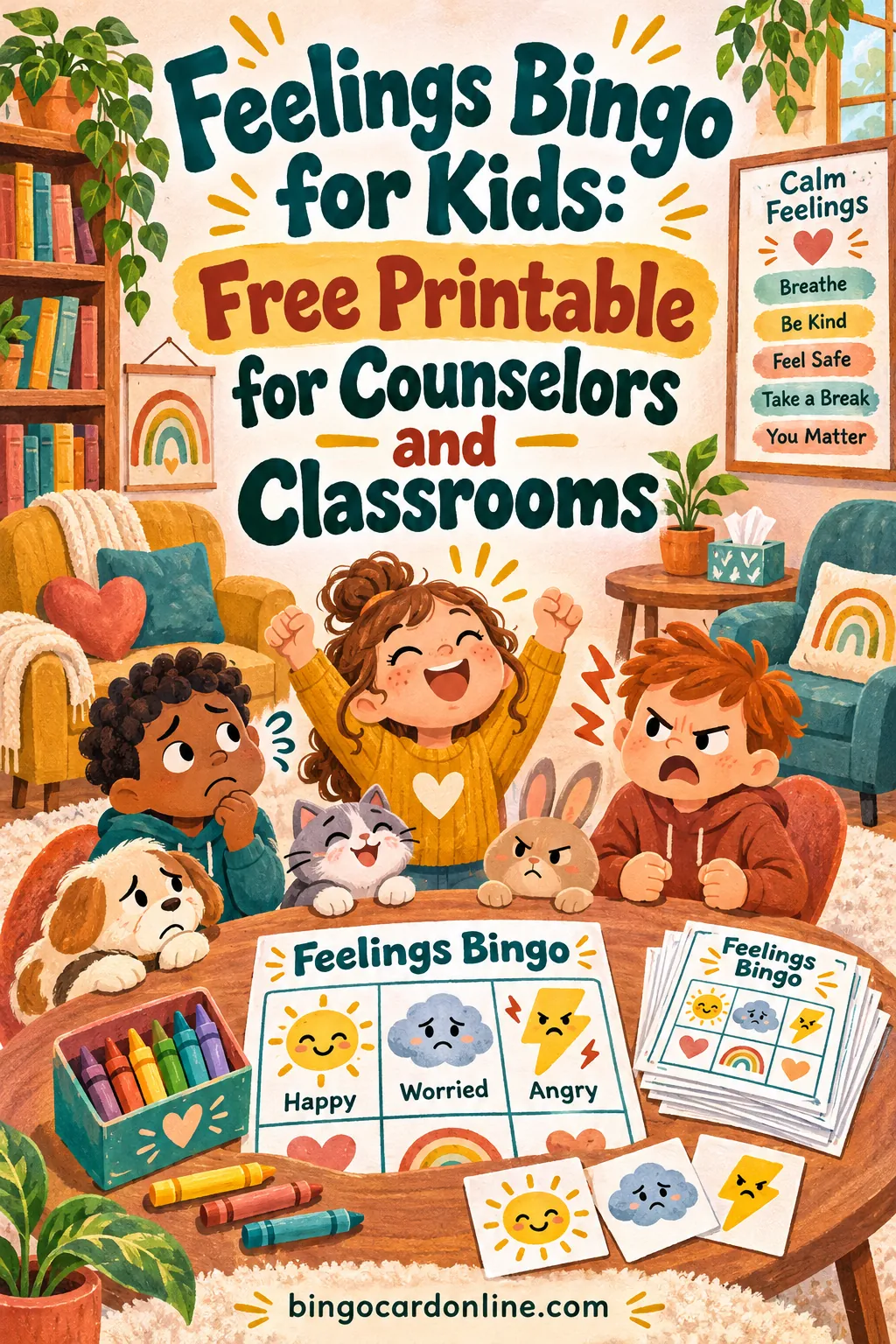
You can make feelings bingo for kids for free by typing 9 or 16 emotion words (or picking emoji faces) into the generator, printing a different card for each child, and using the call list as prompts like "Tell about a time you felt proud." There's no kit to order and nothing to wait for. The free bingo card generator builds the whole set, including a call sheet, in a few minutes.
Below you'll find ready-to-use emotion word lists by age, the exact settings, discussion prompts, and ways to run the game in a counseling group or a full classroom.
▶ Make these exact bingo cards
Why Feelings Bingo Works So Well
Kids often struggle to name what they feel. Many can say "mad" or "sad," but words like "frustrated," "disappointed," or "nervous" take practice. Bingo gives them that practice in a low-pressure way.
The game does a few useful things at once:
- It builds an emotions vocabulary. Kids see and hear feeling words over and over as they're called.
- It gives everyone a turn to listen. The whole group watches their cards, so attention stays on the caller.
- It opens the door to sharing, without forcing it. A called word can be a prompt to talk, but kids can also just mark the square and pass.
- It's familiar. Most kids already know how bingo works, so you spend your time on feelings instead of rules.
Boxed emotion bingo games exist, but they can be hard to find in stock and you can't change the words. When you make your own, you pick the feelings that match your lesson, your group's age, and what's going on in your school.
How to Fix It With the Generator
Here's the exact setup for a feelings bingo set. You can have cards in hand before your next session.
- Open the bingo card generator.
- Choose your card type. Pick Words for reading kids, or Emoji for pre-readers and mixed groups.
- Pick a grid. Use 3×3 (9 squares) for kindergarten through second grade, 4×4 (16 squares) for older elementary, or 5×5 (24 squares plus a free space) for middle school.
- Enter your feelings. Type one emotion per line. Use the age lists below to get started.
- Add a card title. Something like "How Do I Feel?" or "Feelings Bingo" works well.
- Set the number of unique cards. Enter one per child plus a couple of extras. Every card is a different shuffle, so no two kids have the same board.
- Choose cards per page. Use 2 per page for younger kids who need big squares, or 4 per page for older groups to save paper.
- Pick a color theme. Pastel feels soft and calm for a counseling room. Ink-saver black & white is great if kids will color their cards.
- Click "Print / Save as PDF." Then click "Print master call sheet" so you have your full call list.
If you're running the game on a screen, the "Play caller" button lets you call words one at a time. On a 5×5 card you can also change the free space label to something like "I feel safe" or "My choice."
Emotion Word Lists by Age
Use more words than squares whenever you can. That way each card gets a different mix of feelings, and fewer kids hit bingo on the same call.
Ages 4–6 (3×3 grid)
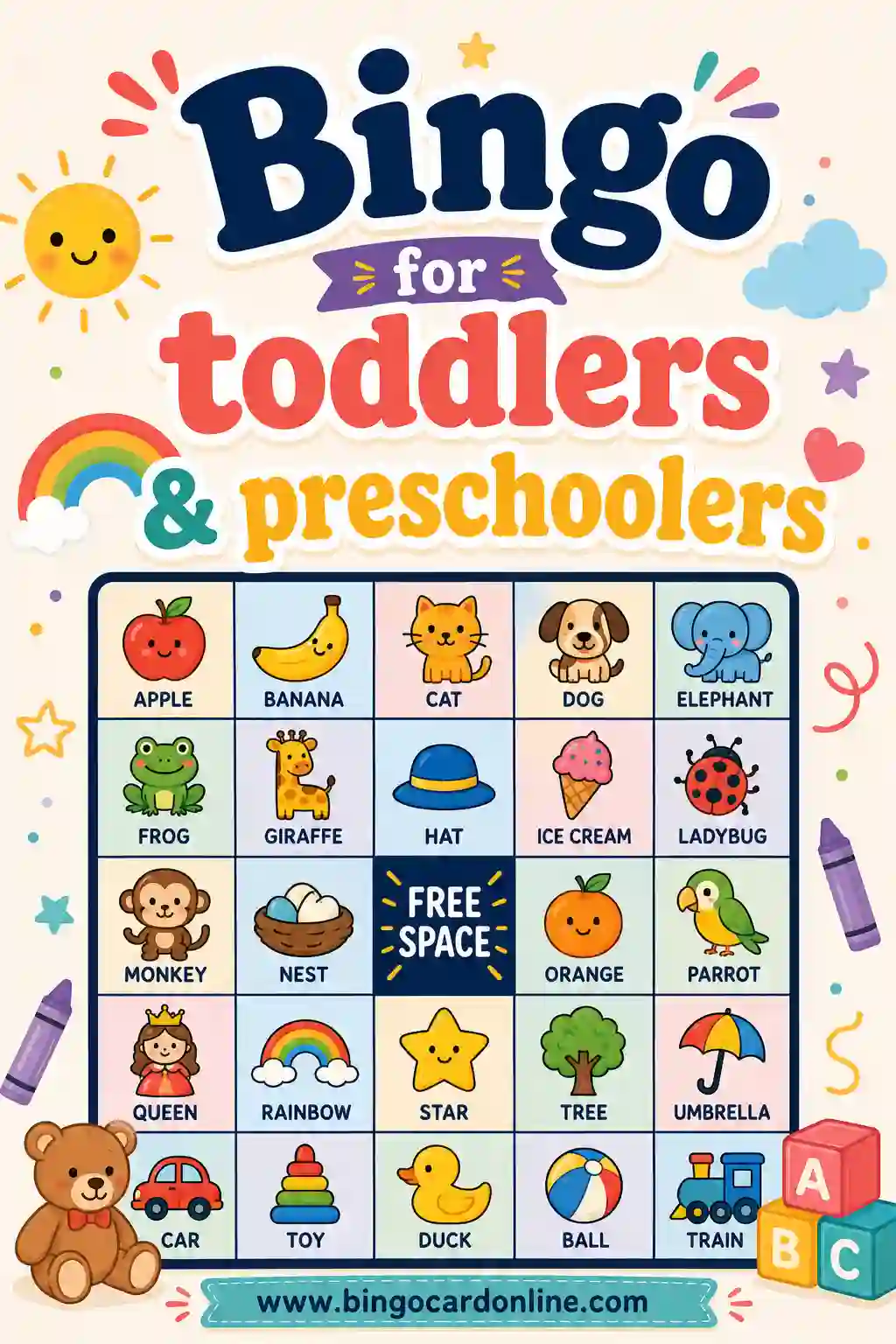
Keep words simple and concrete. Fifteen words work well for a 3×3 card.
Happy, sad, mad, scared, excited, tired, silly, calm, surprised, shy, proud, lonely, loved, grumpy, brave
Ages 7–9 (4×4 grid)
Add some words kids hear but may not use yet. Aim for about 24.
Happy, sad, angry, scared, excited, calm, proud, worried, silly, lonely, surprised, frustrated, brave, shy, grateful, tired, jealous, nervous, confused, embarrassed, hopeful, bored, disappointed, kind
Ages 10–13 (5×5 grid)
Older kids can handle more shades of feeling. A list of 35 or more gives every card a good mix.
Anxious, overwhelmed, content, confident, insecure, curious, guilty, relieved, hopeful, hurt, peaceful, irritated, left out, determined, ashamed, thankful, restless, encouraged, betrayed, inspired, discouraged, accepted, impatient, cheerful, stressed, embarrassed, jealous, lonely, proud, nervous, calm, excited, disappointed, grateful, confused
Quick reference
| Age group | Grid | Squares | Words to type |
|---|---|---|---|
| 4–6 | 3×3 | 9 | 12–15 |
| 7–9 | 4×4 | 16 | 20–26 |
| 10–13 | 5×5 | 24 + free space | 30–40 |
Emoji cards for pre-readers
Not every child reads yet, and some kids in your group may be learning English. Emoji cards solve both problems.
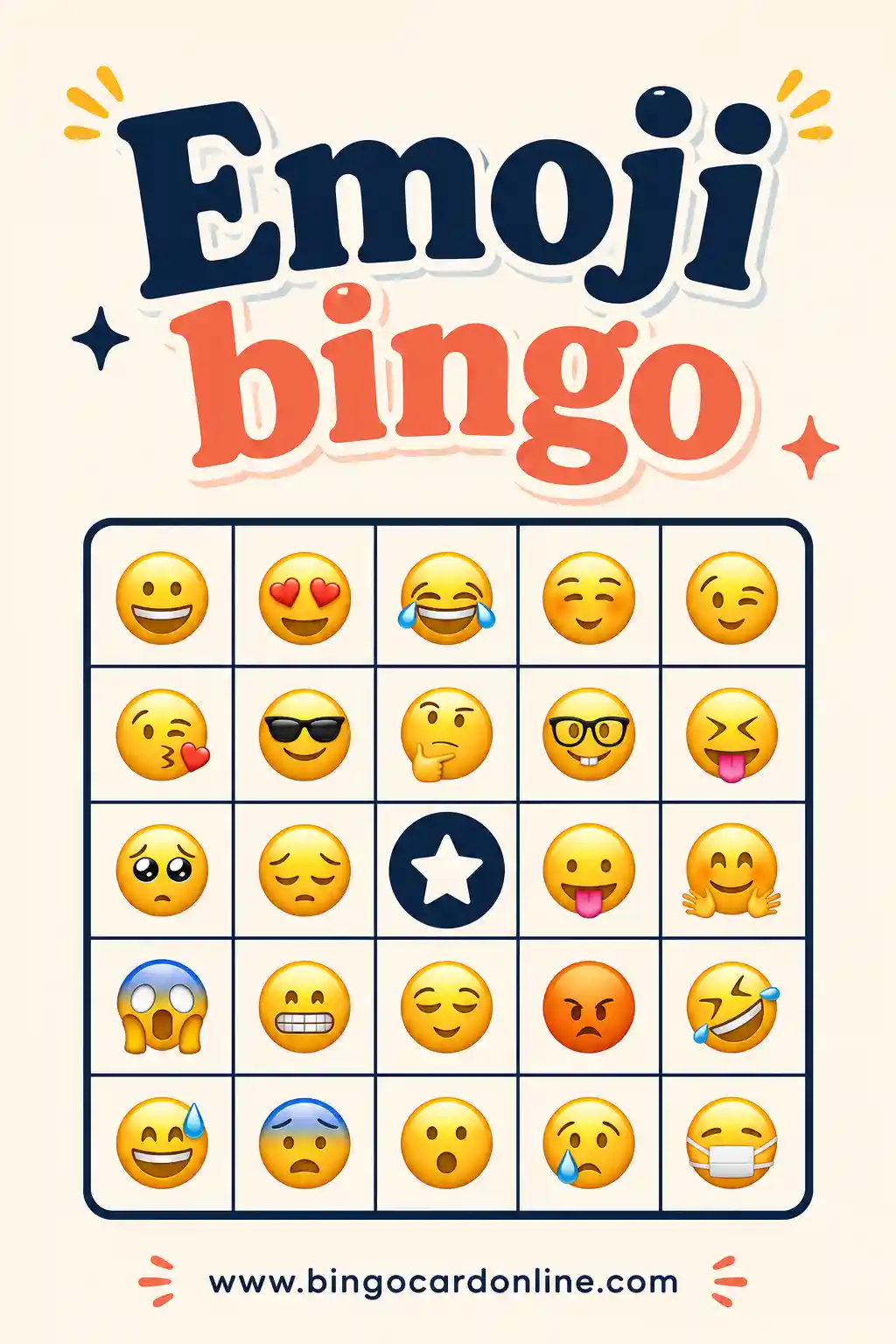
Choose the Emoji card type and pick faces that show clear feelings: smiling, crying, angry, scared, sleepy, surprised, nervous, and so on. When you call a feeling, say the word and make the face. Kids match your face to the face on their card.
This works well with a few extra steps:
- Make the face together. Ask everyone to show "surprised" before they look for it.
- Name the face out loud. Kids hear the word as they see the picture, which builds vocabulary.
- Mix words and faces later. Once kids know the faces, try a Words card with the same feelings.
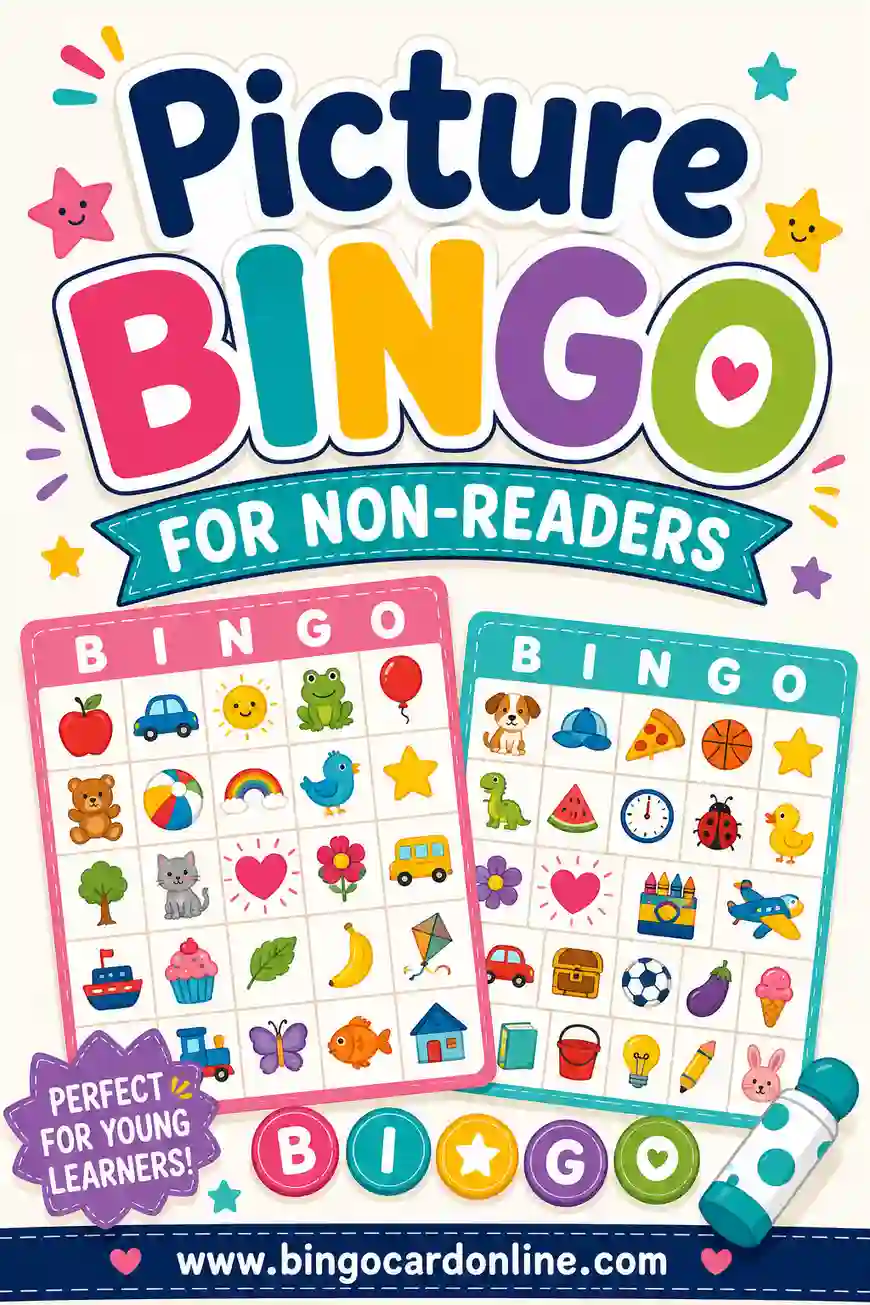
The guide to emoji bingo has more tips for running picture-based games, and how to make picture bingo for non-readers covers the Photos option if you'd like to use real pictures of faces.
Turning Calls Into Conversation
The real value of feelings bingo for kids is the talk that happens between calls. The call sheet becomes your list of discussion prompts.
Prompts you can use with any feeling
When you call a word, choose one of these:
- "Tell about a time you felt ___."
- "What does ___ feel like in your body?"
- "What does a ___ face look like? Show me."
- "What could you do if you felt ___?"
- "How could you help a friend who feels ___?"
Keep sharing optional
Not every child wants to talk about every feeling, and that's okay. Make a simple rule at the start: "You can share, or you can say 'pass.'" Kids who pass still mark their squares and stay in the game.
Some words, like "lonely," "scared," or "left out," can bring up real things. Be ready to follow up privately if a child shares something that needs more attention. Follow your school's guidelines for anything serious.
Pace the talking
If you stop for a story after every call, the game can drag. Try one of these:
- Share only on every third call.
- Let only the kid who just marked that square share, if they want.
- Play fast to bingo, then go back to three or four feelings for discussion.
Ways to Play in Groups and Classrooms
Feelings bingo fits small counseling groups, full classrooms, and calm-down corners. Pick the version that fits your setting.
| Setting | Group size | Grid | Best version |
|---|---|---|---|
| Small counseling group | 3–6 kids | 3×3 or 4×4 | Talk after every call |
| Full classroom | 20–30 kids | 4×4 or 5×5 | Talk every few calls |
| Calm-down group activity | 4–8 kids | 3×3 | Slow pace, breathing between calls |
| Morning meeting | Whole class | 3×3 | One short round, one share |
| Individual session | 1 child | 3×3 | Counselor and child each take a card |
Small counseling groups
In a small group, you can go slow. Call a feeling, ask one prompt, and let a few kids answer. A single game might take most of a session, and that's the point.
Full classrooms
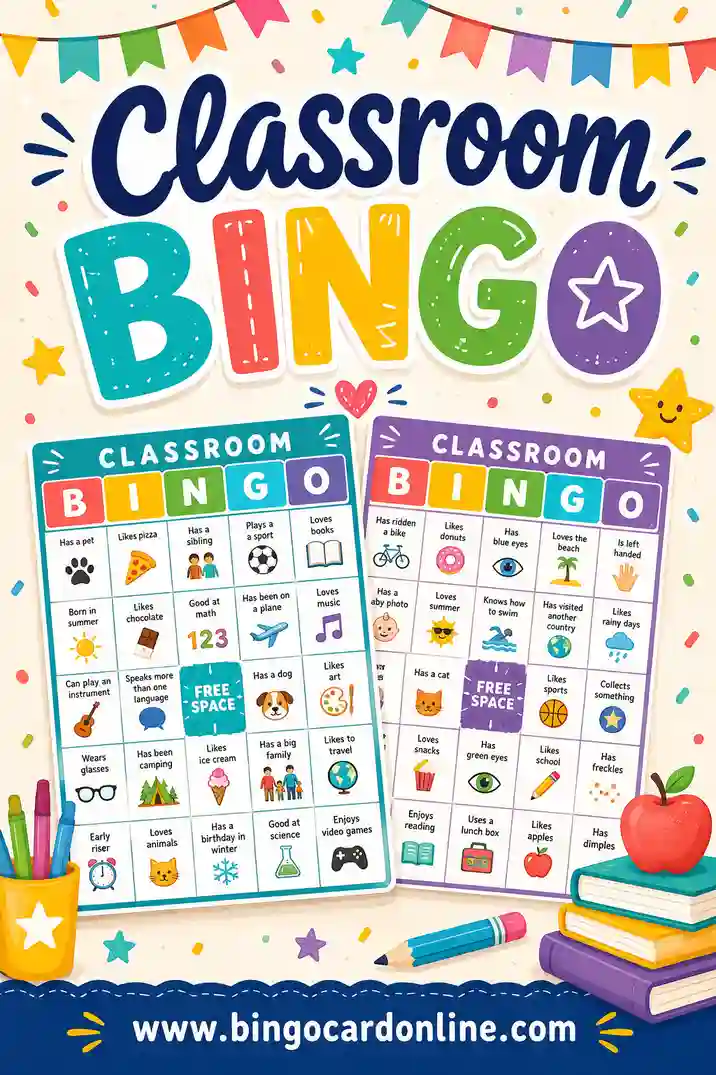
With 25 kids, keep the game moving. Call faster, and pause for a quick share every few words. You can use a simple line pattern so the game doesn't run too long. The kindness bingo page has more ideas for social-emotional games that work with a whole class.
Calm-down version
For a quieter activity, add a breathing step. After each call, everyone takes one slow breath before marking their card. This turns the game into a calm group activity that's useful after recess or before a test.
One-on-one
Even with one child, bingo works. You each take a card. When a feeling is called, both of you share if it's on your card. Kids often open up more when the adult shares too.
A Sample 30-Minute Counseling Session
If you'd like a ready-made plan, here's one way to fit feelings bingo into a half-hour small-group session. Adjust the times to fit your group.
| Time | Activity |
|---|---|
| 0–5 minutes | Check-in: each child names one feeling they have right now |
| 5–8 minutes | Hand out cards and markers, explain the "share or pass" rule |
| 8–23 minutes | Play: call feelings, pause for a share every two or three calls |
| 23–27 minutes | Winner reads back their line and picks one feeling to talk about |
| 27–30 minutes | Closing: each child names one thing that helps when they feel upset |
Tips for the check-in and closing
Starting and ending with a quick go-around gives the game a frame. At the check-in, kids can point to a word on their new card if they can't think of one. That's a nice way to show the card is a tool, not just a game board.
At the closing, keep it short and positive. "I talk to my mom," "I go outside," or "I hug my dog" are all great answers. Write the group's ideas on chart paper and keep them up in your room for next time.
Repeat with a new set
Kids enjoy playing more than once. Keep the same word list for two or three sessions so the words become familiar, then add five or six new feelings. Generate a fresh batch of unique cards each time so nobody gets the same board twice.
Winning Patterns, Markers and Follow-Ups
For young kids, any straight line is plenty. Older groups might enjoy a bigger challenge, like four corners or a full card. The "Print winning patterns" button gives you a sheet you can hold up so everyone knows the goal.
When someone gets bingo, try a fun twist: ask them to read back their winning feelings and pick one to talk about. Small prizes like stickers or a special pencil work fine. Praise is a prize too.
Markers and making cards last
Kids love marking cards, and the markers can be part of the calm.
- Crayons or colored pencils for one-time paper cards. Kids can color the square in a color that matches the feeling.
- Printed chips from the "Print bingo markers/chips" button.
- Small counters like pom-poms, buttons, or plastic chips.
- Sheet protectors and dry-erase markers so you can reuse the cards with your next group.
For counselors who see many groups, laminated cards save a lot of reprinting. Print a full set once on card stock, and they'll last the whole school year.
Extending the activity
A game of feelings bingo can lead into other quick lessons.
Feelings journal. After the game, kids pick one feeling from their card and draw or write about it.
Feelings sort. Use the call list to sort words into "comfortable" and "uncomfortable" feelings. Talk about how all feelings are okay, even the hard ones.
Make your own words. Let older kids suggest feelings for the next game. Type their list into the generator and print a new set.
Coping card. For each hard feeling on the call list, the group comes up with one thing to do, like "take a walk," "talk to a grown-up," or "squeeze a stress ball."
For classroom teachers working with a wide range of learners, the ideas in bingo for special needs classrooms offer more ways to adapt the game.
▶ Make these exact bingo cards
Frequently Asked Questions
How many feelings do I need for a bingo card?
You need at least as many feelings as squares: 9 for a 3×3 card, 16 for a 4×4 card, and 24 for a 5×5 card with a free space. Adding more words than that gives each card a different mix, so fewer kids win at the same time.
What age is feelings bingo good for?
It works from preschool through middle school. Use emoji faces and a 3×3 grid for ages 4 to 6, simple words on a 4×4 grid for ages 7 to 9, and a longer list of more complex feelings on a 5×5 grid for older kids.
Can I make emotion bingo with pictures instead of words?
Yes. Choose the Emoji card type and pick faces that show clear feelings. You can also choose Photos and upload up to 30 of your own pictures, like photos of faces showing different emotions.
How do I keep feelings bingo from taking too long?
Don't stop for discussion on every call. Share every few calls, or play straight through to bingo and then go back to talk about a few feelings. A smaller grid also finishes faster.
What if a child shares something upsetting during the game?
Thank them for sharing, keep the moment calm, and continue the game. Follow up privately afterward. Use your school's guidelines if a child shares something that needs more support.
Can kids play feelings bingo on a tablet?
Yes. Use the "Copy shareable link" button to send the game to a phone or tablet so kids can play on a screen. Printed cards often work better for small groups, since kids enjoy marking squares by hand.
Make Your Feelings Bingo Set Today
Pick your feelings, choose a grid that fits your group's age, and print a different card for every child. Your call sheet doubles as a list of talking prompts. Head to the free bingo card generator to make your set.