Gift-Opening Bingo: Keep Kids Engaged While Presents Are Opened One at a Time
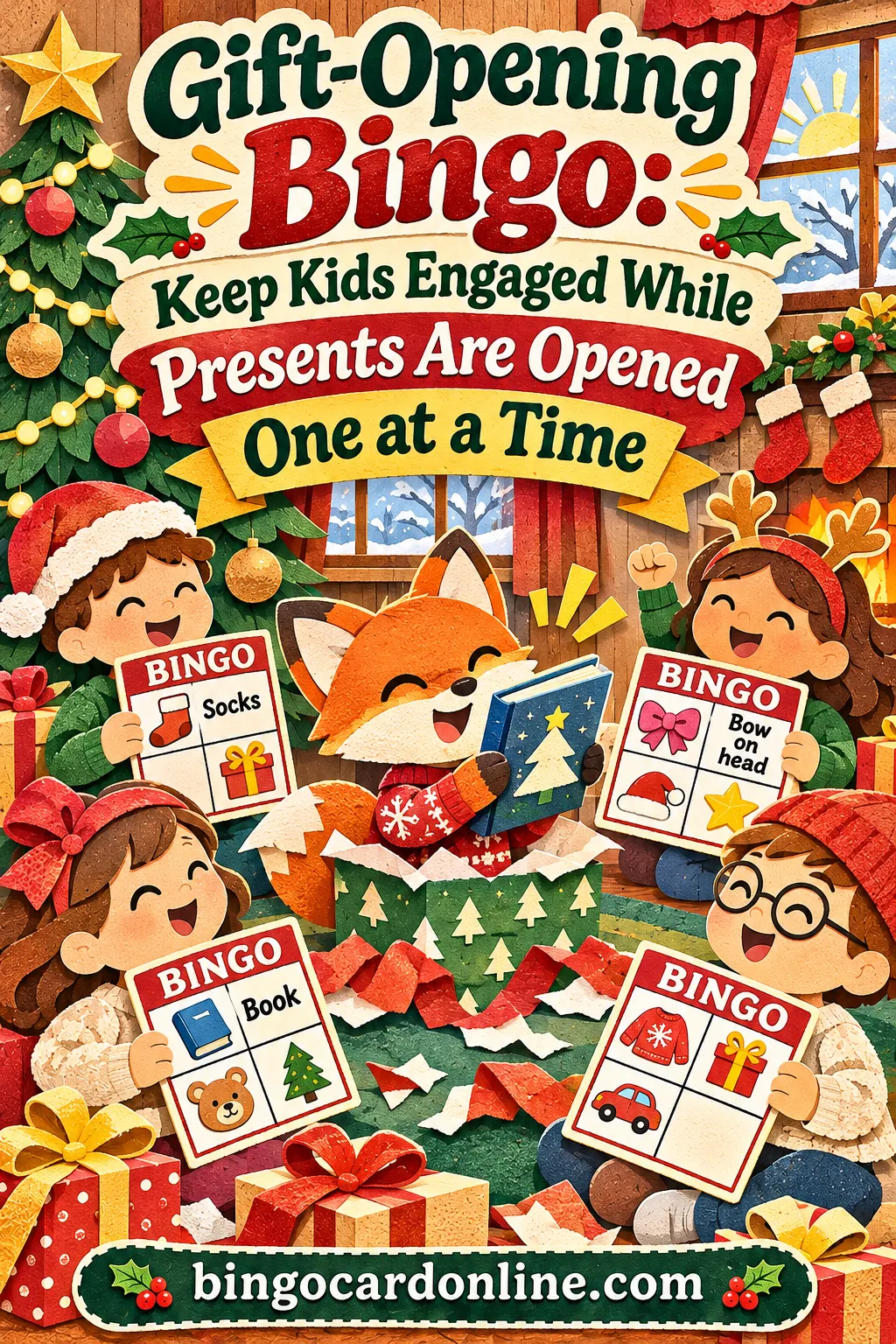
Gift opening bingo keeps kids engaged on Christmas morning by giving every watcher a card full of things that happen while other people open presents, like "socks," "someone says wow," "a hug," or "the dog gets a gift," so watching becomes part of the game instead of a wait. Each person gets their own card, marks a square whenever it happens, and the first line wins a small job or treat. You can make a unique card for everyone in your family in about five minutes with the free bingo card generator.
Below you'll find a ready list of squares, the exact tool settings, simple house rules, a timeline from Christmas Eve to the last bow, and ways to adjust the game for toddlers, teens and big extended families.
▶ Make these exact bingo cards
Why Kids Drift Off During One-at-a-Time Gift Opening
Plenty of families open gifts one at a time on purpose. It slows the morning down, lets everyone see what each person got, and gives the giver a moment to watch someone open the thing they picked out. It's a lovely tradition. It's also hard for kids.
Here's what usually goes wrong:
- Waiting has no job attached. A six-year-old watching Grandpa open a sweater has nothing to do but wait for their own turn.
- Their own pile is right there. Kids sit next to their gifts and start picking at corners, shaking boxes and peeling tape.
- Teens check out. Older kids drift to a phone or the kitchen and come back only when someone calls their name.
- Little ones wander. Toddlers lose the thread after a few gifts and start pulling paper off everything.
- The giver loses the moment. When half the room isn't watching, the person who chose a gift doesn't get to see the reaction they were hoping for.
The fix isn't more rules or more lectures. It's giving watchers a reason to watch. A bingo card does that. When a child is hunting for "someone gets socks" or "a gift for the pet," every single present matters to them, even the ones that aren't theirs.
What makes gift opening different from other bingo games
Most bingo games need a caller. This one doesn't. The "calls" are the real moments in the room: Aunt Lisa opens a scarf, the dog gets a squeaky toy, Dad says "oh wow." Everyone sees the same moment at the same time and marks their own card.
That means nobody has to stop the gift opening to run a game. The game runs alongside the tradition you already have.
How Gift-Opening Bingo Works
The idea is simple enough to explain in under a minute.
- Everyone gets a card. Each card has 16 squares of things that might happen during gift opening.
- Open gifts the way you always do. One at a time, in whatever order your family uses.
- Mark a square when it happens. If a gift is socks, anyone with "socks" on their card marks it. If someone hugs the giver, anyone with "a hug" marks it.
- Call "Bingo!" on a line. The first person with a full row, column or diagonal wins round one.
- Keep going. Play on for four corners, a second line or a full card while the rest of the gifts are opened.
Because every card is a different shuffle, people fill their cards at different speeds. One child might be waiting on "a puzzle" while their sister needs "tape won't tear." Every gift is a chance for someone.
Why unique cards matter on Christmas morning
If everyone has the same card, everyone marks the same squares at the same moment. Then three kids shout "Bingo!" at once and the morning turns into a debate.
When your word list is longer than the card, each card pulls its own random mix. With 24 squares in your list and a 16-square card, every card leaves out 8 squares, and a different 8 each time. So when socks come out, maybe two people mark something and three don't. That spreads out the wins.
| Squares in your list | Card size | Squares left off each card | How it plays |
|---|---|---|---|
| 9 | 3 × 3 | 0 | Every card shares every square; ties are likely |
| 16 | 4 × 4 | 0 | Same squares in a different order; several people often win together |
| 20 | 4 × 4 | 4 | Some variety; fewer ties |
| 24 | 4 × 4 | 8 | Good variety; wins spread across the morning |
| 30 | 5 × 5 with free center | 6 | Good variety for a long morning with many gifts |
For most families, a 4 × 4 card with 24 squares in the list is the sweet spot.
How to Make the Cards With the Free Tool
The bingo card maker shuffles your list into a different card for each player and prints them in one batch. Here are the settings that work best for Christmas morning.
Exact settings
| Setting | What to choose | Why |
|---|---|---|
| Card type | Words | Short phrases like "a hug" and "socks" read quickly |
| Your words or items | 24 squares, one per line | More squares than the card needs means every card is different |
| Card title | Gift Opening Bingo, or your family name | Prints at the top of every card |
| Card colors | Red & Green — holidays | Looks right next to the tree |
| Grid size | 4 × 4 for most families; 3 × 3 for little kids | 16 squares fill at a good pace over 20 to 40 gifts |
| Free center space | Only on 5 × 5 | The free center is a 5 × 5 option; skip it for smaller cards |
| Number of unique cards | Number of people playing plus two | Spares cover a surprise guest or a spill |
| Cards per page | 2 | Big enough to read from the couch, and it saves paper |
| Ink-saver / black & white print | On if your color ink is low | Squares still print clearly in gray |
Step by step
- Leave Card type on Words. It's the default.
- Clear the starter text in the "Your words or items" box.
- Paste your list, one square per line. Keep each square to one to four words. Long squares shrink the text on the whole card.
- Type a card title. "Gift Opening Bingo" is clear. "The Parker Family Christmas Morning Bingo" is fun too.
- Choose Card colors: Red & Green — holidays.
- Click 4 × 4 under Grid size. For kids under five, click 3 × 3 instead and make a separate batch (more on that below).
- Check the line above the live preview. It tells you how many squares the card needs and how many you've entered. You want your count to be higher than the card needs.
- Set Number of unique cards. For a family of six, type 8.
- Open Print & sharing options, pick 2 cards per page, and turn on Ink-saver if you need it.
- Click Generate cards, then Print / Save as PDF.
If you'd rather skip the typing, the "Make these exact bingo cards" button on this page opens the generator with 24 Christmas morning squares already filled in. You can edit any of them before you generate.
Print the night before
Christmas morning is not the time to discover the printer is out of paper. Print the cards on Christmas Eve, or a day or two earlier, and tuck them in an envelope with a handful of crayons or pencils. Card stock is nice if you have it, because cards on a soft rug are hard to write on. A stack of clipboards, a cookie sheet or a big hardcover book works fine as a lap desk.
If a co-parent or grandparent is hosting and wants to print their own set, open Print & sharing options and use Copy shareable link. The link rebuilds your setup so they can print from their house.
Square Ideas That Actually Happen on Christmas Morning
The best squares are things that are almost sure to happen at some point, but not on every single gift. If a square happens on every gift, like "someone tears paper," it gets marked in the first minute and stops being fun. If it almost never happens, it's dead space.
Aim for a mix: about half "this will definitely happen" squares, about a third "probably," and a few long shots for excitement.
Gift squares (what's inside)
- Socks
- A book
- A puzzle
- A game
- A hat
- Mug
- Scarf
- Gloves or mittens
- Pajamas
- Clothes
- Something soft
- Something that lights up
- Something homemade
- Art supplies
- A gift card
- Something to eat
- Something for the kitchen
- Batteries needed
- Two gifts the same
- A gift for the pet
Reaction squares (what people do or say)
- Someone says wow
- A hug
- Thank you said
- A laugh
- Someone gasps
- Someone guesses before opening
- Someone shakes the box first
- Someone says "I love it"
- Someone tries it on right away
- Someone asks "who's this from?"
- Happy tears
- A photo taken
Wrapping squares (what happens with the paper)
- Paper ball fight
- Bow on a head
- Tape won't tear
- Tiny box
- Huge box, small gift
- Gift bag with tissue
- Tag read out loud
- Box inside a box
- Wrapped in newspaper or kraft paper
- Someone saves the paper
Family squares (people and pets)
- The dog or cat sits in a box
- A pet steals a bow
- Someone opens a gift for the baby
- A gift from far away
- Grandma or Grandpa opens one
- Someone opens the wrong gift
- A gift that needs grown-up help to open
Adjust these to fit your house. If you don't have a pet, skip the pet squares. If your family never uses gift bags, leave that one out. The more a square fits your real morning, the more fun it is to mark.
A ready 24-square list to copy
This list works for most families of four to ten people. It's the same set the "Make these exact bingo cards" button loads.
| Gifts (12) | Reactions (5) | Wrapping (5) | Family (2) |
|---|---|---|---|
| Socks | Someone says wow | Paper ball fight | A gift for the pet |
| A book | A hug | Bow on a head | Two gifts the same |
| A game | Thank you said | Tag read out loud | |
| A hat | A laugh | Tiny box | |
| A puzzle | A surprise | Tape won't tear | |
| Mug | |||
| Scarf | |||
| Gift card | |||
| Something soft | |||
| Clothes | |||
| Batteries needed | |||
| Homemade gift |
Because each 4 × 4 card uses 16 of these 24 squares, one card might lean toward reactions while another leans toward wrapping. That's what keeps everyone watching different things.
Squares to skip
Christmas morning is tender. A few kinds of squares can sour it fast:
- Anything about cost or size of a gift. "Most expensive gift" or "biggest pile" invites comparison.
- Anything that rates a gift. "Someone doesn't like their gift" will happen sometimes, but nobody wants to be the square.
- Squares that depend on one person's reaction. "Mom cries" puts pressure on Mom.
- Specific gifts that only one child is getting. If only one kid is getting a bike, "a bike" spoils the surprise for anyone who reads the card early.
- Anything that rushes the opener. "Opened in under 10 seconds" turns a slow, sweet moment into a race.
The test is simple: would anyone in the room feel a little worse when this square gets marked? If yes, swap it out.
Rules and a Round Plan for the Morning
Keep the rules light. It's a holiday, not a tournament. These five cover almost everything.
House rules
- The gift opener never marks during their own turn. Whoever is opening just enjoys it. They catch up on their card after their turn ends.
- One gift, as many squares as fit. If Grandma opens a homemade scarf and hugs the giver, that could mark "Scarf," "Homemade gift" and "A hug" all at once.
- If it's close, it counts. Is a beanie a hat? Yes. Are slipper socks socks? Yes. When in doubt, the youngest player decides, and that's the end of it.
- Say "Bingo!" between gifts, not during one. Kids hold their win until the paper settles. This one rule protects the giver's moment.
- Nobody opens out of turn. If you peek, shake hard or pick at tape on your own pile, you skip your next mark. (Families can soften this for little ones.)
Read the rules out loud once, quickly, right after stockings or breakfast. Then hand out the cards and start the first gift.
How many gifts does it take to get a line?
This depends on how many gifts your family opens and how many squares each gift tends to mark. You don't need exact numbers. A rough plan helps you pick the grid and decide how many rounds to play.
Here's a simple way to think about it. Count the total gifts that will be opened. Most gifts mark at least one square on someone's card, and many mark two or three, because a single gift often brings a reaction square and a wrapping square along with the gift itself.
| Family size | Gifts per person | Total gifts | Time at about 2 minutes per gift | Grid that fits |
|---|---|---|---|---|
| 3 to 4 people | 4 to 6 | 12 to 24 | 25 to 50 minutes | 3 × 3 or 4 × 4 |
| 5 to 6 people | 4 to 6 | 20 to 36 | 40 to 70 minutes | 4 × 4 |
| 7 to 10 people | 3 to 5 | 21 to 50 | 40 to 100 minutes | 4 × 4 |
| 11 to 20 people | 2 to 4 | 22 to 80 | 45 minutes to over 2 hours | 4 × 4, or 5 × 5 with free center |
Here's a worked example. A family of five opens about five gifts each, so 25 gifts in all. At about two minutes a gift, that's around 50 minutes. On a 4 × 4 card, a player needs 4 marks in a row, column or diagonal, and those 4 squares have to be the right ones. With 25 gifts, each bringing two or three moments that could match one of the 24 squares, most players mark a good chunk of their card, and the first line usually shows up somewhere in the middle of the pile. That leaves plenty of gifts for a second and third prize.
If your family opens fewer than 15 gifts, use 3 × 3 cards so somebody wins before the last present. If you open more than 50, use 5 × 5 cards with the free center on so the game doesn't end too early.
A round plan that keeps everyone in
One win is good. Three rounds is better, because the kids who don't win the first line still have something to chase.
| Round | Pattern | Prize idea |
|---|---|---|
| 1 | Any straight line | Pick the next person to open a gift |
| 2 | Four corners | Choose the side dish for Christmas lunch |
| 3 | Full card, or most squares marked when gifts run out | Pick the first game of the afternoon |
Players keep the same card the whole time. When someone wins round one, everyone keeps marking and starts aiming for four corners. You don't need new cards between rounds.
For a full rundown of shapes you can play, see bingo patterns explained.
What to say before the first gift
Kids take a game more seriously when it sounds like a real tradition. Here's a short script to read, or put in your own words:
"Before we start, everyone gets a bingo card. Each square is something that might happen while we open presents, like someone getting socks or someone giving a hug. When you see it happen, mark it. If you get a line, wait until the gift is done and then say 'Bingo!' The person opening a gift doesn't mark during their turn. They just enjoy it. First line gets to pick who opens next."
That last line matters. Picking who goes next is a small prize, but it gives kids a sense of control over a morning when they usually have very little.
Christmas Morning Timeline
A little planning in the days before makes the game feel effortless when it counts.
In the days before Christmas
| When | What to do |
|---|---|
| A week or so before | Count who'll be there and decide on grid size |
| A few days before | Build your list, generate the cards and print them, plus two spares |
| A few days before | Pick your prizes (privileges work best; see below) |
| Christmas Eve | Put cards, crayons or pencils, and lap boards in a bag near the tree |
| Christmas Eve | Agree with any co-host on the order of opening and who reads the rules |
On Christmas morning
| Time | What happens |
|---|---|
| Wake-up | Stockings, if that's your tradition; this takes the edge off the wait |
| After stockings or breakfast | Gather at the tree; read the rules in about a minute |
| Gift opening | Hand out cards and open gifts one at a time; play round one |
| First winner | Winner picks the next opener; keep marking for four corners |
| Second winner | Winner picks a side dish or snack; keep going for a full card |
| Last gift | Count marks if nobody has a full card; most marks wins round three |
| After | Tidy-up race: whoever fills a trash bag with paper first gets the last cookie |
Stockings first is a common trick, and it helps here too. Kids who've already opened something small are usually calmer when the main gifts start.
Pick an opening order that helps the game
How you choose who goes next affects how long kids sit still. A few orders that work:
- Youngest to oldest, then repeat. The littlest kids don't wait long for their next turn.
- Round robin by gift. Each person opens one, then the next person opens one. Nobody gets a long run while others wait.
- Winner's choice. After the first bingo, the winner picks each next opener. Kids love this.
- Giver hands it over. Each person picks one gift they gave and hands it to the recipient. The giver gets to watch the reaction up close.
Whichever you pick, avoid letting one person open their whole pile in one go. That's when the room drifts.
Adjust the Game by Age and Family Size
Every family's Christmas morning looks different. Here's how to make the cards fit yours.
Toddlers and preschoolers (2 to 4)
Toddlers can't read squares and can't sit through 40 gifts. Give them a smaller, simpler game.
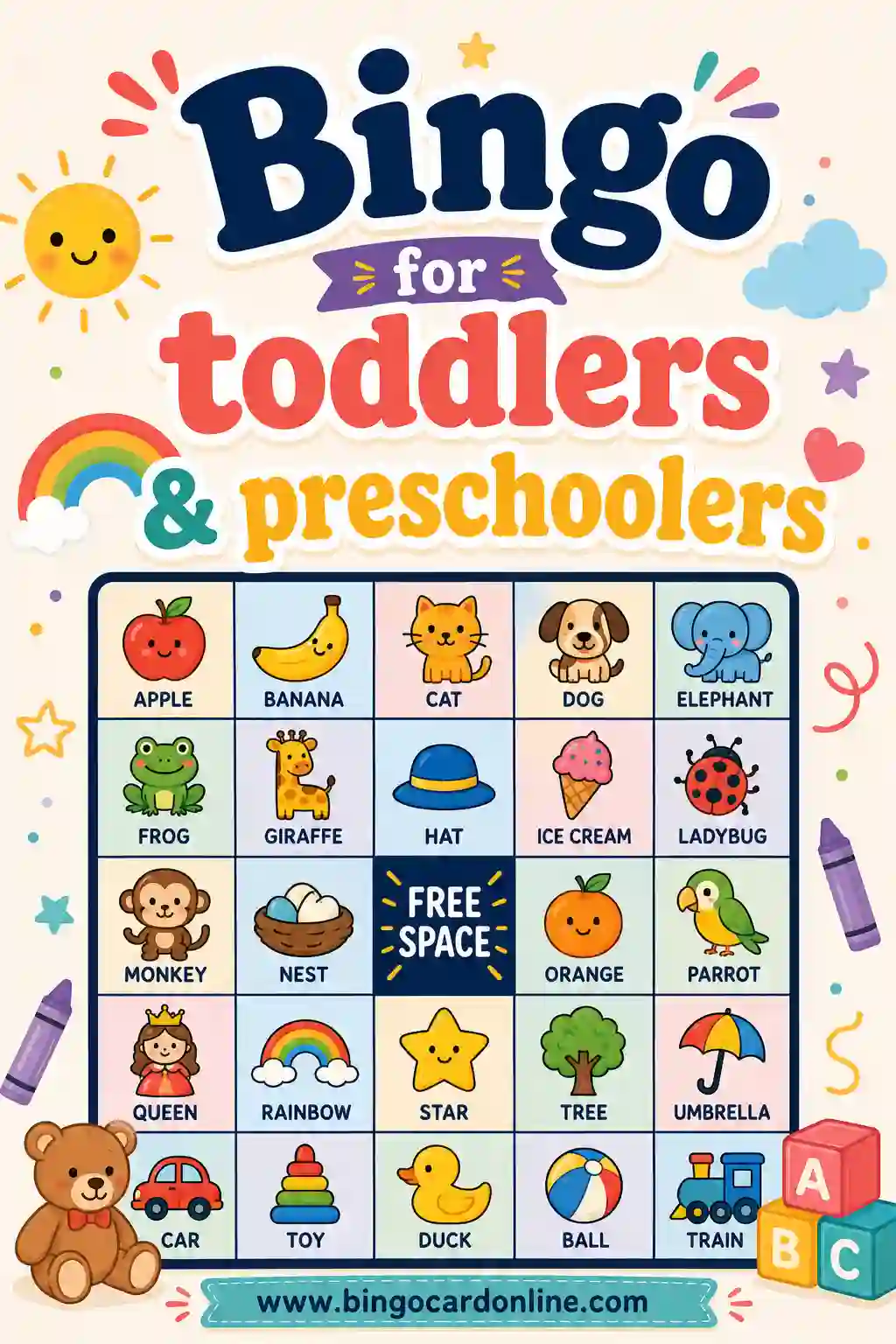
- Make a separate batch with a 3 × 3 grid and only nine to twelve very common squares: "socks," "a hug," "a bow," "a box," "paper," "a laugh," "a book," "a toy," "a pet."
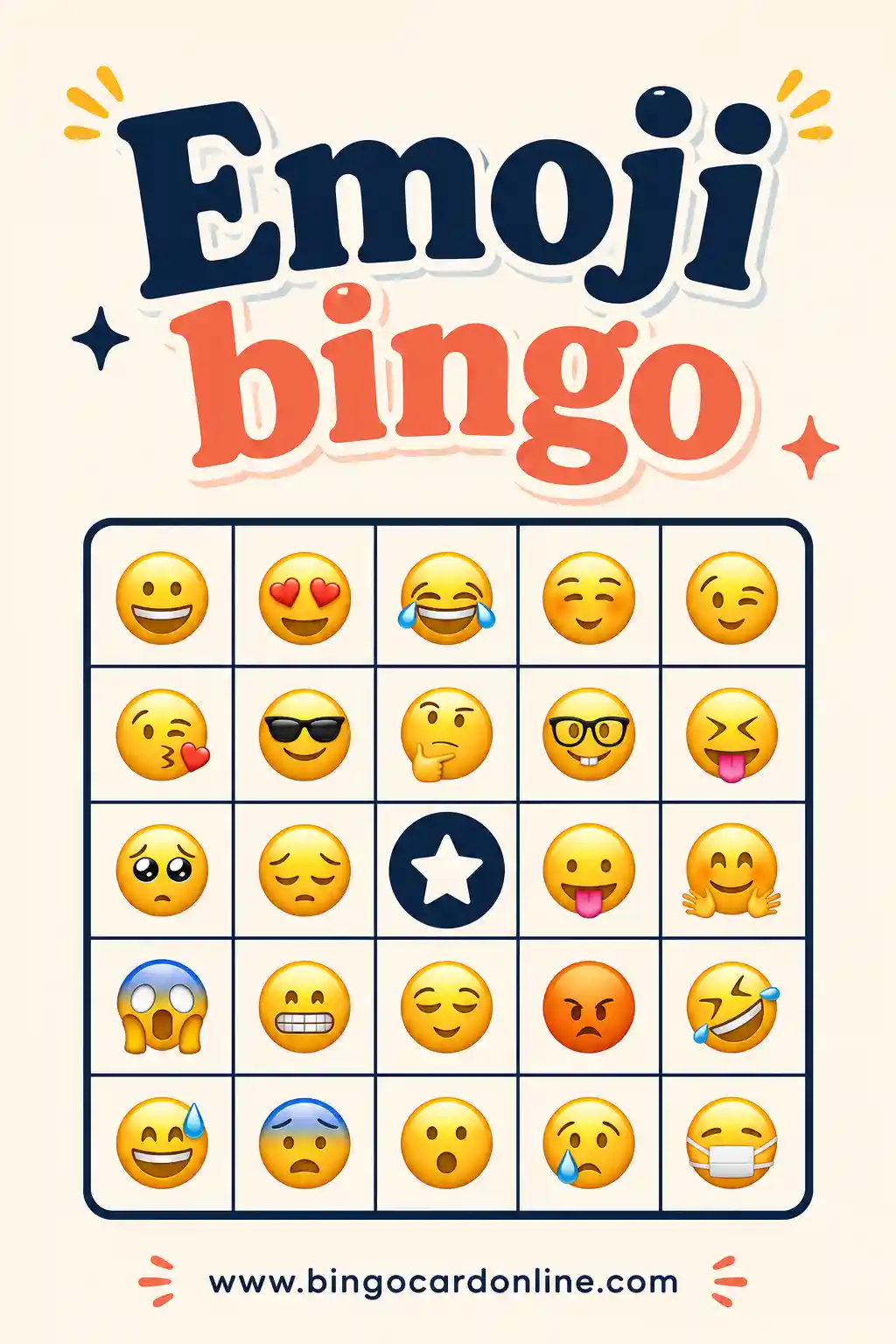
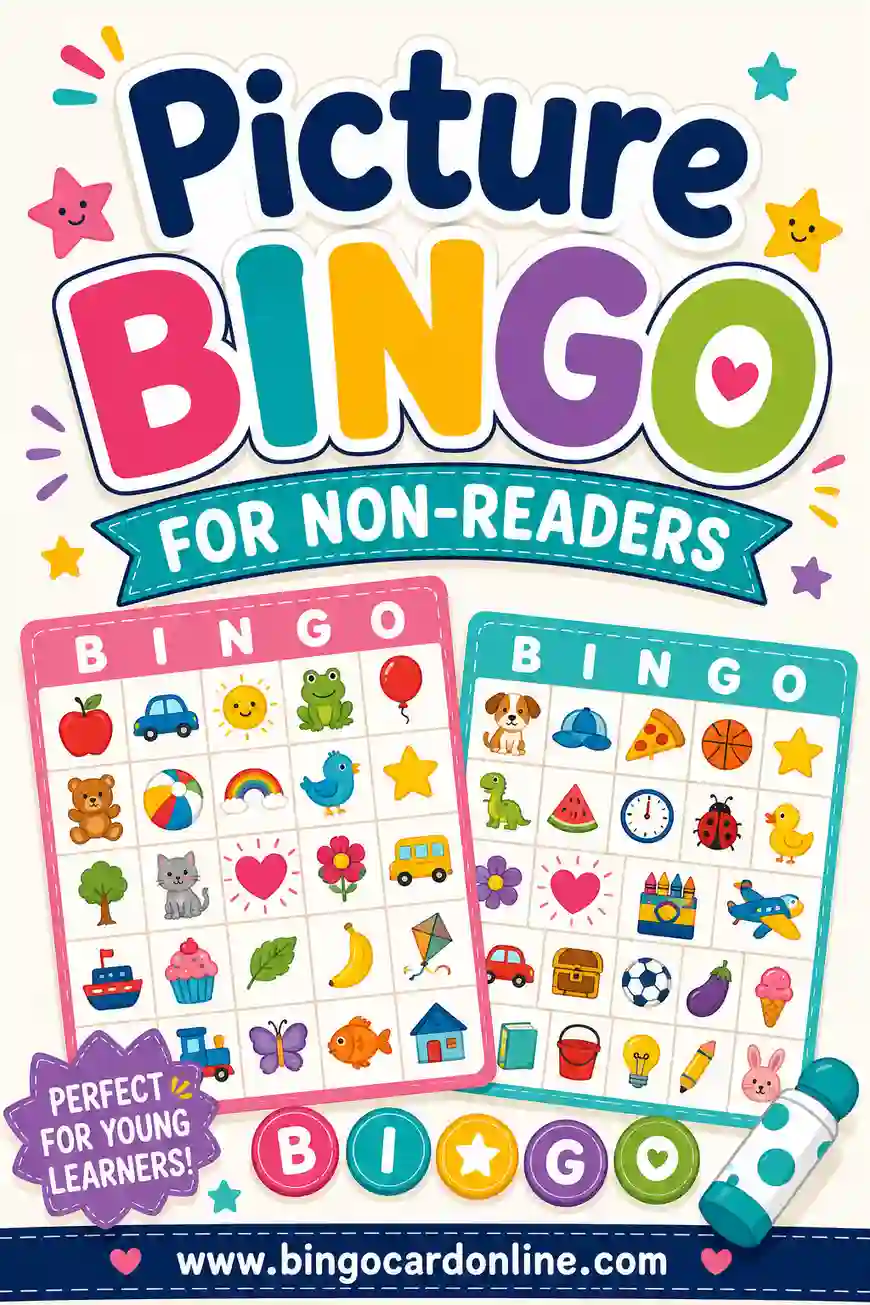
- Try the Emoji card type and a holiday pack from "Quick start with a theme," so squares show little pictures instead of words. The packs show general holiday pictures rather than specific gifts, so for squares like "socks," a word card with a grown-up reading aloud works just as well. Our guide to picture bingo for non-readers walks through the options.
- Use stickers instead of crayons. Peeling and placing a sticker is half the fun at this age.
- Let them win quickly. A 3 × 3 card usually gets a line early, which is about as long as a toddler will stay with it anyway.
Pair each toddler with an older sibling or grown-up who points out when a square happens.
Early readers (5 to 8)
This is the age group the game helps most. They can read short words, they love marking things, and they have the hardest time waiting.
- Use a 4 × 4 card with short squares of one to three words.
- Crayons in a festive color make marking feel special.
- Let them be the official "Bingo checker" for one round, reading the winner's squares out loud.
- Add a few squares that make them look closely, like "tag read out loud" or "box inside a box."
Big kids (9 to 12)
Kids this age like a little challenge and a little chaos.
- Add funny reaction squares: "someone guesses wrong," "fake surprised face," "someone wears the bow."
- Make them the scorekeeper. They track who has how many marks in each round.
- Try a blackout final round. A full card takes most of the morning, which keeps them engaged until the end.
Teens
Teens will play if it's a little bit silly and nobody makes a big deal about it.
- Let them help write the list. Their squares will be funnier than yours.
- Add squares about the adults: "Dad says you shouldn't have," "someone reads the instructions out loud," "a grown-up gets a gadget they can't figure out."
- Offer a prize teens actually want, like first pick of leftovers or a pass on one chore.
- Keep cards and pencils on the arm of the couch. A teen who's half-playing is still more present than one who's somewhere else.
Big extended families (12 or more)
Larger gatherings can mean 60 or more gifts and a morning that stretches toward lunch.
- Use 5 × 5 cards with Free center space turned on and a list of 30 or more squares. That keeps the game going through a long opening.
- Break the morning into two halves with a snack in between, and play rounds one and two before the break.
- Recruit a "bingo helper," usually a teen or grandparent, to check winning cards so the host can keep the gifts moving.
- Add family-specific squares: "a gift from the cousins," "a gift mailed from far away," "Grandpa needs scissors."
If your family loves games beyond Christmas morning, our page on bingo for family game night has more ideas for mixed ages.
Two households, or family on a video call
Some families open gifts over a video call with grandparents or a parent in another home. Bingo works well here because everyone can see the same moments on screen.
- Use Copy shareable link under Print & sharing options so the other household can rebuild your setup and print their own set.
- Have each household take turns opening one gift at a time on camera.
- Add squares like "someone's camera freezes," "a gift held up to the camera" and "someone waves."
- Agree in advance who checks wins, so nobody argues over a video lag.
Prizes That Don't Add More Stuff
Christmas morning already has plenty of things in it. The best bingo prizes are privileges and little honors, not more gifts.
Privilege prizes kids love
- Pick who opens next. The classic first-round prize.
- Choose the breakfast or lunch side. Cinnamon rolls or pancakes? The winner decides.
- First pick of the afternoon activity, like a board game, a walk or a puzzle.
- Wear the "bingo crown" (a bow stuck on the head) until the next round.
- Skip one cleanup job. Everyone else picks up paper.
- Pick the music for the rest of the morning from your family's own collection of carols.
- Sit in the best chair by the tree for the next round.
Small keepsake prizes
If you want something to hold, keep it tiny and useful:
- An extra candy cane or chocolate coin from the stocking stash
- A new pencil or crayon pack for the next game
- A special ornament they get to hang on the tree
- A handwritten "coupon" from a parent, like one extra bedtime story
For more ideas at every budget and age, see our list of bingo prize ideas.
A prize for everyone at the end
When the last gift is opened, every player with at least one line can pick a candy cane or a sticker from a bowl. Little kids especially need to leave the game feeling like winners. A morning when a sibling won everything and you won nothing can feel long.
Troubleshooting Gift-Opening Bingo
Most mornings, the game runs itself. When something does go sideways, it's usually one of these.
| Problem | Likely cause | Fix |
|---|---|---|
| Three kids yell "Bingo!" at once | Short word list, so cards are too alike | Use a list of 24 or more for 4 × 4 cards; for now, everyone who called it shares the prize |
| Nobody gets a line for ages | Too many rare squares, or too few gifts | Switch to "most marks wins," or let each player mark one free square of their choice |
| Cards fill in five minutes | Squares that happen on every gift | Remove "paper ripped" and similar squares; use a 5 × 5 card next year |
| Kids interrupt the opener | Excited to call a win | Use the "Bingo between gifts" rule and point to it with a smile |
| Arguments about whether a square counts | Vague squares | Youngest player decides; write clearer squares next year |
| Toddler is grabbing paper | Too long and too complicated | Give them a 3 × 3 card with stickers, or a job like "bow collector" |
| Teen won't play | Feels babyish | Let them write squares or be the scorekeeper |
| Text is too small to read from the couch | Long squares or 4 cards per page | Shorten squares and print 2 cards per page, or 1 for small kids |
| Someone feels left out of the win | One child won every round | Use the "prize for everyone" bowl and rotate prizes |
Quick checks before you print
- Read every square once out loud. If any could make someone feel bad, cut it.
- Look at the count line above the live preview. Your list should have more squares than the card needs.
- Print one test card on plain paper to check the text size.
- Print two spares.
- Put the cards and markers somewhere you'll find them at 6 a.m.
Keep the giver's moment
The whole point of opening gifts one at a time is to give each gift its moment. Bingo should add to that, not compete with it. A few small habits help:
- When someone is about to open a gift, the giver says who it's from. Everyone looks up.
- Players mark after the gift is open and the hugs are done, not while paper is still flying.
- If a gift is very special, like something handmade or from someone who's passed away, pause the game for a minute. Nobody has to say why.
Kids pick up on this fast. Within a few gifts, the watchers usually become the most engaged people in the room.
Make your gift-opening bingo cards now
Setting it up takes about five minutes. Open the free bingo card generator, paste a list of 24 squares, pick 4 × 4, set the number of cards to your family size plus two, and print on Christmas Eve. Or use the "Make these exact bingo cards" button on this page to start from a ready list and change anything you like. For more seasonal squares, browse our Christmas bingo cards page, and come back to the bingo card maker whenever you want a fresh set for New Year's Day or the next family gathering.
▶ Make these exact bingo cards
Frequently Asked Questions
What is gift opening bingo?
Gift opening bingo is a Christmas morning game for families who open presents one at a time. Each person gets a card with things that might happen during gift opening, like "socks," "a hug" or "bow on a head." Players mark squares as they see them happen, and the first line wins a small prize like picking who opens next.
Do I need a caller for gift opening bingo?
No. The gifts and reactions are the calls. Everyone watches the same moments and marks their own card, so nobody has to stop and run the game. A grown-up only needs to check winning cards and hand out prizes.
What size card is best?
A 4 × 4 card works for most families opening 20 to 50 gifts. Use 3 × 3 cards for toddlers or for small families with fewer than 15 gifts. For big gatherings with 60 or more gifts, use 5 × 5 cards with the free center turned on so the game lasts the whole morning.
How many squares should I put in my list?
Put in more squares than the card needs. For a 4 × 4 card, 24 squares gives every player a different mix and spreads out the wins. For a 5 × 5 card with the free center on, aim for 30 or more.
Can little kids who can't read play?
Yes. Make a separate 3 × 3 batch with very simple squares, and pair each little one with an older sibling or grown-up who points out when a square happens. Stickers make marking easy and fun. You can also try the Emoji card type with a holiday picture pack.
What if our family opens gifts all at once?
The game works best for one-at-a-time opening, but you can still play. Open stockings all at once, then switch to one at a time for the bigger gifts and play bingo for that part. Or play the game while one person at a time shows off what they got.
What prizes work for gift opening bingo?
Privileges work best, since Christmas morning already has plenty of things. Try picking who opens next, choosing a side dish, picking the afternoon game, or skipping a cleanup job. A bowl of candy canes or stickers at the end makes sure every child wins something.
Can family on a video call play too?
Yes. Open Print & sharing options and use Copy shareable link, then send the link so the other household can rebuild your setup and print their own cards. Take turns opening gifts on camera and add a few squares like "someone waves at the camera."
How do I stop kids from interrupting a gift to shout "Bingo!"?
Make "Bingo between gifts" the main rule. Kids hold their win until the paper settles and the thank-yous are said, then call it. Practicing it once at the start, with a smile, is usually enough.