Free Printable Bingo Cards with Numbers (1-75 & 1-90)
Free printable bingo cards with numbers are the classic version of the game — the B-I-N-G-O grid your grandma played, with each column drawn from its own number range and every card a different random draw. No themes, no word lists to write, nothing to invent: pick a number style, print, and play. The free bingo card generator makes them in seconds — choose Numbers as the card type, pick 1-75 (classic US) or 1-90 (UK/housie style), set how many cards you need, and print. No sign-up, no watermark.
This guide covers the part most printable pages skip: which number range to pick, how the columns actually work, how to call a numbers game, and how to size the cards for kids, adults, and grandparents playing at the same table.
What Are Number Bingo Cards?
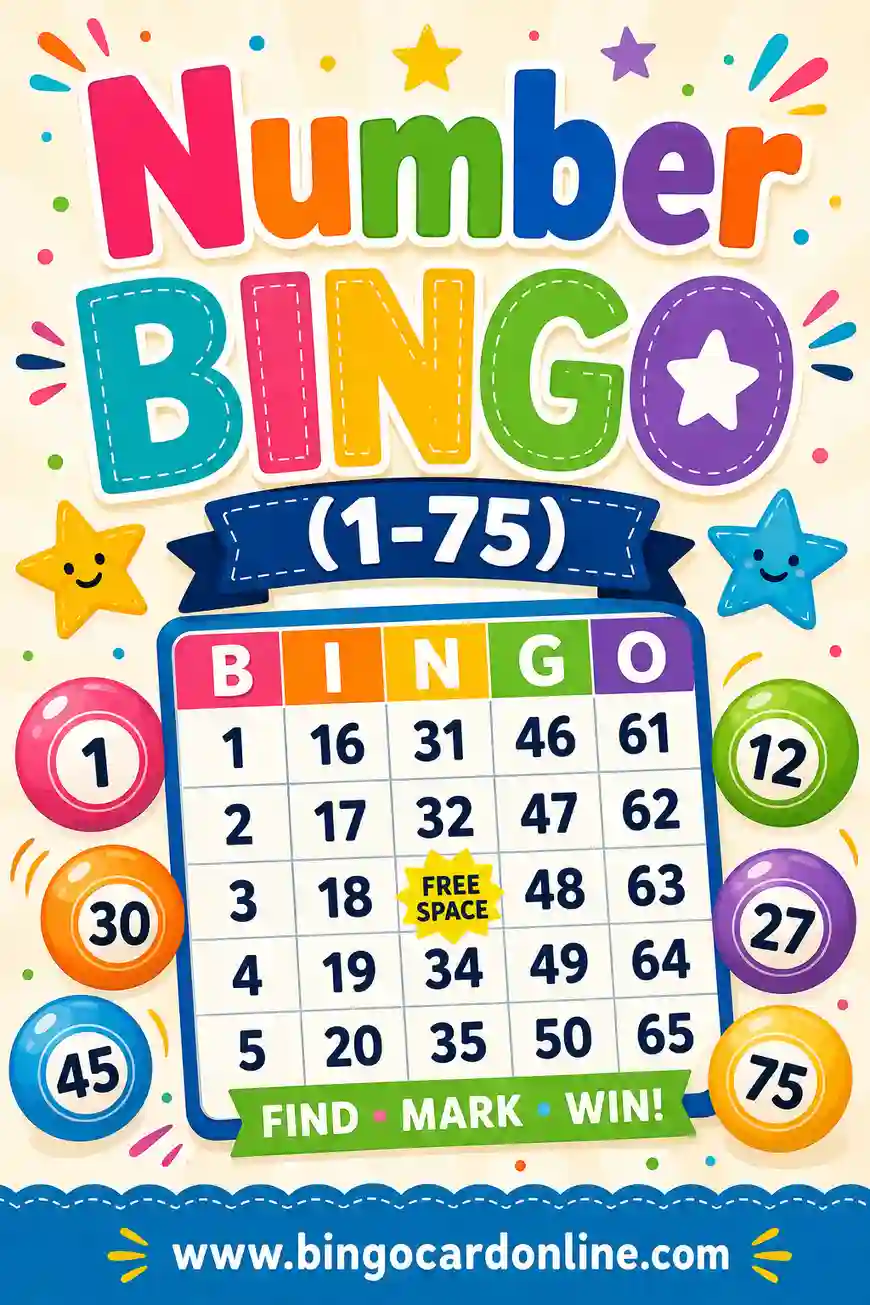
A number bingo card is a grid where every square holds a number instead of a word or picture. In the classic American version, the card is 5x5 with B-I-N-G-O across the top, a free space dead center, and each column drawing from its own slice of 1 to 75. A caller draws numbers one at a time — "B-9!" — players mark matches, and the first completed line wins.
The thing that makes printed number cards work is randomness done right. Each column has to pull from the correct range, no number can repeat on a card, and no two cards in the stack should share a layout. That's fiddly to do by hand and trivial for a generator, which is why "draw your own" number cards usually end in someone discovering two identical cards mid-game.
1-75 or 1-90: Which Should You Print?
There are two big traditions, and your choice mostly depends on where your players learned the game.
| Classic 1-75 (US) | Housie 1-90 (UK, Australia, India) | |
|---|---|---|
| Grid | 5x5 with B-I-N-G-O columns | 9 columns, 3 rows, 15 numbers per ticket |
| Free space | Yes, center square | No — blank squares instead |
| Columns | B: 1–15, I: 16–30, N: 31–45, G: 46–60, O: 61–75 | Column 1: 1–9, column 2: 10–19 ... column 9: 80–90 |
| Typical wins | Line, four corners, X, blackout | One line, two lines, full house |
| Game length | Medium | Comes in tidy three-stage rounds |
If you're in the US or your crowd says "bingo night," print 1-75. If your players say "housie" or "full house," print 1-90. The generator does both — switch the card type to Numbers and pick your range. For a deep dive on the American version specifically, see our number bingo 1-75 guide.
The cheat sheet for calling 1-75
The letters aren't decoration — they tell players which column to scan. B-9 means "check your B column for a 9." Calls go faster and disputes drop when everyone knows the ranges:
- B — 1 to 15
- I — 16 to 30
- N — 31 to 45 (only 4 numbers on the card; the free space eats one slot)
- G — 46 to 60
- O — 61 to 75
How to Print Number Bingo Cards in 4 Steps
- Open the free generator and switch the card type to Numbers.
- Pick your range: 1-75 for classic B-I-N-G-O columns, 1-90 for housie style.
- Set the quantity. One card per player plus a few spares — every card is a unique random draw, checked against the rest of the batch.
- Print. Choose 1, 2, or 4 cards per page, or Save as PDF for a reusable file. Print the master call sheet too — it's your record of what's been called.
Two minutes, start to finish. If you're running the game solo, skip paper calling entirely: the built-in caller draws numbers on screen with no repeats, announces them out loud with voice turned on, and can auto-call every 5, 10, or 15 seconds.
What About Number Cards for Kids?
Classic 1-75 assumes players can scan five columns quickly. For younger kids, shrink the problem:
- 3x3 grid, numbers 1–20. Type the numbers 1 through 20 as a word list and print 3x3 cards. Number recognition practice disguised as a game — kindergarten teachers run this weekly.
- 4x4 grid, numbers 1–30. The step up for early elementary. Calls come fast enough that nobody drifts off.
- Math bingo twist. Call "6 + 3" instead of "9." Same printed cards, instant mental-math drill.
This is the trick most people miss: the Words card type accepts anything, including numbers, so you control the exact range for any age or lesson. Times tables (call "7 × 6," card says "42"), even-numbers-only for a skip-counting unit, negative numbers for middle schoolers — if you can type the list, you can print the cards, and every card still comes out unique.
Ways to Play a Numbers Game
Number cards support every classic win pattern. Announce the target before each round:
- Single line — any row, column, or diagonal. The standard opener.
- Four corners — quick, luck-heavy, great between longer rounds.
- X pattern — both diagonals through the free space.
- Picture frame — the full outer border. A satisfying mid-length round.
- Blackout (full house) — every square. Save it for the grand-prize finale; expect it to take a while with 75 numbers in play.
- Housie progression — with 1-90 tickets, play one line, then two lines, then full house, with a prize at each stage. Three winners per game keeps a big room engaged.
Calling Nicknames to Borrow (If You Want the Full Bingo-Hall Feel)
Part of the charm of a numbers game is the patter. UK callers have a nickname for every number in the 1-90 game, and sprinkling a few into your calls turns a living-room game into a show. Some crowd-pleasers:
- Two little ducks — 22 (the room quacks back; this is mandatory)
- Legs eleven — 11 (traditionally answered with a wolf whistle)
- Two fat ladies — 88
- Doctor's orders — 9
- Top of the shop — 90 (or 75, if that's your top number)
- Unlucky for some — 13
- Dancing queen — 17
- Clickety click — 66
You don't need the full ninety memorized — five or six favorites, delivered with commitment, is plenty. Kids invent their own within two rounds ("Grandpa's age — 65!"), which is honestly the best version. For the American 1-75 game, the letter does the work instead: stretch out the "Beeee... four" and let the room lean in.
Who Number Bingo Cards Are Great For
Family game night. Zero reading required, zero explanation needed — everyone from 6 to 96 already knows the rules. This is the version that needs no pitch.
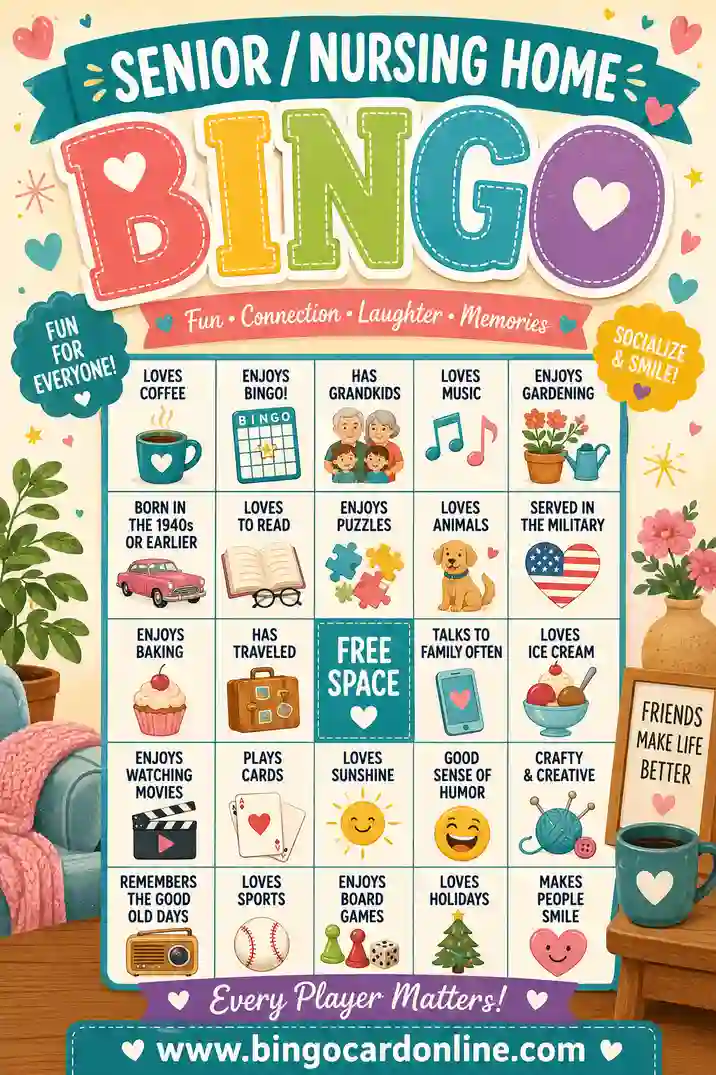
Senior centers and care homes. Number bingo is the gold standard activity, and print size matters more than anything. Print one card per page for large, readable squares — our senior and nursing home bingo guide covers the full setup.
Fundraisers and community halls. Numbers feel fair in a way themed cards can't match — there's no judgment call about whether a square "counts." Print a big batch, sell cards at the door, and keep the call sheet as the official record.
Teachers. Number recognition for the little ones, place value and mental math for older kids, and a rainy-day activity that's ready in one print run.
Printing Tips for Clean Number Cards
- Bigger is better for numbers. Words have shapes; numbers all look similar at small sizes. Print kids' and seniors' cards one per page.
- Black and white works perfectly. Number cards are naturally high-contrast. Use ink-saver mode for big batches.
- Cardstock plus lamination = a permanent set. Unlike themed cards, number cards never go out of season. One good laminated batch with dry-erase markers serves every game night for years.
- Print the call sheet every time. With 75 possible calls, memory won't cut it. Cross numbers off as you go — it's also your winner-verification record.
- Test one page first. Check that column headers and margins survive your printer before running 30 copies.
- Number the cards for events. Running a fundraiser? Write a small ID on each card as you hand them out. When someone wins, you log "card 14 won round 2" and the night's records stay tidy.
Common Mistakes to Avoid
- Photocopying one card. Every player wins simultaneously and the game collapses. Generate a batch — each card is a different random draw.
- Wrong range for the crowd. Calling to 75 with five-year-olds is a long, quiet afternoon. Match the range to the players.
- No verification habit. When someone yells "Bingo!", read their marked numbers back against the call sheet before paying out the prize. Every real bingo hall does this; it takes 20 seconds.
- Calling too fast. One number every 10–15 seconds for adults, slower for kids and seniors. The auto-call timer keeps you honest.
- Forgetting the free space rule. Decide up front whether the center square counts toward every pattern (the usual answer is yes) and say it out loud before round one.
Frequently Asked Questions
Are these bingo cards with numbers really free to print?
Yes. Pick Numbers in the generator, choose 1-75 or 1-90, and print as many unique cards as you want — no sign-up, no watermark, no card limit.
How many number cards can I print at once?
As many as your game needs. Each card is generated as an independent random draw and checked against the others, so a batch of 30 gives you 30 genuinely different cards.
What do the letters B-I-N-G-O mean on the card?
Each letter labels a column and its number range: B is 1–15, I is 16–30, N is 31–45, G is 46–60, O is 61–75. When the caller says "G-52," players scan just their G column.
Can I print number cards without the free space?
Yes — the free center space is optional in the generator. Housie-style 1-90 tickets don't use one at all.
How do I call the numbers without a bingo cage?
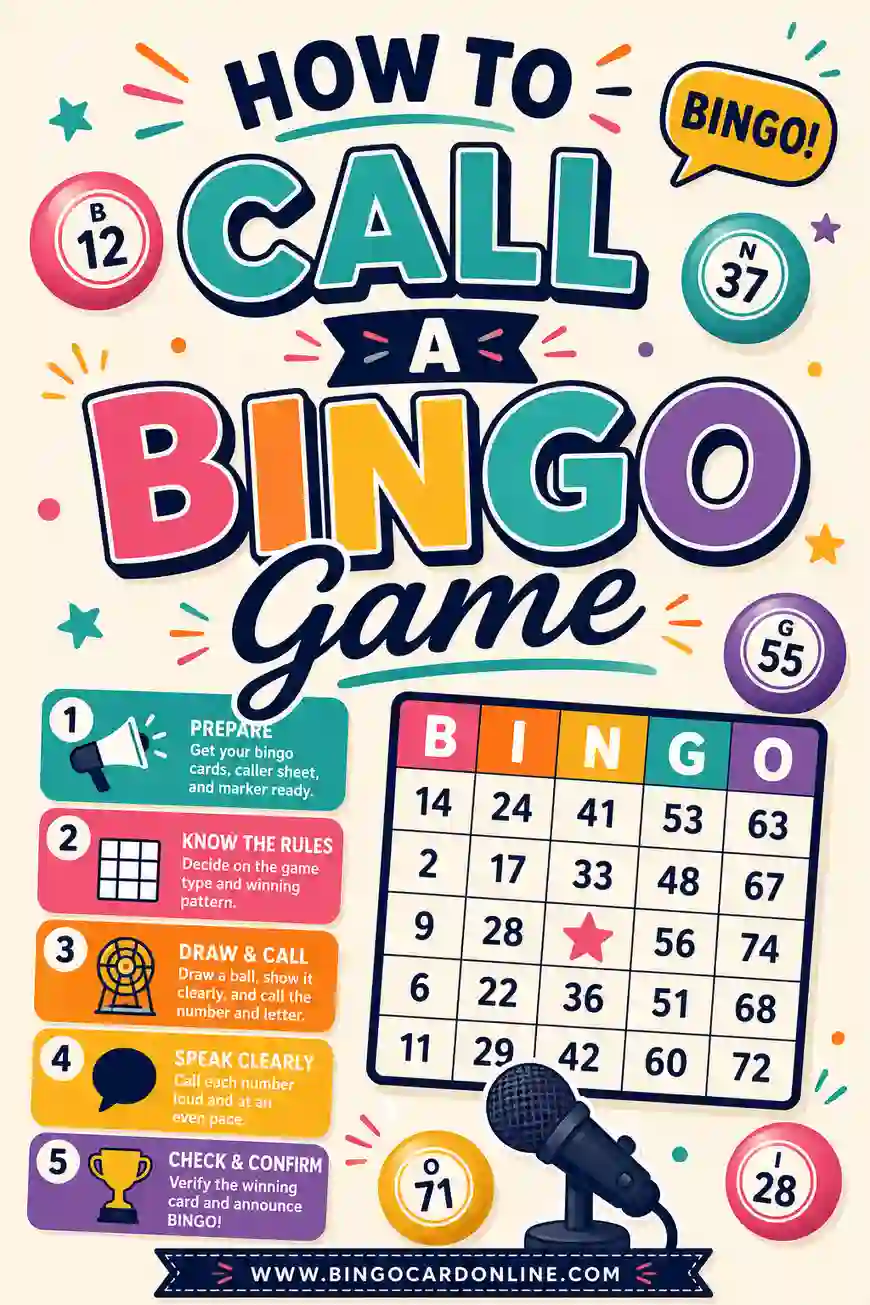
Use the built-in caller. It draws numbers randomly with no repeats, keeps a history you can check, and offers voice announcements plus an auto-call timer. Or print the master call sheet, cut it into slips, and draw from a bowl — the low-tech classic. Our how to call a bingo game guide covers pacing and etiquette.
What's the difference between 1-75 and 1-90 bingo?
1-75 is the American 5x5 game with B-I-N-G-O columns and a free space. 1-90 is the UK/housie version: 9-column tickets, 15 numbers each, played in line/two-line/full-house stages. Same fun, different accents.
Print Your Number Bingo Cards Now
Open the free bingo card generator, switch to Numbers, pick 1-75 or 1-90, and print a unique set for your whole table — plus the master call sheet so you're ready to call. Classic bingo, zero prep, and the next "O-69!" giggle is only a print job away.