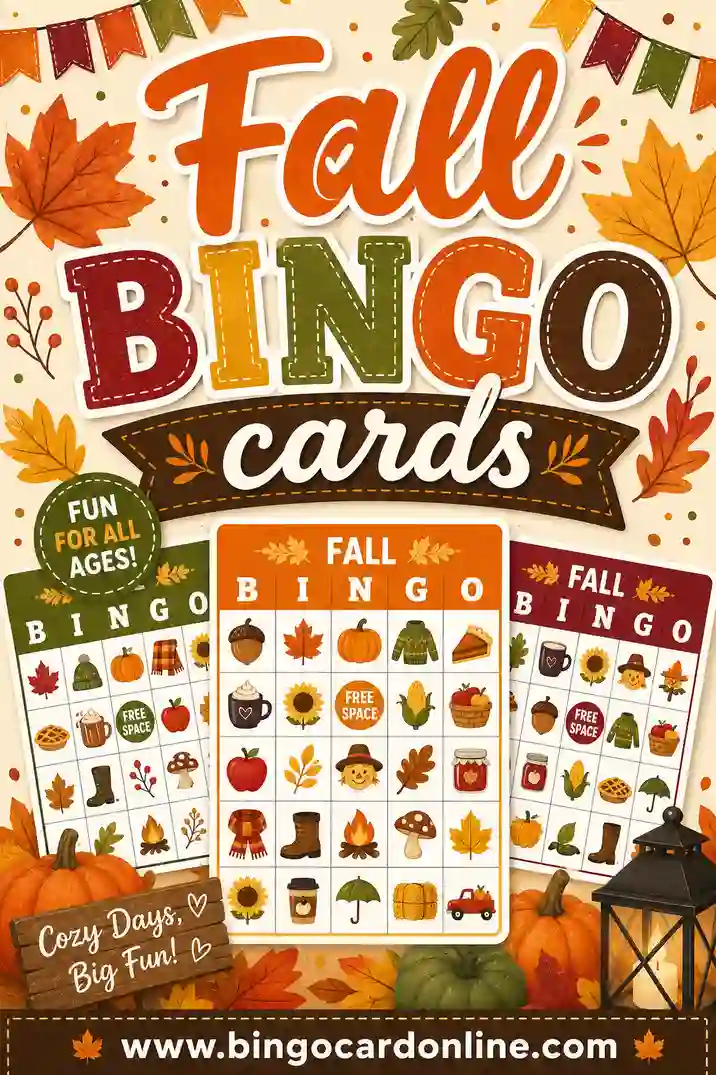
Fall Bingo Cards: Free Printable & Fun
Autumn doesn't arrive on one date. It shows up as a cold morning in September, a bag of apples in October, and a yard full of wet leaves by November. A fall bingo card works because it can follow that whole slide. Instead of numbers, each square holds something you can see, smell, or eat this time of year, and players mark squares as the items get called or spotted.
The quickest route is the free bingo card generator. Paste in the word list further down this page, choose a grid size, and print a stack where every card is shuffled differently. Below you'll find ways to use those cards on a leaf walk, at an orchard, during a football Saturday, and in a classroom.
A Game That Stretches From September to Thanksgiving
Most seasonal bingo is built for a single day. Fall bingo is different because the season is long and the scenery keeps changing. In early autumn you're still in back-to-school mode, with new routines and new classmates. Mid-season brings pumpkin patches, apple picking, and school festivals. By the end, people are raking, wearing wool socks, and planning a big meal.
That gives you a reason to print more than one set. Make a September card around school-week things and trees just starting to turn, an October card around farms and festivals, and a November card around bare branches and cozy evenings. Same game, three different feels, and the kids who played the first round will notice what changed.
There are two basic ways to play, and fall suits both:
- Called bingo. One person draws words and reads them out while everyone else marks matches. Good for classrooms, parties, and car rides.
- Spotted bingo. Nobody calls anything. Players mark a square when they actually see the item, which turns any walk or drive into a hunt.
If you only make one change to a standard game, make it this: give each player a different card. Shared layouts mean two people finish on the same call and the round loses its tension. A generator handles that for you.
The Autumn Word List
Here are 30 fall squares, sorted into three columns. For a 5x5 card, pick any 24 (the center is a free space). For a 3x3 card for preschoolers, pick 8 of the most picturable ones. Copy a column or mix them, then paste into the generator.
| Leaves & Trees | Harvest & Treats | Cozy & Outdoors |
|---|---|---|
| Acorn | Pumpkin | Sweater |
| Falling leaves | Apple pie | Bonfire |
| Maple leaf | Corn maze | Rain boots |
| Pinecone | Caramel apple | Scarf |
| Oak tree | Hay bale | Cup of cider |
| Red leaves | Pumpkin patch | Flannel |
| Chestnut | Scarecrow | Crunchy leaves |
| Bare branch | Wheat | Foggy morning |
| Leaf pile | Cornucopia | Wool socks |
| Golden field | Squash | Wind gust |
For a card tied to one setting, swap in your own squares. Ideas for several settings follow, and the generator lets you paste any list you like.
75 More Fall Bingo Words by Theme
Thirty squares is plenty for one card, but a bigger pool lets you build themed cards and keeps repeat players guessing. Here are 75 more autumn squares in five groups. Mix any of them with the list above, or paste a single group into the generator for a card with one clear theme.
Weather and sky (15 squares)
- Frost on the grass
- Chilly wind
- Gray clouds
- Drizzle
- Harvest moon
- Early sunset
- Misty field
- Cool breeze
- First snowflakes
- Rainbow
- Breath you can see
- Overcast sky
- Long shadows
- Starry night
- Crisp sunny day
Woodland animals (15 squares)
- Chipmunk
- Deer
- Owl
- Raccoon
- Red fox
- Wild turkey
- Geese in a V
- Woolly bear caterpillar
- Crow
- Chickadee
- Beaver
- Rabbit
- Field mouse
- Monarch butterfly
- Blue jay
Fall food and drinks (15 squares)
- Hot cocoa
- Pumpkin seeds
- Squash soup
- Candy corn
- Popcorn ball
- Sweet potato
- Cranberries
- Apple butter
- Cinnamon roll
- Toasted marshmallow
- Pear
- Gingersnap
- Maple syrup
- Kettle corn
- Beef stew
Fall activities (15 squares)
- Raking leaves
- Jumping in leaves
- Hayride
- Apple picking
- Carving a pumpkin
- Painting a pumpkin
- Leaf rubbing
- Football game
- Campfire stories
- Baking a pie
- Planting bulbs
- Stargazing
- Pressing leaves
- Fall festival
- Hiking trail
Around the house (15 squares)
- Porch pumpkin
- Door wreath
- Fuzzy blanket
- Hoodie
- Gloves
- Knit hat
- Fireplace
- Leaf rake
- Potted mums
- Gourds
- Slippers
- Puffy vest
- Soup pot
- Clocks fall back
- Plaid pillow
With the original 30, that makes 105 fall squares. A 5x5 card uses 24, so a pool this size lets the generator deal very different cards to every player, which matters most when you're printing for a full class or a big party.
Take the Card Outside: Leaf Walk Rules
A leaf walk is the most natural home for fall bingo. The rules are simple, and they work in a backyard, a city park, or a trail.
- Hand out a card and a bag. A paper lunch bag or small tote lets kids collect what they find.
- Mark by finding, not by calling. A square counts when the player has seen the item or picked it up.
- Set a walking boundary. Pick a loop or a section of the park so nobody wanders off chasing one more acorn.
- Agree on what stays. Leaves and fallen acorns can come home. Living plants, nests, and anything near a trail marker stay put.
Good squares for a walk are things that exist almost anywhere trees drop leaves: a yellow leaf, a red leaf, an acorn or nut, a pinecone, a feather, a spiderweb, a mushroom, a squirrel, a puddle, a leaf bigger than your hand. Because every region's trees are different, check the surroundings first and adjust. If your area has few red leaves, swap in "brown leaf" or "leaf with a hole in it."
For an extra challenge, add a rule that a player must describe the leaf, such as pointy, round, or fan-shaped, before marking the square. Older kids can use a field guide or a plant-identification app to name the tree.
Orchard and pumpkin patch cards
Farm visits are crowded and busy, so give kids something to look for while the line moves. Squares that usually work at an orchard or patch include a ladder, a wagon, a bushel basket, a crooked pumpkin, a bee, a scarecrow, a cider donut, a hay bale, a farm dog, and someone wearing a flannel. Since you can't control what a particular farm has, add a few safe ones like "muddy boots" and a free center space.
Football Saturdays and Tailgate Cards
In many parts of the US, fall weekends are organized around football. A card built for the stands or the parking lot gives younger siblings and non-fans something to do. Think about squares like a marching band, a team flag, a face-painted fan, a foam finger, a thermos of cocoa, chili, a blanket on someone's lap, a fan wearing the other team's colors, and a cheerleader's pom-pom.
Because these are things to spot, not call, play it as spotted bingo. A simple tailgate rule: the first person to mark a row shows it to an adult, who checks it and then hands over a snack. Keep the cards small, 3x3 or 4x4, so a child can follow them in a noisy crowd. Tie a pen to the card with a loop of string, or use stickers, to keep things moving.
Fall Bingo in the Classroom
Teachers can use the same card for three different jobs across the semester.
September: getting to know you
Early in the year, make a card of back-to-school squares: a new backpack, a sharpened pencil, a bus rider, someone who packed lunch, a student who has a pet. Students walk around and find classmates who match, then write the name in the square. It gets quiet kids talking and teaches names without a formal icebreaker.
October: reading and vocabulary
Use autumn words as a sight-word or spelling exercise. Call a word, and students mark it only if they can spell it back on a sticky note or whiteboard. Younger readers can match picture squares instead. Science classes can build a card of leaf-color and weather terms like deciduous, chlorophyll, migrate, and harvest, with the teacher reading short definitions instead of the words themselves.
November: a calm, pre-break activity
The week before Thanksgiving is a hard time to hold a class's attention. A short round of bingo with markers like dried corn or paper leaves gives a structured break. If your school is gearing up for the holiday, you can pair it with our Thanksgiving bingo cards.
Whatever the month, print a spare card or two for new students, and keep a few blank cards on hand so the class can add its own squares.
Harvest Festival and Fall Party Setups
If you're hosting a neighborhood harvest night, a church fall festival, or a family gathering, bingo is an easy anchor activity. A few practical formats:
- Booth bingo. Each square is a booth or station: face painting, cider, ring toss, cakewalk. Visitors get a stamp or sticker at each one, and a full row earns a small prize. It nudges people toward the quieter booths.
- Dessert table bingo. Squares are the treats people expect: apple crisp, pumpkin bread, caramel corn, pecan pie. Guests mark each one as they taste it.
- Not-quite-Halloween bingo. If you want a fall event that isn't about costumes, this works well. If you do want the spookier version, we have Halloween bingo cards too.
For prizes, think seasonal and small: a mini pumpkin, a caramel apple, first pick of the cider flavors, or choosing the next song. A prize doesn't need to cost much to feel like a win.
Rainy Days and Cozy Evenings
Some fall afternoons are all drizzle. Keep the cards for those days and play at the kitchen table with a mug of something warm. A few indoor variations:
- Blackout. Mark every square. A good fit for a slow afternoon.
- Four corners. The first to mark all four corners wins, which makes for quick rounds when kids lose patience.
- Leaf frame. Mark all the squares around the outer edge, leaving the middle empty like a picture frame.
- Family memories. Fill squares with real family fall moments, such as last year's costume or the time the pie burned. Players mark a square when that memory is shared aloud.
- Team bingo. Pairs share a card, which helps when ages are mixed.
Printing for Damp Hands and Muddy Boots
Fall games often leave the house, and that changes how you should print.
- Use cardstock or sleeves for outdoor play. Damp air and wet grass wilt plain paper quickly. Sliding the card into a clear zip bag keeps it dry, and you can mark through the plastic with a dry-erase marker.
- Add a clipboard or a piece of cardboard. Kids on a trail need something firm to lean on.
- Print in black and white. The card stays clear, and children can color in pumpkins and leaves while they wait for the bus or the hay ride.
- Test one card first. A quick trial print tells you whether the squares fit your printer's margins before you run 30 copies.
- Go bigger for small hands. A 3x3 or 4x4 grid gives each square more room, which is easier for toddlers and for anyone wearing gloves.
For markers, many people use what the season provides: acorn caps, dried corn kernels, small pebbles, or paper leaves cut from construction paper. Skip anything small enough to be a choking hazard around toddlers, and check for nut allergies before using real nuts as game pieces.
Matching the Grid to the Player
The same word list can serve different ages with a few changes.
| Who's playing | Grid | What works in fall |
|---|---|---|
| Toddlers and preschoolers | 3x3 | Pictures only: leaf, pumpkin, apple, boots. A grown-up helps mark. |
| Early elementary | 4x4 | Short words with pictures, plus a leaf walk or orchard card. |
| Older kids and teens | 5x5 | Spotted bingo at games and festivals, vocabulary rounds in class. |
| Adults | 5x5 | Tailgate, dessert-table, or memory-sharing cards. |
| Grandparents and seniors | 4x4 | Large print, classic words like cider, hay bale, and scarecrow. |
How to Prep and Call a Fall Bingo Game
Spotted bingo runs itself, but a called game needs a little setup. Ten minutes of prep keeps the round fair and moving.
- Choose your squares. Pick 30 to 40 words from the lists on this page so the cards differ from one another.
- Print one card per player, plus a few spares. Use the generator so each card is shuffled differently, and check the first page before printing the rest.
- Make a calling sheet. Print or write the full word list on one page. This is your master list for checking winners.
- Cut calling slips. Print a second copy of the list, cut it into slips, and drop them into a small pumpkin pail, a basket, or a paper bag.
- Hand out markers. Crayons, dot markers, dried corn, or paper leaves all work.
- Call and cross off. Draw a slip, read it aloud twice, and cross it off on the calling sheet so you always know what has been called.
- Check the winner. When someone calls bingo, compare their marked squares to your crossed-off list before handing out a prize.
For younger players, hold up a picture or point to an item as you call it. For more tips on pacing and announcing, see our guide on how to call a bingo game, and our tips for printing bingo cards at home.
Fall Bingo Win Patterns
A straight line is the classic way to win, but changing the pattern is the easiest way to make a second or third round feel new. Announce the pattern before you start calling, and sketch it on a whiteboard or the back of a card so everyone can see it. These patterns assume a 5x5 card with a free center.
| Pattern | Squares to mark | Good for |
|---|---|---|
| Single line | Any full row, column, or diagonal | First round and young players |
| Two lines | Any two complete lines | A slightly longer round |
| Four corners | Only the four corner squares | Fast rounds and short attention spans |
| Postage stamp | A 2x2 block in any corner | A quick change of pace |
| Letter X | Both diagonals, crossing at the free space | Mid-length rounds |
| Letter T | The whole top row plus the middle column | Older kids and adults |
| Plus sign | The middle row plus the middle column | Mid-length rounds |
| Leaf frame | Every square on the outer edge | Longer games |
| Blackout | Every square on the card | The final round or a slow afternoon |
| Falling leaf | One diagonal plus the bottom row, like a leaf drifting to the ground | A themed round that fits the season |
On a 3x3 or 4x4 card, stick to lines, four corners, and blackout, since the other shapes need more room. For pictures of each shape and a few more ideas, see bingo patterns explained, plus our dedicated pages on four corners bingo and postage stamp bingo.
Fall Bingo Prize Ideas
Prizes don't have to be big. A small, seasonal reward is part of the fun, and it helps to have a few on hand at different price points so you can play several rounds without overspending.
Free prizes
- Pick the next game or the next song
- First in line for cider or snacks
- Wear a paper leaf crown until the next round
- Skip one chore, such as setting the table
- Choose the family movie for the weekend
Prizes under $1 each
- A mini pumpkin or small gourd
- Fall stickers or a sticker sheet
- A leaf-shaped eraser or a pencil
- A wrapped caramel or a small bag of popcorn
- A homemade bookmark made from a pressed leaf
Prizes under $5 each
- A caramel apple or a cider donut
- A pair of fuzzy socks
- A small fall coloring book with crayons
- A packet of hot cocoa with a mug
- A pack of flower bulbs to plant for spring
For a classroom, a class-wide reward often works better than individual prizes: an extra recess, a read-aloud of the winner's choice, or a sticker on the class chart for every bingo.
Fall Bingo for Kids (Picture Cards)
Toddlers and preschoolers can play fall bingo long before they can read. The trick is to choose squares that are easy to picture and easy to say, and to keep the grid small.
- Use a 3x3 grid. Eight squares plus a free space is about right for ages two to four. Move up to 4x4 for kindergarten.
- Pick picturable words. Good choices include acorn, pumpkin, apple, leaf, pinecone, scarecrow, owl, squirrel, rain boots, scarf, hat, and corn.
- Add pictures to the squares. Draw a quick sketch, glue on a sticker, or use clip art next to each word so pre-readers can match by sight.
- Call with props. Hold up a real apple or a paper leaf as you call it. Kids learn the words while they play.
- Use big markers. Bingo daubers, stickers, or large paper leaves are easier for small hands than tiny game pieces.
- Let everyone win. With little ones, keep calling until every child has a line, then celebrate together.
For more ideas on picture cards, read how to make picture bingo for non-readers and our guide to bingo for toddlers and preschoolers. If your fall card is mostly outdoor finds, our nature bingo page has more squares for walks and parks.
More Seasonal and Classroom Bingo
Fall bingo pairs well with the other games that fill the calendar from September through November:
- Back-to-school bingo for the first weeks of the school year
- Classroom bingo for vocabulary, review, and brain breaks
- Halloween bingo cards, plus a ready plan for Halloween bingo with 30 players
- Thanksgiving bingo cards and Thanksgiving football bingo for the holiday weekend
- Bingo for large groups if you're running a festival or school event
Fall Bingo Questions
When is the best time to play fall bingo?
Anytime from the first cool days of September until the leaves are gone. Use school-week and tree-color squares early in the season, farm and festival squares in October, and cozy or bare-branch squares by November.
What do I do if there are no colorful leaves where I live?
Autumn looks different across the country, and in some places the trees stay green well into the season. Swap in squares you can actually find: a cooler morning, a seed pod, a squirrel gathering food, a pumpkin on a porch, a hoodie, or a football game on TV. A card that matches your real surroundings is more fun than a generic one.
Can I use fall bingo on a school field trip?
Yes. A 3x3 or 4x4 spotted-bingo card suits orchard, farm, and park visits. Ask the chaperones to check boxes with the kids, and agree beforehand that the group will leave plants and animals alone.
How many words do I need for a 5x5 fall card?
At least 24 for the squares, with a free space in the center. Using 30 or more gives the generator room to make cards that look noticeably different from each other. The list above has 30.
How is fall bingo different from Halloween bingo?
Fall bingo covers the whole season and focuses on leaves, harvest, weather, and cozy things. Halloween cards focus on costumes, ghosts, and candy, and fit a single night. Some families print both and play fall bingo through October, then switch for the last week.
Can I reuse the cards next year?
If you laminate them or slip them into sleeves and use dry-erase markers, yes. Wipe clean, store them flat in a folder, and pull them out next September. You can always regenerate a fresh shuffle in a few seconds if you want different layouts.
How do I play fall bingo with a large group?
Print one unique card per player from the generator, use a 5x5 grid so wins don't come too quickly, and call from a calling sheet so you can check winners fast. A microphone or a whiteboard where you write each called word helps people at the back keep up. For festivals, booth-style spotted bingo spreads people out instead of keeping everyone at one table.
Can I play blackout fall bingo?
Yes. In blackout, a player has to mark every square on the card to win. It takes longer than a single line, so it works well as a final round or on a slow rainy afternoon. With a 5x5 card and a list of 30 to 40 words, expect to call most of the list before someone finishes.
Are there larger-print fall bingo cards?
Choose a 3x3 or 4x4 grid in the generator and each square gets more space, so the words print larger on a standard sheet. That size works well for young children, seniors, and anyone playing outdoors in gloves.
How many fall bingo cards should I print?
Print one card per player plus two or three spares for latecomers or spills. If you plan several rounds and don't want to reuse cards, print a new set per round or laminate one set and use dry-erase markers.
Can I play fall bingo without a caller?
Yes. Spotted bingo needs no caller at all, since players mark squares when they find the item on a walk, at a farm, or during a game. It is a good choice for car rides and outdoor play.
Before the Leaves Come Down
Pick the setting you'll play in first, whether it's a classroom, an orchard, or a kitchen table on a rainy Sunday. Copy the matching squares from the list above, open the generator, and print a few unique cards. You can make a second set for the next stage of the season when the weather turns.