Animal Bingo: Free Printable Cards for Kids
Animal bingo is classic bingo with the numbers swapped out for creatures — a grid of squares filled with dogs, elephants, penguins, and octopuses instead of B-14. A caller announces an animal (or makes its sound, which is the best part), players mark the matching square, and the first full line wins. If you're hunting for an animal bingo free printable, the quickest route is the free bingo card generator: paste in an animal list or pick the ready-made animal emoji pack, and it shuffles unique printable cards for your whole group in seconds.
Want to skip ahead? Open the free generator, grab the animal word list below (or switch to the Emoji card type and choose an animal pack for non-readers), pick a grid size, and print. No sign-up, no watermark, no cost.
What Is Animal Bingo?
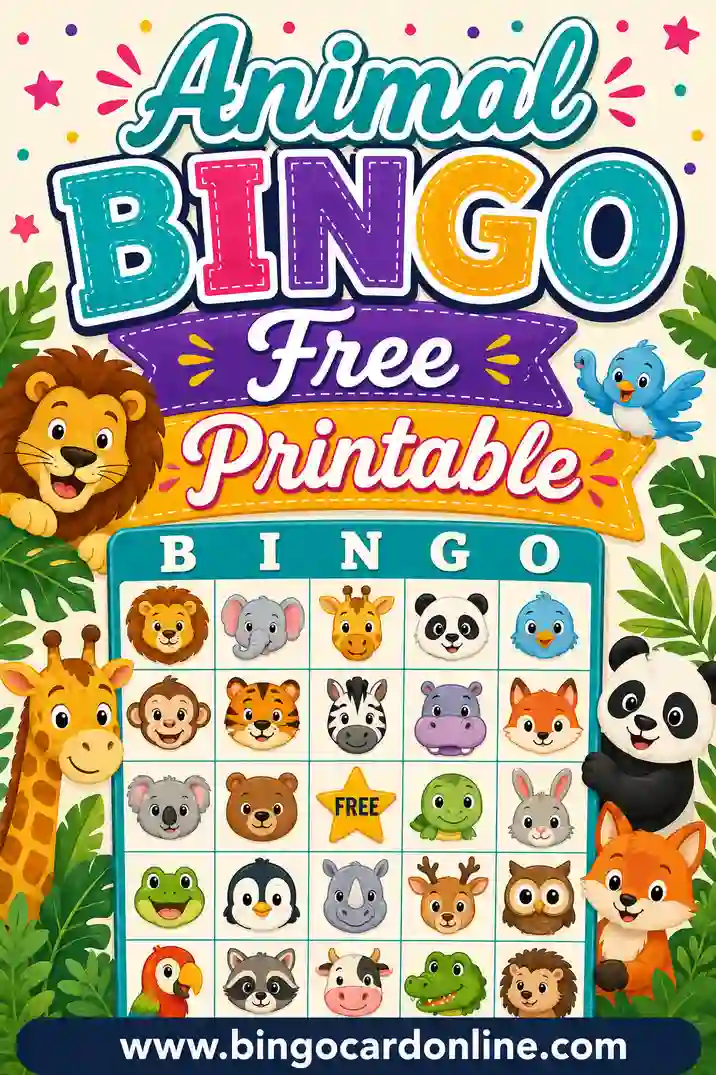
Animal bingo replaces the numbered squares of regular bingo with animal names or animal pictures. Cards come in three sizes: 3x3 for toddlers and preschoolers, 4x4 for early elementary, and the classic 5x5 with a free center square for bigger kids and mixed-age groups.
There are two ways to fill the squares, and the right one depends on who's playing:
- Word cards. Each square holds an animal name — "giraffe," "octopus," "hedgehog." Great for readers, and sneaky-good spelling and vocabulary practice.
- Picture cards. Each square holds an animal image or emoji. This is the version for toddlers, preschoolers, and any group with non-readers, because kids match what they see instead of what they read. The generator has ready-made animal emoji packs, so you don't have to hunt down clip art.
The magic ingredient, as with all bingo, is that every card must be different. If two kids have identical layouts, they win at the same instant and you get a tie nobody enjoys. That's the whole reason to use a generator instead of copying one card 20 times — it reshuffles your animal list into a unique grid for every player automatically.
Why Make Your Own Instead of Downloading a Fixed PDF
There are plenty of animal bingo PDFs floating around, so why generate your own? Three honest reasons.
- Fixed PDFs usually have 6–10 cards. Fine for a family, useless for a class of 25. The generator prints as many unique cards as you need.
- You pick the animals. Doing a farm unit? All farm. Ocean week? All ocean. Your kid is obsessed with dinosaurs and sloths? In they go. A fixed PDF can't do that.
- You pick the format. Words for your second graders, pictures for your preschoolers, a 3x3 for the youngest sibling so everyone plays the same game at their own level.
It takes about five minutes from "we should play bingo" to a printed stack, which is roughly how long it takes to even find a decent fixed PDF.
Free Animal Bingo Word List (Copy & Paste)
Here's a ready-made list of 30 animals, grouped so you can build themed cards or mix across columns. Copy a column (or the whole thing) straight into the generator.
| Farm | Zoo & Safari | Ocean, Sky & Small |
|---|---|---|
| Cow | Lion | Dolphin |
| Pig | Elephant | Shark |
| Horse | Giraffe | Octopus |
| Sheep | Zebra | Turtle |
| Chicken | Monkey | Penguin |
| Duck | Kangaroo | Owl |
| Goat | Panda | Butterfly |
| Rooster | Tiger | Ladybug |
| Bunny | Hippo | Frog |
| Dog | Bear | Fox |
For a 5x5 card you need at least 24 animals, so grab most of the table. For a toddler 3x3 you only need 9 — stick to animals they can name on sight, like dog, cow, duck, and bunny.
Themed twists on the list
- Animal sounds bingo. Same cards, but the caller doesn't say the animal — they make its sound. "Moo!" means mark the cow. Chaos, in the best way.
- Baby animals. Calf, piglet, duckling, joey, cub. A fun vocabulary stretch for early elementary.
- Habitat rounds. Call out "lives in the ocean" and players mark one matching square. Turns the game into a mini science review.
Animal Bingo Themes: Farm, Zoo, Ocean, Jungle, Pets and More
The 30-animal list above is a great start, but themed games are where animal bingo really shines. Below are 156 more animals in 11 themed lists, none repeating the starter table. Each list fills at least a 3x3 card on its own; for a 5x5, combine a theme with its matching column above or with a second theme. Paste any list into the generator, one animal per line.
Farm animals (12 animals)
Pair with the Farm column in the table above for a full 5x5 farm unit.
- Llama
- Alpaca
- Donkey
- Turkey
- Goose
- Ox
- Pony
- Mule
- Barn cat
- Hen
- Lamb
- Bull
Zoo & safari animals (16 animals)
Combine with the Zoo & Safari column for a field-trip review.
- Rhinoceros
- Cheetah
- Ostrich
- Hyena
- Meerkat
- Gazelle
- Wildebeest
- Warthog
- Camel
- Flamingo
- Crocodile
- Koala
- Baboon
- Antelope
- Vulture
- Water buffalo
Ocean animals (17 animals)
Perfect for ocean week. Try clue calling: "I swim upright, and the dad carries the eggs" means seahorse.
- Whale
- Jellyfish
- Starfish
- Crab
- Lobster
- Seahorse
- Clownfish
- Stingray
- Sea otter
- Squid
- Manatee
- Sea lion
- Pufferfish
- Orca
- Eel
- Shrimp
- Swordfish
Jungle & rainforest animals (16 animals)
Bright, noisy, and great for act-it-out rounds.
- Jaguar
- Sloth
- Toucan
- Parrot
- Gorilla
- Orangutan
- Chameleon
- Anaconda
- Poison dart frog
- Tapir
- Lemur
- Macaw
- Leopard
- Howler monkey
- Okapi
- Gibbon
Pets (16 animals)
A favorite for young kids. Swap in the names of your students' own pets for a personal touch, or use the Photos card type with real pet pictures.
- Cat
- Puppy
- Kitten
- Hamster
- Guinea pig
- Goldfish
- Parakeet
- Gerbil
- Ferret
- Hermit crab
- Canary
- Bearded dragon
- Tortoise
- Chinchilla
- Cockatiel
- Betta fish
Bugs & garden critters (14 animals)
Ideal for spring, a backyard bug hunt, or a garden unit.
- Bee
- Ant
- Caterpillar
- Grasshopper
- Dragonfly
- Firefly
- Snail
- Earthworm
- Spider
- Beetle
- Cricket
- Moth
- Praying mantis
- Centipede
Woodland & forest animals (14 animals)
A natural fit for fall and camping trips.
- Deer
- Raccoon
- Squirrel
- Chipmunk
- Skunk
- Porcupine
- Beaver
- Moose
- Wolf
- Badger
- Opossum
- Woodpecker
- Bat
- Elk
Arctic & polar animals (12 animals)
Great for winter or a cold-climates science lesson.
- Polar bear
- Walrus
- Arctic fox
- Snowy owl
- Harp seal
- Reindeer
- Narwhal
- Beluga whale
- Puffin
- Musk ox
- Arctic hare
- Lemming
Birds (15 animals)
Good for bird-watching walks, where kids mark each bird they actually spot.
- Bald eagle
- Robin
- Cardinal
- Blue jay
- Hummingbird
- Pelican
- Swan
- Peacock
- Crow
- Seagull
- Hawk
- Pigeon
- Sparrow
- Stork
- Kiwi
Reptiles & amphibians (12 animals)
Scaly, slimy, and very popular with older kids.
- Alligator
- Iguana
- Gecko
- Komodo dragon
- Salamander
- Toad
- Rattlesnake
- Cobra
- Newt
- Box turtle
- Python
- Tree frog
Dinosaurs & prehistoric animals (12 animals)
For the dinosaur-obsessed. Not every prehistoric animal here is technically a dinosaur, which makes a fun talking point for older kids.
- T. rex
- Triceratops
- Stegosaurus
- Brachiosaurus
- Velociraptor
- Pteranodon
- Ankylosaurus
- Spinosaurus
- Diplodocus
- Woolly mammoth
- Saber-toothed cat
- Parasaurolophus
Taking the game outside? Nature bingo adds plants, weather, and trail sightings to the animals. Seasonal parties work too: bunnies and chicks fit Easter bingo cards, bats and owls fit Halloween bingo cards, and woodland critters pair nicely with fall bingo cards. For early readers, an A-to-Z animal list doubles as alphabet bingo (alligator, bee, cat, deer...).
How to Make Animal Bingo Cards in 4 Steps
- Open the free generator and choose your card type — Words for animal names, or Emoji and an animal pack for picture cards little kids can play.
- Add your animals. Paste the list above or type your own, one per line. Aim for 30 or more so the cards vary nicely.
- Pick a grid size and quantity. 3x3 for preschool, 5x5 for everyone else. Print one card per player plus a couple of spares.
- Generate and print. Every card comes out unique. Print the master call sheet too — it's your calling list, with every animal in one place.
If you'd rather run the game from a screen, click Play caller after generating. It draws one animal at a time with no repeats, and you can turn on voice so the tool announces each call out loud while you play along.
Who Animal Bingo Is Great For
Preschool and kindergarten
Animal bingo might be the single best first bingo game, because animals are the thing little kids know most about. Use a 3x3 picture card, call slowly, and let kids roar back at you when the lion comes up. It builds matching, listening, and turn-taking skills without feeling like a lesson. For more early-years ideas, see bingo for toddlers and preschoolers.
Elementary classrooms
Word cards turn the game into reading practice. Tie the animal list to your current science unit — habitats, life cycles, food chains — and call clues instead of names: "this animal hatches from an egg and says quack." There are more curriculum tricks in classroom bingo.
Zoo trips and farm visits
Print spot-it cards before you go. Instead of a caller, kids mark each animal as they actually see it during the visit. It keeps younger kids engaged between exhibits and gives the whole trip a friendly mission.
Birthday parties
An animal-themed party practically demands a round of animal bingo. Use the party's theme animals, hand out animal crackers as edible markers, and give the winner first pick of the goody bags.
Printing Tips for Cards Kids Will Actually Use
- Pictures for non-readers, always. A four-year-old staring at the word "kangaroo" is a four-year-old who's out of the game. Emoji or photo squares keep everyone in. More on this in picture bingo for non-readers.
- Bigger grids, bigger squares. A 3x3 card gives small hands room to place markers without knocking three others off.
- Cardstock for repeat players. Regular paper survives one game night; cardstock survives a semester.
- Laminate for a permanent class set. Pair with dry-erase markers and you can play weekly all year from one print run.
- Markers that fit the theme. Animal crackers, goldfish crackers, or pom-poms all work — or print matching chips with the generator's built-in Print bingo markers button.
Bingo Markers Kids Love
For little players, the markers are half the fun. Here are easy options beyond the snack-cracker classics:
- Buttons. Colorful, reusable, and easy to scoop back into a jar between rounds.
- Stickers. Animal stickers or plain dot stickers turn each card into a keepsake. Best for a single game, since they don't peel off neatly.
- Dot (dauber) markers. Washable bingo daubers are a big hit with preschoolers. Use them on paper cards you don't plan to reuse.
- Mini animal figurines. Small plastic animals that match the squares make the game feel like a toy. Kids place the toy on the matching square.
- Cereal pieces. O-shaped cereal is cheap, clean, and edible when the game ends.
- Coins or counters. Pennies or math counters from the classroom shelf work well for older kids.
- Paper squares. Cut colored paper into small squares, or use the generator's printable marker sheet.
- Dry-erase markers. On laminated cards or cards slipped into sheet protectors, kids can mark and wipe clean for the next round.
- Magnetic chips and wand. Magnetic bingo chips scoop up in seconds with a wand, which speeds up cleanup between rounds.
Safety note: buttons, coins, glass gems, and other small objects are choking hazards for children under 3. For toddlers, use large markers, dot stickers, or daubers, and supervise closely. More marker ideas are in our guide to bingo markers.
How to Print Animal Bingo Cards at the Right Size
- Print at 100% (actual size) or "fit to page." If your printer dialog shrinks the page, squares get small and pictures get hard to see. Check the scale setting before printing the whole stack.
- Choose cards per page by age. One large card per page is best for toddlers and preschoolers; two or four per page saves paper for older kids who can handle smaller squares.
- Use the right paper. Plain printer paper is fine for one game; cardstock holds up to little hands and repeat play.
- Print a test page first. Check that picture squares are clear and that nothing is cut off at the margins.
- Print the master call sheet too. It's your checklist for calling and for verifying winners.
For step-by-step printer settings, see how to print bingo cards at home, and for exact card and square dimensions, see what size a bingo card should be.
Fun Ways to Play Animal Bingo
Once straight-line bingo gets familiar, mix in these variations:
- Sound-only round. The caller only makes animal sounds. Players have to figure out which square that howl belongs to.
- Act it out. The caller mimes the animal — flapping, hopping, slithering. Loudest laughs per minute of any version.
- Clue bingo. Describe the animal without naming it: "I have a long neck and eat leaves from tall trees." Great for classrooms.
- Blackout. Fill the whole card. Save it for the last round since it takes a while.
- Four corners. Quick round for short attention spans — just the corner squares win.
How to Run the Game (and Mistakes to Avoid)
Running animal bingo takes zero experience. Hand out cards and markers, announce the win condition (one line is standard), then call animals one at a time from your master call sheet, crossing each off as you go. When someone yells "Bingo!", check their marked squares against your crossed-off list. That's the entire job.
A few mistakes worth dodging:
- Too few animals in the list. With exactly 24 animals on a 5x5, every card holds the same set and only the layout differs. Use 30+ so cards genuinely vary.
- Mixing readers and non-readers on the same card type. Print word cards for the big kids and picture cards for the little ones — the generator makes both from the same session.
- Calling too fast. Young kids need a beat to scan nine squares. One call every 15–20 seconds is plenty quick.
- No spare cards. Juice happens. Print 10–20% extra.
How to Win Animal Bingo: Line, Corners, and Blackout
Always announce the winning pattern before the first call. These are the most common win conditions for animal bingo:
| Pattern | What counts as a win | Best for |
|---|---|---|
| Single line | Any full row, column, or diagonal | The standard first round; good for all ages |
| Two lines | Any two complete lines | Older kids who finish single-line rounds quickly |
| Four corners | Just the four corner squares | Quick rounds and short attention spans |
| Letter X | Both diagonals | 5x5 cards with a free center |
| Picture frame | Every square around the outer edge | A longer round for bigger kids |
| Blackout | Every square on the card | The last round of the day |
For toddlers on a 3x3 card, a single line is plenty; you can also let everyone keep playing until the whole table has a line so nobody feels left out. More patterns and diagrams are in bingo patterns explained.
How to play with more people
- Print one unique card per player. The generator has no card limit, so a whole grade level or a big family reunion can play at once.
- Use a bigger animal list. With more players, 30 to 40 animals keeps cards varied and reduces ties.
- Make calls easy to hear. Use the built-in voice caller or a microphone, and hold up a picture for each animal.
- Recruit a checker. One helper verifies winning cards against the call sheet while you keep calling.
- Plan for ties. Decide in advance whether simultaneous winners share the prize or play a quick four-corners tiebreaker.
Hosting a really big group? See bingo for large groups, or for a home game, bingo for family game night.
Animal Bingo by Age
| Age group | Grid | Card style | Best variation |
|---|---|---|---|
| Toddlers (2–4) | 3x3 | Pictures/emoji | Sound-only calling |
| Preschool–K (4–6) | 3x3 or 4x4 | Pictures | Act it out |
| Early elementary (6–8) | 4x4 | Words + pictures | Clue bingo |
| Older kids (9+) | 5x5 | Words | Blackout rounds |
And if your crowd loves picture squares in general, the same approach works beyond animals — see emoji bingo for food, holiday, and everything-else packs.
Frequently Asked Questions
Is there really a free printable animal bingo card set?
Yes. The generator is completely free — no account, no watermark, no card limit. Paste an animal list or pick an animal emoji pack, and print as many unique cards as your group needs.
How many animal bingo cards can I print?
As many as you want. One per player plus a few spares is the rule of thumb; for a class of 25, print about 30. Every card is automatically different.
What animals should I put on a card for toddlers?
Stick to animals they can recognize instantly: dog, cat, cow, duck, bunny, fish, pig, horse, and lion cover a 3x3 nicely. Use picture squares rather than words, and keep rounds short.
Can I make animal picture bingo without finding clip art?
Yes. Switch the card type to Emoji and pick an animal pack — the squares fill with animal images automatically. You can also use the Photos card type to upload up to 30 of your own animal pictures, which is a hit with pet photos.
How do I call animal bingo for kids who can't read?
Say the animal name clearly and, ideally, show a matching picture or make the sound. The built-in caller can speak each call out loud with the voice option, which frees you up to help little players scan their cards.
How many players can play animal bingo?
Two or more. There is no upper limit, because the generator makes a unique card for every player. A family of three, a class of 25, or a camp group of 60 can all play the same game. With a very large group, use a bigger animal list (30 to 40 animals) to keep cards varied.
How do you win animal bingo?
The first player to cover a complete row, column, or diagonal of called animals shouts "Bingo!" and wins, once the caller checks their squares against the call sheet. You can also play four corners, an X, a picture frame, or blackout (every square covered) for longer rounds.
Should I print animal bingo with pictures or words?
Use pictures for toddlers, preschoolers, and anyone still learning to read; use words for confident readers who can use the practice. With a mixed-age group, print picture cards for the little ones and word cards for the older kids from the same animal list, so everyone plays the same game.
How do I play animal bingo with a 2-year-old?
Keep it tiny and playful: a 3x3 picture card, very familiar animals, and big, easy-to-grab markers such as dot stickers or daubers (not small objects). Show the picture and make the sound for each call, help them find the square, and celebrate every match. Stop while it's still fun; a couple of short rounds is plenty. See bingo for toddlers and preschoolers for more ideas.
Can animal bingo be played on a nature walk or zoo trip?
Yes. Skip the caller and have kids mark each animal as they actually spot it. Use animals you're likely to see (backyard birds and bugs for a walk, the zoo's exhibit list for a zoo trip). Clipboards and crayons make marking easy on the move.
Can I make animal bingo for summer camp or a birthday party?
Absolutely. Use your camp or party theme animals, print one card per guest, and plan a few short rounds. For more ideas, see bingo for summer camps and birthday party bingo.
Ready to Print Your Animal Bingo Cards?
Copy the animal list above, open the free bingo card generator, and you'll have a stack of unique, printable animal bingo cards before the kids finish arguing about who gets the lion card. Words for readers, pictures for the little ones, sounds for everyone. Moo loudly and carry a big call sheet.